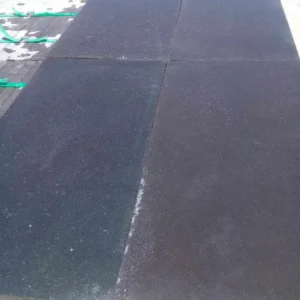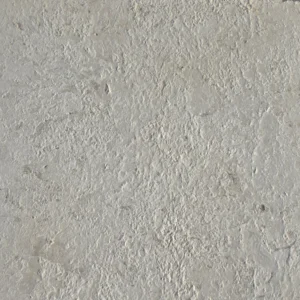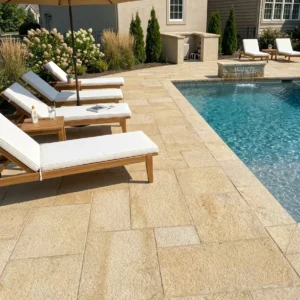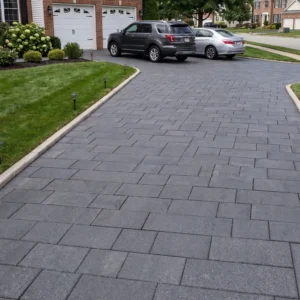
50 Years Of Manufacturing & Delivering The Highest-Quality Limestone & Black Basalt. Sourced & Hand-Picked From The Middle East.

Escrow Payment & Independent Verifying Agent For New Clients

Contact Me Personally For The Absolute Best Wholesale & Trade Prices:

USA & Worldwide Hassle-Free Delivery Options – Guaranteed.

Ivory Travertine in Arizona

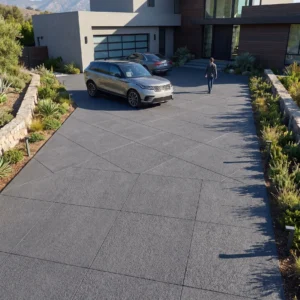
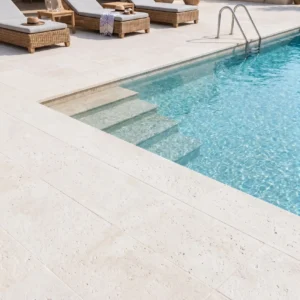
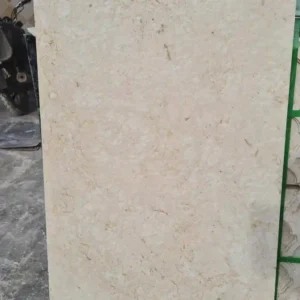
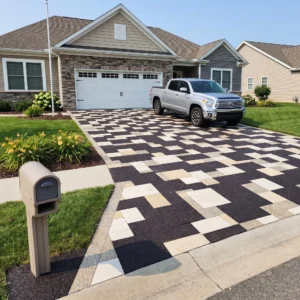
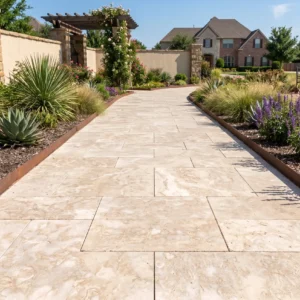
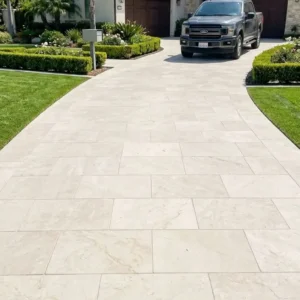
Installing ivory travertine in Arizona presents unique terrain-driven challenges that go well beyond surface aesthetics. Across the state's varied elevations — from high-desert plateaus to sloped hillside lots — proper base preparation and drainage engineering are critical to long-term performance. Travertine's natural porosity and weight distribution make subbase compaction especially important on uneven or rocky ground, where shifting can compromise grout lines and surface stability over time. Understanding how slope gradient influences water runoff patterns helps determine joint spacing, edge restraint placement, and overall layout direction. Citadel Stone ivory travertine Arizona finish options are specifically worth evaluating in the context of terrain and traction requirements before committing to a final specification. Citadel Stone supplies quality ivory travertine to homeowners and contractors throughout Arizona, offering consistent material standards and knowledgeable support for every project.

See & Feel the Quality – Free Arizona Stone Samples

Our stones are made for the Arizona sun. See how the colors hold up in your specific light.

Design Your Arizona Home with a Local Stone Expert

Get personalized advice on the best stone for Arizona's climate and your design style.

Premium Natural Stone — All Sizes & Thicknesses Available

From standard cuts to fully custom dimensions — our limestone, granite, basalt & shellstone
are cut to your exact specifications. Residential or commercial, we’ve got you covered.

Get Your Free Arizona Stone Quote

Transparent Pricing for Your Arizona Project

Elevate Your Arizona Property with Premium Stone, Priced for Value.

Unlock $10,000 Worth of Deals on Beautiful Paver, Tiles & Cobble Setts—For Free!

Invest in Arizona’s Landscape: Stone That Lasts a Lifetime.

100% Happiness Guarantee

Trust 50 Years of Expertise. Invest in Quality Limestone Tiles

Custom-Cut for Your Arizona Project: Any Size, Any Finish.

No-Obligation Consultation: Get Expert Advice for Your Arizona Home.

The Stone Supplier Trusted by Arizona's Leading Architects & Designers.

Trusted by Top Stone Experts Around the Globe

Arizona's Most Diverse Selection of Limestone Tiles.

Elevate Your AZ Property with Limestone Built for the Desert. Our expansive collection of limestone tiles brings timeless beauty and proven durability to both residential and commercial spaces across Arizona. As the state’s leading supplier, we offer a diverse palette of colors and finishes—from cool, light tones that reflect the sun to rich, earthy textures that complement the Southwest landscape. Transform your environment with limestone that stands up to the Arizona heat while providing the sophisticated aesthetic you desire.

Explore Arizona-Tough Alternative Stones

Product NameDescriptionPrice per Square Foot
Travertine TilesBeautiful natural stone with unique textures$8.00 - $12.00
Marble TilesLuxurious and elegant, available in various colors.$10.00 - $15.00
Granite TilesExtremely durable and perfect for high-traffic areas.$7.00 - $12.00
Slate TilesRich colors and textures; ideal for wet areas.$6.00 - $10.00
Porcelain TilesVersatile and low-maintenance, mimicking natural stone.$4.00 - $8.00
Ceramic TilesAffordable with a wide variety of designs.$3.00 - $6.00
Quartzite TilesStrong and beautiful, resistant to stains.$9.00 - $14.00
Concrete PaversCustomizable for patios; durable and cost-effective.$5.00 - $9.00
Glass TilesStylish, reflective, and brightening.$15.00 - $25.00
Composite TilesEco-friendly options made from recycled materials.$5.00 - $10.00

Incredible Prices for Top-Quality Stone—Shop Citadel Stone Today!

Table of Contents

Ivory travertine in Arizona performs at its best or worst depending almost entirely on what happens beneath the surface — and in a state defined by dramatic elevation shifts, that means your base preparation strategy has to change with the terrain, not just the temperature. From the low desert basins around Phoenix to the plateau edges above Flagstaff, the structural demands on an ivory travertine installation shift considerably based on soil type, drainage gradient, and frost penetration depth. Getting the stone right is only half the decision; the other half is understanding what the ground beneath it will do across seasons and decades.

Why Elevation Changes How You Specify Ivory Travertine

Arizona’s elevation range spans from roughly 70 feet above sea level near Yuma to over 7,000 feet in the highlands north of Sedona — and that vertical spread has real consequences for how ivory travertine behaves in the ground. At lower elevations, the primary challenge is alluvial soil instability and caliche hardpan interrupting drainage paths. At higher elevations, the calcite matrix in travertine faces freeze-thaw pressure that doesn’t exist at all below 3,500 feet. Your specification has to account for the zone, not just the material.

Travertine’s inherent porosity — typically between 5% and 12% depending on the block grade — means moisture infiltration is always a factor. In low-desert settings, that porosity accelerates drying and usually works in your favor. Higher up, that same porosity becomes a liability if water penetrates the stone and the temperature drops below freezing. Understanding this relationship is what separates a thoughtful specification from a generic one.

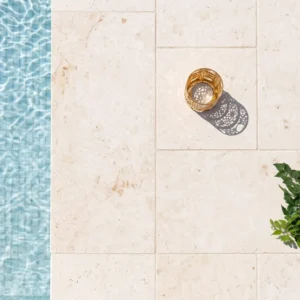
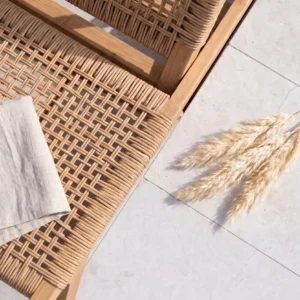
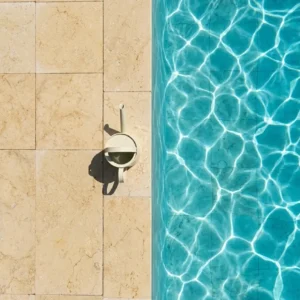
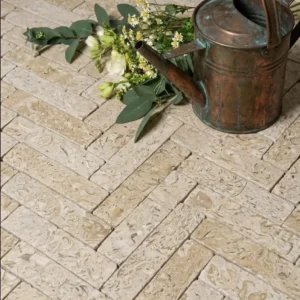
Two light-colored stone slabs with a decorative metal lantern and green foliage.

Stone Types That Perform Across Arizona’s Terrain Conditions

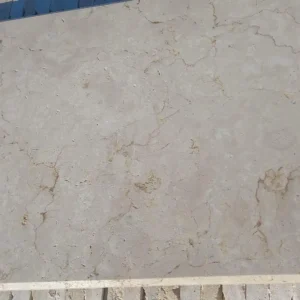
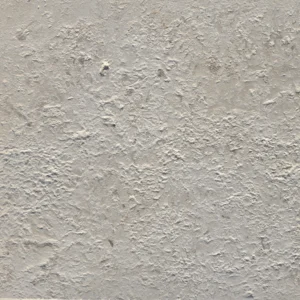
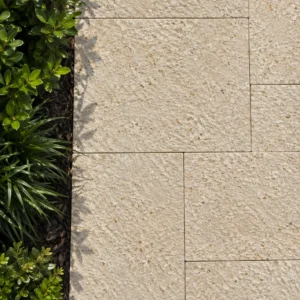
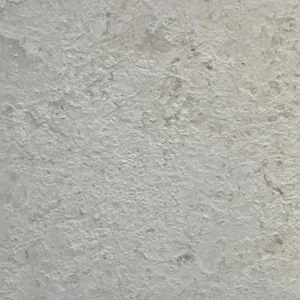
Not all ivory travertine tile Arizona suppliers carry comes from the same quarry or grade, and the difference in field performance is measurable. Honed and filled finishes are the workhorse of the industry for exterior applications — the filled voids prevent debris accumulation and reduce the risk of thin-wall fracture along natural channels. Brushed finishes add texture without compromising the stone’s structural surface, making them appropriate for sloped installations where grip matters.

  • Select-grade travertine: tighter vein structure, denser fill, better for high-load applications like driveways and commercial entry plazas
  • Standard-grade: consistent enough for residential patios and pool surrounds with proper base support beneath
  • Commercial-grade: wider variation in vein density — functional for pathways and low-traffic applications where visual character matters more than uniformity
  • Thickness matters more in Arizona than in many states — 1.25-inch nominal thickness is the practical minimum for exterior use; 2-inch provides meaningful protection against point-load fracture on unstable sub-base conditions

In Flagstaff, the freeze-thaw cycle demands that you default to the denser select grades and prioritize filled finishes with penetrating sealers rated for cyclic thermal movement. The logic is straightforward: unfilled travertine retains water in the natural voids, and a hard freeze expands that moisture against the walls of the channel until something gives.

Drainage Design Comes Before Material Selection

The single most overlooked variable in ivory travertine pool deck Arizona specifications is drainage geometry. Contractors focus on stone color and finish, then design the drainage as an afterthought. That sequencing is backwards. In Arizona’s terrain — where slopes can shift from flat alluvial floodplain to hillside cuts within a single lot — you need to establish your drainage plan first, then fit the paver layout to it.

A 2% minimum cross-slope is the standard for any horizontal travertine surface, but terrain-specific installations on grade-transition sites may require 3–4% in zones where concentrated runoff from uphill areas will sheet-flow across the surface. Your grading plan needs to intercept that flow before it reaches the stone, or you’ll end up with accelerated joint erosion and sub-base saturation regardless of how well the stone itself was installed.

  • Establish finished drainage paths before setting any base material
  • Use perforated drain lines at the low edges of hillside installations, not just at corners
  • Size catch basins for the upstream catchment area, not just the paved surface itself
  • In caliche-heavy soils, perforate the base aggregate layer to allow lateral drainage — vertical drainage through caliche is negligible
  • Recheck slope with a digital level after base compaction — settling can eliminate 0.5–1% of designed gradient before you lay a single paver

Base Preparation for Arizona Soil Conditions

Arizona’s soil profile changes dramatically with elevation, and your base preparation strategy has to follow it. Projects in Mesa frequently encounter caliche hardpan at 18–24 inches below grade — a cemented calcium carbonate layer that’s actually a reasonable sub-base once properly prepared, but will redirect any downward water movement horizontally if left intact without drainage penetrations. You can’t assume vertical percolation in these soils; you have to design for lateral drainage from the start.

For ivory travertine pavers in Arizona at lower elevations, a compacted aggregate base of 4–6 inches is standard for residential applications. On hillside or terrain-transition sites, that depth often needs to increase to 8–10 inches, particularly in areas with expansive clay soils that can generate 1–2 inches of vertical heave during wet cycles. The compaction requirement is 95% modified Proctor density — not the 90% that’s sometimes applied to concrete subbase work. The difference matters when thermal cycling and moisture load are both in play.

Pool Coping Specifications for Arizona Climates

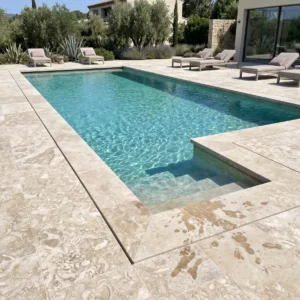
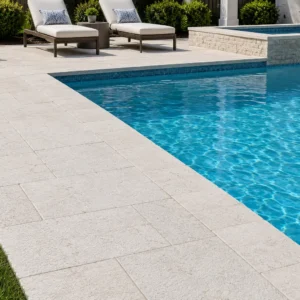
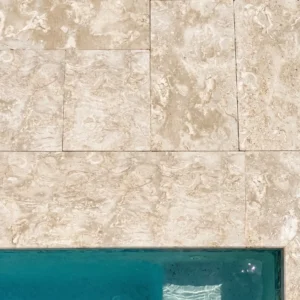
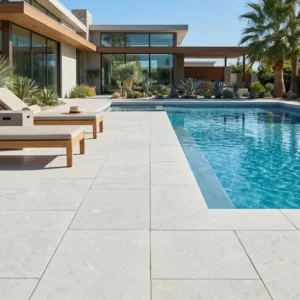
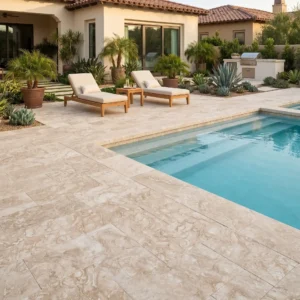
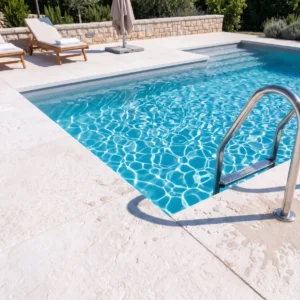
Ivory travertine pool coping in Arizona gets tested by conditions that most pool coping materials simply weren’t designed for — sustained surface temperatures above 140°F on exposed stone, aggressive pool chemistry, and the mechanical stress of repeated thermal cycling between daytime highs and cooler evenings. The material handles it well when specified correctly, but there are non-negotiable details that determine whether your coping lasts 8 years or 25.

  • Coping thickness for cantilevered installations: 2-inch nominal minimum, 3-inch preferred for cantilevered overhangs exceeding 2 inches beyond the bond beam
  • Drip-edge detail: a kerf cut or ogee profile on the underside prevents water from tracking back under the coping and behind the tile line
  • Setting mortar: polymer-modified Type S mortar, not standard Type N — the bond strength requirement at the pool edge under thermal movement demands the higher-grade material
  • Expansion joints: every 8–10 linear feet of coping, not the 15–20 feet often used for patio applications — pool edge movement is more concentrated
  • Sealer: penetrating silane-siloxane formulation, applied to all six faces before installation, then again 30 days post-installation after the initial cure

Surface temperature on ivory travertine pool coping in Arizona mid-afternoon runs measurably lower than dark-colored concrete alternatives — typically 25–40°F lower under identical solar exposure — which is a real comfort consideration for barefoot use. That thermal advantage comes from the stone’s natural reflectivity and lower thermal mass compared to dense concrete. It’s not marketing; it’s physics, and it’s one of the reasons ivory travertine pool AZ applications have dominated high-end pool construction in this state for the past 15 years.

Sealing Requirements Across Arizona Elevation Zones

Sealing ivory travertine isn’t optional in Arizona — it’s a maintenance function that directly determines the lifespan of your installation. The frequency and product type should vary with elevation, not just because of UV intensity but because of moisture infiltration risk. Your sealing specification should reflect the specific conditions of the project site, not a one-size-fits-all label recommendation.

For low-desert installations in the Phoenix or Scottsdale corridor, a penetrating silane-siloxane sealer applied every 2–3 years is sufficient for most residential applications. The dry climate limits moisture intrusion risk, and the primary threat is staining from pool chemistry, organic material, and iron oxidation from irrigation water. At mid-elevations — roughly 3,000 to 5,000 feet — you’re entering a zone where afternoon monsoon moisture and occasional hard freeze events overlap, and sealing frequency should move to annual inspection with reapplication every 18–24 months. Surface temperature readings in Scottsdale confirm that properly sealed ivory travertine tile Arizona installations show significantly less surface weathering after 10 years than unsealed stone from the same installation batch — the sealer is genuinely doing work.

ivory travertine pavers Arizona projects

Joint Spacing and Thermal Movement Management

Thermal expansion in natural stone is measured but real, and ivory travertine’s coefficient of thermal expansion runs approximately 4.5–5.5 × 10⁻⁶ per °F. Across a 10-foot run of paving experiencing a 100°F temperature swing — entirely normal in Arizona — that translates to roughly 0.05–0.07 inches of linear movement. That doesn’t sound like much until you consider that rigid mortar joints with insufficient width will absorb that movement as stress, and eventually as cracking either in the stone or the mortar bed.

  • Standard field joints: 3/16 inch to 1/4 inch for dry-set installations
  • Expansion joints: 3/8 inch minimum, every 10–12 feet in both directions for mortar-set work
  • At building perimeter and fixed structure interfaces: 1/2 inch minimum isolation joint, filled with backer rod and polyurethane sealant
  • Do not use Portland-only grout at expansion joint locations — it will fail in 2–3 thermal cycles
  • ASTM C920 sealant is the appropriate specification for expansion joint fill in exterior stone applications

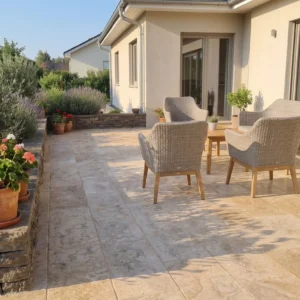
The detail that most installations get wrong is the transition between the ivory travertine pavers in Arizona field and any concrete structure — steps, walls, or the pool bond beam. That interface is where differential movement concentrates, and it’s where you’ll see the first crack if the joint is undersized or filled with rigid grout. Spec it as a movement joint from day one.

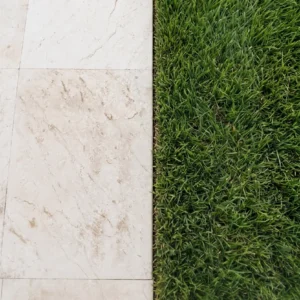
Two light-colored, textured natural stone tiles laid flat.

Supply Logistics and Project Planning for Arizona

Lead time management is where projects succeed or fall apart in Arizona’s construction cycle. The peak exterior construction window runs from October through April — after summer heat breaks and before the next monsoon season. That window creates real warehouse inventory pressure, and projects that haven’t confirmed material availability before mobilizing often face 4–6 week delays on import stone. Planning your ivory travertine tile Arizona order 8–10 weeks before your target installation date is not overcautious; it’s standard professional practice.

Citadel Stone maintains warehouse inventory in Arizona, which typically compresses lead times considerably compared to orders placed through distributors drawing from coastal import centers. Your truck delivery scheduling should account for site access — narrower lots in urban Scottsdale or hillside sites in Sedona may require boom delivery or staged truck access that affects your receiving plan. Confirming truck access width and turning radius at the delivery site before finalizing the order saves coordination headaches during delivery.

  • Order 10–15% overage for cut waste and future repairs — matching stone from a different lot years later is difficult
  • Inspect each pallet at delivery before the truck leaves — lippage, fill quality, and color consistency are easier to resolve before installation than after
  • Store material on level ground, covered, and on the original pallet until ready to install — travertine corners chip easily from improper stack storage
  • Confirm that your truck delivery window aligns with site crew availability — unloading delays create exposure risk for material left on a flatbed in afternoon heat

Getting Ivory Travertine Right in Arizona

The specification decisions that determine long-term performance for ivory travertine in Arizona trace back to terrain and drainage planning before anything else. Base depth, joint design, sealer selection, and stone grade all need to be calibrated to the specific elevation, soil type, and drainage geometry of the project site — not lifted from a generic specification sheet. That’s the work that separates installations that look identical at year one but diverge sharply by year ten.

Arizona’s architectural tradition has embraced ivory travertine across project types precisely because the material responds well to thoughtful specification — it’s not a demanding stone, but it does reward the effort you put into the details beneath and around it. Your project benefits from that investment in proportion to how rigorously you address the sub-surface conditions from the start. As you explore design options and technical references, Premium Natural Stone from Citadel Stone provides broader context on the natural stone range available for Arizona hardscape applications. For Arizona projects requiring reliable ivory travertine sourcing, Citadel Stone provides experienced guidance and dependable material supply across the state.

Why Arizona’s Builders Choose Citadel Stone?

Free AZ Comparison: Citadel Stone vs. Other Suppliers—Find the Best Value!

FeaturesCitadel StoneOther Stone Suppliers
Exclusive ProductsOffers exclusive Ocean Reef pavers, Shellstone pavers, basalt, and white limestone sourced from SyriaTypically offers more generic or widely available stone options
Quality and AuthenticityProvides high-grade, authentic natural stones with unique featuresQuality varies; may include synthetic or mixed-origin stone materials
Product VarietyWide range of premium products: Shellstone, Basalt, White Limestone, and moreProduct selection is usually more limited or generic
Global DistributionDistributes stones internationally, with a focus on providing consistent qualityOften limited to local or regional distribution
Sustainability CommitmentCommitted to eco-friendly sourcing and sustainable production processesSustainability efforts vary and may not prioritize eco-friendly sourcing
Customization OptionsOffers tailored stone solutions based on client needs and project specificationsCustomization may be limited, with fewer personalized options
Experience and ExpertiseHighly experienced in natural stone sourcing and distribution globallyExpertise varies significantly; some suppliers may lack specialized knowledge
Direct Sourcing – No MiddlemenWorks directly with quarries, cutting unnecessary costs and ensuring transparencyOften involves multiple intermediaries, leading to higher costs
Handpicked SelectionHandpicks blocks and tiles for quality and consistency, ensuring only the best materials are chosenSelection standards vary, often relying on non-customized stock
Durability of ProductsStones are carefully selected for maximum durability and longevityDurability can be inconsistent depending on supplier quality control
Vigorous Packing ProcessesUtilizes durable packing methods for secure, damage-free transportPacking may be less rigorous, increasing the risk of damage during shipping
Citadel Stone OriginsKnown as the original source for unique limestone tiles from the Middle East, recognized for authenticityOrigin not always guaranteed, and unique limestone options are less common
Customer SupportDedicated to providing expert advice, assistance, and after-sales supportSupport quality varies, often limited to basic customer service
Competitive PricingOffers high-quality stones at competitive prices with a focus on valuePrice may be higher for similar quality or lower for lower-grade stones
Escrow ServiceOffers escrow services for secure transactions and peace of mindTypically does not provide escrow services, increasing payment risk
Fast Manufacturing and DeliveryDelivers orders up to 3x faster than typical industry timelines, ensuring swift serviceDelivery times often slower and less predictable, delaying project timelines

Extra Benefits

Choosing Citadel Stone offers unique advantages beyond premium stone quality:

Exclusive Access to Durable Stones

Citadel Stone specializes in unique, regionally exclusive stones, sourced directly from the Middle East.

Transparent Pricing – No Hidden Costs

With no middlemen, Citadel Stone provides direct, transparent pricing that reduces unnecessary costs.

Flexible Customization for Bespoke Projects

Tailor your order to precise specifications, from sizes to finishes, ensuring your project aligns perfectly with your vision.

Streamlined Delivery & Reliable Stock Availability

Benefit from fast production and delivery timelines, designed to minimize delays and ensure reliable availability.

The Preferred Stone Supplier for Luxury AZ Developments.

Scale Your Vision: We Support Arizona's Largest Projects with Reliable, Fast Delivery.

With unlimited tiles, pavers, cobble setts, curbstones, and the fastest delivery options, What’s not to love? Say goodbye to unnecessary hassles!

Leading AZ Stone Suppliers are Loving Citadel Stone!

Don’t Settle for Less. Source the Best Stone for Your Local Stone Expert.

DanielOwner
Thank you, Kareem. We received the order. The stones look great!
FrankOwner
You are a good businessman and I believe a good person. I admire your honesty, this is why I call you a good businessman.
Gemma C
Gemma CPrivate Project
Undoubtedly the price was the reason that we chose Citadel stone, in addition to the fact that you offer a white limestone that is hard to source. Your products are very good value for money by comparison with other companies. You have helped at every stage of the process and have been quick and reliable in your responses. It was a big risk for us to pay everything up front including shipping and not know the quality. You did make me feel that I could trust you and your company however and we are very happy with the tiles. They appear to have been finished to a very high quality of smoothness and I can't wait to see them once they have been laid. We need to see now how easy they are to fit and maintain, yet you also sealed them before shipment so we think that they will be very durable. Our building project has been delayed for a few months now so it may be sometime before we see them laid, but I promise that I will send photos as soon as we have them down. Thank you so much Kareem and your team, you have done a great job. I am hoping that we can pay for, and receive our second shipment in the not too far future, so that we can finish everything off. Wishing you well. Gemma
Molly McK
Molly McKPrivate Project
I appreciate the quality of product and care for the custom order in packaging each crate to minimize breakage as well as the flexibility with the order to help us make the most of shipping. The timely communications are impressive from the beginning and throughout the process. It's reassuring to have gone through one order to know what the process will be like in the future. I am glad to have had some guidance through the importing process and recommendations for shipping partners to assist. It's incredible to think about the journey the stone traveled to get to our site and I'm grateful to have made it to the next stage of the project relatively smoothly and with from what I can tell

Frequently Asked Questions

If your question is not listed, please email us at [email protected]

How does Arizona's varied terrain affect base preparation for ivory travertine installations?

Arizona’s elevation changes and rocky substrates create inconsistent load-bearing conditions that directly impact travertine stability. On sloped sites, a compacted aggregate base of at least 4–6 inches is typically required, with additional attention to grading to direct water away from the surface. Skipping proper base preparation on uneven ground often leads to settling, cracked tiles, and failed mortar joints within a few seasons.

Ivory travertine can perform reliably on moderate slopes when the correct finish and installation method are selected. Brushed or tumbled finishes provide better grip than honed surfaces and are a practical choice for terraced patios, pool decks on hillside lots, or stepped pathways. The key variable is slope angle — surfaces exceeding roughly 5–8% grade typically require additional anti-slip treatment or alternate stone patterning to remain safe.

On sloped Arizona properties, surface water must be actively directed away from travertine installations to prevent undercutting the base material. French drains, channel drains, and properly graded sub-layers are commonly incorporated into hillside designs to manage runoff during monsoon activity. Joint filler selection also matters — permeable jointing compounds can help manage minor water infiltration, while dense mortar joints work better where concentrated flow is a concern.

In Arizona’s drier climates, travertine’s natural voids can accumulate fine dust, grit, and mineral deposits if left unsealed. A penetrating sealer applied every one to two years helps protect the stone’s surface while reducing the effort required to clean debris from pitted areas. At higher elevations where temperature swings are more pronounced, periodic inspection of grout lines for cracking is a useful maintenance habit, as freeze-thaw cycles — even mild ones — can gradually work on unsupported joints.

Ivory travertine remains a popular choice for Arizona pool surrounds because its light coloration reflects rather than absorbs solar radiation, and its naturally textured surface handles wet foot traffic well. On hillside pool installations, the layout plan should account for water drainage toward designated outlets rather than back toward the structure. Citadel Stone’s brushed and tumbled ivory travertine finishes are well-suited to poolside applications where both traction and aesthetics need to be balanced with the site’s terrain realities.

Unlike import-to-order suppliers that require extended lead times, Citadel Stone maintains warehouse inventory of Arizona-popular ivory travertine sizes and finishes at regional facilities, which meaningfully reduces project delays. This inventory depth lets contractors confirm material availability before finalizing timelines rather than building schedules around uncertain shipping windows. Arizona professionals benefit from Citadel Stone’s established in-state supply coverage, backed by a team that understands local project specifications and can provide consistent, reliable material access.