What Actually Damages Ivory Travertine Over Time
Knowing how to clean ivory travertine correctly starts with understanding why this material reacts so differently from ceramic or porcelain — and that chemistry is the foundation of every maintenance decision. Travertine is calcium carbonate, and that composition makes it chemically reactive to acids, even mild ones like lemon juice, vinegar-based cleaners, or diluted bleach solutions that would seem harmless on harder surfaces. Most cleaning failures don’t start at the cleaning stage — they start with the wrong product sitting on the surface for too long before anyone notices.
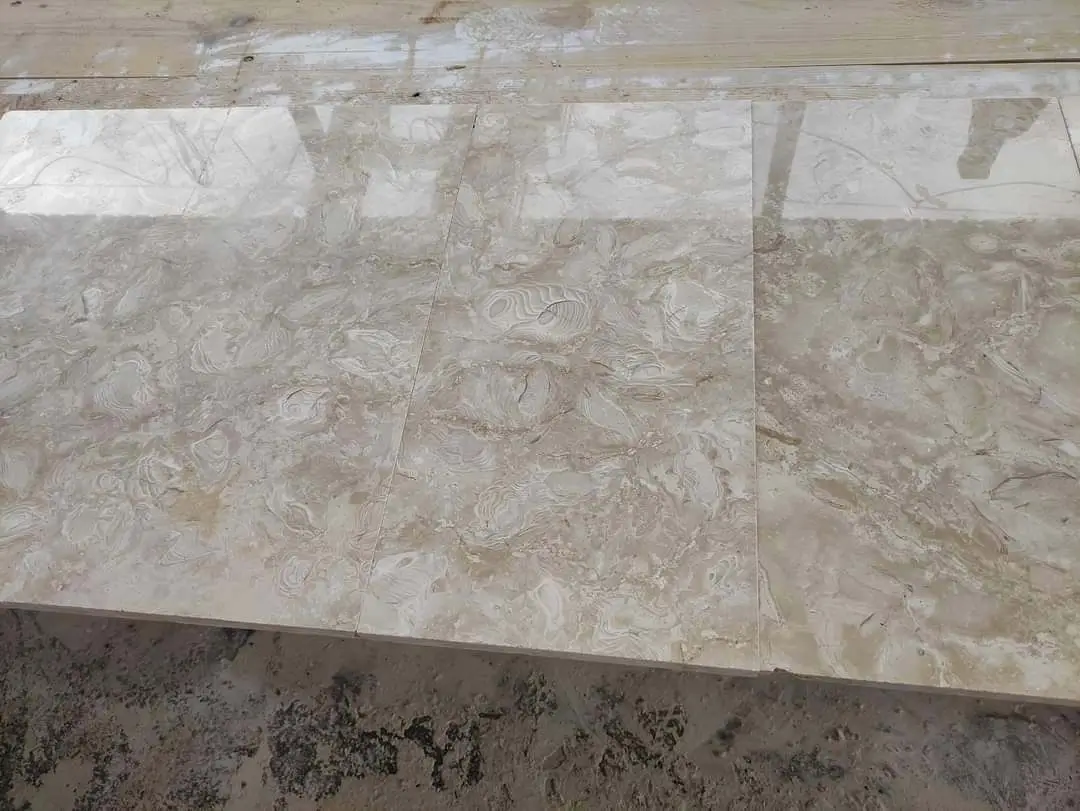
The pore structure compounds the problem. Ivory travertine’s interconnected voids — visible in its characteristic surface pitting — draw liquids in quickly, especially unfilled or lightly grouted installations. Grime doesn’t just sit on the surface; it migrates into the stone. The good news is that the same porosity that makes travertine vulnerable to staining also makes it highly responsive to proper pH-neutral maintenance once you establish a consistent routine.
Your Daily and Weekly Cleaning Routine
For day-to-day maintenance, dry dust-mopping is the single most protective habit you can develop. Hard particles — fine grit, sand, dust — act as micro-abrasives underfoot and are the primary cause of surface scratching on honed ivory travertine floors. A microfiber flat mop picks up particles without dragging them across the surface the way a standard broom does.
Wet cleaning once or twice a week with a pH-neutral stone cleaner keeps the surface bright without breaking down the sealer. Dilute the cleaner according to the manufacturer’s ratio — typically one ounce per gallon of warm water — and use a damp (not soaking) mop. Excess water sitting in open pores or unfilled voids is a recurring maintenance headache that accelerates re-soiling and can cause efflorescence on exterior travertine pavers over time.
- Use only pH-neutral cleaners specifically formulated for natural stone — never all-purpose household cleaners
- Change your mop water frequently; dirty water redeposits dissolved minerals back onto the surface
- Blot spills immediately rather than wiping, which spreads the liquid laterally into adjacent pores
- For honed ivory travertine, avoid abrasive scrub pads — a soft nylon brush or microfiber cloth is all the mechanical action you need
- Dry the surface after wet mopping if the area has low airflow — pooling moisture is the enemy of long-term brightness
Products You Must Keep Away from Ivory Travertine
The product avoidance list for travertine is longer than most homeowners expect. Acidic cleaners are the obvious culprits — anything with citrus, vinegar, or ammonia will etch the calcite matrix and leave dull, cloudy patches that no amount of buffing will reverse without professional honing. But the less obvious offenders are equally destructive.
Grout haze removers, tile degreasers, and many bathroom mold treatments contain hydrochloric or phosphoric acid. These products are sold as general tile cleaners, but they’ll chemically burn ivory travertine on contact. Always check the pH of any cleaner before it touches the stone. According to NSI travertine properties, the calcite structure of travertine makes it particularly sensitive to pH levels below 7, with visible etching occurring rapidly even at mild acidities.
- Vinegar and vinegar-based “natural” cleaners — highly acidic, will etch immediately
- Bleach and chlorine solutions — strip sealer and can cause long-term discoloration
- Ammonia-based glass cleaners — dull the surface and break down penetrating sealers
- Steam cleaners used directly on unfilled travertine — force moisture into voids and can loosen grout
- Abrasive powders or scouring pads — permanently scratch honed finishes
Deep Cleaning and Targeted Stain Removal
Periodic deep cleaning goes beyond the weekly mop-down and addresses accumulated soil in the pores that routine cleaning can’t fully lift. The most effective approach for how to clean travertine shower tiles and floor installations alike is an alkaline stone cleaner — pH between 8 and 10 — applied with a soft-bristle floor machine or by hand with a scrub brush in manageable sections.
For isolated stains, a poultice is the professional’s tool of choice. Mix diatomaceous earth or fine white flour with a pH-neutral cleaning agent to form a thick paste, apply it over the stain, cover with plastic wrap, and allow 24–48 hours of dwell time. The poultice draws the staining agent out of the pore as it dries. Organic stains — coffee, wine, food — respond well to a hydrogen peroxide-based poultice at 12% concentration. Oil-based stains need a solvent carrier like acetone or mineral spirits as the base. The ASTM C1527 travertine dimension stone standard classifies travertine by absorption rate, which directly predicts how deeply a stain will penetrate and how many poultice applications you’ll need to fully extract it.
For shower installations specifically, soap scum and hard water deposits require a non-acidic descaling product. These exist — look for chelating-agent formulas marketed for natural stone showers. They dissolve calcium mineral deposits without attacking the travertine itself. Apply, let dwell for five minutes, and rinse thoroughly.
Cleaning Exterior Ivory Travertine Pavers
Exterior travertine cleaning introduces variables that indoor maintenance doesn’t face. Algae, moss, and organic staining from leaf tannins are the dominant challenges on outdoor surfaces, especially in shaded areas or installations with inadequate drainage slope. Your cleaning approach needs to address both the surface accumulation and the underlying moisture condition that allows organic growth to take hold.
A low-pressure rinse with a garden hose is your first step — pressure washing at high PSI can erode grout joints and drive water into the base through any unsealed voids. If you’re using a pressure washer, keep it below 1,500 PSI with a fan-tip nozzle held at least 12 inches from the surface. For biological growth, an oxygen-based cleaner or diluted sodium percarbonate solution is effective and stone-safe. Apply it to damp stone, allow 10–15 minutes of dwell, then scrub and rinse.
Drainage management plays a significant role in how quickly exterior ivory travertine pavers need deep cleaning. Installations with inadequate slope — anything less than 1/8 inch per foot — allow water to pond, which accelerates biological growth and can cause subsurface saturation issues in regions with heavy rainfall seasons or monsoon-pattern precipitation. Proper drainage design reduces cleaning frequency dramatically. In freeze-thaw regions, that same ponding creates ice-expansion risk in the voids, making drainage slope a structural concern as well as a maintenance one. At Citadel Stone, we consistently advise specifiers to confirm drainage geometry before finalizing travertine paver layouts for exterior projects.
Sealing Ivory Travertine for Long-Term Brightness
Sealing is not optional for ivory travertine — it’s the maintenance practice that determines whether your cleaning routine takes 15 minutes or 90 minutes. A quality penetrating impregnator sealer fills the pore network below the surface, significantly slowing liquid absorption and giving you the blot-up window you need when spills happen.
For our honed travertine stone tile, a fluorocarbon-based impregnating sealer typically outperforms silicone-based alternatives in long-term oil and water repellency. Application is straightforward: clean the stone thoroughly, allow it to dry completely — 24 hours minimum for indoor installations, 48–72 hours for exterior pavers — then apply the sealer in thin, even coats with a foam applicator or clean cloth. Buff off the excess before it dries; residue on the surface creates a cloudy film that’s difficult to remove.
- Test the sealer absorption rate before full application — pour a tablespoon of water on the surface and check absorption time; under 4 minutes means sealing is needed immediately
- Reapply penetrating sealer every 1–3 years depending on traffic intensity and whether the installation is interior or exterior
- High-traffic commercial installations may need annual resealing; residential floors in moderate use typically hold well for two to three years
- Always use sealers specifically rated for travertine and calcium-based stones — general concrete sealers can cause surface discoloration
- For shower applications, select a sealer rated for wet, continuous-immersion environments — standard impregnators are not designed for persistent moisture exposure
Specific Care for Honed Ivory Travertine
Honed ivory travertine requires more vigilance than polished finishes because its matte surface shows etching and water spotting more visibly. The honing process removes the micro-profile that polished stone has, meaning there’s no reflective layer to mask minor surface damage. What you’re maintaining is the consistent, flat matte tone — and anything that disturbs that uniformity shows immediately.
The good news is that honed finishes are more forgiving of light physical wear than polished surfaces. They don’t show fine scratches the same way. Etching is a different matter — acid contact creates a brighter, more reflective spot against the matte field, which is visually obvious. Your cleaning discipline around acid prevention is therefore more important for ivory honed travertine than it would be for a tumbled or brushed finish where surface variation is already part of the aesthetic. According to TCNA natural stone tile installation standards, maintaining the integrity of honed stone finishes in wet environments like showers requires both correct product selection and adequate sealer refresh intervals.
For minor etching on honed surfaces, a marble polishing powder applied with a damp cloth and light circular pressure can restore the matte uniformity without full professional refinishing. Deeper etching from prolonged acid contact requires professional honing with progressively finer diamond pads — this is not a DIY repair on large floor areas.
How to Clean Travertine Shower Tiles Effectively
Shower environments present the most demanding ongoing cleaning challenge for ivory travertine. Hard water mineral deposits, soap scum, and near-constant moisture create conditions that quickly overwhelm sporadic cleaning. The key is frequency — short, consistent cleaning sessions beat occasional deep cleans every time.
Squeegee the shower walls and floor after every use. This single habit eliminates roughly 70% of hard water deposit build-up before it can bond to the surface. Spray a pH-neutral stone cleaner on the surfaces weekly and wipe down with a soft cloth. For grout lines in travertine shower installations, a soft nylon brush with the same neutral cleaner is sufficient — avoid grout brushes with stiff metal bristles that can scratch adjacent stone.
- Ventilate the shower area fully between uses — mold and mildew growth on grout lines is a cleaning problem that’s eliminated by airflow management
- Never use mold-and-mildew spray products on travertine shower tiles — they are almost universally acidic or bleach-based
- For persistent hard water film, a non-acidic chelating stone cleaner applied weekly removes deposits without etching risk
- Re-caulk rather than re-grout movement joints in shower installations — grout in movement-prone joints cracks, and cracked grout channels water behind the tile
- Check sealer performance in shower installations every 12 months — wet environments deplete penetrating sealers faster than dry areas
Ordering, Stock, and Project Planning
Your cleaning and maintenance plan should be established before installation, not after problems appear. That means confirming product compatibility during the specification stage and sourcing your sealer and cleaner at the same time as your stone. Citadel Stone carries warehouse inventory of ivory travertine tile and pavers, which typically allows lead times of one to two weeks — significantly faster than the six to eight week cycle for direct import orders, and useful when a project timeline doesn’t allow for delays.
Truck delivery logistics affect how material arrives on-site, and travertine tile requires careful unloading — pallets should stay bundled until they reach the installation area, as corners and edges chip under careless handling. For exterior paver projects, confirm your truck access route can accommodate a full-size delivery vehicle, particularly for large quantities where multiple pallet drops are involved. Planning the delivery sequence alongside your installation phases prevents stone from sitting exposed on-site longer than necessary, which reduces surface soiling before installation even begins.
Keeping Ivory Travertine at Its Best
Getting ivory travertine cleaning right is less about finding the perfect product and more about committing to a consistent system — the right neutral cleaner, regular sealing, and disciplined avoidance of anything acidic. The stone rewards that consistency with a warm, bright surface that holds up well across years of use. For a closer look at how ivory travertine performs across different cut orientations and applications, ivory vein cut travertine explained covers the specification decisions that affect both aesthetics and long-term performance. Periodic resealing combined with the right cleaning products can extend the brightness of ivory travertine significantly, a practice Citadel Stone outlines for both floors and exterior pavers.
Related reading: ivory travertine pool deck guide · ivory travertine sealing problems · How to Lay Ivory Travertine in a French Pattern.