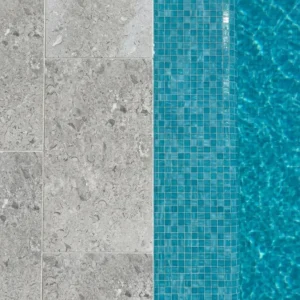
The process of how limestone edging is quarried determines far more about your finished border than most specifiers realize — the bed orientation, block geometry, and grain structure locked in at extraction directly influence how the stone performs once it’s installed in the ground. Quarrying isn’t just about getting material out of the earth; it’s about preserving the structural integrity that makes limestone edging worth specifying in the first place. Understanding what happens between the quarry face and your project site gives you a meaningful edge when evaluating material quality and setting realistic performance expectations.
How Limestone Forms Before It Reaches the Quarry
Limestone is a sedimentary rock, built over millions of years from calcium carbonate derived primarily from marine organisms — shells, coral skeletons, and calcite precipitates that accumulated in ancient seabeds. That layered depositional history is visible in every freshly quarried block as distinct bedding planes, and those planes matter enormously for edging applications. The orientation of the natural beds relative to the quarried face determines whether the finished piece will resist lateral loading, shed water cleanly, or split prematurely under freeze-thaw pressure.
According to USGS geological data on limestone composition, the mineral consistency and density of a limestone deposit varies significantly based on depositional environment — shallow marine, lacustrine, or reef-associated origins each produce stone with distinct porosity ranges and compressive strength profiles. Dense oolitic limestones from deep calm-water environments typically yield compressive strengths above 8,000 PSI, while more porous reef limestones may sit closer to 4,500 PSI. For edging exposed to vehicle overhang loads or heavy foot traffic, that distinction matters at the specification stage, not after installation.
The crystalline structure of the calcium carbonate matrix also dictates how cleanly the stone can be sawn and dressed. Finely crystalline limestone — sometimes called lithographic limestone — machines with exceptional precision, producing sharp arris edges ideal for formal border applications. Coarser-grained varieties with visible fossil inclusions cut slightly less predictably, which is worth knowing before you commit to a project requiring tight dimensional tolerances.
Site Assessment and Quarry Bench Preparation
Before a single blade touches the rock face, quarry operators conduct detailed geological surveys to map bedding plane orientation, joint spacing, and fault lines across the deposit. This assessment isn’t optional background work — it directly determines the extraction sequence and the usable yield from each bench. A bench that runs parallel to tightly spaced natural joints will deliver shorter block runs, which limits the achievable length for edging pieces and forces more waste per tonne extracted.
Bench heights at limestone quarries typically range from 6 to 10 feet, selected to balance block volume against equipment reach and blast fragmentation control. For edging and border stone applications, quarry operators often preference benches where the natural bedding planes run horizontally relative to the planned cut face — this orientation allows saw blades to follow the grain rather than cut across it, producing cleaner surfaces and reducing the micro-fracturing that compromises long-term edge integrity.
- Geological mapping confirms usable deposit zones versus fractured or weathered overburden
- Bench height selection balances block yield against equipment handling limits
- Bedding plane orientation dictates cut direction and finished edge quality
- Joint mapping identifies natural fracture planes that define maximum achievable piece lengths
- Overburden removal exposes fresh, unweathered stone before primary extraction begins
Primary Extraction Methods for Quarrying Limestone
The method used in how limestone edging is quarried falls broadly into two categories: drill-and-split and wire-saw cutting. Each produces a meaningfully different block quality, and the choice cascades all the way through to finished piece performance.
Drill-and-split extraction uses a line of closely spaced drill holes along the planned separation plane, followed by hydraulic wedge splitting or controlled blasting. This method is fast and cost-effective for high-volume quarrying, but it introduces micro-fractures parallel to the split face — fractures that aren’t always visible at delivery but become crack initiation points when the installed edging is subjected to ground movement or frost heave. For demanding applications, it’s worth asking your supplier specifically whether the material was wire-sawn or split.
Wire-saw cutting uses a continuous diamond-impregnated wire threaded through pre-drilled holes and driven at high speed around the block perimeter. It produces flat, parallel cut faces with minimal subsurface damage, and it allows the quarry operator to orient cuts precisely relative to the bedding planes. For carving limestone into finished edging profiles — beveled tops, radius corners, or dressed faces — wire-sawn blocks provide the structural consistency that machining requires. The Natural Stone Institute limestone technical specifications distinguish between extraction methods as a quality indicator precisely because the cutting approach affects finished stone performance in ways that visual inspection alone won’t catch.
- Wire-saw cutting preserves internal grain structure and minimizes hidden micro-fractures
- Drill-and-split is economical but introduces stress planes parallel to the split face
- Diamond wire allows cut orientation to follow natural bedding for maximum durability
- Block geometry from wire-sawing is more consistent, reducing waste at the dressing stage
- Quarried limestone blocks destined for thin edging profiles benefit most from wire-saw extraction
Block Sizing and Initial Quality Grading
Fresh blocks coming off the quarry bench go through an immediate sizing and visual grading process before they’re moved to the primary processing shed. Quarry graders are looking for through-cracks, seam-plane delamination, discoloration from iron oxide intrusion, and zones of high porosity that appear as chalky patches on the cut face. Blocks with visible faults get redirected to aggregate or fill applications — the tight-tolerance material needed for edging, coping, and dimensional stone never comes from compromised blocks.
Block sizing at this stage is critical for downstream efficiency. Oversized blocks require additional passes through the primary saw, increasing processing cost and blade wear. Blocks sized correctly for the target edging dimensions — typically 6-inch to 12-inch depth profiles for landscape edging — move through the production chain faster and with lower wastage rates. Your delivery timeline from the warehouse to site often reflects how efficiently this sizing step was managed at the quarry level, not just logistics scheduling.
Density testing and absorption rate sampling also happens at the grading stage for premium specification work. For quarried limestone going into high-exposure edging applications — pool borders, driveway margins, or planting bed edgings subject to irrigation runoff — material with absorption rates below 7% by weight performs measurably better over time than higher-porosity alternatives. Those numbers should appear on the material data sheet you receive with your order.
Processing Limestone Blocks Into Edging Profiles
After initial grading, blocks move to gang saws — multi-blade frame saws that slice the block into slabs of predetermined thickness in a single pass. Gang sawing is where dimensional consistency is established across a production run, and it’s the stage that directly determines whether your edging pieces will install with tight, consistent joints or require field trimming to achieve a uniform line.
For carving limestone into profiled edging — rounded bullnose edges, chamfered tops, or recessed base details — the sawn slab moves to CNC routing or manual dressing stations. CNC routing holds tolerances to within 1–2 mm across a standard edging run, which matters when you’re specifying pieces for formal garden borders where visual consistency is as important as structural performance. Hand dressing still dominates for custom or irregular profiles, and skilled stone dressers can work to similar tolerances on runs up to 30 linear feet.
Surface finish decisions happen at this processing stage too. Honed limestone edging presents a smooth, low-sheen surface that accepts sealer readily and resists staining from organic material like mulch and soil. Sawn-face finish — left as-cut from the gang saw — provides a matte texture with slightly higher slip resistance, which is worth specifying for edging on slopes or adjacent to wet areas. Tumbled finishes, achieved by rotating sawn pieces in a drum with abrasive media, soften arrises and add an aged character that suits informal landscape styles.
Soil Conditions and What Quarry Quality Means for Your Installation
The connection between how limestone edging is quarried and long-term field performance becomes very direct when you factor in the soil conditions the installed material will encounter. Edging set into expansive clay soils — common across large regions of the country — experiences upward and lateral forces during wet-dry cycles that can exceed 1,500 lb/ft² of lateral pressure at the stone face. Material with hidden micro-fractures from poor extraction practices will fail at those stress points within three to five years; properly wire-sawn limestone with intact grain structure handles the loading without issue.
Sandy soils present a different challenge: they offer minimal lateral support to edging pieces, which means the stone bears more of its own structural load without the passive earth pressure that denser soils provide. In these conditions, thicker edging profiles — 3 inches nominal rather than 2 inches — and deeper set depths compensate for reduced soil support. The block geometry established at the quarry determines what thicknesses are achievable; drill-and-split extraction often limits consistent thickness to 3 inches or above because thinner splits introduce too much fracture risk.
Rocky or caliche subgrades add excavation complexity that affects how cleanly edging can be set to line and grade. Caliche — the calcium carbonate hardpan found in dry regions — is ironic in its composition: it’s essentially the same mineral as the limestone edging you’re installing above it. Cutting through caliche for edging trenches requires pneumatic breaking rather than spade work, and the irregular trench bottom means you’ll need a compacted aggregate leveling course to achieve consistent bearing for the stone. The quarry quality of your edging determines how well it tolerates any unevenness in that bearing layer — dense, well-structured stone self-distributes minor load variations; porous or fractured stone concentrates stress at contact points and cracks.
- Expansive clay soils require edging with intact grain structure to resist lateral frost and moisture pressure
- Sandy subgrades demand thicker nominal profiles and deeper set depths to compensate for low passive support
- Caliche and rocky subgrades require a compacted aggregate leveling course under edging for consistent bearing
- Quarry extraction method directly determines how the finished piece handles uneven subgrade contact
- Always request absorption rate data for edging being set into high-moisture or poorly draining soil conditions
From Quarry to Warehouse: Handling and Storage
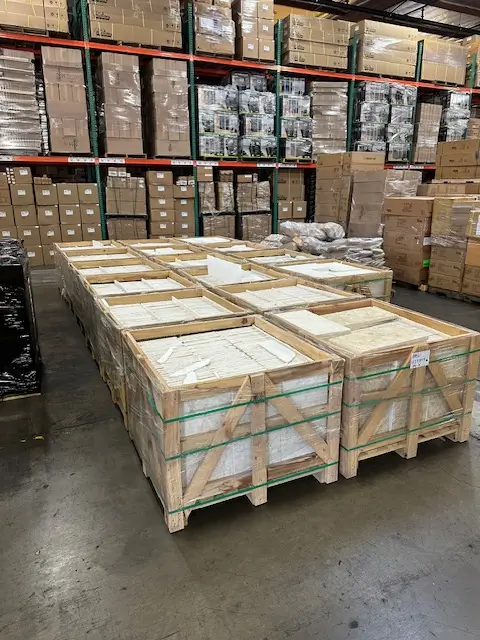
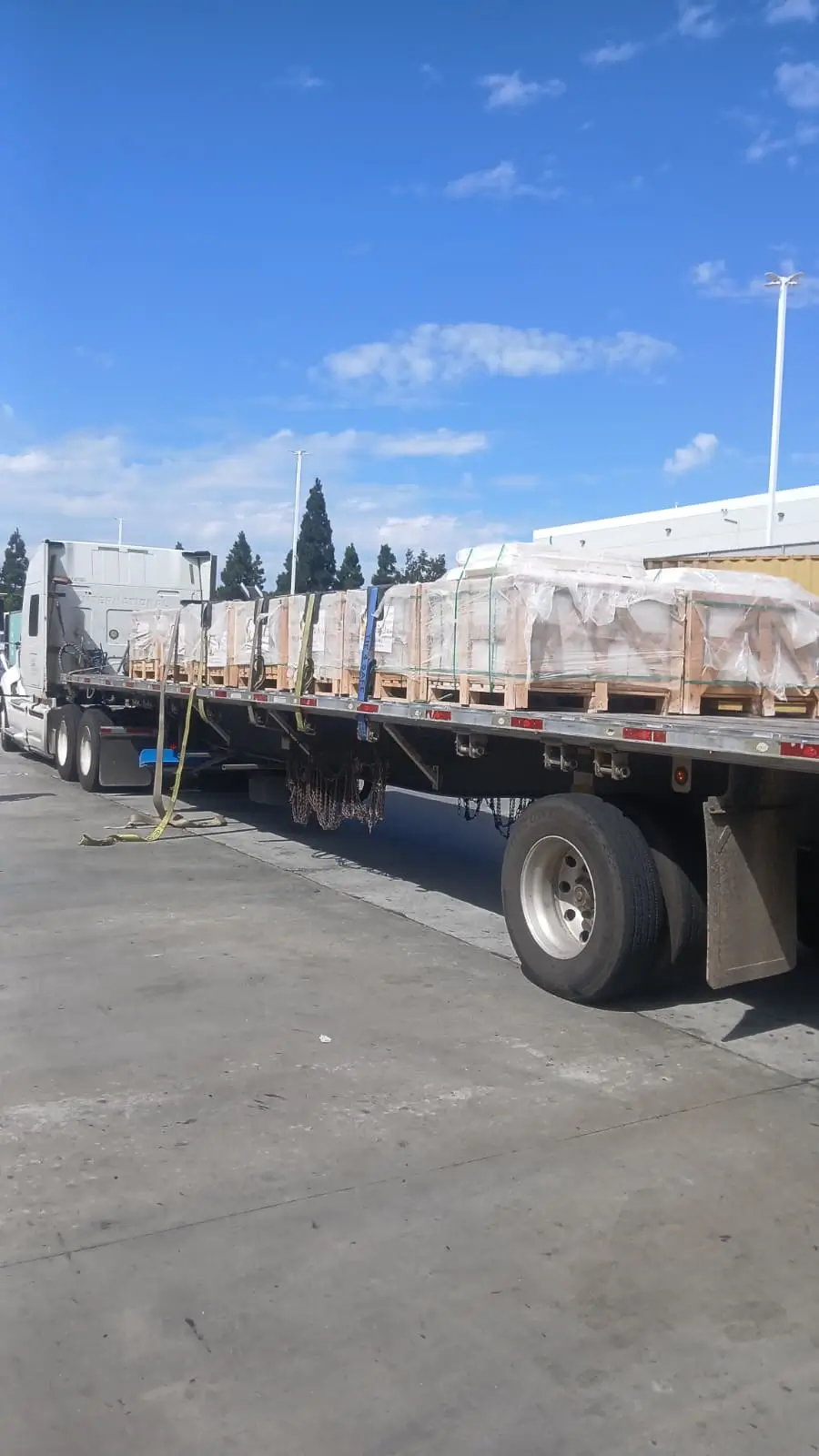
The journey from quarry to warehouse introduces its own quality risks that are easy to overlook when evaluating stone. Freshly processed limestone edging pieces are stacked on timber banding pallets with foam or rubber separators between courses — the separators prevent arris chipping during transit, which is the most common cosmetic damage on edging that arrives at the job site with broken corners. Pallets should be banded in two directions, not just longitudinally, to prevent the stack from spreading under truck vibration.
Warehouse storage conditions matter more for limestone than for harder igneous stones. Limestone that sits in outdoor storage exposed to repeat wetting and drying cycles — particularly if it’s a high-porosity variety — can develop surface spalling on the dressed faces before it even reaches your project. Quality warehouse operations store processed limestone under cover, ideally on elevated racking to prevent ground moisture wicking through the pallet into the bottom course of stone. At Citadel Stone, we inspect edging stock during warehouse intake specifically for this type of pre-delivery moisture damage, flagging affected pieces before they’re allocated to orders.
Truck loading sequence also plays into delivery quality. Edging pallets should be loaded with the heaviest courses at pallet base and the lightest at top, and pallets should be positioned in the truck so the bed weight is distributed evenly — end-loaded trucks that run heavy at the tailgate create suspension-induced vibration that’s measurably harder on thin stone profiles than even-distributed loads. Your truck delivery schedule should account for at least one full business day between warehouse dispatch and on-site unloading to allow the driver to plan a load-balanced run.
Specifying Quarried Limestone for Edging Projects
Your specification for quarried limestone edging should capture more than just dimensions and finish — it should define the extraction and processing standards that protect your installation performance. A complete specification references minimum compressive strength (typically 4,000 PSI for landscape edging, 8,000 PSI for driveway or vehicular-adjacent applications), maximum water absorption by weight, and permissible dimensional tolerance at delivery.
The ASTM compressive strength and durability standards for dimension stone provide the testing methodology benchmarks your specification should call out. Referencing ASTM C568 for limestone classification — which defines Type I through Type III limestone by density and absorption — gives your procurement team a defensible quality threshold when evaluating supplier material data sheets.
- Specify minimum compressive strength appropriate to the application load class
- Define maximum absorption rate — below 7% for edging in wet or frost-prone conditions
- Require dimensional tolerance statement: typically ±1/8 inch for sawn-face profiles, ±3/16 inch for tumbled or hand-dressed
- Request extraction method documentation — wire-saw versus drill-and-split — for thin-profile edging orders
- Confirm finish type is matched to application: honed for formal borders, sawn-face for slope or wet-area edging
- Verify pallet banding and separator details for transit damage protection
For large orders, the ASLA landscape edging and border stone design guidance provides complementary specification context around edging geometry, set depth, and drainage integration that aligns with how quarried limestone performs in a properly detailed landscape installation. Combining material-side ASTM criteria with design-side ASLA guidance gives your project documentation genuine technical depth.
For projects requiring consistent color across long linear runs — formal allée borders, pool perimeter edging, or estate driveway margins — specify that material be drawn from a single quarry batch, not blended across multiple extraction dates. Color variation between quarry batches is a natural property of sedimentary stone for edging and border applications; it’s not a defect, but it’s visually apparent in long runs and very difficult to correct after installation. Requesting batch traceability documentation from your supplier before the order ships is the clean solution.
Professional Summary
Understanding how limestone edging is quarried — from bedding plane orientation through extraction method, block grading, gang sawing, and surface dressing — gives you the framework to evaluate material quality before it reaches your site rather than after installation reveals its shortcomings. The quarrying decisions made at the extraction face cascade directly into the dimensional consistency, structural integrity, and long-term durability of every edging piece you specify. Soil conditions, installation load class, and finished profile requirements should all inform which extraction method and processing specification you call out on project documents.
For projects where edging stock needs to arrive ready to install — particularly large commercial landscapes or multi-phase residential estates where schedule discipline matters — verifying warehouse inventory levels and confirming truck delivery lead times with your supplier before finalizing the programme prevents costly delays. At Citadel Stone, we maintain nationwide warehouse stock of quarried limestone edging profiles and can confirm batch availability against your specification before order commitment. The quality traceability that starts at the quarry face carries through every stage of our supply chain, so the material that arrives on your truck matches the data sheet you signed off on. For a closer look at how different limestone varieties perform in edging and border applications, limestone edging variety options and performance covers the material distinctions that matter most at the selection stage. You can also review the full range of limestone sourced by Citadel Stone to match quarry-grade material to your project requirements. The wire-saw and gang-saw finishing stages Citadel Stone uses after quarry extraction allow precise dimensional control across large edging and stepping stone orders.
Related reading: how to install limestone flower bed edging · flagstone for stepping stones · bullnose stone.