What the Bullnose Profile Actually Does
Bullnose limestone edging explained properly starts not with aesthetics but with edge geometry — and specifically, how a radiused arris transfers load and redirects impact energy differently than a square-cut face. The convex curve on a bullnose unit distributes point-load stress across a broader contact area, which matters far more than most specifications acknowledge. You’ll see this payoff most clearly at pool surrounds and garden step nosings, where foot traffic repeatedly loads the same narrow edge zone. Square-cut edges concentrate that stress at a sharp 90-degree corner and chip progressively; the bullnose radius bleeds that force outward and downward into the body of the stone.
The profile also changes how water behaves at the edge. Rain and pool splash sheet off a bullnose radius rather than pooling in the right-angle junction between the top face and vertical drop — a detail that meaningfully reduces long-term saturation at the most vulnerable part of any edging unit. For bullnose edging stones installed at pool decks in freeze-thaw regions, that drainage geometry isn’t decorative; it’s the specification decision that separates a 25-year installation from one that begins spalling within a decade.
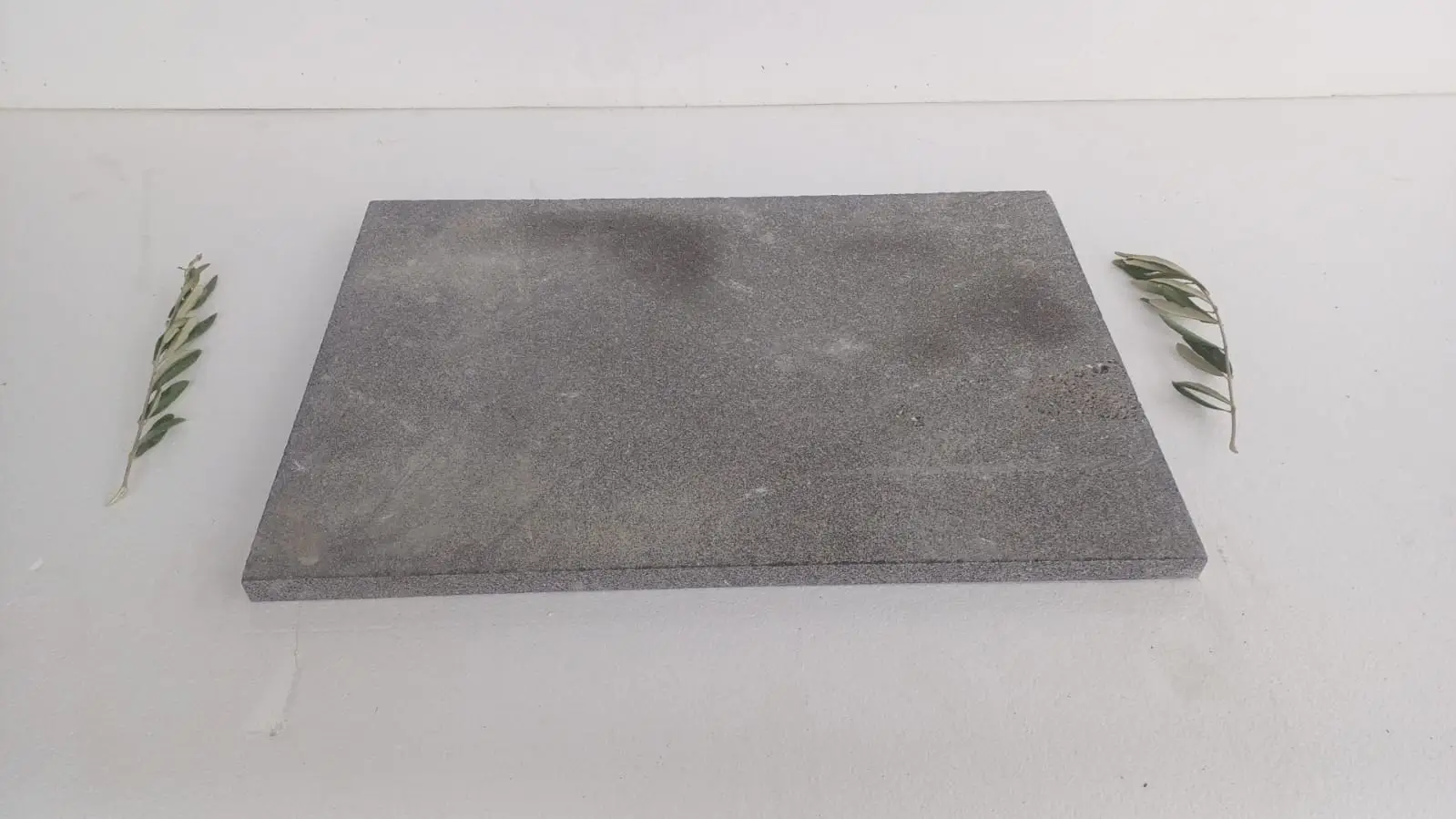
Profile Types and Radius Dimensions
Not every bullnose limestone unit is shaped identically, and the radius dimension has real consequences for both safety and visual proportion. The three profiles you’ll encounter most often are single bullnose, double bullnose, and pencil-round — each serving different applications.
- Single bullnose: one long edge radiused, the opposite edge square-cut — the standard for pool coping, step nosings, and raised-bed borders where only one face is exposed
- Double bullnose: both long edges radiused — specified for freestanding cap applications, pier tops, or any condition where two edges remain visible and accessible
- Pencil-round: a tighter radius, typically 6–10 mm, used where a subtle softening is needed without the pronounced curve of a full bullnose — common in interior thresholds and window sill edging transitions
- Ogee and stacked profiles: fabricated variants with a compound curve that introduces a recessed shadow line — less common in bullnose stone but available through custom fabrication for high-specification architectural projects
Radius size on a standard single bullnose for outdoor use typically runs 20–25 mm on a 30 mm nominal thickness unit. Requesting a tighter 12 mm radius on 30 mm stock is possible but leaves a thinner web of material below the curve, which reduces the unit’s resistance to impact fracture — something worth discussing with your supplier before finalising a specification.
Limestone Selection for Bullnose Edging
Bullnose limestone selection isn’t just about colour palette. The stone’s internal structure determines how cleanly it will profile during fabrication and how well that profile holds up under repeated mechanical stress. Dense, fine-grained limestones — those with consistent crystalline texture and low open porosity — take a bullnose radius cleanly and hold the arris over time. Coarser, more fossiliferous material will profile acceptably but tends to develop micro-chipping along the radius edge within a few seasons of impact loading.
According to NSI limestone specifications, limestone varies considerably in density, absorption rate, and flexural strength depending on geological origin — factors that directly determine suitability for profiled edge applications in exposed outdoor conditions. Your specification should call out minimum density of 2,300 kg/m³ and maximum water absorption of 3% by weight for any bullnose edging unit destined for an outdoor pool or patio application.
- Honed finish: preferred for bullnose pool coping — provides consistent slip resistance (consistent texture across the radius) without the texture variation of tumbled or flamed surfaces
- Tumbled finish: acceptable for garden edging and path borders but less predictable at the bullnose radius, where tumbling can erode the curve into an irregular edge
- Polished finish: not recommended for outdoor bullnose edging — it retains very little wet texture, creating an unacceptable slip hazard at pool surrounds
- Bush-hammered or sawn-face drop: a useful combination — honed top with textured drop face — for step nosings where the riser face needs visual contrast
For projects in freeze-thaw regions, specify limestone with an ASTM C97 absorption value below 3% and verify with your supplier that the profiled units have been fabricated from stock that meets ASTM C568 Grade II or III classification. At Citadel Stone, we check quarry certification against these standards before warehouse stock is released for profiling — a step that catches density inconsistencies that wouldn’t surface until after installation.
Thickness and Dimensional Tolerances
The standard nominal thickness for outdoor bullnose limestone edging runs from 30 mm to 50 mm depending on application. Pool coping typically uses 30–40 mm, while step nosings carrying pedestrian loading benefit from 40–50 mm minimum. Specifying below 30 mm on any profiled unit introduces a real risk of edge fracture under point impact — a dropped tool or a stumble can crack a 20 mm unit at the bullnose curve, whereas the same impact on a 40 mm unit typically produces only a minor surface scuff.
- 30 mm nominal: appropriate for pool coping and raised planter edging under light foot traffic
- 40 mm nominal: the field-recommended minimum for step nosing applications receiving regular pedestrian use
- 50 mm nominal: specified for commercial applications, public pool surrounds, and any location subject to trolley or equipment wheel loads
Dimensional tolerance matters equally. A fabricated bullnose unit with a ±2 mm length tolerance stacks consistently and keeps joint lines true. Tolerances wider than ±3 mm create noticeable irregularity in long runs of edging — a problem you’ll feel in the installation, not just see. Confirm tolerance specifications in your purchase order; don’t assume them from catalogue dimensions alone.
Base Preparation and Setting Requirements
Bullnose edging stones perform as well as the base beneath them — a statement that sounds obvious but gets underestimated consistently. For pool coping applications, the bond beam or cantilever shelf must be level within 3 mm over 3 m before you begin setting. Any deviation beyond that will translate directly into lippage across the bullnose run, and correcting it after the adhesive has cured means grinding or resetting — both expensive.
Your setting bed for outdoor bullnose limestone should be an epoxy-modified cementitious adhesive, not a standard grey cement mortar. The reasoning is mechanical: standard mortar maintains bond strength in static compression but loses adhesion under the cyclic tensile stresses created when the stone and substrate expand and contract at different rates across seasons. Epoxy-modified adhesives maintain adhesion through a much wider stress cycle and resist the hydrostatic pressure that builds behind pool coping when backfill gets saturated.
- Substrate preparation: mechanically scabble or acid-wash concrete pool shells before setting — smooth trowelled surfaces reduce adhesive bond strength by up to 40%
- Back-buttering: apply adhesive to both the slab underside and the substrate — a full-coverage bond with no voids beneath the unit eliminates the flexure points that cause cracking under point loads
- Overhang dimension: the standard pool coping overhang runs 30–50 mm beyond the pool shell face — more than 60 mm significantly increases cantilever bending stress and requires thicker stock
- Expansion joints: position silicone expansion joints every 2.4–3.0 m in continuous runs, at all inside corners, and at all transitions between the bullnose coping and the adjacent deck field
For garden edging set on a concrete beam, the same full-coverage bond and expansion joint spacing apply. Garden step nosings set on mortar rather than adhesive are viable only when the structural slab beneath them is monolithic, crack-free, and not subject to differential settlement — conditions that are rarer than most installation crews assume.
Wind, Storm, and Impact Performance
Bullnose edging stones are edge restraints as much as they are finish elements, and their performance under mechanical stress from storm events deserves specification attention. Wind-driven rain at 80–100 km/h creates hydrostatic pressure at joint interfaces that is an order of magnitude higher than normal rainfall — joint sealant failures that have stayed cosmetic for years can open into active water ingress pathways under those pressure differentials.
Hail impact is a less-discussed threat to profiled stone edges. The bullnose radius itself is relatively resilient — the curved geometry deflects impact energy more effectively than a sharp arris — but the field surface of a 30 mm honed limestone unit can sustain pitting from large hailstones (25 mm diameter or greater). Specifying a minimum surface hardness of 3 on the Mohs scale, which most dense limestones meet, provides baseline impact resistance; moving to a 40 mm unit in hail-exposed locations adds the structural margin needed to prevent full fracture from a severe strike.
- Edge restraint integrity: the mortar or adhesive bed beneath bullnose coping must maintain bond under wind uplift loads — specify adhesive with a pull-off strength of at least 1.0 N/mm² in wet conditions for exposed pool coping
- Joint sealant selection: use a low-modulus polyurethane or silicone sealant rated for movement joints — rigid grouts at expansion locations will crack under wind-induced differential movement
- Drainage at joints: ensure the bullnose drop face sits clear of standing water channels; wind-driven debris packing into partially open joints accelerates joint deterioration over multiple storm seasons
- Anchor fixings: for raised or vertical bullnose applications such as planter cap stones in exposed locations, mechanical anchor pins through the setting bed provide secondary retention against wind uplift that adhesive alone cannot guarantee
The USGS data on limestone composition and construction applications confirms that denser, lower-porosity limestone variants demonstrate significantly better durability under repeated mechanical stress — an important consideration when selecting bullnose limestone edging for installations exposed to regular severe weather.
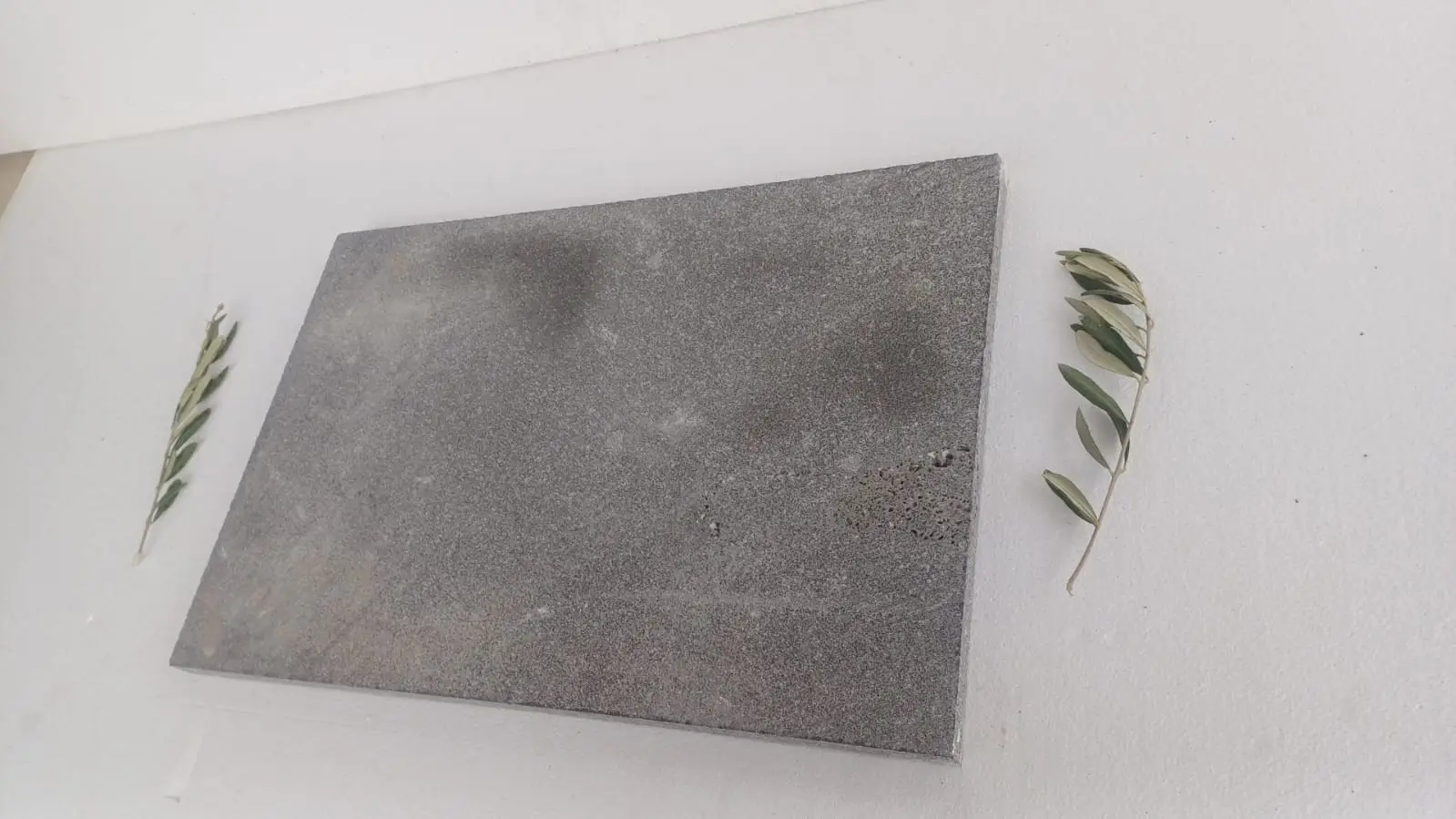
Joint Detailing and Grout Selection
The joint between adjacent bullnose edging stones is where most long-term maintenance problems originate. A 3–5 mm joint filled with unsanded polymer-modified grout is the standard for honed limestone edging. Avoid epoxy grout at the expansion joint locations — its rigidity defeats the purpose of the joint itself. Save epoxy grout for the field tile areas where a hard, stain-resistant fill is the priority.
For bullnose stone set at pool coping, the top joint surface sits in a permanent splash zone. Grout colour selection matters here not just aesthetically but practically — lighter-coloured grout in the splash zone tends to show calcium carbonate scale deposits more readily than mid-tone grout, which means more frequent cleaning to maintain appearance. That’s not a reason to avoid light grout, but it is a maintenance variable your client should know about before colours are finalised.
- Joint width: 3 mm minimum — narrower joints accumulate micro-debris that accelerates biological staining
- Joint depth: fill to within 1 mm of the surface to allow for slight movement without joint face fracture
- Tooling: strike the joint slightly recessed (concave profile) rather than flush — recessed joints shed water more effectively on the top face of bullnose coping
- Sealant at movement joints: apply only after grout has fully cured (minimum 72 hours at 20°C) to prevent sealant adhesion failure from outgassing moisture
Bullnose Edging at Pool Surrounds: Safety Compliance
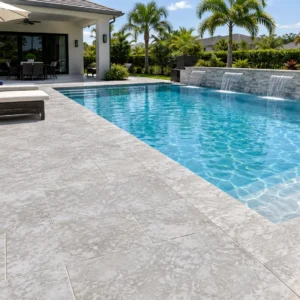
Safety performance at pool surrounds is where bullnose limestone edging explained at a specification level becomes most consequential. PHTA guidance and ANSI A326.3 together govern pool deck surfaces; specify against the ANSI A326.3 wet DCOF threshold (0.42) and keep the surface properly maintained. The bullnose profile contributes to this safety profile by eliminating the sharp-edge trip hazard at the pool perimeter and providing a visually clear edge transition that bathers can identify from the water surface.
ADA compliance at accessible pool entries adds another layer of specification precision. Where the bullnose coping forms part of a wheelchair transfer station or accessible deck path, the overhang dimension must not create a lip higher than 6 mm — standard bullnose overhangs of 30–40 mm above the pool shell face typically satisfy this when the deck field is finished flush to the coping top surface.
- Slip resistance: specify honed or brushed finish for wet-zone pool coping — never polished or high-gloss
- Edge profile height: verify that the bullnose overhang does not create a vertical edge condition exceeding 13 mm on accessible deck routes
- Surface drainage gradient: maintain a minimum 1:60 (1.7%) fall on the deck surface away from the pool — verify this is achieved in the finished installation, not just the design drawing
- Sealant maintenance: reapply penetrating silane/siloxane sealer to bullnose pool coping every 2–3 years — sealed surfaces maintain more consistent wet COF than unsealed stone that has absorbed pool chemicals over time
You can explore our bullnose limestone profiles to compare radius dimensions, thickness options, and finish specifications across the range — knowing the full profile before your design is finalised saves costly substitution discussions during construction.
Ordering, Logistics, and Lead Times
Profiled bullnose units carry longer lead times than standard-cut limestone because the radiusing step is an additional fabrication operation. For in-stock honed bullnose limestone edging in standard dimensions, Citadel Stone’s warehouse typically holds ready inventory that allows dispatch within 1–2 weeks from order confirmation. Custom radius dimensions, non-standard lengths, or specific colour lots from a single quarry batch require 4–6 weeks minimum — plan accordingly if your project has a fixed concrete pour date for the pool shell or step structure that gates the stone installation.
Your truck access conditions directly affect how material arrives on site. Bullnose coping units in 600 mm × 300 mm × 40 mm dimensions are typically palletised at 600–800 kg per pallet — a loaded truck requires a stable, level delivery surface with clearance for a tail-lift or forklift discharge. If your site access involves tight corners, overhead obstructions, or unsurfaced ground, confirm logistics with your supplier at the order stage to avoid a situation where the truck arrives and can’t discharge without damaging the pallet.
- Verify warehouse stock availability against your project timeline before finalising design dimensions — custom profiles ordered late create installation delays
- Order a 10% overage on profiled units — bullnose edging has a higher on-site breakage rate during cutting and handling than field tiles
- Confirm that all units in your order come from the same production batch for consistent colour and texture across the full run
- Request sample units before full order confirmation — bullnose profiles photographed in a catalogue always look more uniform than a full pallet of natural stone in field conditions
Getting Bullnose Limestone Edging Specifications Right
Getting bullnose limestone edging right comes down to a sequence of specification decisions that each build on the last — profile radius, stone density, adhesive type, joint detailing, and surface gradient all interact, and a weak choice at any step undermines the others. The profile choice isn’t decorative; it’s structural and functional. The stone density isn’t just a material datasheet figure; it’s the variable that determines whether your installation still looks and performs correctly after a decade of freeze-thaw cycles, pool chemical exposure, and storm-season impact loading.
Your installation crew’s familiarity with natural stone adhesive systems is worth confirming before work starts — profiled bullnose stone set in standard sand-cement mortar by a team used to concrete pavers is one of the most common sources of callbacks we see. The material is sound; the setting method fails it. Invest the additional cost in a properly specified adhesive and a detailer who knows how to handle profiled natural stone, and the installation will outlast the surrounding concrete structure it’s bonded to. As you plan the broader hardscape context around your edging specification, related stone applications can add useful context — limestone stepping stone paths and spacing covers how adjoining limestone pathway elements are sized and laid out for continuous pedestrian flow. Unlike square-cut edging, the rounded profile Citadel Stone supplies on bullnose units softens visual borders while improving safety on pool surrounds and garden steps.