

Basalt’s formation story begins several kilometres below the surface, where partial melting of the mantle produces a low-viscosity magma rich in iron, magnesium, and calcium silicates. Understanding how basalt rock is formed tells you something critical about its end-use performance: the rapid quench rate that locks in a fine-grained, interlocking crystal structure is precisely what gives the finished tile its characteristic density and dimensional stability. Most specifiers look at basalt tiles and see colour and finish — the real specification conversation starts with understanding how basalt forms and what that geological process created.
What Is Basalt and Where Does It Come From?
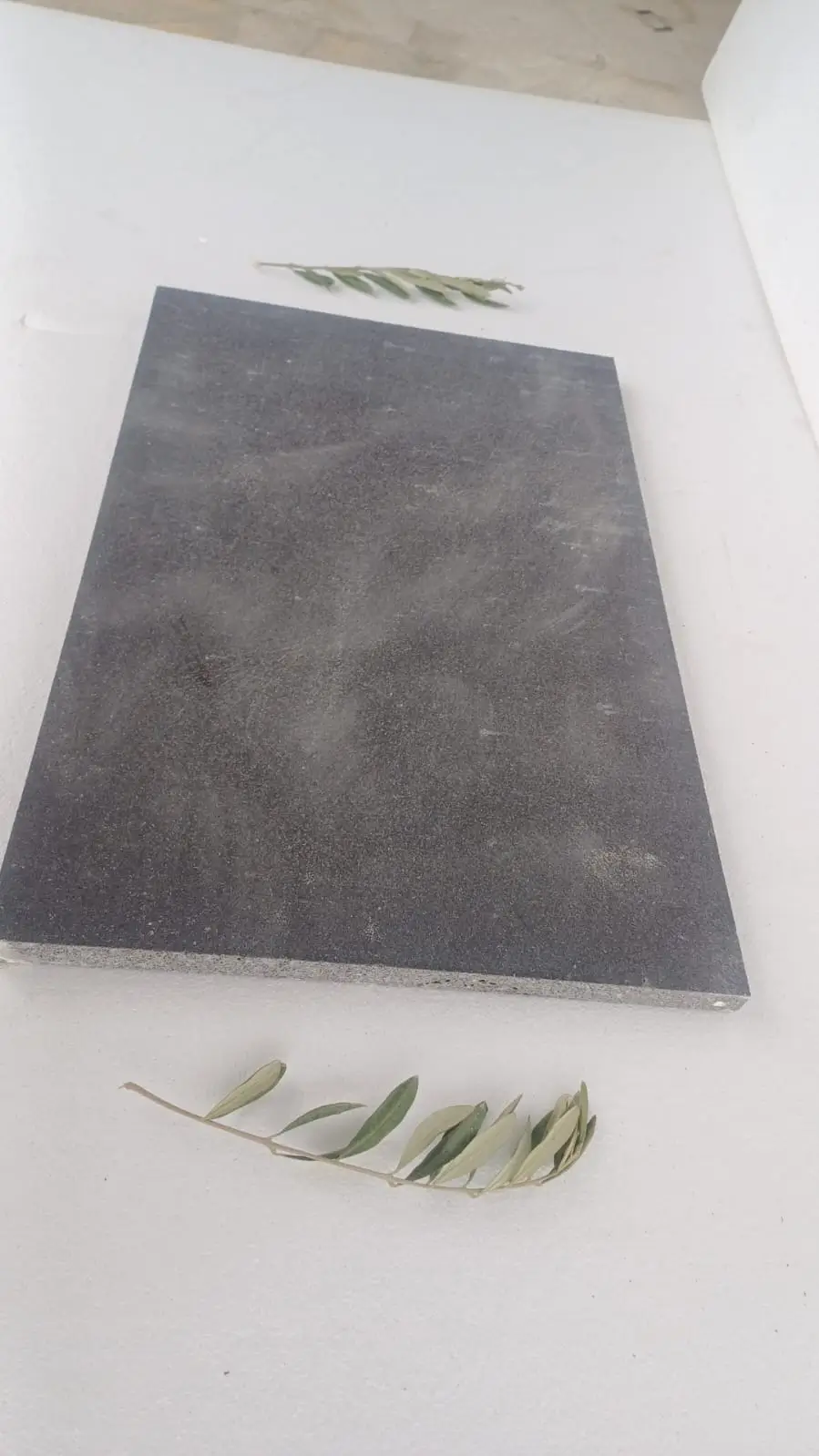
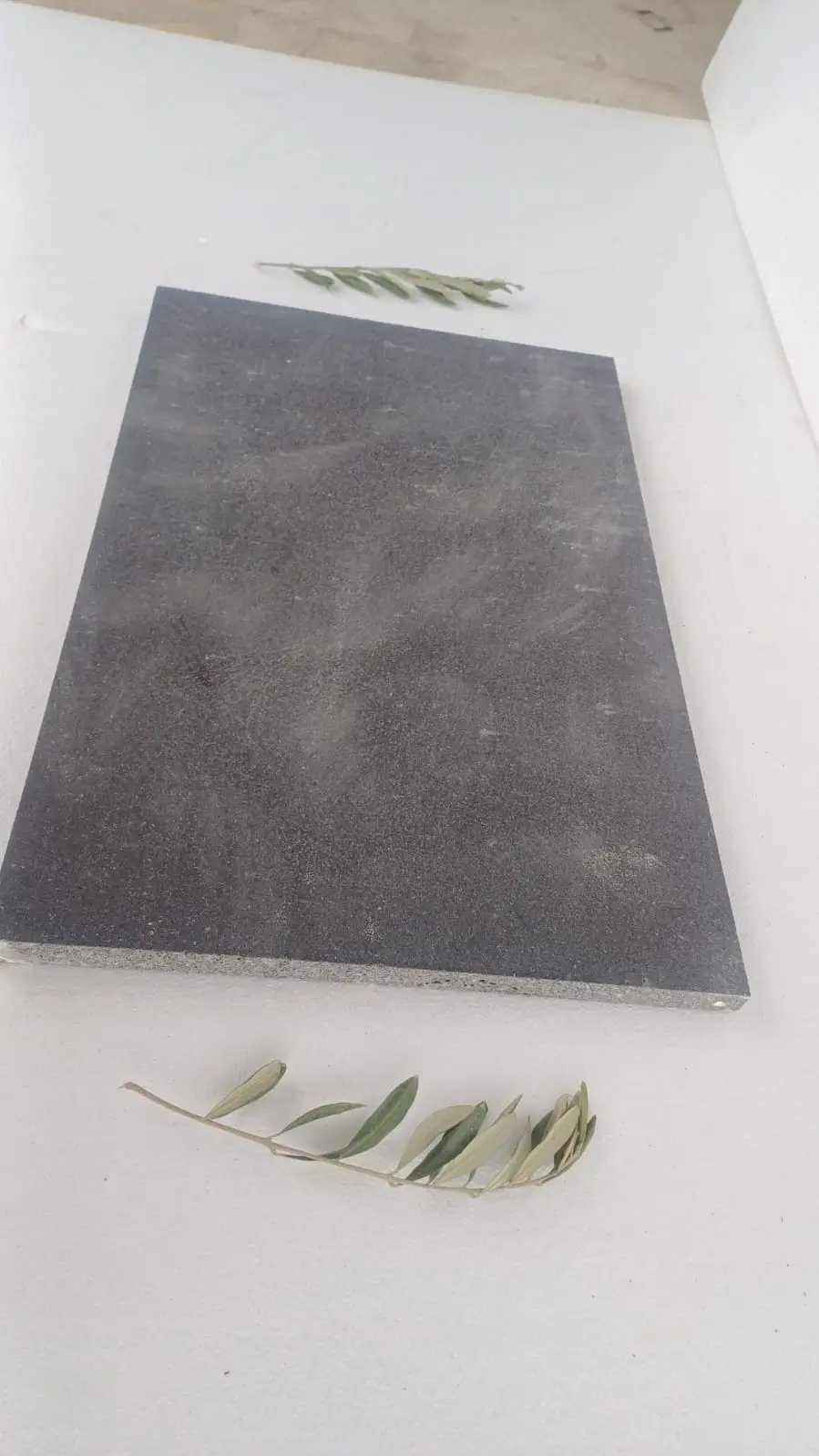
Basalt is a mafic extrusive igneous rock — meaning it forms from magma that erupts or flows onto the Earth’s surface, then cools quickly in contact with air or water. The term “mafic” signals its chemistry: high in magnesium (Mg) and iron (Fe), relatively low in silica compared with granite or rhyolite. That chemistry is not incidental to performance. The iron-rich mineralogy drives the dark colouration that makes honed basalt tiles so striking in contemporary and minimalist design schemes, while the low silica content contributes to the material’s consistent hardness across the slab.
According to USGS volcanic rock composition data, basalt is the most abundant volcanic rock on Earth’s surface, forming the oceanic crust as well as continental flood basalt provinces. That geological ubiquity is a specifier’s advantage — it means well-selected grades are consistent in mineralogy, predictable in machining behaviour, and available in genuinely large quantities for commercial projects.
How Basalt Rock Is Formed: The Volcanic Process in Detail
The formation sequence is more nuanced than most material guides acknowledge. Basaltic magma originates in the upper mantle through a process called decompression melting — as tectonic plates diverge or hotspot plumes rise, pressure on the mantle rock decreases without a significant temperature drop, triggering partial melting. The resulting melt is relatively fluid, with a low silica content that keeps viscosity low and allows gases to escape easily rather than building up explosive pressure.
Cooling Rate and Crystal Structure
Here’s the detail that directly affects the tiles you specify. How basalt forms at the surface — specifically, how fast it cools — determines the crystal size and structural character of the finished stone. Lava that flows into the ocean or across a cool surface quenches within hours to days, producing the fine-grained, near-glassy matrix that defines most commercial basalt. Slower cooling in thicker lava flows produces slightly coarser crystals, occasionally visible as phenocrysts (larger crystals embedded in the fine groundmass) — a feature sometimes called porphyritic texture. From inspections at our selected quarries, we’ve found that porphyritic zones can affect edge consistency during cutting, and it’s worth discussing this with the technical team before committing to a polished or mirror finish.
The practical implication: a genuinely fast-cooled basalt will exhibit a uniform groundmass with minimal large voids, which translates to high density and low absorption relative to sedimentary alternatives. The volcanic rock formation process documented by Britannica’s basalt geological overview confirms that this rapid solidification is responsible for basalt’s tight mineral interlocking — the structural characteristic that underpins its durability in demanding applications.
Vesicles and Amygdales — What They Mean for Tile Quality
Gas bubbles trapped during cooling leave voids called vesicles. In some grades these remain open; in others, secondary minerals fill them over geological time, forming amygdales. For tile specification, vesicularity is a quality variable you need to understand — not a reason to avoid the material. Light vesicularity in a honed finish creates a subtle texture variation that many designers specify deliberately for landscape applications where visual warmth matters. Heavy vesicularity in a polished finish, on the other hand, produces a surface that is harder to maintain over time. Your supplier’s quality-control process at the quarry stage should be sorting these zones before the material reaches the cutting line.
Mineralogy That Drives Field Performance
Basalt’s primary minerals — plagioclase feldspar, pyroxene, and olivine — each contribute to its field behaviour. Plagioclase provides structural framework; pyroxene contributes hardness; olivine, where present, can be a minor weathering variable in certain grades because it is susceptible to hydration over very long timescales. In quarried and dimensioned stone at commercial thicknesses, this is rarely a practical concern, but it reinforces the value of requesting a full petrographic description alongside the standard physical test report from your supplier.
- Plagioclase feldspar forms the interlocking crystalline matrix that resists fracture propagation under point loads
- Pyroxene minerals contribute to the material’s resistance to surface abrasion under foot traffic
- Olivine content, where present, should be confirmed in the supplier’s petrographic report — particularly for exterior wet-environment applications
- Magnetite and ilmenite (iron-titanium oxides) drive the characteristic near-black colour that holds consistently across production runs from stable quarry zones
For physical property values — density, water absorption, compressive strength, flexural strength — always specify the relevant ASTM test method and request the test report directly from your supplier. At Citadel Stone, we recommend requesting the test report before finalising specification, rather than working from indicative values that may not reflect the actual quarry zone being cut.
How Basalt Forms in Different Volcanic Environments
Not all basalt originates from the same eruption type, and those differences are worth knowing even at the specification stage. The three principal formation environments produce stone with subtly different characteristics that affect how it machines and performs. Understanding how are basalt rocks formed in each setting helps you ask the right questions of your supplier before the order is placed.
Oceanic Versus Continental Flood Basalt
Oceanic basalt — formed at mid-ocean ridges — tends to be chemically uniform because the mantle source is relatively consistent. Continental flood basalts, erupted over large plateau areas, can show more compositional variation across a single deposit. For a specifier, this means that the quarry zone, not just the quarry country, determines consistency. How basalt rocks are formed in a specific geological setting shapes the sorting and grading criteria your supplier needs to apply.
Columnar Jointing and Its Relevance to Dimension Stone
Thick lava flows cool from both top and bottom simultaneously, generating tensile stresses that crack the contracting rock into characteristic hexagonal columns — the striking pattern visible in formations worldwide. Quarrying columnar basalt requires cutting across the column axes to produce dimensioned slabs. The joint spacing between columns influences the maximum slab size achievable without natural fracture planes running through the piece. Your project’s slab-size requirements should be confirmed against the quarry’s column geometry before the order is placed.
Specifying Basalt Tiles: What Formation Tells You About Performance
The connection between how basalt rock is formed and how basalt tiles perform in your project is direct and quantifiable — ask for the right tests and the geological story becomes a specification document. The Natural Stone Institute’s igneous stone technical guidance is the industry starting point for understanding which test methods apply to which performance criteria for volcanic stone in construction applications.
For basalt tiles specified in floor or exterior paving applications, the relevant test battery typically covers water absorption, flexural strength under the applicable ASTM method, and abrasion resistance. Request these reports from your supplier with the specific quarry zone identified — not a generic grade description. You can view our selected basalt grades to understand which quarry sources and finish options are available, and our technical team can discuss the test documentation available for each grade.
- Water absorption results tell you how the tile will respond to sealing requirements and maintenance intervals in your climate zone
- Flexural strength data informs thickness specification for the loading regime — particularly relevant for large-format tiles over underfloor heating systems
- Abrasion resistance figures indicate expected surface wear rates under commercial foot traffic volumes
- Thermal movement coefficient is relevant for exterior installations in regions with significant seasonal temperature swing — request this alongside the standard physical property suite
Finish Options and What They Mean for Slip Resistance
Your finish selection is the single biggest variable in how the tile performs in wet conditions — far more influential than the base material’s formation chemistry. Slip resistance under ANSI A326.3 is measured wet, and the result depends almost entirely on surface texture, not on whether the stone is basalt, limestone, or any other material. If a specific result matters for your project, request the test report from your supplier.
A honed finish leaves a smooth, matte surface with minimal texture relief. A flamed finish — achieved by applying intense heat to the surface — causes differential mineral expansion that spalls the surface layer and leaves a coarser, open texture. A brushed or antique finish uses mechanical abrasion to create an aged, slightly undulating surface. Each finish choice produces a different surface geometry, and that geometry is what determines slipperiness when wet — not a marketing description, but a testable, measurable characteristic you should ask your supplier to document.
- Honed: tight, smooth surface — visually sharp and suited to interior flooring and wall cladding
- Flamed: open, rough texture — leaves the surface more irregular, suited to exterior paving where texture is a design priority
- Brushed or antique: mechanically aged surface — a middle ground often specified for pool surrounds and terrace applications
- Sawn: the raw cut surface with visible machine marks — a utilitarian finish used in some structural and landscaping contexts
Basalt in Landscape Design: Integrating Formation Colour and Texture
The dark, near-uniform colouration of well-selected basalt tiles gives designers a palette anchor that works across a surprisingly wide range of landscape styles. In modern minimalist schemes — where the design vocabulary relies on material contrast, clean lines, and restrained planting — honed dark basalt pavers read as a ground plane that recedes visually, allowing planted elements and architecture to dominate. That’s a deliberate choice, and it’s one that the stone’s formation chemistry makes possible: the consistent iron-oxide mineralogy produces a colour that holds across large paving fields without the tonal variation that can make lighter stones feel restless at scale.
Desert xeriscaping schemes use basalt pavers differently. The thermal mass of a dense volcanic stone moderates surface temperature fluctuation differently from a light-coloured sedimentary paver — a darker surface absorbs more daytime energy but in a well-designed xeriscape with strategic shade planting, the mass effect can contribute to a more stable micro-environment around plants. Tropical and subtropical landscape settings, where the design palette often involves bold planting and high humidity, pair well with flamed or brushed basalt because the open texture holds its visual character even when wet, and the dark ground plane complements high-saturation foliage colours without competing with them.
Traditional colonial and heritage landscape styles present a different brief. Tumbled or antique-finished basalt cobbles and setts, referencing the historic street-paving traditions of volcanic stone regions, bridge the gap between contemporary material quality and heritage visual language. The key specification detail in that context is consistent nominal sizing across the paving field — irregular joint widths undermine the formal geometry that heritage styles depend on, so your supplier’s cutting tolerances need to be confirmed before the order is placed.
Ordering, Lead Times, and Project Planning
Basalt tiles are cut to order at the quarry, which means your project timeline needs to account for production scheduling, not just shipping duration. Lead times are quoted with the order and depend on slab availability in the quarry zone, the finish specified, and the dimensioned format required. Large-format tiles and custom thicknesses typically require a longer production window than standard sizes in stocked formats — confirm these details with the technical team before locking your installation programme.
Your project’s offloading arrangements should be confirmed well before the delivery date. Stone pallets are heavy, and curbside offloading with appropriate equipment needs to be planned alongside the delivery schedule rather than resolved on arrival day. Lead times and delivery arrangements are quoted together with the order — delivery is arranged and managed on a project-by-project basis, and scheduling is confirmed as part of that process. Citadel Stone stocks material at our selected quarries and cuts to order, so communicating your programme requirements early allows the production sequence to be aligned with your installation window.
Getting Your Basalt Rock Specification Right
The formation process that produces basalt — rapid volcanic cooling, fine interlocking crystals, high-iron mineralogy — is not geological background noise. It is the direct cause of the material characteristics that make basalt tiles a credible specification for demanding interior and exterior applications. Your specification decisions should trace back to that formation chemistry: finish selection, thickness, joint treatment, sealing interval, and finish type all flow from understanding what the volcanic process actually created. For projects where the aesthetic brief calls for a complementary hard-surface material, the comparison between natural and manufactured alternatives is worth examining in detail — how natural and porcelain basalt compare covers that ground in depth and is worth reviewing before your specification is finalised. Formed from cooled lava, basalt from our selected quarries in the Middle East carries the density that makes it hard-wearing underfoot.
Related reading: choosing grey basalt tile · what type of rock is basalt · basalt mosaic tile ideas.