

Basalt’s formation story is written in the stone itself — and once you understand how basalt is formed, you stop guessing at its performance characteristics and start specifying it with genuine confidence. The process begins deep below the surface, where mantle rock partially melts under conditions of intense heat and reduced pressure, generating low-viscosity magma that rises rapidly toward the surface. That rapid ascent and equally rapid cooling is the key mechanism: it produces an exceptionally fine-grained, dense crystalline structure that sets basalt apart from coarse-grained igneous rocks like granite, which cool slowly beneath the crust. Everything that makes basalt a compelling paver choice — its density, its tight pore structure, its resistance to surface wear — traces directly back to that volcanic origin.
The Volcanic Origin of Basalt
Basalt forms from the effusive eruption of mafic magma — magma that is relatively low in silica and high in iron and magnesium. That chemistry matters because it governs both colour and density. The elevated iron content is why basalt presents as dark grey to almost black in freshly cut form. Magnesium contributes to the formation of dense mineral phases — primarily pyroxene and olivine — that give the finished stone its characteristic mass. When this magma reaches the surface through fissure eruptions or shield volcanoes, it flows as fluid lava, spreading broadly before solidifying. The cooling happens quickly enough that individual mineral crystals never grow large, locking the microstructure into a fine, interlocked grain that is one of the defining features of basalt rock composition. For the full formation sequence, from eruption to solid rock, see how basalt rock is formed.
You’ll often see references to columnar jointing in basalt outcrops — those striking hexagonal columns that form as the cooling lava contracts and fractures in a regular geometric pattern. From a quarrying perspective, this jointing actually aids block extraction, allowing predictable separation along natural planes. According to USGS basalt volcanic rock properties and composition, basalt is the most abundant volcanic rock on Earth’s surface, forming oceanic crust extensively and appearing across continental interiors wherever ancient or modern volcanism has occurred.
Basalt Rock Composition: Minerals and Structure
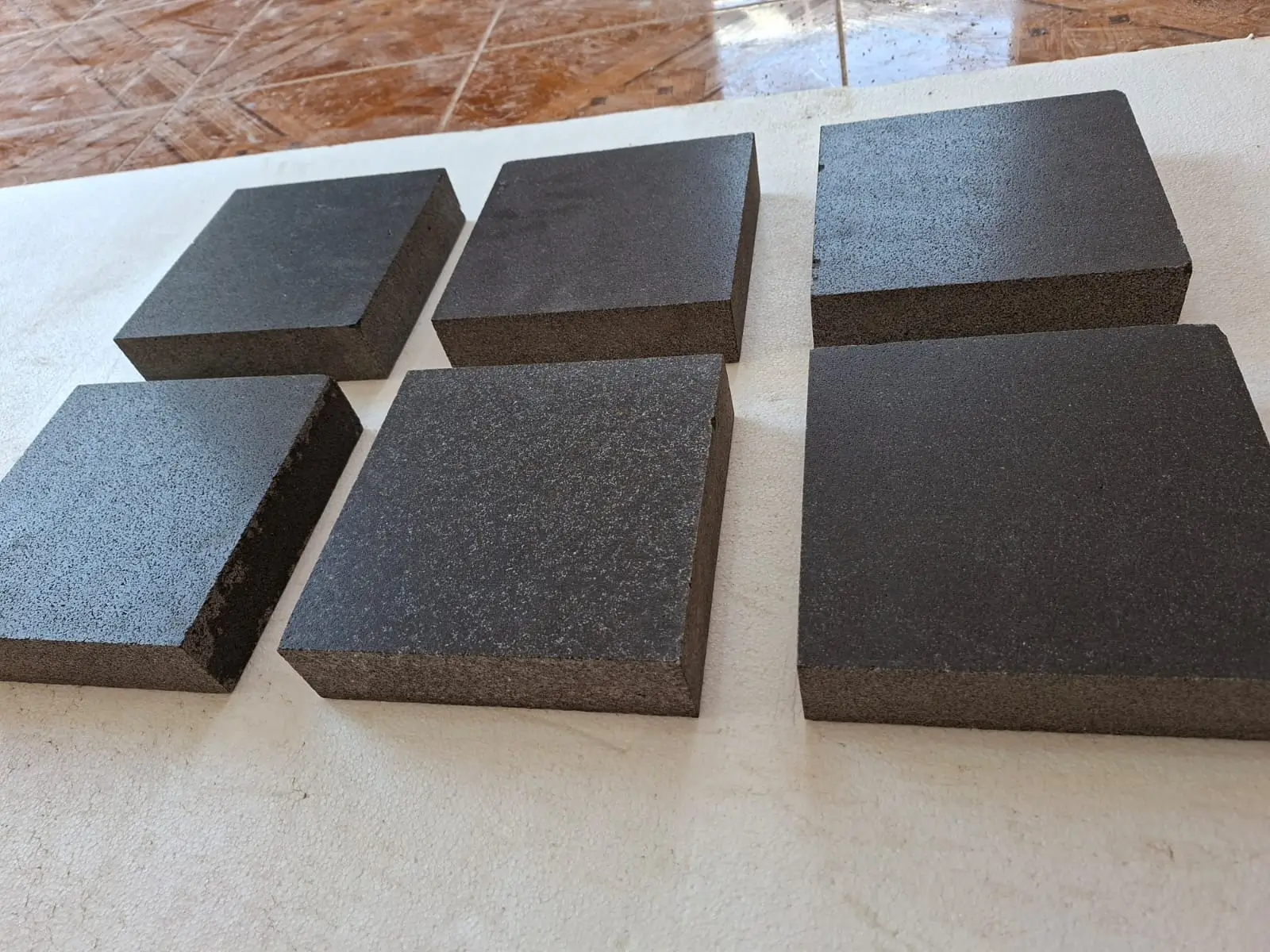
The mineralogy of basalt rock composition centers on plagioclase feldspar, pyroxene (typically augite), and olivine — with iron-titanium oxides filling the interstices. Some flows also contain small vesicles, gas-bubble voids trapped during solidification, but commercially quarried basalt for paving is selected from dense, low-vesicularity zones where these voids are minimal. That selection matters enormously: a vesicular basalt and a dense basalt from the same flow can have markedly different absorption characteristics, and absorption drives long-term performance in outdoor installations.
The fine-grained interlocking texture that results from rapid surface cooling creates a material where individual mineral grains are physically bonded without the large cleavage planes you find in coarser stones. This microstructural integrity is what translates to high resistance to surface wear and the kind of impact resistance that holds up under vehicle traffic on basalt pavers. For a confirmed quantitative profile of any specific batch — density, absorption, compressive and flexural strength — always request the test report from your supplier. At Citadel Stone, we recommend specifying the relevant ASTM test methods when preparing a project specification, and we can provide test reports on request for our material.
How Cooling Rate Shapes Performance
The distinction between intrusive and extrusive igneous rocks is fundamentally a story about cooling rate — and for basalt, the extrusive (surface) cooling path creates the performance profile that makes it attractive for demanding paving applications. Contrast it with granite: both are igneous rocks, but granite’s slow subsurface cooling produces large, interlocked crystals that you can see with the naked eye. Basalt’s rapid cooling keeps crystals microscopic and maximises grain-boundary contact area, which in practice means a stiffer, tighter matrix.
Here’s what most specifiers miss when reviewing the formation of basalt rock: the cooling environment also influences colour consistency. Flows that cool against dry air tend to oxidise iron minerals at the surface, producing the slightly rusty brown patina you sometimes observe on freshly quarried faces. That patination typically extends only a millimetre or two into the stone, and cutting through it reveals the characteristic dark interior. Confirm with your supplier whether cut faces or cleft faces are required for the application — honed cuts will expose the consistent dark interior, while cleft or natural-face finishes may retain trace surface variation from the original flow.
Formation of Basalt Rock at Different Geological Settings
The formation of basalt rock happens across three primary geological contexts, and each setting produces material with subtly different characteristics that reach through to quarried product:
- Mid-ocean ridges, where tectonic plates diverge and mantle material upwells continuously, generate the highest-volume basalt on Earth — but this material is generally inaccessible for terrestrial quarrying
- Hotspot volcanism — such as the large igneous provinces of continental interiors — produces thick, extensive lava plateau sequences that are the primary source of commercially quarried basalt for construction
- Subduction-related volcanic arcs generate basalt with slightly higher silica content due to crustal contamination; this material is still classified broadly as basalt but may show subtle colour and density variation compared to pure hotspot flows
- Continental flood basalt sequences, found across parts of Africa, the Middle East, and Asia, represent some of the most consistent quarry sources because individual flows can be tens of metres thick with uniform composition throughout the workable zone
The basalt pavers Citadel Stone stocks originate from selected quarries in the Middle East, where continental flood basalt sequences deliver consistent colour, density, and cut quality across large production runs. As Britannica’s overview of basalt volcanic rock formation and construction properties notes, these plateau basalt sequences are characterised by horizontal flow layering that makes block extraction highly controllable and predictable.
What Basalt Formation Means for Paver Durability
Your specification for Basalt Pavers gains real precision once you understand what the formation process has already determined. The tight, low-porosity matrix that results from rapid volcanic cooling means water penetration into the stone body is inherently low compared to sedimentary alternatives like limestone or travertine. That low absorption characteristic reduces the primary failure mechanisms for outdoor paving: freeze-thaw spalling in cold regions and salt crystallisation damage in coastal environments where dissolved minerals are drawn into pores by capillary action.
Density also has a direct bearing on abrasion resistance. Basalt’s fine crystalline matrix resists the microscopic grinding that foot traffic and vehicle movement impose on softer stones — particularly at grain boundaries, which are the weak points where wear begins. The Natural Stone Institute’s igneous stone paving technical standards provide a useful framework for understanding how igneous stone properties compare across material families. For outdoor applications with heavy pedestrian or light vehicular use, basalt pavers represent a particularly rational specification choice when long service life under high exposure is the requirement.
Finish Selection and UV Exposure Considerations
The formation process gives basalt its iron-rich dark colour, but UV exposure over time will interact with that surface in ways your specification needs to account for. Prolonged sun exposure causes the iron oxides near the surface of cut basalt to oxidise further, producing a gradual lightening or bronzing of the darkest faces — not a dramatic colour shift, but a visible change over years of unprotected exposure in high-UV climates. The rate depends heavily on the finish applied.
Honed basalt, with its smooth, low-texture surface, tends to show UV-related colour change more visibly than a more textured finish because the uniform reflectance of a smooth face amplifies subtle tonal shifts. A flamed or brushed finish, with its open matte texture, distributes light scatter more broadly and makes gradual UV weathering less conspicuous in appearance. Your finish choice should reflect not just the immediate aesthetic but the long-term appearance retention target for the project.
Sealing plays an important role here. A high-quality penetrating sealer, applied before first exposure and renewed on the interval your sealer manufacturer recommends, significantly reduces UV-accelerated surface oxidation by minimising the moisture and oxygen cycling that drives iron mineral changes near the surface. In sun-exposed installations — pool surrounds, full-sun terraces, rooftop paving — factor in a sealing schedule from the outset rather than treating it as optional maintenance. Basalt’s low absorption actually works in your favour with sealers: the stone accepts penetrating treatments well without the excessive uptake that softer stones require.
Basalt Rock Formation and Quarrying Consistency
One of the underappreciated practical benefits of how basalt is formed — particularly from large plateau sequences — is the production consistency it enables. Because individual lava flows can be geologically uniform across vast areas and great depths, quarry operators can work within a consistent mineralogical zone for years without the compositional variation that affects layered sedimentary quarries. For specifiers ordering large volumes for a single project, this geological consistency reduces the colour-matching and calibration challenges that complicate big runs in other stone types.
The quarry yield for dense, paving-grade basalt is also higher than for many sedimentary stones, because the absence of bedding planes and variable strata means fewer zones of compromised material to discard during block selection. Blocks that come from well-stratified flood basalt flows exhibit consistent thickness and parallel faces, which directly reduces cutting waste and simplifies calibration to tight thickness tolerances. For cut-to-order production, this translates into reliable dimensional accuracy across a full project delivery.
- Confirm that production comes from a dense, low-vesicularity zone of the quarry — ask your supplier directly if this isn’t stated in the product documentation
- Specify the finish type clearly and understand its visual implication across the project’s expected UV exposure level
- For large projects, request matching samples from the actual production batch rather than relying solely on standard display samples
- Include sealing in the maintenance schedule at the specification stage, not as an afterthought after installation is complete
Thickness and Structural Specification for Basalt Pavers
The structural demands of the application should determine your thickness specification for basalt pavers, not a generic default. Basalt’s high density means it carries more dead load per unit area than a lighter stone at the same nominal thickness — a factor that matters when you’re calculating substrate and base requirements for elevated decks or load-bearing terrace structures. Your structural engineer’s point load calculations should reference the actual material density from the supplier’s test report, not an assumed value.
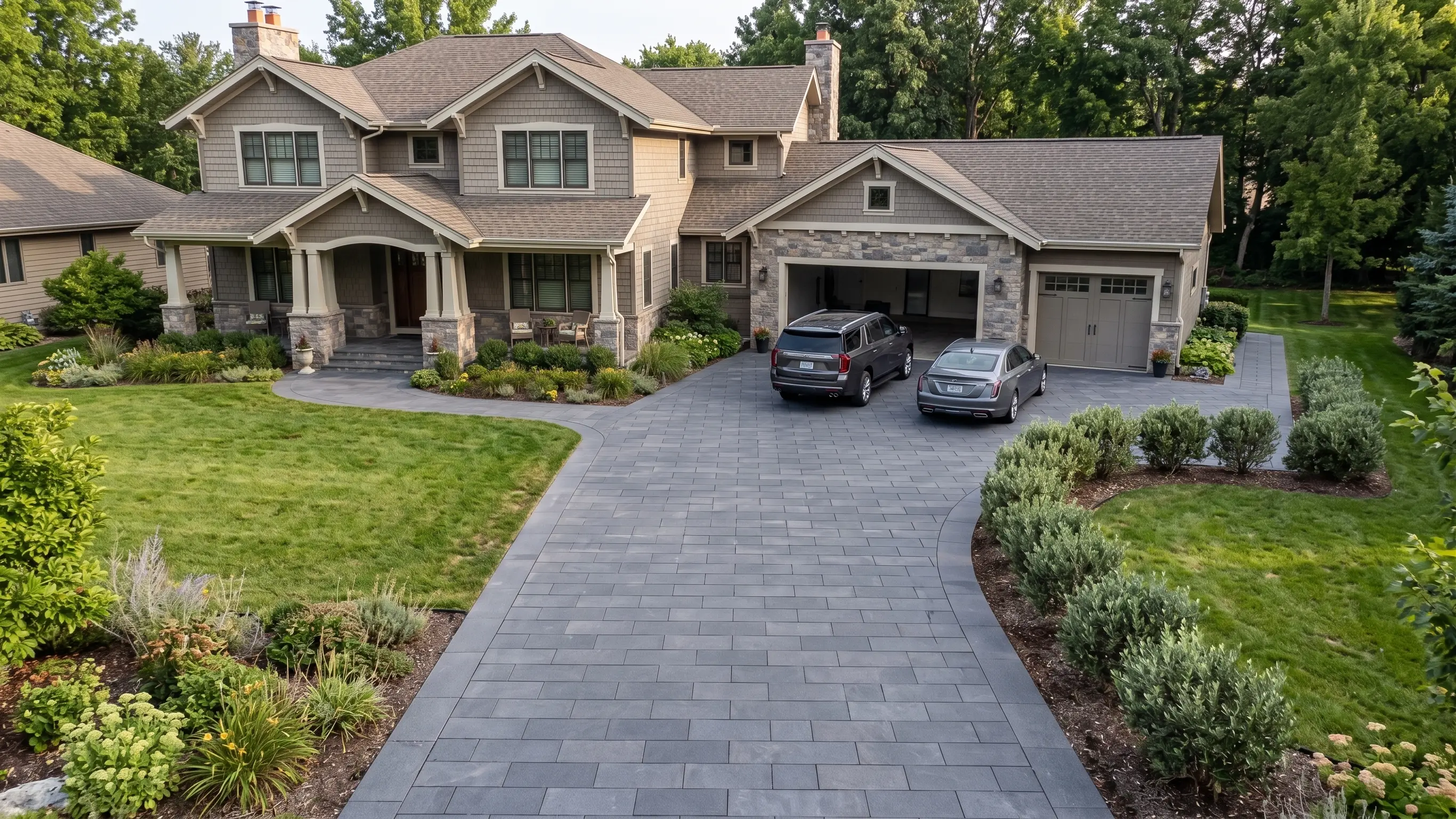
For standard residential pedestrian applications on a well-prepared aggregate base, thinner formats are typically adequate. For driveways subject to vehicle traffic, or for commercial pedestrian areas with concentrated loads, thicker formats are the appropriate specification — and the base depth, compaction specification, and setting bed material should all be sized to the traffic class, not to the paver alone. The paver and the base system perform together; an undersized base under an otherwise excellent paver will still fail.
- Pedestrian terraces and pool surrounds: verify thickness against your project’s point load requirement and confirm base specification with your installer
- Driveway and vehicle-access areas: thicker formats and a reinforced or bound base are standard practice — consult your structural or civil engineer for load-class confirmation
- Delivery scheduling for larger basalt paver orders should be coordinated with your installer; offloading arrangements, including whether a crane-equipped or forklift-equipped vehicle is required on site, should be confirmed before the delivery date
Final Considerations
The formation of basalt rock — rapid volcanic cooling of iron- and magnesium-rich magma — produces a material whose performance profile for outdoor paving is genuinely distinctive. Its density, low porosity, and fine crystalline structure are not incidental; they are direct geological outcomes of the process that created the stone. Specifying basalt pavers from a position of understanding that formation story means you can evaluate supplier claims with a clearer eye, write a specification that addresses the right performance variables, and set realistic long-term maintenance expectations for your client. The surface finish you select will determine both the day-one appearance and the rate at which UV and weathering alter the stone over years of service — that decision deserves as much attention as thickness and base design.
As you work through the wider specification for your project, surface format and block dimensions also influence how the paving reads at scale. For projects where smooth-faced basalt blocks are the aesthetic direction, smooth basalt block options for your project covers the format and application considerations worth reviewing before you finalise drawings. Dense basalt chosen by Citadel Stone from selected quarries in the Middle East is cut to order, with lead times quoted at the time of your inquiry.