




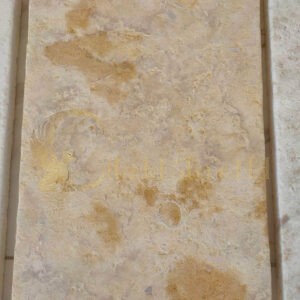
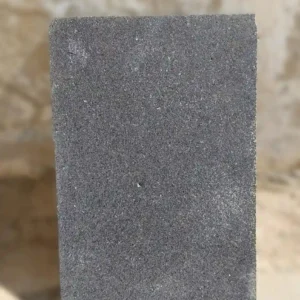
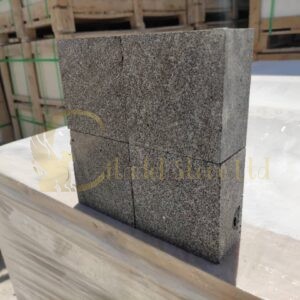
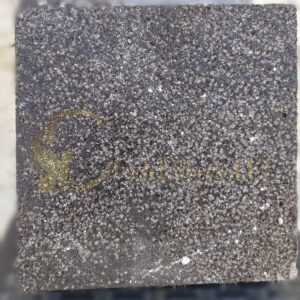









Timing your herringbone pavers installation in Arizona isn’t just a scheduling preference — it’s the single most consequential decision you’ll make before the first paver goes down. The state’s thermal calendar creates installation windows that are genuinely narrow, and contractors who ignore them pay for it in premature joint failure, base settlement, and callbacks that eat profit margins fast. Understanding exactly when Arizona’s seasonal conditions align with optimal bedding sand behavior, polymeric joint curing, and adhesive set times will determine whether your herringbone pavers project performs for two decades or requires remediation in five years.
Why Installation Timing Matters More Than Material Selection
Most specifiers spend considerable energy selecting the right paver material — travertine, concrete, clay brick — and relatively little thought on the installation calendar. That’s backward for Arizona projects. The herringbone pattern, by its nature, involves more cuts, more joint linear footage, and more dimensional precision than a running bond or stack bond layout. Every one of those joints is a potential failure point if bedding and jointing materials aren’t cured under the right temperature and humidity conditions. You’re essentially multiplying your exposure to installation-related failures by the geometric complexity of the pattern itself.
Citadel Stone’s team works directly with project managers from initial specification through delivery logistics, which means we see firsthand how installation timing decisions — made months before truck delivery — ripple through to long-term performance outcomes. The consultation process starts well before materials leave the warehouse, specifically because timing miscalculations are far cheaper to correct on paper than in the field.
- Herringbone layouts require tighter dimensional tolerances than simpler patterns, making base and joint stability during curing critical
- Polymeric sand activation depends on specific moisture and temperature windows that Arizona’s climate frequently violates
- Clay brick pavers expand and contract differently than concrete or natural stone, requiring seasonal joint spacing adjustments
- Base compaction readings shift as ground temperatures drop or rise, affecting final surface level consistency
Arizona’s Seasonal Windows: What Actually Works and What Doesn’t
The sweet spot for herringbone pavers in Arizona falls between mid-October and late April across the low desert — Phoenix, Tucson, and Yuma metro areas included. During this window, ambient temperatures typically range from 55°F to 85°F, which keeps bedding sand workable, allows polymeric joint filler to cure properly, and prevents the thermal expansion stress that creates early joint gaps. Specifically, you want surface temperatures below 100°F at the time of jointing — and in the Sonoran Desert’s summer months, that window may not exist at all between 7 AM and 8 PM.
The problematic periods deserve more specific attention than the generic advice to avoid summer. Concrete and clay-based herringbone pavers installed on a substrate that’s sitting at 140°F surface temperature will exhibit dimensional readings 0.8–1.2% larger than their cold-state measurements. When those pavers cool overnight — sometimes dropping 60°F in a single evening in the high desert — the resulting contraction stress concentrates at the most rigid points in a herringbone layout: the 45-degree angled joints. That’s where you first see cracking, lift, and joint sand migration.
- Mid-October through late April: primary installation season for low-desert Arizona projects
- May through September: high-risk period — surface temperatures routinely exceed safe jointing thresholds
- June and July monsoon season introduces humidity spikes that interfere with polymeric sand activation in unpredictable ways
- December and January in Flagstaff bring genuine freeze-thaw cycling that requires a completely different base specification than Phoenix projects
- March is often the single best calendar month across most Arizona elevations — stable temperatures, low humidity, predictable conditions
For herringbone patio pavers in Arizona’s mid-elevation zones — Prescott, Sedona, Payson — the window extends slightly later into May but also opens earlier in September compared to the low desert. You get more scheduling flexibility, but the freeze-thaw risk in spring and fall means your base specification needs to account for moisture retention and expansion pressure in a way that pure desert projects don’t.
45-Degree vs. 90-Degree Herringbone: Which to Specify for Arizona Conditions
The orientation decision for your herringbone pattern isn’t purely aesthetic — it has real implications for how the installed surface responds to Arizona’s thermal cycling. A 90-degree herringbone paver pattern in Arizona aligns joint lines parallel and perpendicular to the primary expansion direction, which in most rectangular patios and driveways means the joints run predictably with the longest dimension. That predictability makes it easier to place expansion joints at correct intervals and anticipate where seasonal movement will concentrate.
The 45-degree herringbone paver pattern in Arizona creates a more complex stress distribution because diagonal joint lines intersect the primary thermal expansion vectors at non-perpendicular angles. That’s not necessarily a negative — many experienced installers prefer the 45-degree layout for driveways precisely because the diagonal orientation distributes point load stress more evenly across a larger number of joint interfaces. What it does require, however, is more precise cut work at borders, which increases both labor cost and waste factor. Plan for 12–15% waste on a 45 degree herringbone block paving installation versus 8–10% for a 90-degree layout.
- 90-degree herringbone block paving suits rectangular spaces with clear primary expansion directions
- 45-degree layouts excel for driveways and high-traffic areas where load distribution matters more than cut efficiency
- Border soldier courses are mandatory for both orientations in Arizona — they contain the thermal movement that would otherwise migrate joint sand outward over time
- For a 6×9 herringbone paver pattern in Arizona, the longer dimension of each unit should align with the primary traffic direction in driveway applications
Base Preparation and Seasonal Soil Behavior in Arizona
Herringbone block paving in Arizona performs over the long term when the base system is engineered specifically for Arizona soil conditions — not copied from a generic specification sheet. The challenge varies significantly by region. Projects in Mesa frequently hit caliche hardpan within 18–24 inches of grade, which actually functions as an excellent natural sub-base when properly prepared. You can reduce your compacted aggregate depth in caliche-heavy sites, but you must still scarify and re-compact the caliche surface to eliminate differential settlement zones at the caliche-aggregate interface.
Expansive clay soils present in many Tucson and east Phoenix Valley sites behave entirely differently. Arizona’s monsoon season saturates these soils rapidly, causing volume increases of 4–8% that translate directly to surface heave if your base isn’t built with adequate depth and a geotextile separation layer. The timing implication here is significant: schedule base installation and compaction during dry months — November through March — so you’re achieving density readings on soil at its stable, non-saturated state. Compacting during or after monsoon rains locks in a false density reading that will deflate once the soil dries.
- Minimum 6-inch compacted Class II base aggregate for residential herringbone patio pavers in Arizona’s low desert
- 8-inch minimum for herringbone driveway pavers carrying vehicle loads
- Geotextile separation fabric is mandatory on expansive clay sites — skip it and the aggregate migrates into the subgrade within 3–5 monsoon seasons
- Bedding sand layer: 1-inch nominal, laser-screeded to ±1/8 inch tolerance before any herringbone outdoor pavers go down
- Never install bedding sand the day before a monsoon event is forecast — saturation before compaction undoes your screed work entirely
For projects requiring complementary information on installation specifics across similar Arizona site conditions, herringbone brick pavers in Arizona demand the same disciplined base approach whether the finish surface is clay, concrete, or natural stone. Citadel Stone’s technical team provides base specification guidance alongside material selection to ensure both elements of the project are aligned. Details on long-term care are covered in the herringbone block paving options Arizona resource, which addresses maintenance protocols that extend the service life of properly installed herringbone surfaces across the state’s diverse climate zones.
Material Selection for Herringbone Driveway Pavers in Arizona’s Climate
Your choice of material for a herringbone driveway in Arizona directly interacts with the installation timing decisions already discussed. Concrete herringbone brick pavers are the most forgiving material in terms of installation temperature range — they have lower thermal expansion coefficients than clay brick and less porosity sensitivity than natural stone. That said, concrete pavers in Arizona’s intense UV environment will fade more visibly than clay or natural stone alternatives, typically showing measurable color shift within 3–5 years of installation without UV-stabilized sealer maintenance.
Clay brick pavers, specified correctly for a herringbone brick driveway in Arizona, offer excellent long-term color stability and a thermal mass characteristic that moderates surface temperature peaks. The trade-off is dimensional variability — fired clay units can exhibit ±1/8-inch thickness variance within a single production run, which requires your installer to sort and batch units before laying to maintain the tight joint consistency that makes herringbone paving slabs look sharp over time. This isn’t a reason to avoid clay brick; it’s a reason to verify that your installer has laid clay herringbone before and knows how to manage the sort process.
- Herringbone travertine pool deck in Arizona benefits from travertine’s natural porosity, which reduces surface temperature by 15–20°F versus concrete under the same solar exposure
- Concrete pavers: specify minimum 8,000 PSI compressive strength for driveways — standard 6,000 PSI units show surface spalling at the 10–12 year mark in heavy-UV Arizona exposure
- Clay brick: target absorption rate below 6% per ASTM C902 for driveway applications — higher absorption increases susceptibility to salt efflorescence during monsoon season
- Natural stone herringbone paving slabs require penetrating sealer application within 30 days of installation, before the first monsoon season if possible
- Herringbone garden paving applications can tolerate slightly softer stone specifications — 6,000 PSI concrete or Grade SW clay brick — because point load demands are lower
Citadel Stone sources herringbone brick pavers in Arizona from established quarry partners and manufacturing facilities that maintain consistent dimensional tolerances — a factor that matters significantly when you’re calculating cut yields and pattern alignment across large herringbone installations. Each batch arriving at our warehouse undergoes dimensional spot-checks before it’s allocated to a project order, which helps catch production run variances before they reach your job site.
Herringbone Walkway and Patio Installation: The Details That Determine Longevity
A herringbone paver walkway in Arizona introduces a specific challenge that driveway installations don’t face as acutely: edge stability. Walkways are typically narrower than patios, which means the border-to-field ratio is much higher. In a herringbone pattern, those angled units at the border require more cuts, and those cuts are where moisture infiltration and thermal stress concentrate. Specifying a 4-inch concrete edge restraint — not the plastic snap-together type — is non-negotiable for any herringbone paver walkway in Arizona if you expect the border units to stay locked in position through 10+ summer-to-winter thermal cycles.
Herringbone patio pavers in Arizona’s covered outdoor living spaces — the ramada patios and shade structure areas that are increasingly standard in Scottsdale and Chandler residential builds — face a different challenge. These areas receive significantly less direct solar exposure than open patios, which means surface temperatures are more moderate but humidity retention under the cover can be higher. Polymeric sand in these zones stays slightly more active longer, and you may see minor joint sand migration toward the center of the covered area during the first year. That’s normal behavior — top-dress the joints at the 12-month mark and the issue resolves permanently.
- Herringbone brick patio in Arizona: specify minimum 2-3/8-inch paver thickness for patios with any vehicle overhang potential
- Running bond pavers in Arizona edge sections alongside herringbone fields can simplify border management and reduce cut waste significantly
- Basket weave paver sections used as accent borders complement herringbone fields while providing a visual boundary that also serves as a natural expansion joint zone
- Joint sand should be activated with a fine water mist — not a full-pressure spray — to prevent surface displacement on the angular joints of the herringbone field
- Allow 72-hour polymeric sand cure before any foot traffic regardless of ambient temperature during the cool-season installation window
Herringbone Pattern Driveway Load Performance and Maintenance Scheduling
A herringbone pattern driveway in Arizona is one of the most structurally efficient paver configurations for vehicle loads precisely because the interlocking geometry distributes compressive forces diagonally across the field. Independent testing on interlocking concrete pavement systems consistently shows that herringbone layouts resist load-induced settlement better than running bond or basket weave configurations under equivalent base preparation. The mechanism is intuitive: no continuous joint line runs parallel to the primary load direction, so there’s no single fault plane for the load to exploit.
Maintenance scheduling for herringbone driveway pavers in Arizona should follow the thermal calendar just as installation does. Your first post-installation inspection and joint sand top-dress should happen in the spring following the first winter — typically February or March in the Phoenix area — before the surface temperatures climb back above 100°F. Sealer re-application on natural stone and travertine herringbone surfaces performs best between 60°F and 80°F ambient temperature, which in the low desert limits your window to November through early April. Attempting sealer application at 95°F ambient on a surface reading 120°F results in flash-curing that leaves a patchy, uneven finish requiring full strip and reapplication.
- Annual joint sand inspection: check for voids deeper than 1/4 inch, which indicate base movement or excessive runoff erosion
- Basket weave driveway sections adjacent to herringbone fields should be inspected simultaneously — differential settlement between pattern zones is a common early failure indicator
- Basket weave brick pattern borders: inspect mortar or sand-set edge restraints for lateral displacement after each monsoon season
- Pressure washing: limit to 1,500 PSI maximum with a fan tip — higher pressure dislodges polymeric sand from angled joints in herringbone fields
- Herringbone outdoor pavers in full sun exposure should receive UV-stabilized penetrating sealer every 2–3 years depending on stone porosity
- Running bond pavers in Arizona transition sections require the same resealing schedule as the herringbone field — inconsistent sealing creates differential absorption that shows visually as patchy darkening after rain
Projects in Scottsdale‘s older residential neighborhoods often involve retrofitting herringbone paving into existing hardscape contexts where the adjacent concrete or pool deck has already established its thermal expansion behavior. In those situations, plan your herringbone field to terminate 1/2 inch from any fixed concrete structure with a flexible backer rod and sealant joint — not a tight butt joint. Arizona’s 60–80°F seasonal differential will open or close that interface predictably, and a rigid joint will crack one material or the other within three seasons.
Order Herringbone Pavers in Arizona from Citadel Stone
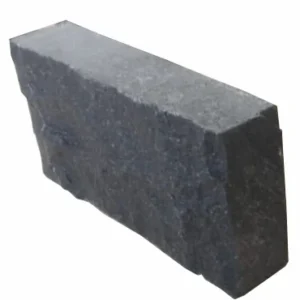
Citadel Stone stocks herringbone brick pavers and herringbone paving slabs in standard formats including 4×8, 6×9, and 3×9 configurations, with thickness options from 2-3/8 inch to 3-1/8 inch depending on application load requirements. Both 45-degree and 90-degree herringbone pattern installations are supported with pre-calculated cut yield estimates that help you order accurately without over-purchasing. You can request physical samples and thickness specification sheets before committing to a full project order — a step worth taking when you’re matching an existing hardscape palette or working within tight HOA color approvals.
Trade and wholesale enquiries are handled through Citadel Stone’s project consultation process, where your specification requirements — material type, finish, format, and quantity — are matched to current warehouse availability across Arizona. Lead times from warehouse to job site typically run 1–2 weeks for in-stock items, which means your installation window planning can proceed with confidence rather than building in the 6–8 week buffer that imported materials often require. Delivery coverage extends across the state, including the greater Phoenix, Tucson, and Flagstaff metro areas, with truck scheduling coordinated to match your crew’s site readiness rather than a fixed dispatch calendar.
For custom cuts, non-standard formats, or projects combining herringbone garden paving with complementary basket weave brick pattern borders, Citadel Stone’s technical team can advise on material compatibility and lead time requirements specific to your project scope. As you evaluate all the hardscape elements your Arizona project might include, Cobblestone Pavers in Arizona offers parallel guidance on another durable and widely specified Citadel Stone product well suited to Arizona’s demanding outdoor conditions. For herringbone block paving in Arizona, Citadel Stone provides reliable materials and knowledgeable guidance to support projects of varying scale throughout the state.