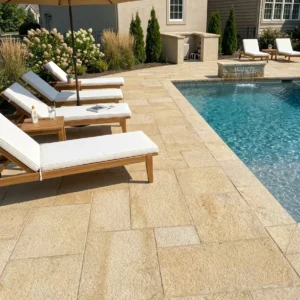
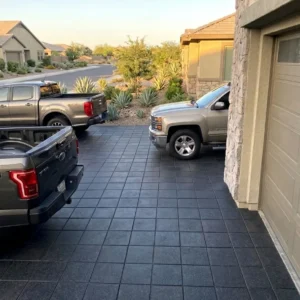
Grey tile floor selections hinge on a variable most designers gloss over — the interaction between surface finish and ambient light reflectance, which shifts dramatically across a single day and can make the same tile read as warm silver at noon and cool slate by late afternoon. Getting the tone right requires you to evaluate samples under multiple lighting conditions before committing to a full-run order. Your finish choice also carries real performance implications: a honed grey tile floor reads softer and hides minor lippage, while a polished finish amplifies every imperfection in the substrate preparation beneath it.
Why Grey Works Across So Many Interior Styles
The versatility of a grey tile floor comes from its position at the intersection of warm and cool undertones. Depending on the mineral composition and finish, the same nominal grey can lean toward blue, green, or taupe — meaning your surrounding palette either locks in or contradicts the tile’s natural cast. Field performance data shows that tiles with visible crystalline veining or textural relief hold their visual interest far better in large open-plan spaces than flat, uniform grey options.
For modern interiors, the appeal is structural as much as aesthetic. A consistent grey ground plane anchors disparate furniture groupings and lets vertical surfaces take the design risk — bold cabinetry, statement joinery, or warm timber ceilings all read more cohesively against a neutral floor plane. You’re not muting the room; you’re giving every other element room to breathe.
Natural Stone Options for Grey Tile Floors
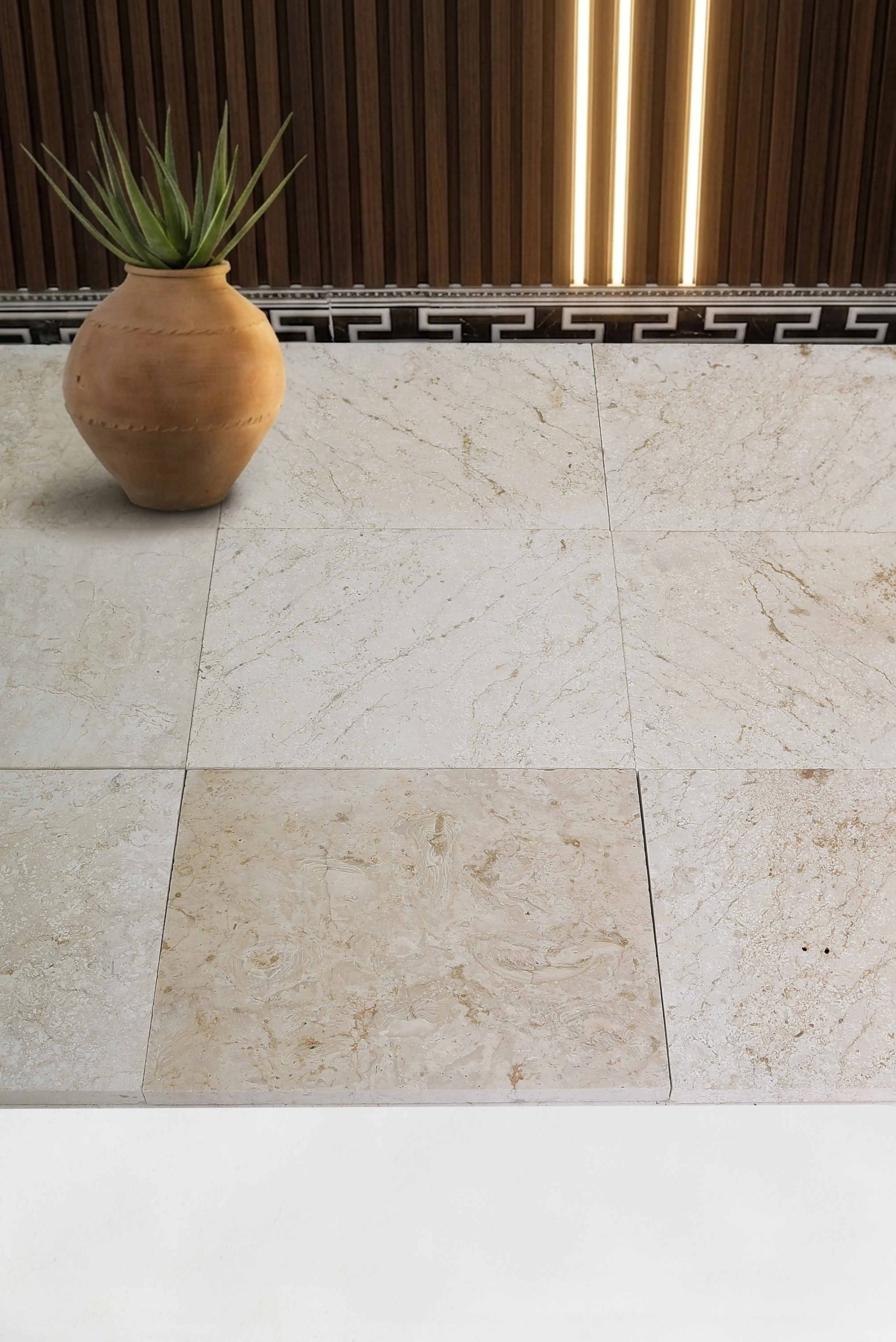
Natural stone delivers a depth of tone that fired ceramic simply cannot replicate. Each option below brings a distinct technical profile alongside its visual character, and understanding those differences will sharpen your specification well before the first tile is laid.
- Grey limestone: medium porosity, excellent thermal mass, calibrated for consistent thickness — ideal for large-format floor tile applications where lippage control is critical
- Grey basalt: dense, low-absorption volcanic stone with a naturally honed surface texture — performs exceptionally well under high foot traffic and requires minimal maintenance sealing cycles
- Grey travertine: characteristic pore structure adds textural warmth, available in filled-and-honed profiles for a smooth grey tile floor suited to residential living spaces
- Grey slate: cleaved surface texture provides inherent slip resistance — well matched to transitional spaces where wet-area performance requirements apply
- Grey marble: high polish potential, pronounced veining — reserved for lower-traffic interiors where the visual payoff justifies the ongoing maintenance commitment
According to NSI stone tile specifications, absorption rate is the most consequential single variable for indoor stone floor performance — low-absorption stones tolerate wider cleaning product ranges and resist staining from food and beverage contact far better than high-porosity alternatives.
Design Ideas That Make Grey Tile Floors Work Harder
The format you choose reshapes the room geometry as much as any architectural intervention. Large-format tiles — 24×24 inches or larger — extend perceived depth along the longer axis of a room, making narrow corridors and open-plan kitchens read as more generous. The same grey tile floor in a 12×12 format creates visual rhythm and energy, which suits high-contrast modern styling or commercial interiors where movement and activity are part of the design language.
Herringbone and chevron lay patterns transform a simple grey tile floor into a directional element that draws the eye toward a focal point — a fireplace wall, a kitchen island, or a view corridor. These patterns require precise layout planning and a skilled setter, but the result is genuinely distinctive without relying on colour contrast to do the work. Running bond in offset percentages from 33% to 50% offers a middle path: more dynamic than straight stack, more restrained than herringbone.
- Large-format grey tile (600mm+): maximises visual continuity, reduces grout lines, suits contemporary open-plan spaces
- Mosaic or smaller-format grey tile: adds tactile complexity, better suited to wet areas and feature zones within a broader layout
- Bookmatched veined stone: mirror-image layouts using natural stone slabs produce a dramatic symmetry that reads as bespoke even in modest-scale spaces
- Mixed-tone grey tile blending: specifying a palette across two to three adjacent grey tones reduces installation monotony and mimics the natural variation found in quarried stone
Pairing a Grey Tile Floor with Tile Countertops
The relationship between a grey tile floor and tile countertops in kitchen and bathroom interiors is one of the more technically demanding design decisions you’ll navigate. The risk isn’t visual conflict — it’s inadvertent sameness. Two grey surfaces in the same space need differentiation through finish, scale, or undertone to read as intentional rather than accidental.
Matte-finish grey tile floor combined with a polished or crackle-glaze tile countertop creates the contrast in surface language that designers rely on to distinguish horizontal from vertical planes. Where the floor is warm grey with taupe undertones, the counter tile should resolve toward cooler blue-grey or white to prevent the room from feeling colour-washed. This undertone contrast is the specification detail that separates installations that feel resolved from those that feel merely consistent.
- Match finish type across floor and counter only when the formats differ significantly — same finish, same format reads as unintentional
- Grout colour on the floor should be chosen independently from tile countertop grout — floors tolerate darker grout better due to shadowing and traffic patterns
- Natural stone tile countertops benefit from higher-density stone with lower absorption than floor tiles — specify accordingly even when sourcing the same colour family
Taking Grey Tile Floor Design Outdoors
Extending a grey tile floor design outdoors introduces a set of engineering requirements that indoor-only specifications simply don’t encounter. Thermal cycling — the daily and seasonal swing between high daytime temperatures and cooler overnight conditions — creates cumulative stress at tile joints and adhesive beds that compounds over years. In regions where day-night temperature differentials exceed 40°F, thermal expansion coefficients become a specification input, not a secondary consideration.
Natural stone grey tile floor design in outdoor applications requires you to calculate movement joint spacing based on the stone’s linear expansion coefficient. Grey limestone, for example, expands at approximately 4–5 × 10⁻⁶ per °F, meaning a 20-foot run experiences roughly 0.11 inches of dimensional change across a 100°F seasonal swing. Undersized movement joints filled with rigid grout crack within the first full freeze-thaw cycle — and once the joint fails, water infiltration begins a cycle of damage that accelerates with every subsequent temperature swing. The TCNA installation standards provide specific movement joint spacing guidance for exterior stone applications that your specification should reference directly.
- Specify exterior-grade grey tile floor products with absorption below 0.5% for freeze-thaw resilience — this aligns with ASTM C1528 category requirements
- Anti-fracture membranes beneath exterior grey tile floor systems absorb substrate movement before it reaches the tile — essential for concrete slabs with control joints
- Grout selection for outdoor grey tile installations should specify a polymer-modified mix with documented freeze-thaw cycling resistance
- Movement joints at perimeter edges and field intersections every 12–15 feet — not the 20-foot spacing common in indoor specifications
Base Preparation: The Detail That Determines Outcome
Every grey tile floor performs to the quality of its substrate, and substrate failures are far more common than material failures in long-term audits. The flatness tolerance for large-format grey tile floor installation sits at 1/8 inch in 10 feet — tighter than the 3/16-inch tolerance that older installation guides still reference. Exceeding this tolerance produces hollow spots beneath tiles, lippage at joints, and accelerated grout cracking under dynamic loads.
Self-levelling underlayment applied over a clean, primed substrate resolves most flatness deficiencies without the labour cost of grinding high spots. Confirm that the underlayment product is compatible with your adhesive mortar system — some epoxy mortars require specific surface profile (CSP) ratings that certain self-levellers don’t achieve. At Citadel Stone, we advise specifiers to submit full system compatibility documentation before ordering tile, because substrate preparation failures are the leading cause of delayed projects and costly remediation after installation.
Sourcing, Grading, and Logistics for Natural Stone Grey Tile
Tone consistency across boxes is the sourcing variable that project managers underestimate until the first delivery arrives. Natural stone grey tile cut from the same quarry block can vary significantly in tone between production runs — a detail that matters enormously when you’re tiling a continuous floor plane across multiple rooms. Specifying by shade group and requesting matched production batch numbers at the time of ordering dramatically reduces installation-day surprises.
For travertine options in grey palettes, the Citadel Stone travertine range provides access to filled-and-honed profiles sourced from select quarries across the Middle East, with shade grouping available on request. Warehouse stock levels for grey natural stone tile typically allow projects up to 2,000 square feet to be fulfilled from a single inventory batch — critical for tone consistency on large open-plan floors. Confirm available batch quantities before finalising your order to avoid mid-project tone discontinuity.
According to ASTM stone tile absorption and testing standards, graded stone tile must meet documented thresholds for water absorption, flexural strength, and abrasion resistance before it is classified suitable for floor use — verify that your supplier provides compliant documentation for any natural stone grey tile specification.
- Order 10–15% overage on natural stone grey tile floor projects — cuts and future repairs require matched material that may not be available from later production runs
- Request warehouse batch confirmation numbers and shade group documentation for all orders exceeding 500 square feet
- Verify truck delivery access dimensions for your site before scheduling — natural stone tile pallets are heavy and require ground-level delivery or a capable tailgate lift arrangement
- Allow 48–72 hours of material acclimatisation on site before installation, particularly for large-format stone in conditioned interiors
Sealing and Long-Term Maintenance
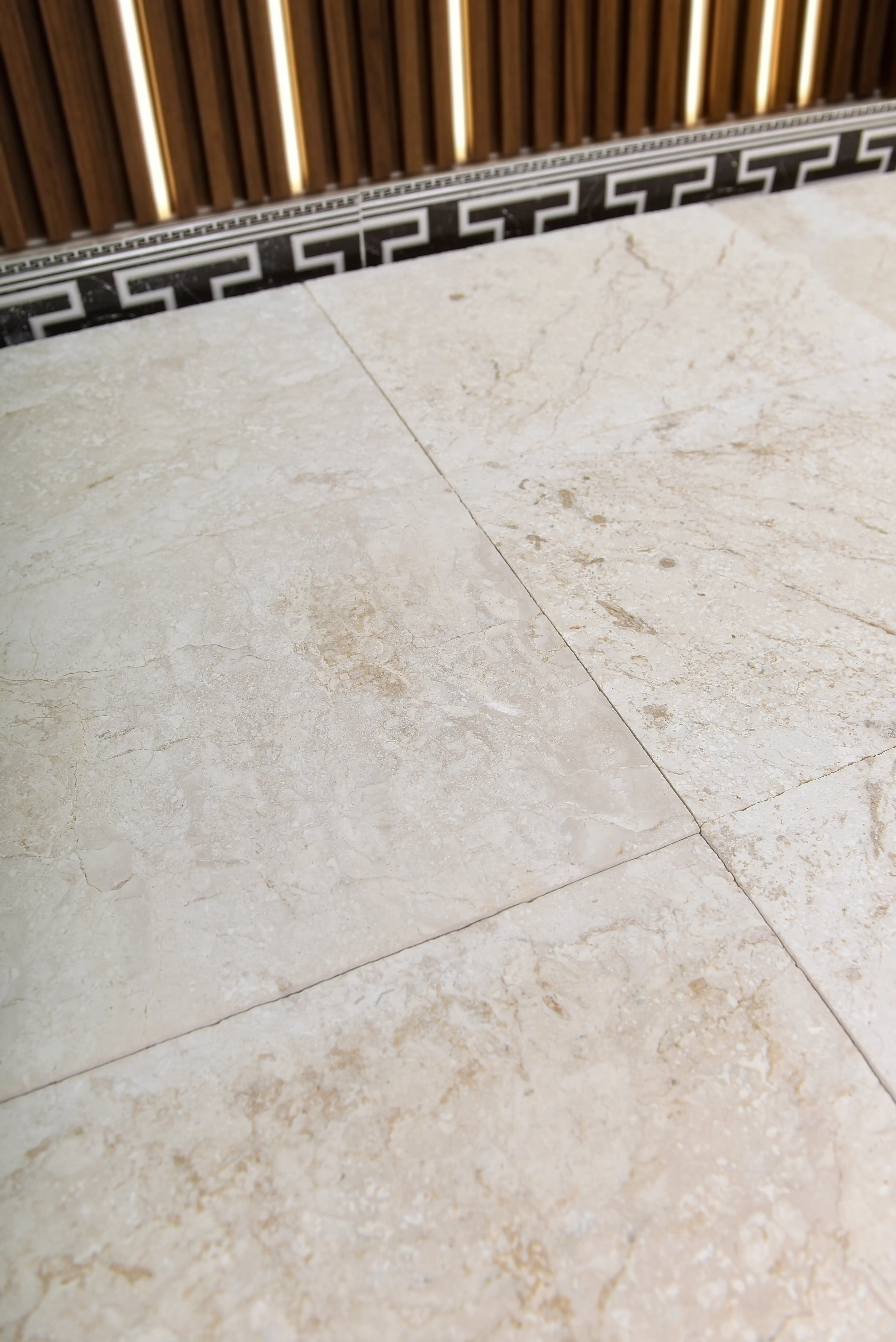
Sealing protocols for grey natural stone tile floors differ meaningfully from standard ceramic maintenance because the stone’s mineralogy determines how the sealer bonds, how often it needs refreshing, and what product chemistry is appropriate. Impregnating sealers that penetrate below the surface are the correct specification for most grey limestone and travertine floor tiles — they protect without altering the surface finish or creating a topcoat that wears unevenly under foot traffic.
Expect 15–25 years of reliable service life from a properly sealed and maintained natural stone grey tile floor, provided the grout joints are kept at 90%+ fill capacity and any sealer degradation is addressed on a biennial inspection cycle. Dense grey basalt and slate require less frequent sealing — often every 4–5 years — while higher-porosity limestone may benefit from annual reapplication in high-traffic zones. The natural stone grey tile floor design you specify today performs over decades when the maintenance regime is built into the client handover documentation from the outset.
Grey Tile Floor Specification: What Determines Long-Term Success
Your grey tile floor specification is only as strong as the decisions made before a single tile is laid. Format, finish, undertone, substrate flatness, movement joint spacing, and batch consistency are the variables that separate an installation that looks exceptional at handover from one that starts showing stress within three years. Natural stone brings irreplaceable depth and material authenticity to grey tile floor design — but it also requires a specification discipline that fired tile simply doesn’t demand in the same way.
For project planning that extends beyond flooring, complementary stone surfaces throughout the interior can reinforce your material palette — mosaic tile floor design ideas explores how smaller-format natural stone tile integrates with larger grey tile floor fields to add character and visual complexity. Citadel Stone maintains national warehouse inventory with stock spanning multiple grey stone families, which typically reduces lead times to 1–2 weeks compared to the 6–8 week cycle on direct-import orders. Plan your batch confirmation and delivery scheduling early — especially for large-format grey tile orders where truck logistics require site access pre-qualification. Grey travertine from Citadel Stone ships from select natural stone quarries worldwide with tone consistency across boxes.
Related reading: how to install large floor tile · stone kitchen floor tile ideas · natural stone floor tile cost.