Granite stone tile vs travertine is one of those comparisons where the surface-level answer — “granite is harder, travertine is warmer” — misses the decisions that actually determine long-term performance. The real specification question is about matching material behaviour to installation conditions: porosity response to moisture cycling, surface finish retention under UV load, and how each material responds to the thermal stress your base system generates. Get those variables right and either stone delivers decades of service life. Get them wrong and you’re looking at a remediation project inside ten years.
Material Composition and Structural Character
Granite is an igneous rock formed under extreme pressure and heat deep within the earth’s crust. That origin story matters practically: the interlocking crystalline structure of quartz, feldspar, and mica produces a material with compressive strength typically ranging from 19,000 to 30,000 PSI, depending on the quarry source and mineral ratio. Porosity in granite generally falls below 1%, which means moisture ingress is minimal under normal service conditions. The stone is highly resistant to abrasion — a key advantage in high-traffic applications where surface wear is a live concern.
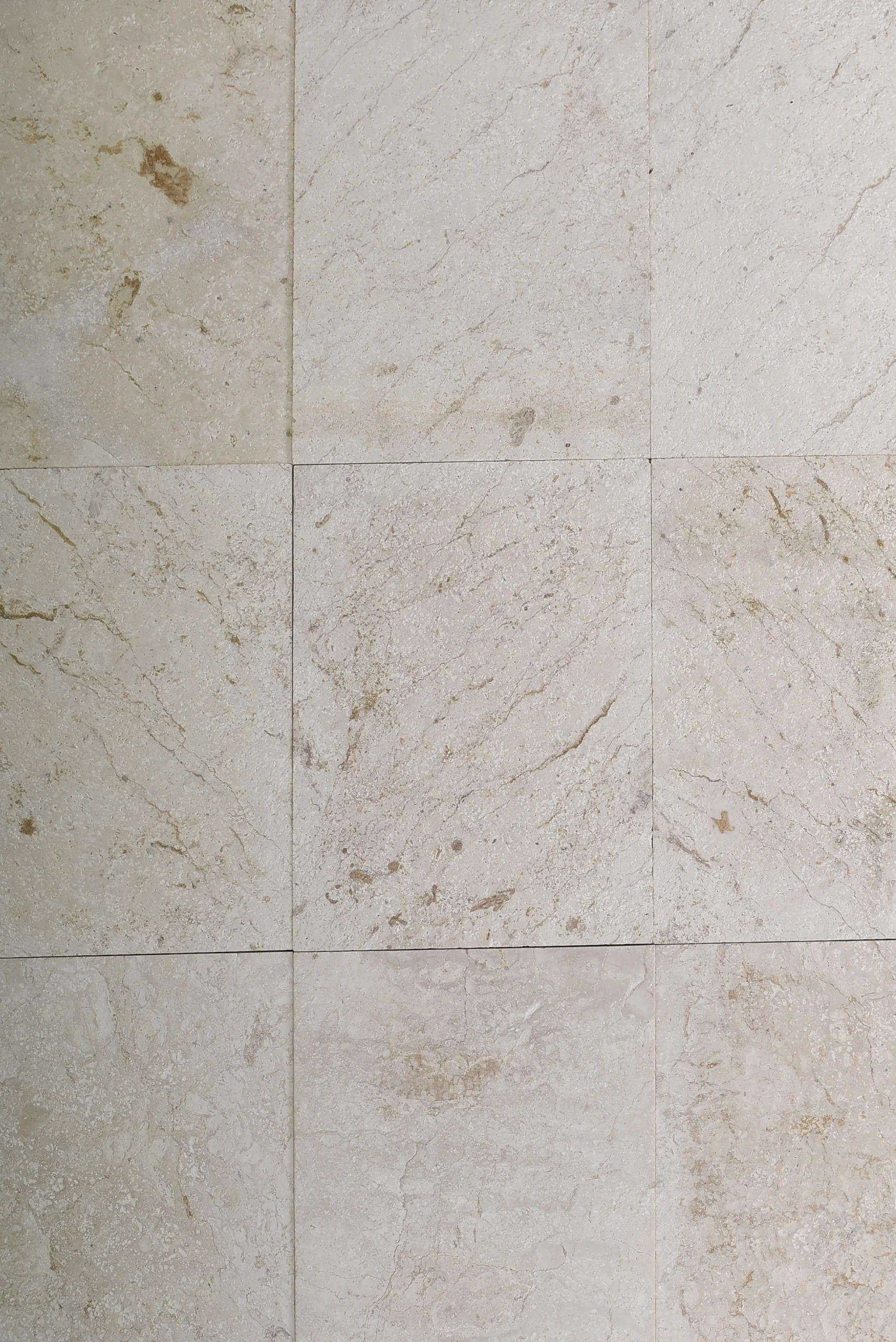
Travertine tells a different geological story. It’s a sedimentary calcium carbonate stone formed by mineral-rich spring deposits, and that process leaves behind a characteristic vug structure — natural voids and channels running through the material. Unfilled travertine has effective porosity ranging from 3% to as high as 12% in lower-density grades. Filled-and-honed versions reduce that significantly, but the material will always be more moisture-responsive than granite. Compressive strength for quality travertine sits between 8,000 and 12,000 PSI — lower than granite but comfortably above the thresholds most paving and cladding applications demand, per ASTM C1527 travertine dimension stone standards.
Surface Finish Options and What They Mean for Performance
Finish selection is where granite stone tile vs travertine begins to diverge in ways that matter day-to-day. Both materials come in honed, polished, brushed, and tumbled finishes — but the performance implications differ considerably between the two.
- Polished granite develops a highly reflective surface that amplifies the crystal pattern and is exceptionally durable against staining, but it becomes slippery when wet — unsuitable for pool surrounds or exterior walkways without additional anti-slip treatment
- Honed granite delivers a matte surface with coefficient of friction (COF) values typically in the 0.6–0.8 range, making it a practical choice for indoor flooring and covered exterior applications
- Brushed or flamed granite produces a textured surface that raises the COF above 0.8 — meeting the threshold most specifiers use for uncovered exterior paving, per ASTM C615 granite dimension stone quality standards
- Honed travertine offers a consistent matte surface; the filled voids remain visible as subtle tonal variations that many designers treat as a feature rather than a flaw
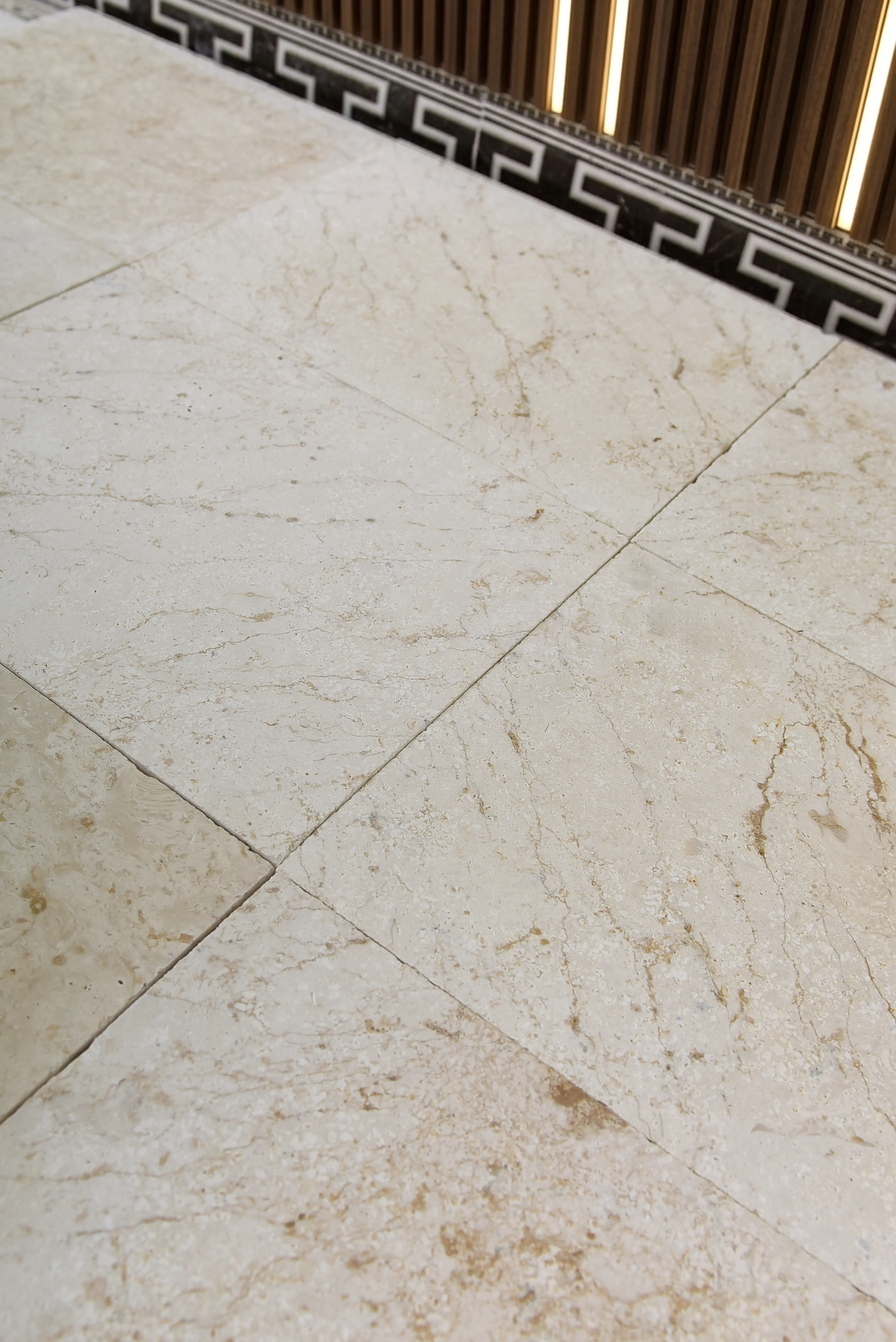
- Tumbled travertine produces naturally textured, antiqued edges that increase surface grip — a practical finish for pool decks and informal garden paving
- Unfilled brushed travertine retains open voids; while aesthetically distinctive, those voids collect debris in outdoor applications and require more consistent maintenance
Finish also dictates your sealing schedule. Polished granite needs resealing approximately every three years under moderate foot traffic. Honed travertine typically requires an annual penetrating sealer application to maintain adequate moisture resistance — a maintenance commitment you need to build into your project documentation from day one.
Granite Split Stone Tiles and Thickness Considerations
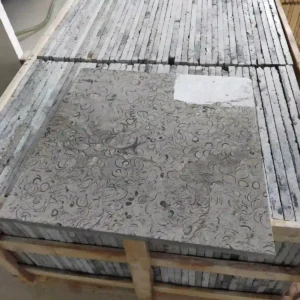
Specifying granite split stone tiles introduces a thickness variable that directly affects your base design. Split-face granite — where the stone is cleaved rather than sawn — produces a naturally textured surface with thickness variation of ±5–8mm across a single piece. That’s manageable in wall cladding applications where the variation adds visual depth, but in floor paving it creates a lippage challenge your setting bed needs to absorb.
For floor applications using granite split stone tiles, increase your mortar bed depth to 40–50mm rather than the standard 25–30mm you’d use for sawn tile. This gives you adequate adjustment range without creating hollow spots under thin sections. In wall cladding, the variation actually works in your favour — the shadow lines produced by split-face texture read as premium detailing in natural light.
- Standard sawn granite tile for flooring: 20mm nominal thickness, ±2mm tolerance
- Split-face granite wall cladding: 20–40mm variable thickness depending on cleavage depth
- Travertine pavers for exterior use: 30mm nominal is the minimum worth specifying — thinner material risks flexural failure under point loading
- Interior travertine tile: 12mm honed works for residential flooring; specify 15mm for commercial and heavy-use applications
UV Exposure, Colour Stability, and Surface Weathering
This is where the granite stone tile vs travertine comparison produces its most significant long-term divergence — and where most specs underestimate the variables involved. UV exposure affects both materials, but through different mechanisms that demand different management strategies.
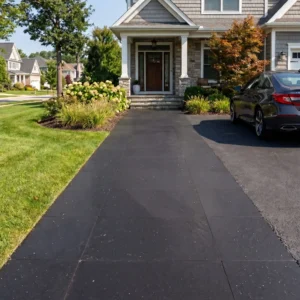
Granite’s mineral composition — particularly iron-bearing minerals in darker varieties — is susceptible to surface oxidation under prolonged UV and moisture cycling. Black and dark grey granites are the most affected: you may notice a subtle bronzing or surface rust toning on iron-rich material after several years of direct sun exposure. This is a cosmetic change, not a structural one, but it matters for specifications where colour consistency is a design requirement. Lighter granites with higher quartz and feldspar ratios show far less UV-driven colour shift. A penetrating silane/siloxane sealer applied annually on exterior granite slows oxidation by reducing moisture ingress into the mineral structure — moisture is the catalyst that accelerates iron oxidation, so UV and moisture together create the most aggressive weathering environment.
Travertine’s calcium carbonate base reacts differently to UV. The material itself is photostable — the calcium carbonate doesn’t oxidise or shift colour in the way iron-bearing minerals do. What you’ll notice instead is surface seal degradation: UV breaks down organic sealers faster than in shaded environments. In high-UV installations, your travertine resealing schedule should move from annual to every eight to ten months. Failing to maintain seal integrity allows UV-enhanced thermal cycling to open micro-fissures at the vug edges in filled travertine — a gradual process, but one that accelerates filler loss and staining risk over a five-year horizon. At Citadel Stone, we recommend impregnating sealers with UV-stable chemistry for any travertine specification in sun-exposed exterior applications — they outperform standard penetrating sealers in both protection duration and colour-neutrality.
According to Natural Stone Institute granite durability and application specifications, surface finish selection plays a direct role in weathering behaviour: flamed and brushed finishes on granite weather more evenly than polished finishes under prolonged outdoor exposure because the micro-texture distributes UV and moisture stress across a larger effective surface area rather than concentrating it at the polish plane.
Thermal Performance and Base System Compatibility
Both granite and travertine expand and contract with temperature change, but at different rates. Granite’s coefficient of thermal expansion sits around 4.7–8.0 × 10⁻⁶ per °F depending on mineral composition. Travertine, being calcium carbonate, runs slightly lower at 3.3–5.6 × 10⁻⁶ per °F. The practical implication: in large-format installations covering more than 600 square feet of continuous pavement, granite accumulates more dimensional movement across a temperature swing than travertine does.
Your expansion joint spacing should reflect this. For granite exterior paving, place movement joints every 12–15 feet. For travertine, 15–18 feet is defensible in most climates, though in freeze-thaw regions you should maintain the tighter 12-foot spacing regardless of material — the sub-base movement in frost-heave conditions is a more significant force than the stone’s own thermal expansion.
- Granite expansion joint minimum: every 12 feet in climates with more than 30°F seasonal swing
- Travertine expansion joint minimum: every 15 feet under moderate conditions, 12 feet in freeze-thaw zones
- Both materials require a properly compacted aggregate base — 6 inches minimum for pedestrian applications, 8–10 inches for vehicular
- In high-UV environments, light-coloured travertine reflects more solar radiation and runs cooler underfoot than dark granite — a genuine barefoot comfort advantage for pool deck applications
Maintenance, Sealing, and Long-Term Appearance
Maintenance expectations are something you should communicate clearly to your client before specification is finalised — because the two materials represent genuinely different ongoing commitments. Granite stone tile in a honed or flamed finish is highly resistant to staining and requires relatively minimal ongoing care. A quality penetrating sealer applied every two to three years and routine cleaning with a pH-neutral stone cleaner is the standard protocol. Polished granite needs more attention in food-service or outdoor kitchen contexts where acidic spills are common — citrus and vinegar will etch polished granite if left in contact long enough.
Travertine requires more consistent maintenance investment. The open calcium carbonate structure is reactive to acid — anything below pH 7 can cause surface etching. In outdoor settings where acid rain or organic debris (fallen leaves, pine needles) creates localised acidic conditions, you’ll see etch patterns develop on unsealed or under-sealed travertine within two to three seasons. Annual resealing — or eight-to-ten months in high-UV conditions — is non-negotiable for exterior travertine. For clients who want a genuinely low-maintenance exterior stone, granite is the more honest recommendation. Travertine rewards those who engage with it — its patina deepens attractively over time with proper care, but neglect accelerates deterioration.
Check warehouse stock levels for both materials before finalising your project timeline. Travertine in specific fills and finishes can have longer lead times depending on quarry production cycles, whereas honed and flamed granite tile formats are typically held in deeper warehouse inventory and ship within standard lead times.
Application Matching: Which Material Belongs Where
Reviewing travertine alternatives and complementary options is worthwhile at the specification stage — Citadel Stone granite alternatives cover a range of formats and finishes that bridge the gap between the two material families where the spec calls for something in between.
For most application types, the choice between granite stone tile and travertine comes down to three variables: traffic intensity, maintenance tolerance, and design register.
- High-traffic commercial flooring: granite, honed finish, 20mm minimum — its abrasion resistance and low maintenance frequency justify the premium over travertine in heavy-use environments
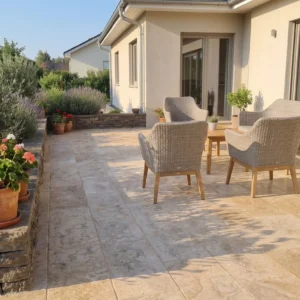
- Residential pool deck: tumbled or honed travertine at 30mm — cooler surface temperature underfoot, naturally textured for grip, and the vug pattern adds visual warmth that suits outdoor living zones
- Exterior cladding: granite split stone tiles in split-face or flamed finish perform exceptionally well — highly resistant to weathering and UV with minimal colour shift over decades of service life
- Interior feature walls: both materials work, but travertine’s natural vug texture creates more depth at close range; granite’s crystalline pattern reads better at distance
- Kitchen and bathroom flooring: honed granite is the practical choice — acid-resistance matters where cleaning products and food contact are routine
- Spa and wellness interiors: travertine’s warm tonal range and thermal feel underfoot create the sensory environment most designers are chasing in those applications
Sourcing, Budget, and Supply-Chain Planning
Budget planning for granite stone tile vs travertine needs to account for material cost, installation complexity, and ongoing maintenance cost over a realistic service horizon — not just the per-square-foot material price at the point of purchase. Granite typically runs 15–30% higher in material cost than comparable travertine grades, but the lower maintenance frequency partially offsets that differential over a ten-year ownership period.
Citadel Stone sources both materials directly — granite from quarries across multiple continents and travertine from Turkey and selected quarries from the Middle East — which means quality is evaluated at the source rather than accepted on specification sheets alone. That matters more than most buyers realise: travertine density varies significantly between quarry strata, and a warehouse that doesn’t evaluate stone batch by batch will ship material with inconsistent absorption characteristics that creates sealing inconsistencies across the same installation. Our technical team inspects incoming stone for fill consistency, void depth, and finish uniformity before material enters the inventory cycle.
Truck delivery logistics differ between the two materials at scale. Granite’s higher density — typically 168–175 lbs per cubic foot — means a truck load carries fewer square feet than an equivalent travertine shipment at 145–155 lbs per cubic foot. For large projects, that calculates into additional freight runs that need to be factored into your project timeline and logistics budget. Verify your truck access constraints before scheduling delivery — heavy stone pallets require adequate clearance and ground bearing capacity that isn’t always present on residential sites.
The USGS dimension stone data confirms granite’s position as one of the most extensively used natural stone types in construction globally — a supply chain depth that provides reliable availability across standard formats and finishes. Travertine has equally robust global production, with Turkey being the dominant source for the commercial-grade material most projects specify. Lead times from warehouse to site typically run one to two weeks for stocked formats — custom dimensions or specific fills can extend that to four to six weeks, so build that buffer into your programme.
Expert Summary
The granite stone tile vs travertine decision resolves cleanly when you work through the actual performance criteria rather than defaulting to category generalisations. Granite brings higher compressive strength, lower porosity, and highly resistant surface behaviour that minimises ongoing maintenance obligations — it’s the right call for high-traffic commercial applications, exterior cladding, and any project where acid contact is a live risk. Its UV-driven colour change in iron-rich varieties is worth disclosing upfront, and finish selection should factor in the specific sun exposure profile of the installation.
Travertine offers a warmer design register, superior barefoot comfort in pool deck applications, and a patina that deepens attractively with proper care. Its maintenance requirements are real and shouldn’t be minimised in your client conversations — annual sealing, accelerated to eight-to-ten months in high-UV environments, is the price of keeping travertine looking the way it was specified. As you explore material formats and layout configurations for your project, large-format stone design ideas offer useful visual reference for how both granite and travertine read at scale across different application types. Both materials deliver genuinely strong performance when the specification matches the application — the gap between a well-executed installation and a problematic one almost always traces back to mismatched expectations at the selection stage, not the materials themselves. Direct from quarries in Turkey, the Mediterranean, and beyond, Citadel Stone stocks both granite stone tile and travertine for varied budgets.
Related reading: 4×8 tile vs 6×12 tile · How to Install 2×4 Tile in a Herringbone Layout · choosing quarry stone tile.