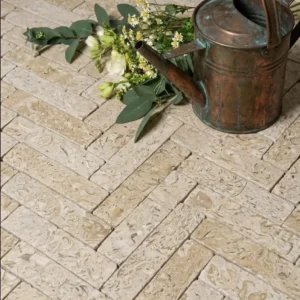
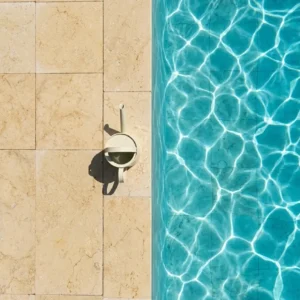
Quarry stone tile selection comes down to variables most buyers don’t discover until after they’ve committed to a material — absorption rates, surface finish compatibility with adhesive type, and the dimensional tolerances that determine whether a large-format lay-up stays true or telegraphs every substrate irregularity. Choosing quarry stone tile correctly means evaluating these factors before the order is placed, not after the first course is set. The decisions you make at the specification stage determine how the finished surface performs across years of thermal cycling, foot traffic, and cleaning chemistry.
What Quarry Stone Tile Actually Is
The term gets used loosely in the trade, so it’s worth pinning down exactly what you’re working with. Quarry stone tile refers to natural stone cut directly from a quarried block — typically limestone, travertine, basalt, or marble — processed to a consistent thickness and dimensioned for tile applications. It’s distinct from porcelain tile made to look like stone, and it’s distinct from rough-cut flagstone used in landscape applications. You’re dealing with a material that carries genuine geological variation from slab to slab, which creates both its visual appeal and its specification complexity.
The Natural Stone Institute provides ASTM tile stone specifications and standards that define absorption class, modulus of rupture, and compressive strength benchmarks for dimension stone used in tile applications. Understanding where your selected material falls in these classifications shapes every downstream decision, from adhesive selection to joint width.
Surface finish also carries structural implications that go beyond aesthetics. A honed finish on limestone, for example, closes surface pores slightly compared to a tumbled finish — which affects both sealer penetration depth and the coefficient of friction under wet conditions. Think about finish selection as a performance variable, not just a design preference.
Material Types and Their Real Performance Differences
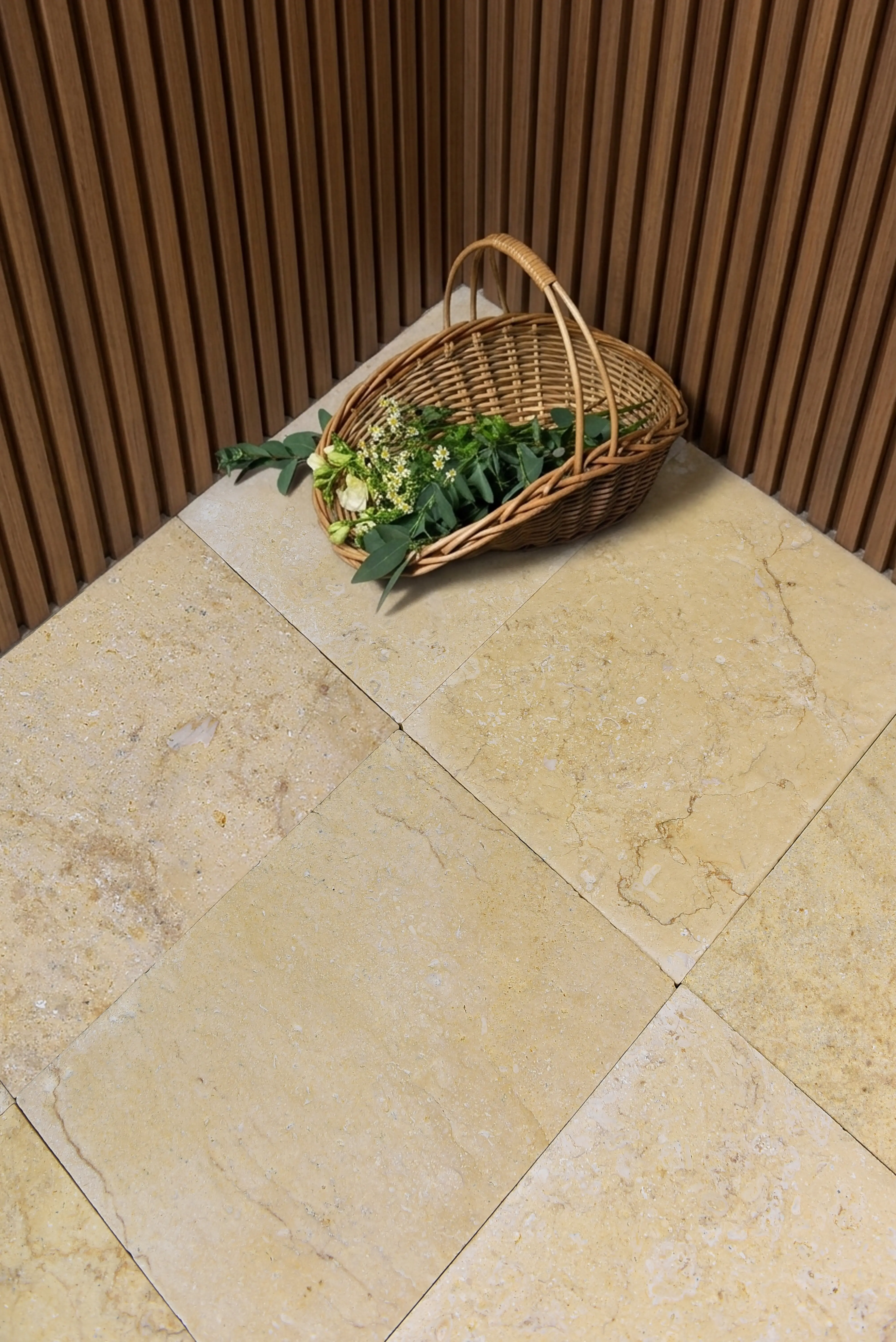
Limestone is the workhorse of quarry stone tile applications — highly versatile, available across a wide density range, and responsive to multiple finishing processes. What most buyers don’t account for is the density variation within limestone itself. A dense, low-absorption limestone from Turkey behaves very differently from a softer, higher-porosity variety sourced from Middle East quarries. The ASTM C568 classification breaks limestone into three groups based on absorption and compressive strength, and you should confirm which group your selected stone falls into before writing a spec.
- Group I (low density): absorption above 12% — not recommended for high-traffic floor applications
- Group II (medium density): absorption 3–12% — suitable for most interior floor and wall applications with appropriate sealing
- Group III (high density): absorption below 3% — the correct choice for exterior paving, wet areas, and freeze-thaw environments
Travertine occupies a different category. Its characteristic void structure means raw, unfilled travertine has genuine structural gaps that can trap moisture, cleaning product residue, and debris. Filled travertine resolves this but introduces a colour-matched filler that may behave differently from the parent stone under thermal stress. For interior floor tiles, filled and honed travertine is often the practical choice. For exterior applications, the choice between filled and unfilled shifts based on drainage conditions and how the tile will be sealed.
Basalt is the material that consistently surprises buyers who haven’t worked with it before. Its compressive strength typically exceeds 20,000 PSI, making it one of the most structurally capable natural stone tile options available. The trade-off is that its very density makes it heavier per unit area — a logistical consideration for upper-floor installations and for truck delivery planning when quantities run high. Your structural engineer should confirm floor loading capacity before specifying basalt tile in large-format sizes on elevated slabs.
Reading Technical Data Sheets Before You Buy
Every credible stone supplier should be able to produce technical data for the specific material you’re specifying. The data points that actually matter for choosing quarry stone tile in demanding applications are:
- Water absorption percentage (ASTM C97) — directly determines suitability for wet and exterior use
- Modulus of rupture (ASTM C99) — governs minimum thickness for a given span and load scenario
- Compressive strength (ASTM C170) — relevant for high-traffic and vehicle-loaded applications
- Abrasion resistance (ASTM C241) — the underrated metric that predicts surface wear in corridors and entryways
- Coefficient of thermal expansion — critical for specifying joint widths correctly, especially in exterior applications
The ASTM natural stone tile testing standards for these properties are publicly accessible and give you the vocabulary to hold suppliers accountable. Any supplier who can’t produce this data for their listed products is one you should approach carefully. At Citadel Stone, we run absorption and dimensional tolerance checks at our warehouse before materials are released for dispatch — it’s the kind of quality gate that prevents field surprises on large projects.
Surface Finish Selection for Quarry Stone Tile
Your finish choice locks in the slip coefficient, sealing strategy, and long-term maintenance commitment for the installation. These four finishes each carry distinct performance profiles:
- Polished: highest aesthetic impact, lowest friction coefficient — avoid for exterior or wet interior applications unless COF-rated for wet use
- Honed: smooth but matte, with a friction coefficient that suits most interior floor applications — the practical default for residential and light commercial flooring
- Brushed or aged: textured surface that improves grip while retaining a refined appearance — well-suited to exterior terraces and pool surrounds
- Tumbled: irregular, rounded edges with a deliberately weathered texture — high friction, highly forgiving of installation imprecision, ideal for informal outdoor settings
The Tile Council of North America’s natural stone tile installation standards include guidance on acceptable COF values by application type. Interior wet areas are assessed under ANSI A326.3, which sets a minimum wet DCOF of 0.42 and replaced the withdrawn ASTM C1028 static test in 2014. Tumbled and brushed finishes leave an open, textured face; polished finishes on dense limestone or travertine leave a much smoother one, so confirm the wet DCOF for the finish you specify.
Sizing, Thickness, and Format Considerations
Format selection is where quarry stone tile projects most often run into field problems. Large-format tiles — anything above 18×18 inches — demand a flatter substrate than most builders plan for. The industry standard tolerance for a substrate receiving large-format stone tile is a maximum 1/8-inch variation over a 10-foot straightedge. Substrate prep that meets standard concrete flatness tolerances but not large-format tile flatness tolerances will cause lippage, and lippage in natural stone is both a tripping hazard and a cleaning trap.
Thickness selection follows application type:
- 3/8 inch (10mm): interior wall tile and light-traffic interior floors over solid substrates
- 1/2 inch (12mm): standard interior floor tile for residential and moderate commercial use
- 3/4 inch (20mm): exterior paving applications, steps, and high-traffic commercial floors
- 1.2 inch (30mm) and above: vehicle-accessible paving and load-bearing applications
Browsing our quarry stone tile selection gives you a practical view of the format and thickness combinations that perform best across interior and exterior applications. The range spans from compact 6×12 formats suitable for bathroom floors to larger exterior paving dimensions, and the thickness options align with the application load requirements described above.
Seasonal Installation Timing and Adhesive Performance
The installation window matters more for quarry stone tile than most buyers realize, particularly for exterior applications and large interior slabs where modified thinset is the adhesive of choice. Modified thinset mortars cure through a combination of hydraulic set and polymer film formation — and the polymer component is temperature-sensitive in ways that the product data sheet doesn’t always communicate clearly.
For exterior tile installations, the practical constraints are:
- Substrate temperature below 40°F causes polymer film formation to stall — the mortar reaches adequate hardness for foot traffic but never achieves full bond strength
- Substrate temperature above 95°F accelerates open time loss — in warm months, morning installation (before 10 a.m.) is preferable to afternoon work when substrate surfaces can significantly exceed air temperature
- Direct sun on a dark stone tile during installation can create a surface temperature 20–30°F above ambient — misting the substrate and back-buttering immediately before setting reduces this risk
For interior installations, HVAC-conditioned spaces reduce weather sensitivity substantially. The timing concern shifts to humidity control — ambient relative humidity above 75% can extend curing time for epoxy grouts and some premium adhesives by 30–40% beyond manufacturer estimates. Schedule grouting for periods when the building’s HVAC system is running and stabilized, rather than during commissioning phases, to avoid this complication. For major exterior projects, planning installation for shoulder seasons — spring and early autumn — gives you the temperature windows that adhesive manufacturers actually designed their products around.
Grout Joint Width and Movement Accommodation
Natural stone tile requires wider grout joints than porcelain tile of equivalent dimensions — not because of aesthetic preference, but because dimensional variation in natural stone is greater than in manufactured tile. A rectified porcelain tile held to ±0.02 inch tolerance can be laid with a 1/16-inch joint. Quarry stone tile with the typical ±0.04–0.06 inch dimensional variation needs a minimum 3/16-inch joint to absorb size differences without causing lippage at the intersection of adjacent tiles.
Movement joints are a separate consideration from grout joints. The guideline of one movement joint per 8–10 linear feet in interior applications tightens to one per 6–8 feet in exterior applications where thermal cycling is more pronounced. Stone tile installed without adequate movement accommodation will transmit substrate stress directly to the tile, and the result is typically a clean fracture along the weakest joint plane — often at a corner or an area of concentrated load. Specifying movement joint locations in the tile layout drawing before installation begins is the professional standard, not an optional extra.
Sealing Strategy and Maintenance Planning
Choosing quarry stone tile without planning its sealing programme is like selecting a high-performance material and then neglecting the maintenance schedule that keeps it performing. Penetrating sealers — impregnators that block pore space below the surface without forming a film — are the appropriate choice for most quarry stone tile applications. Film-forming sealers create a surface coating that can peel, yellow, and trap moisture under thermal cycling; they’re generally not recommended for natural stone tile in demanding environments.
Your sealing schedule depends on porosity class and application:
- High-porosity limestone (Group II) in a kitchen floor: seal before grouting, and reseal every 12–18 months depending on cleaning frequency
- Medium-porosity travertine in a bathroom: impregnating sealer before grouting, with an annual maintenance seal
- Low-porosity basalt or dense limestone (Group III) in an exterior application: initial sealer application may be optional, though a periodic topical treatment helps resist staining from organic matter
The water-bead test is your field diagnostic — apply a few drops of water to an unsealed or aged-sealed stone surface and count the seconds until absorption begins. Immediate absorption indicates resealing is overdue. A bead that holds for 4–5 minutes indicates the sealer remains effective. Build this check into your maintenance programme at least annually for interior installations and twice yearly for exterior applications exposed to seasonal weather patterns.
Ordering, Logistics, and Project Planning
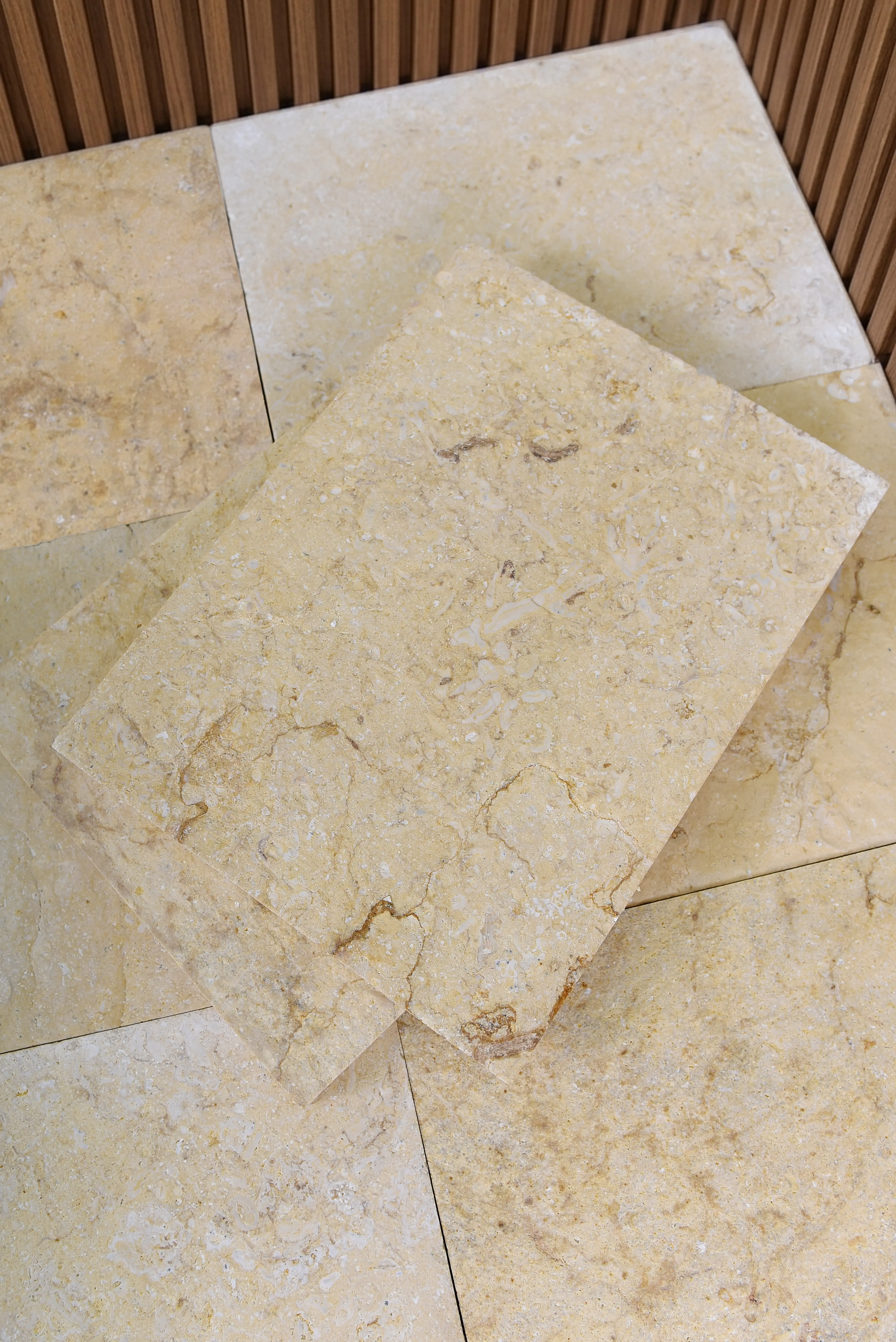
Quarry stone tile arrives in crates, and crate weights for larger format stone can run 800–1,200 lbs per unit. Your truck access and site receiving plan need to account for this before materials ship. Forklift access, crate staging areas, and safe stacking limits are not afterthoughts — they’re planning items that prevent material damage and site injuries during delivery.
Citadel Stone maintains stocked warehouse inventory that allows faster fulfilment than direct import lead times for most project quantities. Verifying warehouse stock levels before confirming your project schedule saves you from a common mid-project delay — discovering that the material you specified is on back-order with a 10–12 week lead time. Ordering 10–15% overage on quarry stone tile is standard practice; natural stone lots vary between production runs, and matching a replacement tile to an existing installation is one of the more difficult problems in the trade.
Palletised delivery by truck to a site with reasonable access is straightforward for most residential and commercial projects. For upper-floor deliveries or sites with access restrictions, confirm with your supplier whether the delivery includes liftgate service and how far from the truck the driver is contracted to move materials. These logistics questions matter more than most buyers realize until delivery day arrives.
Final Recommendations
The specification decisions that define a successful quarry stone tile installation aren’t the glamorous ones — they’re the absorption classification check, the substrate flatness verification, the movement joint layout, and the adhesive temperature window that determines whether you install in the morning or reschedule for a cooler day. Choosing quarry stone tile correctly means running through these variables systematically before purchase, not troubleshooting them after the material is set. Your grout joint width, your sealing programme, and your format-to-substrate match are all pre-decisions that shape the installation’s decades of service life. As you finalize your material plan, complementary layout approaches can also influence how the stone reads in the finished space — herringbone tile layout techniques offer a practical look at how format and pattern interact in real installations. From premium quarries in Turkey and the broader Middle East region, Citadel Stone curates quarry stone tile across varied finishes and sizes.
Related reading: How Much Do 6×12 Travertine Tile Prices Run? · 4×8 tile vs 6×12 tile · rectangular travertine tile sizes compared.