Why Format Scale Drives the Entire Design Decision
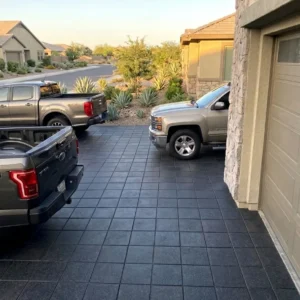
Big tile and stone ideas fail most often not at the material selection stage but at the format selection stage — specifiers choose color first and format second, which is exactly the wrong order. The format you choose — whether a 24×48 limestone slab or a 48×48 porcelain-look natural stone tile — determines grout line frequency, perceived room size, and the spatial rhythm your eye follows across floors, walls, and outdoor terraces. According to NSI stone tile specifications, large-format stone behaves differently from smaller mosaic units under thermal cycling and substrate movement — and your specification needs to account for that from the start. Getting this sequence right is what separates installations that perform beautifully for decades from those that generate field corrections within the first year.
Idea 1: Continuous Floor Planes With Matched Slabs
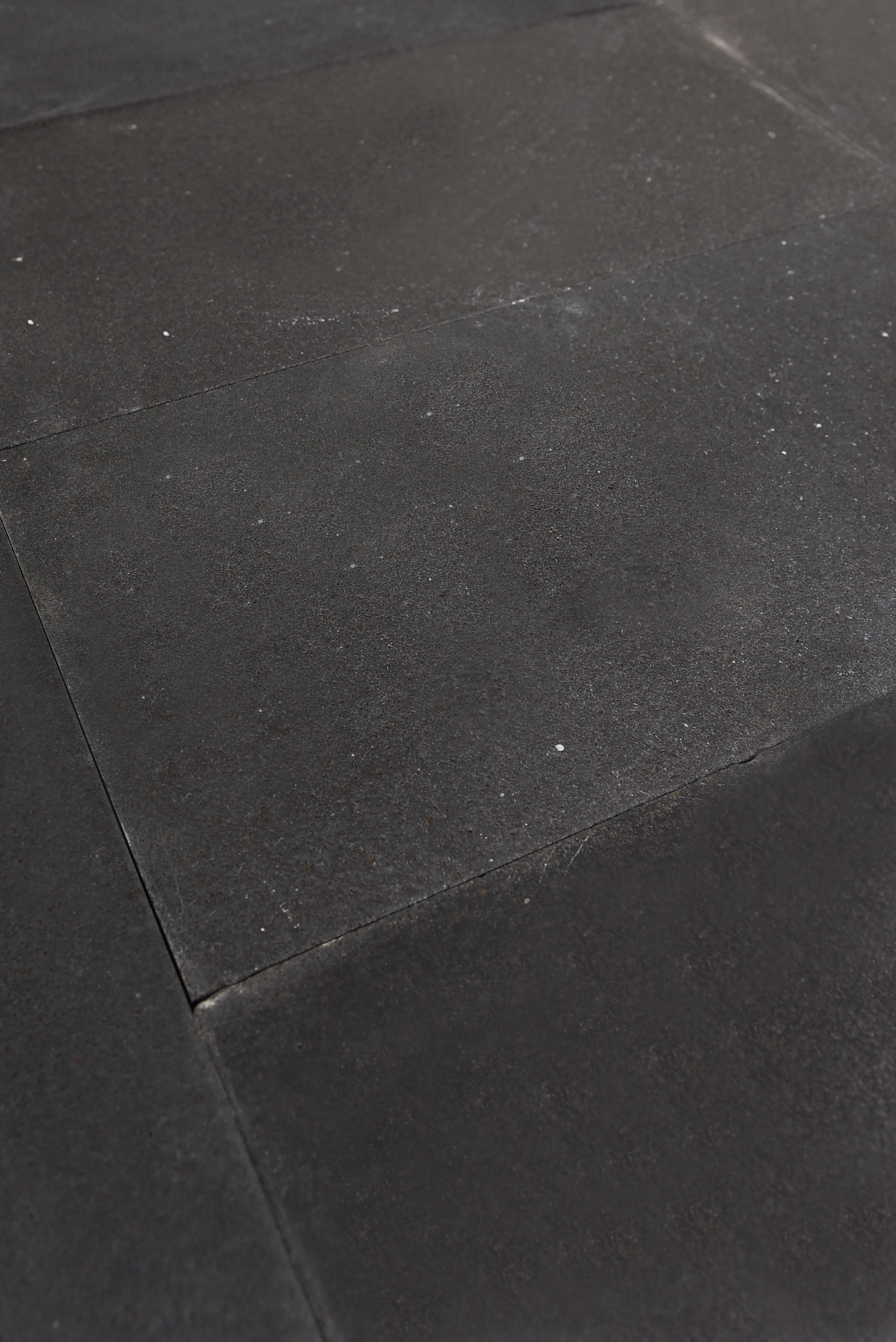
Your most immediate impact from large-format stone comes when you run matching slabs continuously from an interior living zone out through sliding doors onto a terrace. The slab-to-slab alignment eliminates the threshold moment that typically breaks spatial flow. You’ll want a maximum lippage tolerance of 1/32 inch between adjacent units — achievable with large-format setting beds of medium-bed mortar at 3/16 to 1/2 inch depth.
- Choose stone with consistent vein direction so the book-match effect reads naturally across the threshold
- Confirm your substrate deflection is within L/360 — large-format stone is highly resistant to cracking only when the substrate flex stays within this tolerance
- Slope exterior sections at 1/8 inch per foot minimum for drainage without disrupting the visual plane
- Allow an expansion joint at the interior-exterior transition even when using the same material — differential thermal movement across the threshold is real and measurable
Idea 2: Feature Walls Using Stone Face Tiles
Stone face tiles in large formats — think 12×24 or 16×32 oriented vertically — create dramatic accent walls without the visual noise of smaller mosaic patterns. The key specification detail most designers miss is back-buttering coverage. You need 95% adhesive contact on walls (versus 80% on floors), because the bond must resist peel forces rather than compression alone. Travertine and limestone stone face tiles are particularly well-suited for this application because their natural surface variation reads as intentional texture at scale, not inconsistency.
Your grout joint selection here matters enormously. A rectified large-format stone tile allows joints as tight as 1/16 inch, which reads almost seamlessly on a feature wall. Non-rectified units need 1/8 inch minimum — still clean, but the joint shadow line becomes part of the composition. For landscape-integrated interiors, a rough-hewn limestone face tile in warm ivory tones bridges interior stone walls directly with desert xeriscaping or Mediterranean garden plantings visible through glazing.
Idea 3: Large-Format Slabs for Outdoor Terraces
The ASLA outdoor paving guidance consistently emphasizes that large-format stone on terraces requires a compacted aggregate base of at least 4 inches for residential loads and 6 inches for vehicular or event-use terraces. Cutting corners on base depth is the single most common field failure in big tile and stone terrace installations — the slab telegraphs every void in the substrate within 18 months.
- Use 2-inch nominal thickness for slabs spanning 24 inches or more — 3/4-inch tiles work only over a fully bonded concrete substrate
- Thermal expansion in light-colored limestone runs approximately 4.6 × 10⁻⁶ per °F — factor this into joint spacing calculations, especially in climates with significant temperature swings
- Sand-set large slabs only when joints are 1/2 inch or wider; tighter joints require mortar bed or direct adhesive to prevent rocking
- Brush-finished or tumbled surfaces outperform polished finishes outdoors in wet conditions by a significant margin on the slip-resistance scale
Idea 4: Landscape Integration and Material Harmony
One of the strongest design moves with big tile and stone formats is using the same large slab material as both the hardscape surface and the planting bed border — it dissolves the boundary between built and planted space. This approach works especially well with warm-toned travertine in tropical planting schemes, where the stone’s open pore structure and warm ivory palette mirror the organic texture of broad-leaf plantings. For modern minimalist landscapes, a bookmatched grey limestone or dark basalt slab laid in a strict grid grounds the design without competing with the architecture.
Desert xeriscaping responds particularly well to large-format buff limestone or sandstone slabs — the warm ochre tones echo the surrounding soil palette, and the expansive surface area keeps ground-level temperatures cooler than dense dark stone under intense UV exposure. Traditional colonial garden designs often call for irregularly edged large flagstone, where the format scale maintains formality while the natural edge reads as intentional craft. Explore the Citadel Stone design collection to see how travertine formats translate across these distinct landscape styles.
Idea 5: Large-Format Stone in Kitchens and Bathrooms
Specifying big tile and stone for wet interior spaces introduces a performance dimension that aesthetic choices alone can’t resolve. Your bathroom floor needs a coefficient of friction (COF) of at least 0.42 (DCOF) when wet — and not every large-format stone finish meets this threshold. Honed travertine typically reads between 0.45 and 0.55 DCOF, while polished marble or limestone can drop below 0.40 in the same test. The finish you choose for a 24×48 floor tile in a bathroom is a safety specification, not a style preference.
- Heated floor systems work exceptionally well under large-format stone — the slab’s thermal mass distributes heat evenly without the hot spots common with smaller mosaic tiles
- Specify large-format stone at 3/8-inch thickness for bathroom floors on a concrete substrate — thinner tiles risk flexure failure at the unsupported centre of large panels
- Kitchen islands clad in matching large-format stone face tiles create a unified material language that reads as intentional architecture rather than applied finish
- Coordinate stone face tile direction with floor grain to avoid visual collisions between vertical and horizontal material reads
Idea 6: Vertical Cladding and Building Facades
Large-format natural stone on building facades is an entirely different specification discipline from interior or patio work. Facade stone panels must account for wind load, differential movement between the stone and the structural substrate, and long-term anchor integrity. The ASTM stone performance and testing standards for exterior cladding specify flexural strength testing (ASTM C880) as the critical metric — not compressive strength, which dominates interior spec conversations.
Your panel thickness for mechanically anchored facade stone typically starts at 1.25 inches for spans up to 36 inches — thinner panels in large formats need engineered back-rod systems to distribute load. Granite and basalt are the preferred choices here because their low absorption rates (typically below 0.4%) make them highly resistant to freeze-thaw spalling over decades of service life. Limestone and travertine can work on facades in dry climates but require sealed edges and strict moisture control at anchors. At Citadel Stone, we recommend discussing facade panel applications directly with our technical team — the sourcing, thickness, and finish combination needs to align with your project’s structural engineering before material selection is locked in.
Idea 7: Pool Surrounds and Wet-Zone Stone
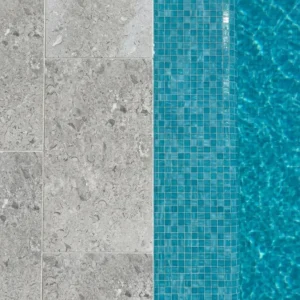
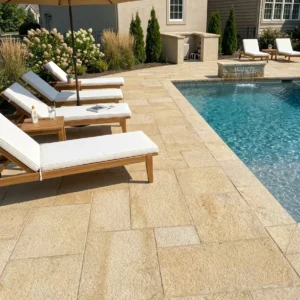
Pool surrounds are where big tile and stone format selection gets genuinely technical. Large-format stone around a pool presents a specific challenge: the slab must drain quickly, stay cool underfoot, and handle constant wet-dry cycling without surface degradation. Travertine’s open pore structure actively wicks moisture away from the surface, which is why it remains the most specified natural stone for pool decks. Its surface temperature under direct sun typically runs 15–20°F cooler than dense granite of equivalent colour — a meaningful difference for bare feet.
- Specify tumbled or brushed travertine in formats up to 24×24 for pool decks — larger formats increase lippage risk as the substrate heats and moves
- Filled travertine is preferred over unfilled for pool surrounds — open voids collect algae and pool chemicals, accelerating surface staining
- Apply a penetrating sealer rated for pool chemical exposure before grouting, then annually thereafter
- Maintain a 1/4-inch expansion joint at all fixed edges — coping, walls, and equipment pads — because pool deck slabs move significantly with seasonal temperature changes
Idea 8: Accent Formats and Stone Medallions Within Large Fields
Large-format stone fields gain compositional depth when you interrupt the grid with a contrasting accent format or a stone medallion. This design move is more technically demanding than it looks — the medallion stone and the field stone need compatible coefficients of thermal expansion or you’ll see joint failures within two to three heating seasons. Marble-on-limestone combinations, for example, often present thermal mismatch issues that require wider perimeter joints around the medallion to accommodate differential movement.
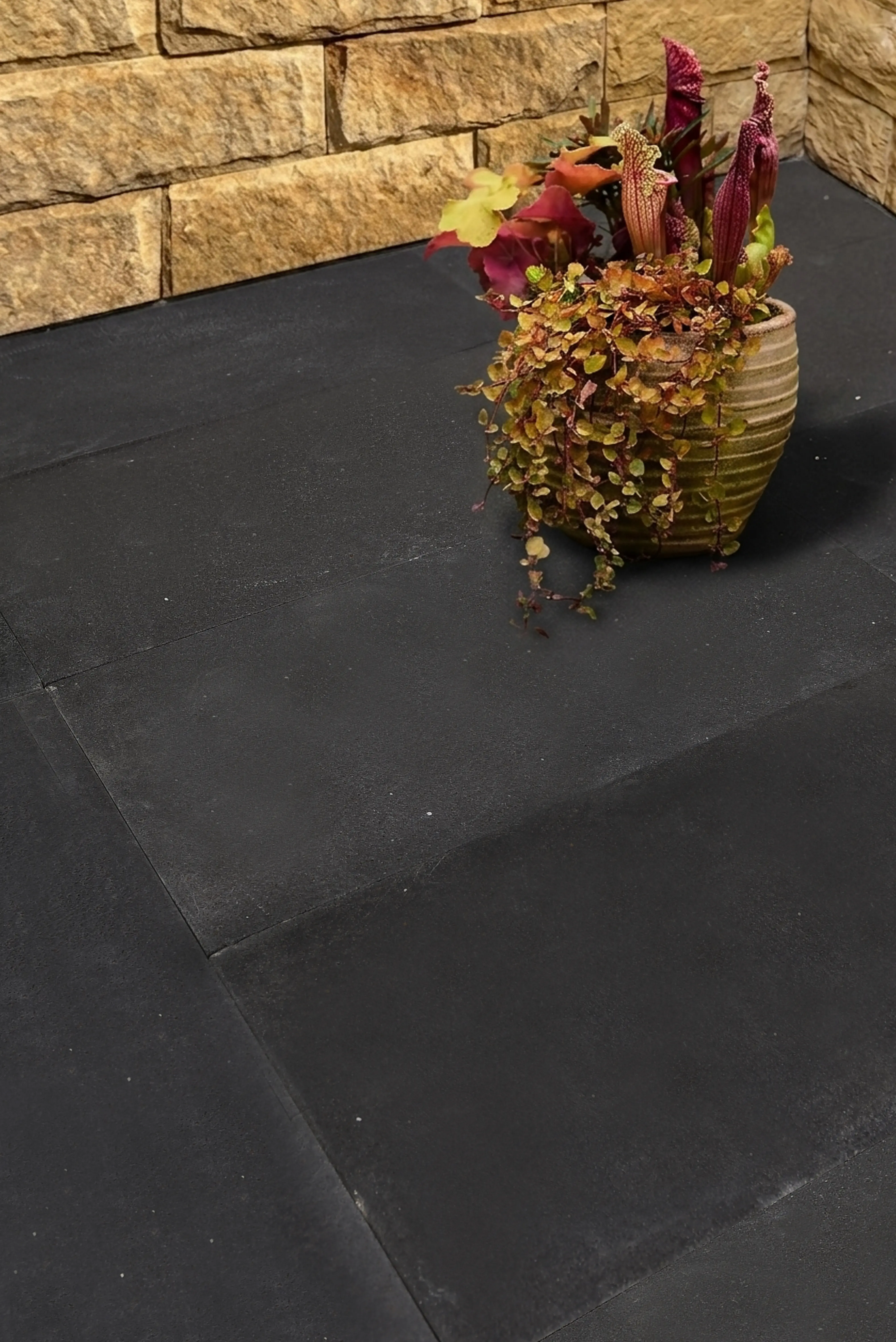
Your design resolution for accent work depends on how precisely the fabrication tolerances are held. Citadel Stone’s warehouse inventory includes pre-checked dimensional stone that arrives within ±1/32 inch of specified thickness — critical when you’re setting accent borders against large-format field tiles where lippage at transitions is immediately visible. Verify your warehouse lead times early when combining multiple stone formats in one project; the coordination window between field tile and accent medallion delivery can compress faster than most project schedules anticipate.
Getting Big Tile and Stone Specifications Right
Executing big tile and stone ideas correctly means resolving format scale, substrate preparation, thermal movement, and finish selection simultaneously — not sequentially. The format drives everything downstream: the mortar system, the joint spacing, the expansion allowance, and the maintenance schedule. Projects where format was chosen last — after color and material — consistently present the most field corrections. Nail the format and thickness first, then let color and finish follow from those structural decisions.
As you plan adjacent stone features beyond the main field surfaces, related applications can inform your overall material approach. For care practices that keep natural stone performing across years of use, natural stone care essentials covers maintenance protocols worth building into your project handoff documents. Stone for nationwide projects arrives from select natural stone quarries worldwide, giving designers wide slabs for seamless open-plan layouts.
Related reading: 6×12 tile cost · 4×8 Tile vs 6×12 Tile: Which Format Wins? · how to install 2×4 tile.