Granite steps consistently outperform competing materials when compressive strength data enters the conversation — ASTM C615-compliant granite typically tests above 19,000 PSI, which puts it in a different structural category than most engineered alternatives. What separates a 30-year installation from one that starts showing edge chipping and surface scaling within a decade isn’t just material selection, though. It comes down to how well you match stone type, grade, finish, and thickness to the specific demands of your project. The stone type and grade guide that follows gives you the specification framework to make those decisions with confidence.
Why Granite Outperforms for Exterior Steps
The density advantage is the starting point. Granite’s crystalline interlocking mineral structure — primarily quartz, feldspar, and mica — gives it a water absorption rate typically below 0.4% by weight when tested to ASTM standards. That low absorption figure is what you’re really buying when you specify granite steps over sedimentary alternatives like sandstone or even many limestones. Moisture infiltration is the primary driver of spalling and surface degradation in step treads, and granite’s near-impermeability addresses that at the material level, before any sealing or treatment is applied.
Field performance across high-foot-traffic entry applications consistently shows that correctly specified granite steps maintain their surface integrity through 20-plus years of use without structural compromise. That durability isn’t accidental — it’s a direct result of the igneous formation process that created the stone over millions of years under extreme heat and pressure. According to NSI granite durability and application data, granite’s formation characteristics translate directly into its resistance to surface wear, thermal stress, and chemical degradation in exterior environments.
You’ll also find that granite’s hardness rating — typically 6 to 7 on the Mohs scale — makes it one of the most abrasion-resistant options available for step treads. In high-traffic residential entries, commercial building approaches, and institutional stairways, that hardness means the nosing (the leading edge of each tread) holds its profile over time rather than rounding and losing its definition. That’s not a cosmetic issue alone — rounded nosings are a slip hazard, and maintaining tread edge definition directly contributes to long-term step safety.
Granite Stone Types for Steps: What the Differences Actually Mean
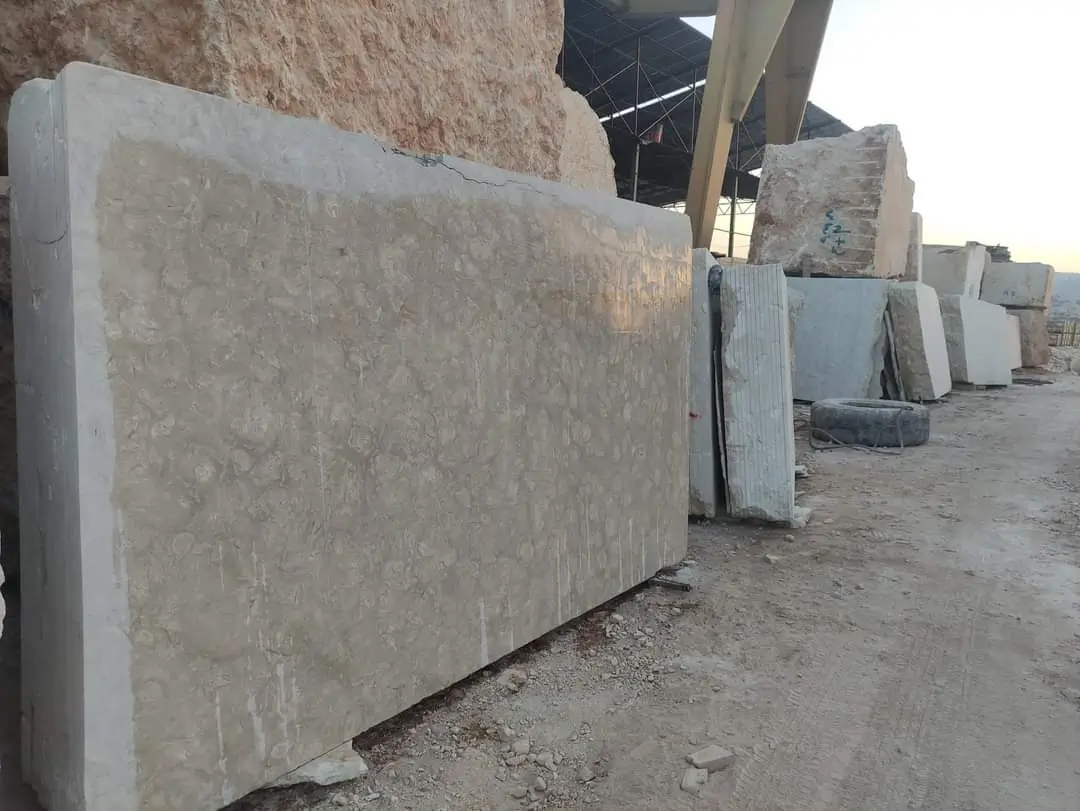
Not all granite stone for steps performs identically in step applications — and this is where many specifications go wrong. The term “granite” in the commercial stone industry covers a broader mineralogical range than the strict geological definition, but from a performance standpoint, the distinctions that matter most are grain structure, mineral density, and quarry origin consistency.
- Fine-grained granites (grain size under 1mm) offer the highest surface hardness and the tightest resistance to moisture infiltration — ideal for exterior entry steps in high-wear conditions
- Medium-grained granites provide a balance of workability and durability, making them the most common specification for residential and commercial step treads
- Coarse-grained granites can exhibit slightly higher porosity at crystal boundaries — verify absorption testing data for any coarse material before specifying it for exterior step use in freeze-thaw regions
- Gneissic or foliated stone sold as architectural granite may contain directional cleavage planes that reduce flexural strength — always request flexural strength data (ASTM C880) for structural step applications
Quarry origin also affects colour consistency across a project. Granite from a single quarry batch will show consistent mineral patterning, which matters when your stair run involves six or more treads. Colour variation between batches from different quarry zones is normal, but visually noticeable if you’re not specifying from a single inventory run. At Citadel Stone, we check batch consistency at the warehouse before fulfillment — this is something specifiers often don’t think to ask about until they receive mismatched material on site.
Granite Grades Explained: Commercial, Standard, and Select
Grade designations in the natural stone trade don’t follow a single universal standard, but the common three-tier framework — commercial, standard, and select — gives you a useful working reference. Understanding what each grade actually means in practical terms helps you avoid over-specifying for straightforward applications or under-specifying where appearance and performance both matter.
- Commercial grade: acceptable for structural applications where appearance is secondary — may include minor fissures, colour variation, and minor fabrication irregularities; appropriate for utility stairs and back-of-house applications
- Standard grade: the typical specification for most residential and mid-range commercial projects — consistent colour within normal variation ranges, no structural fissures, square edges within ±2mm tolerance
- Select grade: tight colour and pattern matching, no visible fissures, minimal surface variation — specified for high-visibility entry stairs, architectural feature stairways, and luxury residential projects
The critical point is that grade does not directly correlate to structural performance. A commercial-grade granite step with verified compressive and flexural strength data may outperform a select-grade piece from a different quarry on pure structural metrics. Grade language describes appearance quality and fabrication consistency, not necessarily engineering performance. Your specification should address both independently — appearance grade AND minimum mechanical properties.
For structural step applications, the relevant ASTM standard is C615 for granite dimension stone, which sets minimum requirements for compressive strength, flexural strength, and absorption. Requesting a C615 compliance statement from your supplier is a reasonable and professionally appropriate step in the specification process. According to ASTM C615 granite dimension stone quality standards, minimum compressive strength for granite dimension stone is set at 19,000 PSI — a threshold that most quarried granite comfortably exceeds, but one that’s worth confirming in writing for structural applications.
Thickness and Tread Dimensions: Getting the Structural Numbers Right
Tread thickness is one of the most consequential specification decisions you’ll make, and it’s frequently under-specified in residential projects. The general field guidance for supported granite step treads — meaning treads bearing on continuous masonry, concrete, or steel — is a minimum of 1.5 inches nominal thickness. For cantilevered treads or spans exceeding 36 inches between supports, work with a minimum of 2 inches and verify flexural strength data for the specific material.
- 1.25-inch treads: suitable for low-span, fully supported applications only — not recommended for exterior entry use without engineering review
- 1.5-inch treads: the standard residential specification for supported treads up to 48 inches wide — adequate for most single-family entry stair applications
- 2-inch treads: the commercial standard for public-access stairways, high-traffic entry applications, and any span above 48 inches — provides meaningful safety margin for point loading from concentrated foot traffic
- 3-inch and above: institutional and architectural applications where load-bearing and visual mass both matter — granite stone for steps at this thickness delivers structural performance that exceeds most code requirements by a significant margin
Tread depth and riser height follow building code requirements (typically 11-inch minimum tread depth and 7-inch maximum riser height under IBC and most residential codes), but the stone specification should also account for the overhang or nosing projection. A 1-inch nosing projection is standard for granite step treads — it provides visual definition and a natural drip edge that helps direct water away from the riser face. Confirm that your fabricator accounts for nosing projection in the stated tread dimensions, because there’s a real difference between a 12-inch tread and a 12-inch tread with a 1-inch nosing included in that measurement.
Finish Selection: Balancing Safety, Aesthetics, and UV Performance
Finish selection affects three things simultaneously: slip resistance, long-term appearance retention, and how the stone responds to prolonged UV exposure. These factors interact in ways that aren’t always obvious from a product specification sheet, and getting the balance right matters more for exterior step treads than for most other stone applications.
Flamed finish is the most consistently recommended surface treatment for exterior granite steps, and for good reason. The thermal flaming process creates a roughened, matte surface with a dynamic coefficient of friction that meets or exceeds ADA slip resistance requirements for exterior walkways. According to ADA outdoor surface slip resistance standards, exterior walking surfaces must achieve a minimum static coefficient of friction of 0.6 — flamed granite regularly tests above 0.8 under dry conditions, providing a meaningful safety buffer. The flamed surface also masks surface scratching and wear more effectively than polished finishes, which is a practical advantage in high-traffic step applications.
Here’s what the UV angle adds to your finish decision: polished granite will lose its surface sheen over time when exposed to direct sun. The polished surface doesn’t degrade structurally — it’s a surface optical change driven by UV-induced oxidation of the mineral surface and micro-abrasion from airborne particulate. For steps in a fully sun-exposed entry, specifying a honed or flamed finish eliminates this concern entirely, because those surfaces don’t have a reflective sheen to lose in the first place. You’re essentially future-proofing the appearance of the installation by choosing a finish that looks the same at year fifteen as it did at installation.
- Polished: high aesthetic impact, lowest slip resistance — not appropriate for exterior step treads without anti-slip treatment
- Honed: smooth matte surface, moderate slip resistance — acceptable for sheltered exterior steps, requires sealing for full moisture protection
- Flamed: textured matte surface, highest slip resistance — the preferred standard for exposed exterior steps
- Brushed or antique: mechanically textured finish, similar slip performance to flamed — provides a softer visual aesthetic while maintaining outdoor suitability
- Bush-hammered: heavily textured, maximum slip resistance — typically specified for institutional or industrial stair applications where aesthetic is secondary
UV-driven colour shift is also worth discussing for darker granite varieties. Black and deep charcoal granites can develop a slightly greyed or bronzed surface cast over several years of UV exposure — this is particularly noticeable on polished surfaces. Flamed or honed finishes on dark granites show far less visible colour shift because the surface is already matte. If long-term colour consistency matters for your project, finish selection is a more effective control than sealing alone.
Sealing Granite Steps: Schedules, Products, and UV Considerations
The question of whether to seal natural stone outdoor steps generates more debate than it should. The honest answer is that granite’s low absorption rate means sealing provides less protective benefit than it does for higher-porosity stones like travertine or sandstone — but it’s still worth doing for exterior steps, particularly in heavily exposed, sun-facing installations.
The primary function of a penetrating impregnator sealer on granite step treads is to reduce the rate at which moisture, oils, and surface contaminants enter the stone’s micro-pore structure. Even at sub-0.4% absorption, some moisture movement occurs — and in freeze-thaw regions, reducing that infiltration reduces the cycle of micro-expansion and contraction that eventually contributes to surface spalling. For exterior granite steps in exposed locations, an initial application of a solvent-based impregnating sealer at installation, followed by reapplication every three to five years, is a reasonable maintenance schedule.
UV exposure complicates sealer longevity in a specific way that’s worth understanding. Many water-based sealers break down faster under prolonged UV exposure than solvent-based alternatives because their polymer chains are more susceptible to photodegradation. For exterior granite steps in highly sun-exposed orientations, specifying a UV-stable, solvent-based penetrating impregnator gives you meaningfully longer protection between reapplication cycles. You can explore our granite tread options to see which finishes are stocked and available for your project timeline.
One practical field observation: the first sealing application should go on once the installation mortar has fully cured — typically 28 days for Portland cement-based settings. Sealing too early traps residual alkalinity from the curing mortar in the stone, which can cause efflorescence and surface cloudiness. This is a detail that gets skipped when project timelines are tight, and it’s consistently the cause of appearance issues that get blamed on the stone quality rather than the installation sequence.
Natural Stone Outdoor Steps: Base Preparation and Setting Requirements
The structural performance of granite step treads is only as good as the base they’re bearing on. This is the section of a project spec that gets the least attention and causes the most field problems — and the issues that develop aren’t always visible immediately. Settlement-induced cracking, tread rocking, and joint failure at the riser-tread interface are almost always base failures, not material failures.
- Compacted aggregate base: minimum 6 inches of compacted crushed stone beneath the foundation — 8 inches in freeze-thaw regions where frost heave is a realistic concern
- Concrete substrate: the preferred setting bed for granite step treads — minimum 3,000 PSI concrete, fully cured before stone installation begins
- Setting mortar: a 3:1 sand-to-Portland cement dry-pack mortar bed, typically 1 to 1.5 inches thick, gives you the adjustability needed to achieve consistent tread level across a full stair run
- Reinforcement: rebar or wire mesh in the concrete substrate is not optional for step structures bearing on grade — unreinforced concrete foundations are the leading cause of step settlement in residential installations
- Drainage pitch: each tread should slope away from the structure at 1/8 inch per foot minimum — this is non-negotiable for exterior steps; standing water on granite treads accelerates biofilm growth and increases slip risk regardless of finish
Steps stone installed over a concrete substrate that hasn’t achieved full cure strength will develop microscopic movement at the setting bed interface as the concrete continues to shrink. That movement translates into grout joint cracking and eventually tread instability. Waiting the full 28-day cure period before stone installation isn’t conservative over-caution — it’s the structural minimum that determines whether the installation holds its geometry long-term.
Colour, Pattern, and Long-Term Appearance Under Sun Exposure
Colour selection for granite steps involves more than aesthetics — it affects how the installation reads visually at different times of day, how surface soiling shows, and how the stone’s appearance evolves under long-term UV exposure. These are practical specification considerations that belong in the technical brief alongside strength and finish data.
Lighter granite varieties — whites, creams, and light greys — have a natural advantage in direct sun exposure because they reflect more solar radiation rather than absorbing it. In practice, this means the tread surface temperature on a light grey granite step in full afternoon sun will be meaningfully lower than on a dark charcoal variety. For barefoot or low-footwear use scenarios, that thermal comfort difference is significant. Lighter stones also show less UV-induced surface cast change over time — there’s simply less contrast shift available in a light stone compared to a dark one.
Darker granites — blacks, deep greys, and dark greens — offer a striking visual contrast against light architectural surroundings and tend to hide surface soiling from foot traffic more effectively. The trade-off is higher surface temperature in sun exposure and, on polished finishes, a gradual oxidation-driven surface dulling that develops over three to seven years in heavily UV-exposed orientations. Specifying a honed or flamed finish on dark granite for exterior step applications essentially eliminates this concern by removing the surface gloss from the equation.
- Light granite in full sun: lower surface temperature, minimal UV-driven colour shift, shows surface soiling more readily — clean regularly with pH-neutral stone cleaner
- Dark granite in full sun: higher surface temperature, potential for gradual surface cast change on polished finishes, effective at hiding foot traffic marks
- Variegated patterns: multi-mineral visual texture masks wear patterns and surface scratching effectively — a practical advantage for high-traffic step applications
- Uniform solid colours: require more careful maintenance of surface appearance — any surface scratching or wear pattern is more visible against a consistent background
Ordering, Project Planning, and Delivery Logistics
Getting granite steps to site on time and undamaged requires more project coordination than most stone products. The combination of heavy unit weight, long tread spans, and the potential for edge chipping in transit means that delivery logistics deserve early attention in the project timeline.
Standard 48-inch granite step treads at 2-inch thickness weigh roughly 60 to 70 pounds per linear foot — a full 6-tread residential entry stair run can easily represent 800 to 1,000 pounds of natural stone outdoor steps material. Your truck access constraints at the delivery site matter significantly: a flatbed or boom truck delivery is standard for larger orders, and you’ll need to plan unloading and staging access before confirming delivery scheduling. Narrow site access, soft ground conditions, or restricted overhead clearance can all affect what delivery configuration is viable for your project.
Citadel Stone warehouses granite step tread inventory nationally, which means lead times for standard sizes are typically one to two weeks from order confirmation rather than the six to eight weeks common with direct import orders. That warehouse availability matters when your project schedule has a tight installation window — confirming stock availability before committing to a contractor installation date is a simple step that prevents schedule collisions. For non-standard tread dimensions or specialty fabrication, allow additional lead time for custom cutting and finishing, and confirm fabrication tolerances in writing before the order is placed.
Edge protection during delivery and on-site staging is a detail worth specifying explicitly. Granite tread nosings are vulnerable to impact chipping during handling, and that damage almost always occurs during the last mile — unloading and site movement, not transit. Requesting foam-edge protection on fabricated treads and requiring padded cradle storage on site rather than stacking flat is standard professional practice that prevents replacement orders and installation delays.
Specifying Granite Steps: From First Decision to Finished Tread
The specification decisions that determine how your granite steps perform over the next two to three decades come down to a relatively short list of variables: stone type and grain structure, grade relative to your appearance requirements, finish selection matched to exposure and slip resistance needs, thickness verified against span and load conditions, and base preparation that gives the stone a stable structural platform. Getting each of those decisions right at the specification stage eliminates the vast majority of field problems before installation ever begins. The most common failure mode for granite step installations isn’t material failure — it’s specification gaps that allow the wrong grade, finish, or setting bed configuration to reach the field unchallenged.
For the installation process itself, including setting bed preparation, joint detailing, and step alignment, the step-by-step installation walkthrough covers the field sequence in practical detail. Working through both the specification and installation guidance together gives you a complete picture of what a durable, well-executed granite step installation actually requires from first design decision to finished tread. Granite from Citadel Stone is selected for dense grain that resists chipping under heavy foot traffic on entry steps.
Related reading: Choosing Stone Slabs for Steps: A Buyer’s Guide · railings for stone steps · lime stone for steps.