Thickness and Load Capacity for Stone Steps
Lime stone for steps performs at a different level depending on one specification decision most buyers overlook at the quoting stage: slab thickness. The difference between 2-inch and 4-inch nominal stock isn’t cosmetic — it determines whether your treads handle point loads from foot traffic and patio furniture without developing hairline fractures along the cleavage plane. For residential applications with standard tread widths up to 60 inches, 3-inch minimum thickness is the working standard. Go to 4 inches the moment your tread span exceeds 48 inches unsupported, or whenever the step receives vehicular overhang loading.
Compressive strength in quality limestone ranges from 4,000 to 12,000 PSI depending on formation density and quarry origin. That variance matters more than most buyers realize — a dense, low-porosity limestone at 10,000 PSI compressive strength handles edge chipping at nosings far better than softer, higher-absorption stock that looks identical in a warehouse photograph. Always request the ASTM C170 compressive strength data sheet before committing to a thickness specification.
Finish Selection and Slip Resistance
Your finish decision carries more safety and maintenance consequence than nearly any other specification choice for stone steps. Polished limestone looks exceptional in showroom lighting but delivers a wet coefficient of friction that falls below the 0.6 threshold recommended by ADA accessibility and slip resistance standards for outdoor walking surfaces. That’s not a marginal miss — it’s a meaningful liability exposure on any step installation exposed to rain or morning dew.
Honed finishes sit in the practical middle ground for most step applications. They produce a matte surface with enough texture to maintain traction without the aggressive tooth of a bush-hammered or flamed finish that telegraphs boot dirt and organic staining. Flamed and thermal finishes are the right call for pool-adjacent steps or any location where wet-foot traffic is frequent. The thermal process opens the surface structure slightly, increasing friction without making the stone visually coarse.
- Polished: COF typically 0.3–0.4 wet — unsuitable for exterior steps without anti-slip treatment strips
- Honed: COF typically 0.5–0.7 wet — appropriate for protected entries and covered porches
- Flamed or thermal: COF typically 0.7–0.9 wet — recommended for exposed steps and pool entries
- Bush-hammered: COF above 0.8 wet — best for high-traffic commercial steps or steep grade changes
- Tumbled: COF varies with profile depth — verify per batch since texture is not standardized
Base Preparation and Mortar Bed Requirements
The base system under limestone steps determines whether the treads stay level for twenty years or start rocking within two winters. A compacted crusher-run aggregate base of 6 to 8 inches handles the drainage and load distribution function — don’t shortchange it by going to 4 inches to save material cost. The compaction standard matters too: 95% Proctor density is the floor for step base work, and anything below that will allow differential settlement that opens the mortar joints exactly where water entry does the most damage.
Full mortar bed setting — a 1-inch to 1.5-inch dry-pack mortar bed under the full tread surface — outperforms spot mortar dollops in every long-term performance metric. Five-point bonding (one blob at each corner, one in the center) creates a void beneath the slab that accumulates water, allows ice expansion, and gives the tread nowhere to go except loose when thermal cycling exerts pressure from below. Full bed setting eliminates that failure mode entirely.
According to Natural Stone Institute step and tread design specifications, full mortar bed installation with appropriate curing time before traffic loading is the technical standard for exterior stone treads. Skipping the 24-hour wet cure minimum before allowing foot traffic is one of the most common field errors — it produces bond failures that look like material defects but are purely installation-related.
Freeze-Thaw Performance and Thermal Cycling
Temperature cycling is the performance variable that separates a well-specified lime stone for steps installation from one that starts deteriorating in year three. The relevant engineering concern isn’t simply cold temperatures — it’s the amplitude and frequency of the swing. A region that cycles from 15°F overnight to 55°F by mid-afternoon puts limestone treads through more cumulative thermal stress in a single winter month than a consistently cold environment does in a full season.
Limestone’s thermal expansion coefficient runs approximately 4.4 × 10⁻⁶ per °F. For a 60-inch tread span cycling through a 40°F daily temperature range, that works out to roughly 0.011 inches of dimensional movement per cycle. Multiply that across 90 freeze-thaw cycles in a moderate winter and the cumulative joint stress becomes significant — particularly in mortar joints that have begun to absorb moisture. The practical response is to specify joint widths of at least ⅜ inch with flexible sealant rather than rigid mortar in exposed tread-to-riser joints, and to select limestone stock with water absorption below 3% per ASTM C97 testing.
High-absorption limestone — particularly some of the softer oolitic varieties — spalls at the nosing when saturated and then frozen. The water doesn’t need to penetrate deep into the slab. Surface absorption of 1.5 to 2% by volume is enough to develop ice-lens pressure at the face that pops aggregate grains off the leading edge. For freeze-thaw exposed installations, dense limestone with absorption below 2.5% and a modulus of rupture above 900 PSI per ASTM C99 is the specification baseline you should hold to.
- Specify absorption below 3% ASTM C97 for any step installation in freeze-thaw regions
- Use flexible joint sealant in tread-to-riser joints — rigid mortar cracks under thermal movement
- Request modulus of rupture data alongside compressive strength — it predicts nosing durability better
- Seal treads with penetrating silane-siloxane sealer to reduce moisture uptake before winter
- Allow full mortar cure before first freeze cycle — green mortar bonds fail under early freeze-thaw stress
Sizing and Tread Depth Standards
Standard residential step geometry calls for a tread depth (run) of 11 to 14 inches and a riser height of 6 to 7.5 inches. Large stone for steps in the 14-inch run range provides more comfort on exterior applications where users aren’t holding a handrail and are navigating with packages, tools, or uneven footwear. The broader tread also gives you more nosing overhang clearance — typically 1 to 1.5 inches — which improves the visual proportion of the step without requiring additional slab material.
Tread width for a standard single-file entry stair runs 36 to 42 inches, but for monumental front entry stairs or wide porch approaches, 60- to 72-inch widths are common. At those spans, you need to be thinking about stone for front steps as a structural specification, not just an aesthetic one. Slabs at 72 inches unsupported in the tread span require 4-inch minimum thickness and should be evaluated for mid-span deflection using the material’s flexural strength data — not just the compressive strength figure that appears on most supplier documentation.
Stone for steps in irregular or custom configurations — L-shaped entries, curved approaches, landing combinations — requires template cutting for precise fits. Requesting oversized blanks and having them cut to template on-site or at a fabrication shop is almost always more reliable than trying to specify fractional dimensions in a purchase order. At Citadel Stone, we recommend confirming tread dimensions against a physical template before final cutting orders are placed, particularly for curved nosing profiles where even a 0.5-inch deviation in arc radius produces a visible gap at the riser joint.
Color and Finish Options for Front Entry Steps
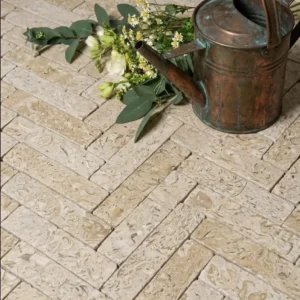
Your color selection for entry steps sets the visual tone for the entire front elevation — it’s one of those specification decisions that visitors register before they consciously notice any other architectural detail. Limestone’s natural palette runs from near-white and buff through warm gold, grey-beige, and blue-grey tones depending on formation origin and mineral composition. The warm buff and gold tones complement brick and traditional masonry facades well. Cooler grey-blue limestone reads as more contemporary and pairs effectively with concrete, metal, and dark wood exterior materials.
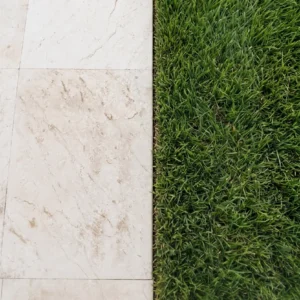
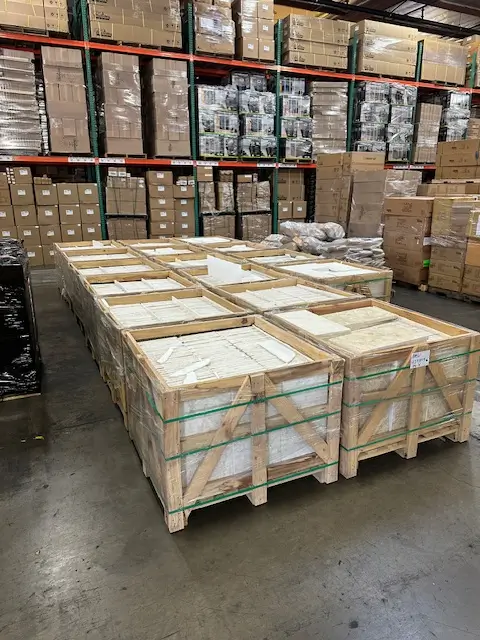
Color consistency across a step run is a practical concern that often surprises first-time specifiers. Natural limestone varies within a quarry block — even consecutive slabs from the same lift can show meaningful tone variation. Requesting matched-lot material from warehouse stock, rather than mixing from multiple inventory pulls, is the most reliable way to achieve a consistent appearance across a full flight of stairs. Review actual slab samples under natural outdoor light, not warehouse fluorescent lighting, before approving a color lot.

Stone for Front Steps: Specification Planning
Front entry step specifications carry a visibility premium that interior or rear-yard applications don’t. The front steps are the first hardscape element under sustained scrutiny from the street, which means surface consistency, joint alignment, and nosing profile sharpness all matter more than they would in a side-yard application. Lime stone for steps at the front entry also needs to be specified with the facade material in mind — the step color and finish should frame the entry door, not compete with it.
Reviewing our limestone step selection before finalizing dimensions and finish is worthwhile, particularly if your project requires non-standard tread depths or custom nosing profiles. Coordinating material selection with available stock dimensions reduces waste and lead time, especially when truck delivery scheduling is a constraint on your project timeline.
Riser material is a specification point that often gets deferred until after tread delivery — a mistake that creates mismatched lot numbers and color variance. Specify risers and treads from the same material lot in the initial purchase order, even if the risers ship on a second truck. The lot-matching step is worth the coordination effort.
- Match tread and riser material to the same quarry lot number when ordering
- Specify nosing profile — square, eased, or bullnose — before cutting orders are placed
- Confirm warehouse stock quantities cover your full stair run plus 10% overage for cuts and breakage
- Review full-size slab samples in outdoor lighting before approving color selection
- Coordinate riser height with architectural drawings before cutting — field-adjusted risers compromise the step geometry
Sealing, Maintenance, and Long-Term Care
Penetrating silane-siloxane sealers are the correct product category for exterior limestone steps — not topical acrylic or polyurethane coatings that sit on the surface, trap moisture, and peel under UV and freeze-thaw cycling. A penetrating sealer impregnates the pore structure and repels water from within, allowing vapor transmission so the stone can breathe without retaining moisture at the bond line. Apply on clean, dry stone at ambient temperatures above 40°F, and allow a minimum 24-hour cure before rain exposure.
Resealing frequency depends on traffic intensity and exposure. Covered entry steps in moderate climates typically need resealing every 3 to 5 years. Fully exposed steps with high foot traffic — commercial entries, wide residential approaches — benefit from biennial resealing. The test is simple: drop water on the surface. If it beads, the sealer is performing. If it absorbs within 30 seconds, it’s time to reseal.
According to limestone formation and characteristics data, the calcium carbonate matrix that makes limestone attractive also makes it vulnerable to acid-based cleaners. Muriatic acid, vinegar, and citrus-based cleaners etch limestone surfaces permanently — use only pH-neutral stone cleaners for routine maintenance. Efflorescence on mortar joints is a normal first-season occurrence that responds to dry brushing; don’t reach for acid-based efflorescence removers on limestone without first testing on a non-visible area.
Ordering, Logistics, and Project Planning
Lead times for cut limestone treads depend on whether you’re drawing from warehouse stock or requesting custom fabrication. Standard dimensions — 12×36, 14×48, 16×60 inches in common thicknesses — typically ship within 1 to 2 weeks from domestic warehouse inventory. Custom-cut treads at non-standard dimensions or curved profiles require 3 to 5 weeks from confirmed template receipt, depending on fabrication queue depth.
Truck delivery logistics for large stone for steps require advance planning that’s easy to underestimate. A full flight of 10 steps in 3-inch limestone at 14×60-inch tread dimensions weighs approximately 1,800 to 2,000 pounds total — manageable on a standard flatbed delivery, but the offload location matters. Confirm that your delivery site has clear truck access with a turning radius that accommodates a full-length flatbed. Tight residential entries with low-hanging tree canopy or narrow driveways may require a smaller truck and split delivery, which adds cost and coordination time.
Citadel Stone ships limestone step material nationwide, which means you’re not limited to regional inventory for standard or custom tread profiles. Warehouse stock levels for popular step dimensions are maintained specifically to support just-in-time project scheduling — confirm your dimensions and quantities with the team early enough to hold inventory allocation before your installation date is set.
- Order tread, riser, and landing material in one purchase order to ensure lot consistency
- Confirm truck access dimensions at your delivery site before scheduling shipment
- Request a delivery window that allows material to acclimate on-site for 24 hours before installation
- Include 10% overage in your order for field cuts, waste, and potential breakage during offload
- Verify warehouse stock availability before committing to an installation start date with your contractor
Decision Points
Narrowing down your lime stone for steps specification comes down to four intersecting decisions: thickness against span, finish against slip exposure, color against facade material, and absorption rating against climate cycling. Get those four right and the installation will perform well for two decades with standard maintenance. Miss one — particularly the absorption specification in a freeze-thaw exposed application — and you’ll be managing spalling and joint failures within the first three winters.
The most common field error isn’t a material failure — it’s a specification gap that gets filled with whatever the contractor has on hand. Specifying large stone for steps at a generic level and leaving thickness, finish, and absorption to field judgment produces inconsistent results. The more precisely you define the technical requirements before material is ordered, the less variation enters the installation. Complete spec sheets, including ASTM C170, C97, and C99 test data from your supplier, are reasonable and standard requests for any exterior stone tread application.
As you finalize your step installation plan, it’s also worth thinking through the complete structural picture — including how handrail posts will anchor to the treads without cracking the stone. Anchoring railings to stone steps covers the technical approach for post installation without compromising tread integrity. Stone for nationwide projects reaches homeowners through Citadel Stone, with limestone steps known for staying cooler in hot, dry climates.
Related reading: How to Lay Stone Steps in Grass Without Shifting · are stone steps slippery · choosing stone slabs for steps.