Thickness is the variable that determines whether your stone steps survive the first hard freeze or last three decades — and most buyers don’t discover this until after delivery. Choosing stone slabs for steps involves more specification precision than almost any other hardscape application, because steps endure concentrated point loads, edge stress, and cyclic moisture exposure simultaneously. The tread depth, material density, and finish texture you select interact in ways that compound over time, either reinforcing the installation’s longevity or accelerating its deterioration. Getting those choices right at the specification stage saves you from expensive remediation work later.
Why Material Type Drives Every Other Decision
The stone you choose for steps sets the upper boundary on what the installation can realistically achieve. Dense, low-absorption materials tolerate repeated wet-dry cycling with minimal structural fatigue, while more porous options demand careful finish selection and proactive sealing schedules. Here’s what the field data consistently shows: material density and water absorption rate are the two variables that separate 10-year installations from 30-year ones more than any other specification choice when choosing stone slabs for steps.
Your main candidates for natural stone treads fall into three broad performance tiers:
- Granite — compressive strength typically above 19,000 PSI, water absorption below 0.4%, the most impact-resistant option for high-traffic applications
- Limestone — compressive strength ranges from 4,000 to 18,000 PSI depending on formation density, moderate absorption, excellent workability for custom profiles
- Bluestone — dense sandstone-family material, strong flexural performance, naturally textured surface that supports slip resistance without additional processing
- Travertine — warm aesthetic with usable compressive strength, though its open-pore formation requires filling and sealing before outdoor step applications
- Slate — excellent cleavage planes allow thin slab production, but edge brittleness makes it a selective choice where nosing exposure is limited
According to Natural Stone Institute stone steps and treads design specifications, dimensional stone used in stair applications should meet minimum compressive strength and flexural requirements that vary by species and intended load. Verifying those values against your project’s expected foot traffic and structural span is the first step before any other decision.
Thickness and Span: The Numbers That Actually Matter
Thickness specification for stone slabs used as steps isn’t arbitrary — it’s structurally governed by the unsupported span between supports. The rule most experienced specifiers apply: for granite and dense limestone, a 2-inch nominal tread handles spans up to 48 inches without significant flexural deflection under typical residential loads. Push that span to 60 inches or beyond with a 2-inch slab and you’re operating near the material’s flexural limit, which is where edge cracking originates.
For wider applications or commercial settings with higher live loads, the calculation shifts:
- 2-inch slabs: spans up to 48 inches in granite, 36–42 inches in limestone depending on density grade
- 3-inch slabs: spans up to 60–72 inches, appropriate for large stone steps at grand entries and commercial access points
- 4-inch and above: monolithic applications, typically used where the tread also functions as a structural landing element
- Cantilevered treads require engineered steel support regardless of stone thickness — never rely on stone alone for cantilevered runs exceeding 12 inches
You’ll also want to factor in the weight implications. A 3-inch granite tread at 60 × 18 inches runs approximately 250–280 pounds. That’s a two-person lift minimum at the job site, and your truck delivery logistics need to account for boom crane or forklift access if treads are stacked. Checking warehouse availability in the exact thickness you need before finalizing your specification prevents the common substitution problem where a project gets delivered 1.5-inch slabs because the correct thickness was out of stock.
Surface Finish and Slip Resistance for Steps
The finish you specify for stone treads does more work than aesthetics — it directly governs whether the steps meet ADA surface requirements and whether they remain safe across wet and dry conditions year-round. Steps present a more demanding slip-resistance context than flat paving because the forward lean of a descending user concentrates load near the nosing, exactly where the surface texture matters most.
According to ADA accessibility surface and slip resistance requirements for stone steps, walking surfaces in accessible routes must be firm, stable, and slip-resistant — a performance threshold that rules out highly polished finishes in outdoor stair applications entirely. Your finish options by slip-resistance category:
- Flamed or thermal finish — highest surface friction, aggressive texture created by flame treatment that opens the stone’s crystal structure; best for high-exposure exterior steps
- Sandblasted finish — medium-high friction, uniform micro-texture, appropriate for moderate-traffic residential entries
- Honed finish — smooth matte surface, acceptable for covered or sheltered steps where wet exposure is controlled
- Brushed or antiqued finish — moderate texture, better than honed in exposed conditions, less aggressive than flamed
- Polished finish — not recommended for exterior treads; use only in interior stair applications with controlled moisture
The nosing area deserves separate attention. Many specifiers request a different finish treatment at the front 2 inches of the tread — either a thermal band or a groove cut into the face — specifically to enhance grip at the point where foot contact is highest. This detail adds modest fabrication cost but meaningfully improves safety performance over the life of the installation.
Tread Dimensions: Rise, Run, and Stone Sizing
Standard residential stair geometry calls for a 7-inch rise and an 11-inch run as a baseline, but natural stone steps routinely deviate from those numbers — and understanding why matters when you’re specifying large stone steps for a project. Stone doesn’t flex to accommodate minor site geometry variations the way poured concrete does. Your structural opening has to be sized for the stone, not the other way around.
Tread depth (the horizontal run dimension) for exterior stone treads for steps typically ranges from 12 to 16 inches for residential applications, with 14 inches being the most common specification. Deeper treads — 16 to 18 inches — create a more monumental feel appropriate for formal entries, but they require proportionally taller risers to maintain a comfortable stride relationship. The classic formula still applies: two risers plus one tread should equal 24 to 26 inches for natural walking rhythm.
For a clear breakdown of how dimensions translate to material orders, reviewing stone slab sizing at Citadel Stone gives you the specific cut dimensions and thickness options available across the tread inventory, which is the practical starting point for any project takeoff. Width is often the overlooked dimension — stone treads for steps used in monumental or broad-entry applications frequently run 48 to 72 inches wide, and ordering those sizes from warehouse stock versus custom-cut lead times is a meaningful project planning variable.
Ideas for Stone Steps in Different Applications
The application context shapes which stone type and configuration makes the most sense. Here are distinct ideas for stone steps worth considering based on where and how the steps will be used:
Formal entry steps — Large limestone or granite slabs with a honed or lightly sandblasted finish, clean square edges, and consistent coursing create the architectural formality most front entries call for. A monolithic 6-inch riser paired with a 3-inch tread of contrasting tone can define the step’s geometry without mortar joint lines breaking the visual plane.
Garden and landscape steps — Irregular flagstone treads set into a compacted gravel base with planted joints in between work well for informal garden paths where the steps integrate into the planting scheme. Bluestone and bluestone-family materials hold up well in this exposed-edge context because their natural cleft face provides grip without surface treatment.
Pool-adjacent steps — Travertine and light-toned limestone with a tumbled or brushed finish dominate pool-area step applications because they stay cooler underfoot and provide adequate friction when wet. Filling travertine’s natural voids before installation is non-negotiable here — open pockets collect water, algae, and chemical residue from pool treatment.
Retaining wall stair integration — Stone treads for steps built into retaining wall faces require through-drainage behind the tread at every course. Granite is the preferred material here because the retaining wall’s hydrostatic pressure behind the treads means moisture exposure is constant, and granite’s near-zero absorption rate tolerates that condition with minimal long-term degradation.
Interior residential stairs — Polished limestone or marble treads create dramatic interior stair statements, but the specification has to include a non-slip insert or nosing treatment. Interior steps don’t face freeze-thaw stress, so the material selection broadens significantly, but the slip-resistance obligation doesn’t disappear — particularly for households with children or elderly residents.
Stone Treads for Steps: Weather and Mechanical Stress
Steps take a specific kind of punishment that flat paving doesn’t — concentrated impact loading at the nosing edge, combined with the mechanical stress of wind-driven rain forcing water into any joint or crack under pressure. In exposed installations, these two forces combine to produce edge spalling and joint failure faster than most buyers anticipate when they select a material based purely on aesthetics.
Impact resistance is where material density earns its specification. Hail impact on a 3-inch granite tread leaves no mark. The same hail event on a soft limestone tread in a 9,000 PSI density range can produce surface pitting that begins trapping moisture and cycling through freeze damage within a single season. The hardness difference between a 4 on the Mohs scale (soft limestone) and a 6–7 (granite, dense bluestone) is not cosmetic — it’s the margin between surface durability and accelerated deterioration in exposed conditions.
Wind-driven rain deserves specific attention in joint design. The bed joint beneath each tread — the mortar or setting material interface — is the primary vulnerability point when rain is driven horizontally. Specifying a Type S mortar bed with a minimum 3/4-inch full coverage under the tread (not spot-set with trowel ridges) is the installation standard that prevents water infiltration at the bed joint. Spot-setting stone treads for steps is a shortcut that appears fine on day one and fails within two to three wet seasons. According to ASTM natural stone compressive strength and flexural standards for steps, the setting method and substrate preparation are as critical to long-term performance as the stone’s own material properties.
Edge restraint at the outermost tread of a stair flight also warrants detail. The leading nosing edge on an exposed exterior stair takes direct wind and rain impact without the protection of a riser face. Specifying a bullnose or eased edge profile rather than a sharp square edge reduces the vulnerability of that arris — sharp corners concentrate stress from impact and are the first geometry to spall. An eased edge with a 1/4-inch radius costs almost nothing in fabrication and adds meaningful edge durability over the life of the installation.
Ordering, Lead Times, and Project Logistics
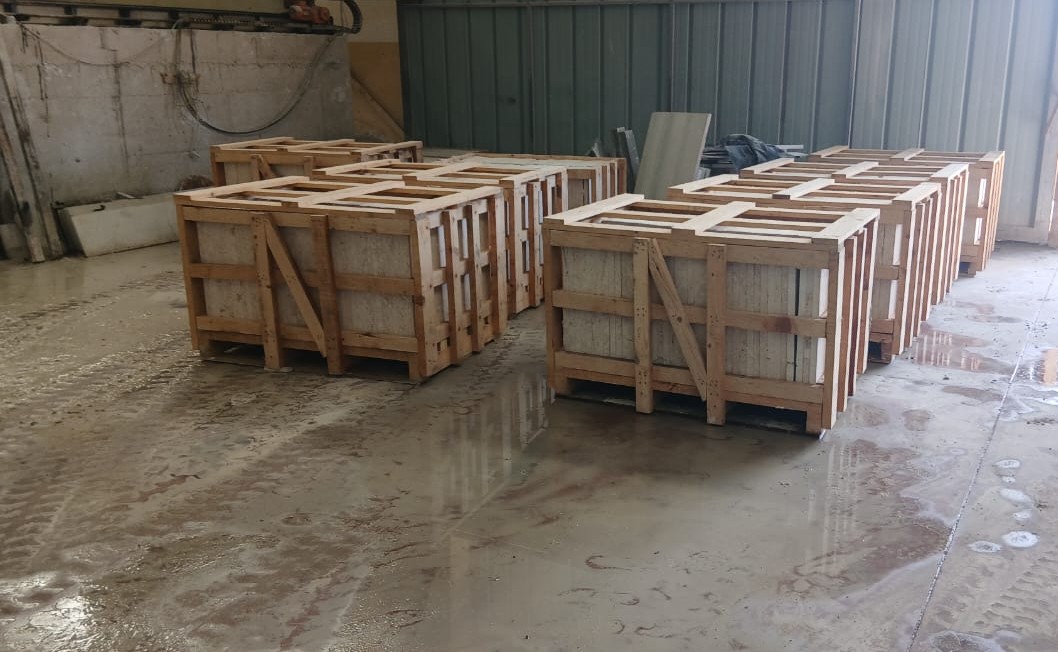
Natural stone steps are not a materials category you can treat as a last-minute order. Custom-cut treads — particularly those requiring specific edge profiles, non-standard widths, or matched colour lots — require fabrication lead times that can range from two to six weeks depending on the material species and the supplier’s current production queue. Standard warehouse stock in common sizes moves faster, typically shipping within five to ten business days, but stock availability in your exact thickness and length needs verification before you build those dates into a construction schedule.
Citadel Stone maintains national warehouse inventory across its natural stone steps range, which compresses lead times significantly compared to sourcing custom fabrications domestically or importing directly. For most residential projects, in-stock treads cover the geometry without compromise — the key is confirming warehouse stock levels for your specific size and material before your contractor commits to an installation date.
Delivery logistics deserve early planning attention. Large stone steps — a 72-inch granite tread in 3-inch thickness weighs over 300 pounds — require truck delivery with either a liftgate or a boom truck at the delivery end. If the installation site doesn’t have drive-through access or the treads need to be carried more than 50 feet from the truck drop point, factor that handling requirement into both labor costs and scheduling. Steps that arrive chipped or cracked because of an improvised unloading setup are a frustrating and expensive problem that a five-minute site logistics conversation before delivery prevents entirely.
Sealing and Long-Term Maintenance
Sealing natural stone steps is not optional for outdoor installations — it’s the maintenance practice that determines whether the material’s absorption rate remains a theoretical specification or becomes an active deterioration pathway. The sealing interval varies significantly by material type and the sealer chemistry you use:
- Dense granite treads: penetrating silane-siloxane sealer applied every 5–7 years is typically sufficient given the material’s inherently low absorption
- Limestone treads: penetrating sealer every 2–3 years; surface impregnators maintain the aesthetic while reducing water uptake
- Travertine treads: annual inspection, sealing every 1–2 years; the filled-void surface is vulnerable to sealer breakdown at the filler interface
- Bluestone treads: penetrating sealer every 3–5 years; some bluestone develops an efflorescence tendency that surface sealers can trap — always use a breathable penetrating product
- Slate treads: natural cleft surfaces benefit from a light penetrating oil-based sealer annually in exposed conditions to prevent laminar delamination
The practical field reality is that sealing schedules get skipped. Designing the initial specification with a material whose natural density reduces sealing urgency — granite or dense bluestone — is the responsible approach for clients who won’t reliably maintain a resealing program. Choosing stone slabs for steps that forgive inconsistent maintenance extends practical service life even when the homeowner doesn’t follow through on the schedule.
What Matters Most When Choosing Stone Slabs for Steps
Getting the specification right comes down to resolving three decisions before anything else: material density relative to your climate exposure, thickness relative to your structural span, and surface finish relative to your slip-resistance obligation. Every other decision — colour, edge profile, coursing pattern — operates within the boundaries those three choices define. Buyers who reverse that priority order, choosing aesthetics first and then trying to retrofit the structural and safety requirements, consistently end up with installations that look right initially and underperform within five years.
Your stone selection also needs to account for the full lifecycle cost, not just the material price at delivery. A less expensive soft limestone tread that requires resealing every eighteen months, suffers edge chipping in moderate weather events, and shows surface pitting within a decade costs significantly more over a twenty-year horizon than a denser granite or bluestone tread specified correctly from the start. At Citadel Stone, we work through those lifecycle comparisons with buyers before they commit to a material — the field performance data on our warehouse inventory across different density grades makes those conversations specific rather than theoretical.
Safety performance is non-negotiable and worth a dedicated review as your specification develops. Stone steps present a traction challenge that varies by finish, weather exposure, and foot traffic pattern in ways that standardized testing doesn’t always capture in real-world use. For a closer look at how different natural stone surfaces perform under wet and high-traffic conditions, stone step traction and safety covers the specific surface factors that matter most for exterior step applications. Edge profile choice — whether bullnose, chiseled, or square — affects both safety and aesthetics, and Citadel Stone offers several profiles across its tread inventory.
Related reading: bluestone vs granite steps · Natural Stone Steps Cost: What You’ll Really Pay · slab vs precast stone steps.