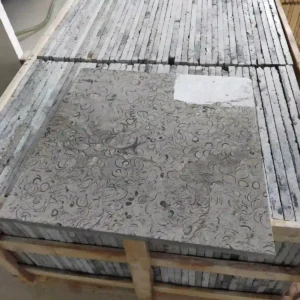
50 Years Of Manufacturing & Delivering The Highest-Quality Limestone & Black Basalt. Sourced & Hand-Picked From The Middle East.

Escrow Payment & Independent Verifying Agent For New Clients

Contact Me Personally For The Absolute Best Wholesale & Trade Prices:

USA & Worldwide Hassle-Free Delivery Options – Guaranteed.

Flagstone Paving Slabs in Arizona

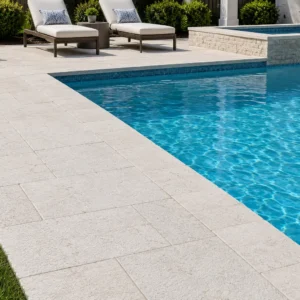
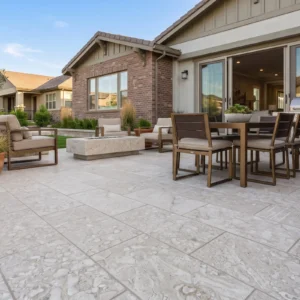
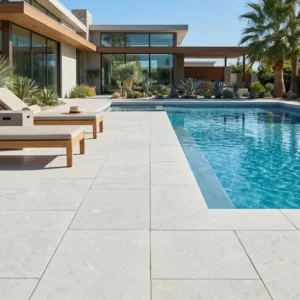
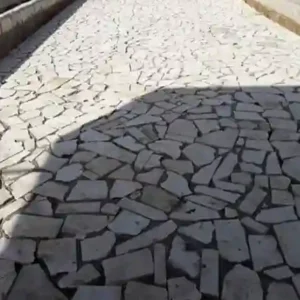
Flagstone paving slabs in Arizona must meet specific structural requirements before aesthetics even enter the conversation — local jurisdictions across the state often mandate minimum slab thickness of 1.5 inches for pedestrian applications, with load-bearing specifications increasing for driveways or commercial access routes. Soil classification matters equally: expansive clay soils common in the Phoenix Valley and compactable caliche layers found in Tucson-area sites each demand different base preparation depths to satisfy both engineering best practice and municipal inspection standards. Citadel Stone Arizona flagstone solutions address these regional demands directly, with available formats ranging from irregular natural-cut pieces to dimensioned slabs in multiple thickness profiles suited to varied load and compliance requirements. What many contractors underestimate is how slab jointing strategy and sub-base compaction interact under Arizona's seismic zone classifications — a critical trade-off examined in the specification guidance below. Citadel Stone provides quality flagstone paving slabs across Arizona, supporting contractors and homeowners with reliable material selection and consistent product availability throughout the state.

See & Feel the Quality – Free Arizona Stone Samples

Our stones are made for the Arizona sun. See how the colors hold up in your specific light.

Design Your Arizona Home with a Local Stone Expert

Get personalized advice on the best stone for Arizona's climate and your design style.

Premium Natural Stone — All Sizes & Thicknesses Available

From standard cuts to fully custom dimensions — our limestone, granite, basalt & shellstone
are cut to your exact specifications. Residential or commercial, we’ve got you covered.

Get Your Free Arizona Stone Quote

Transparent Pricing for Your Arizona Project

Elevate Your Arizona Property with Premium Stone, Priced for Value.

Unlock $10,000 Worth of Deals on Beautiful Paver, Tiles & Cobble Setts—For Free!

Invest in Arizona’s Landscape: Stone That Lasts a Lifetime.

100% Happiness Guarantee

Trust 50 Years of Expertise. Invest in Quality Limestone Tiles

Custom-Cut for Your Arizona Project: Any Size, Any Finish.

No-Obligation Consultation: Get Expert Advice for Your Arizona Home.

The Stone Supplier Trusted by Arizona's Leading Architects & Designers.

Trusted by Top Stone Experts Around the Globe

Arizona's Most Diverse Selection of Limestone Tiles.

Elevate Your AZ Property with Limestone Built for the Desert. Our expansive collection of limestone tiles brings timeless beauty and proven durability to both residential and commercial spaces across Arizona. As the state’s leading supplier, we offer a diverse palette of colors and finishes—from cool, light tones that reflect the sun to rich, earthy textures that complement the Southwest landscape. Transform your environment with limestone that stands up to the Arizona heat while providing the sophisticated aesthetic you desire.

Explore Arizona-Tough Alternative Stones

Product NameDescriptionPrice per Square Foot
Travertine TilesBeautiful natural stone with unique textures$8.00 - $12.00
Marble TilesLuxurious and elegant, available in various colors.$10.00 - $15.00
Granite TilesExtremely durable and perfect for high-traffic areas.$7.00 - $12.00
Slate TilesRich colors and textures; ideal for wet areas.$6.00 - $10.00
Porcelain TilesVersatile and low-maintenance, mimicking natural stone.$4.00 - $8.00
Ceramic TilesAffordable with a wide variety of designs.$3.00 - $6.00
Quartzite TilesStrong and beautiful, resistant to stains.$9.00 - $14.00
Concrete PaversCustomizable for patios; durable and cost-effective.$5.00 - $9.00
Glass TilesStylish, reflective, and brightening.$15.00 - $25.00
Composite TilesEco-friendly options made from recycled materials.$5.00 - $10.00

Incredible Prices for Top-Quality Stone—Shop Citadel Stone Today!

Table of Contents

Structural compliance drives every flagstone paving slab decision in Arizona before aesthetics or material preference ever enters the conversation. The state’s building codes — shaped by soil variability, seismic zone classifications, and extreme thermal loading — set performance floors that your specification must clear before anything else matters. Whether you’re sourcing flagstone paving slabs in Arizona for a residential patio in the low desert or a commercial walkway in the high country, the structural envelope defines your material thickness, base depth, and joint geometry from the first line of the spec sheet.

Arizona Building Code Requirements for Flagstone Paving Slabs

Arizona falls within ASCE 7 seismic design categories that vary meaningfully by county and elevation. The lateral load provisions that apply to retaining walls and grade-adjacent paving aren’t always on a landscape architect’s radar — but they show up in permit reviews. For surface-bonded flagstone installations adjacent to grade changes greater than 30 inches, you’ll need to verify that your base design accounts for the lateral earth pressure coefficients applicable to your specific zone. The Arizona Department of Transportation’s Standard Specifications for Road and Bridge Construction also inform commercial paving slab installations where vehicular access or emergency vehicle loading is possible.

Projects in Phoenix typically fall under Maricopa County’s supplemental code amendments, which tighten drainage slope requirements for hardscape within 10 feet of a structure’s foundation. That 1–2% cross-slope you’d normally specify for drainage becomes a minimum enforced requirement in many Phoenix jurisdictions, not a best practice. Your flagstone paving slab layout needs to accommodate that slope without creating lippage at joints that exceeds the ADA-mandated 0.25-inch threshold.

  • Seismic design category varies from B to D across Arizona — confirm your county’s classification before finalizing base depth
  • IBC Section 1804 governs excavation adjacent to footings, which affects how close flagstone paving can be installed to building foundations
  • Maricopa County amendments require positive drainage slopes on all hardscape within the setback zone
  • ADA compliance mandates maximum 0.25-inch vertical joint displacement at transition points
  • Commercial installations adjacent to fire lanes must meet AASHTO H-20 loading equivalents in most Arizona municipalities
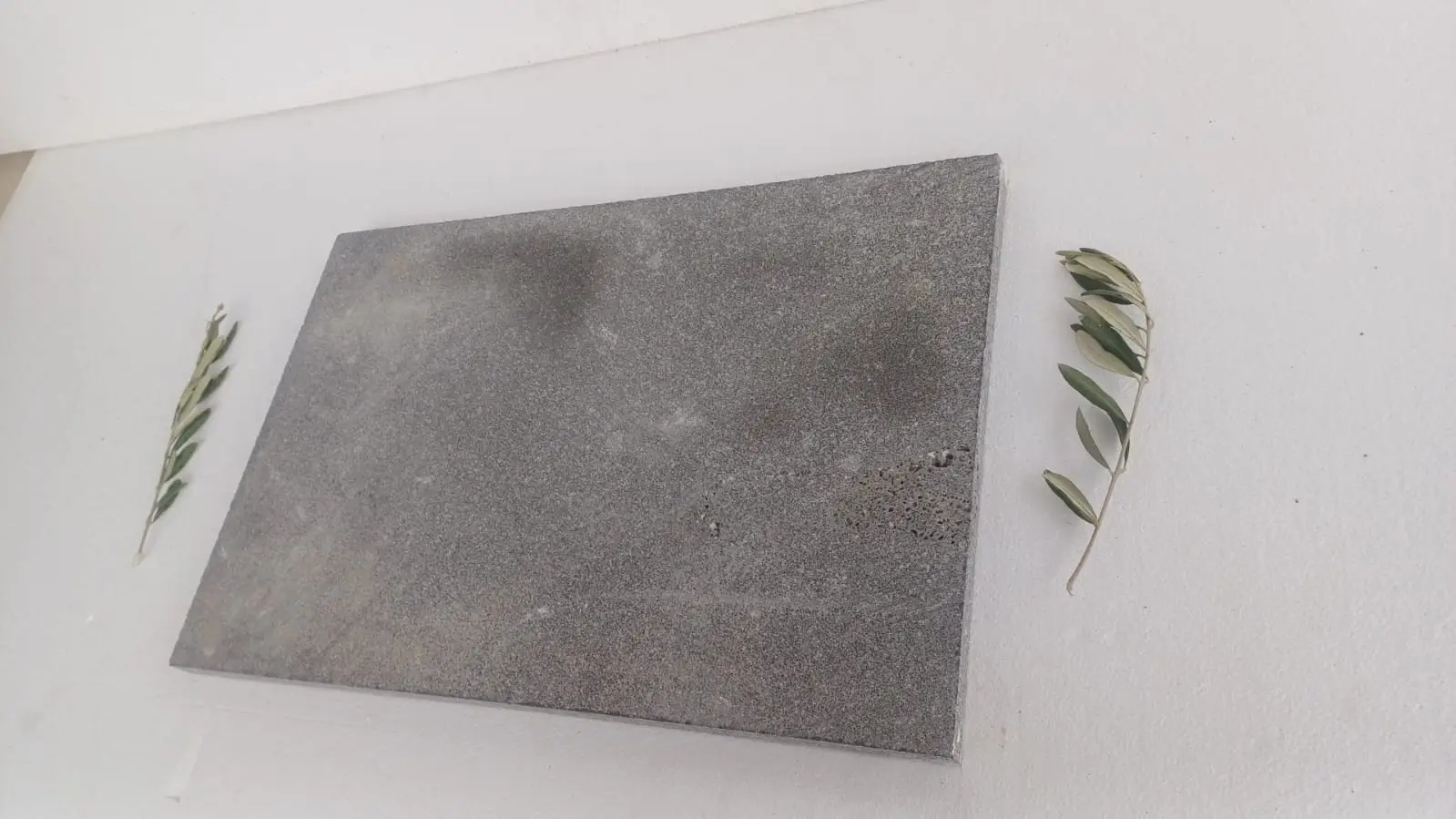
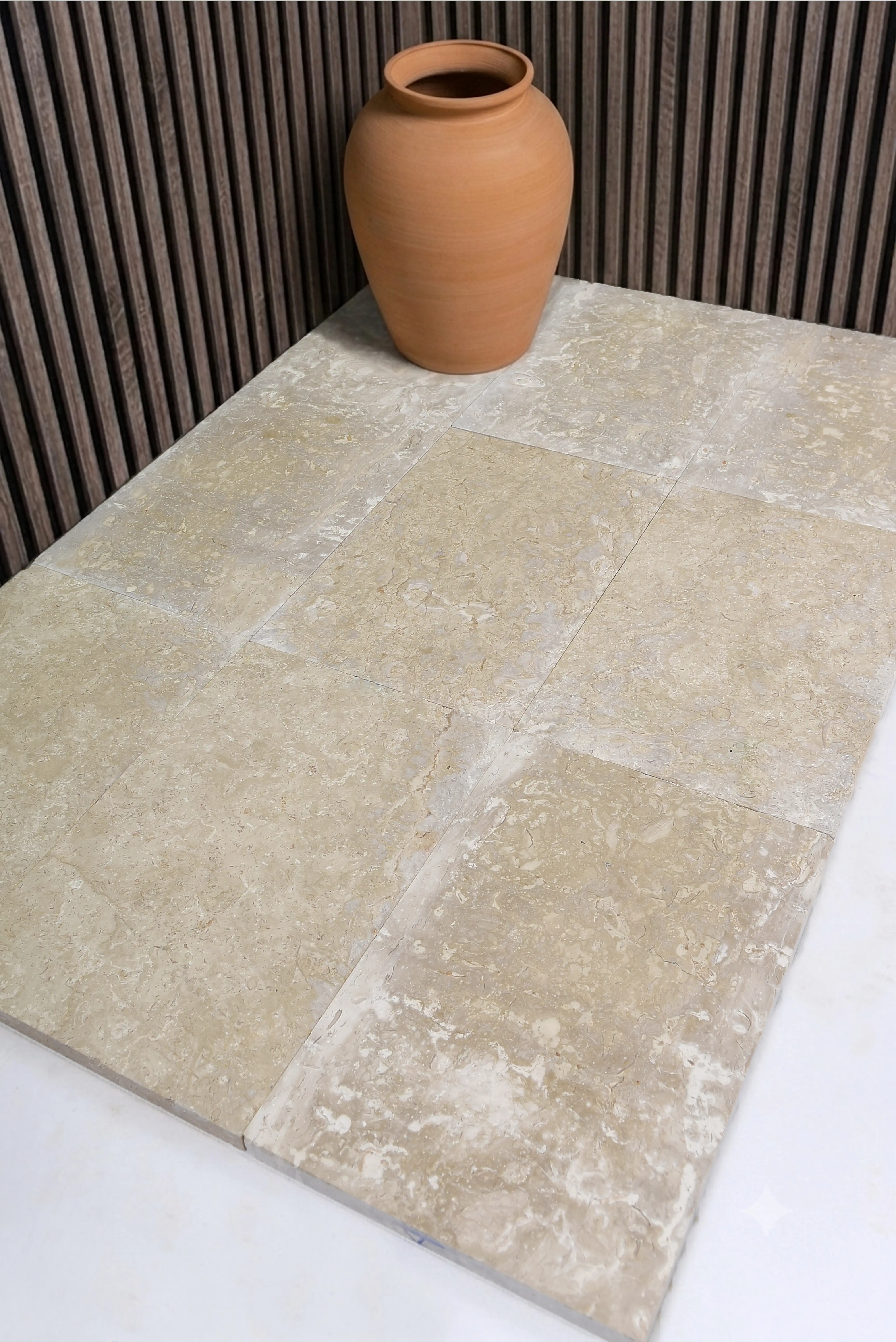
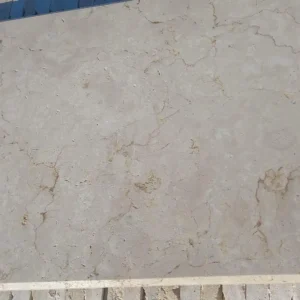
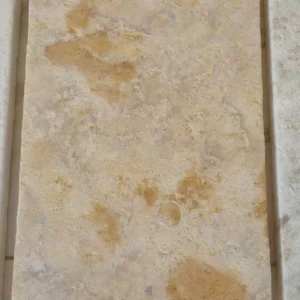
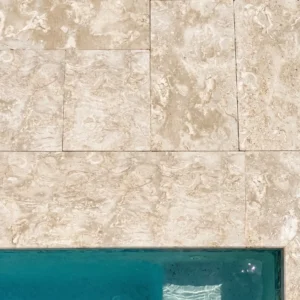
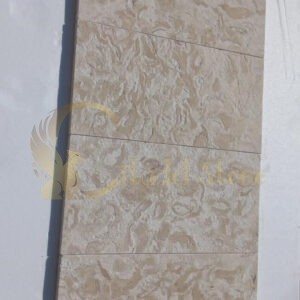
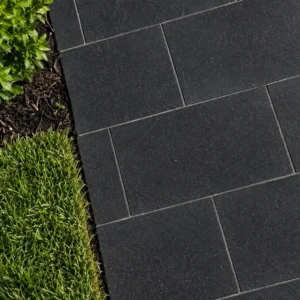
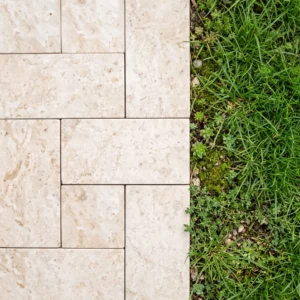
Two light beige stone slabs laid side-by-side on a white surface.

Load-Bearing Thickness and Structural Base for Paving Stone Slabs in Arizona

The minimum thickness specification for paving stone slabs in Arizona depends on two variables most specifiers undervalue: the modulus of rupture of the specific stone and the anticipated point load concentration. A 1.25-inch flagstone slab sitting on a compacted aggregate base handles distributed pedestrian loads reliably — but the same slab fails prematurely under concentrated loads from furniture legs, equipment dollies, or high-heel contact points on unsupported spans. The structural answer isn’t always thicker stone; it’s closing the gap between support points.

For residential patio applications, 1.5-inch to 2-inch nominal thickness on a 4-inch compacted aggregate base over 4 inches of compacted native soil is the standard baseline across most of Arizona’s low-desert zones. That calculation shifts when you’re working over expansive soils. Caliche layers present across much of the Phoenix Basin create an interesting dynamic — they’re structurally competent but their depth and continuity vary significantly within a single project footprint. A proper base design here requires a geotechnical report, not a rule-of-thumb depth from a general spec guide.

  • 1.5-inch minimum thickness for pedestrian-only residential flagstone paving slabs in Arizona
  • 2-inch minimum for mixed residential use with rolling loads (planters, furniture, equipment)
  • 3-inch minimum for light vehicular or emergency access areas
  • Compacted aggregate base: 4 inches minimum for pedestrian, 6–8 inches for vehicular zones
  • Geotextile fabric separation layer required where native soils have PI (plasticity index) above 15
  • Aggregate base must achieve 95% standard Proctor compaction before setting bed placement

Citadel Stone stocks paving slabs flagstone in Arizona in thickness ranges from 1.25 inches through 3 inches, with tolerance specifications published on request. You can confirm current warehouse inventory and request thickness calipered samples before committing to project quantities — a step worth taking when structural compliance depends on meeting exact dimensional tolerances.

Thermal Expansion, Joint Spacing, and the Arizona Heat Envelope

Arizona’s thermal swing is where flagstone paving specifications diverge sharply from generic national guidelines. Surface temperatures on exposed flagstone in Scottsdale or Yuma can reach 165–175°F under peak summer sun — a thermal mass load that drives dimensional movement well beyond the values published in material datasheets tested at ambient laboratory temperatures. The critical design variable isn’t the coefficient of thermal expansion alone; it’s the differential between the top surface temperature and the shaded underside of the slab, which creates a bowing moment that works against your setting bed adhesion over time.

Field performance data across Arizona projects consistently shows that joint spacing recommendations from eastern U.S. specifications need adjustment for the Sonoran Desert climate. Expansion joints at 12-foot centers — standard in many northern-climate specs — should be reduced to 8–10 feet for fully exposed flagstone paving slab installations in low-desert zones. In shaded or covered areas, the 12-foot standard holds. This isn’t a conservative safety margin — it’s a direct response to documented joint failure patterns in Phoenix-area installations from the late 1990s through the early 2000s, when heat-related differential expansion was systematically underestimated by imported spec packages.

  • Surface temperatures: up to 175°F on exposed dark flagstone in peak summer conditions
  • Expansion joint frequency: 8–10 feet in fully exposed low-desert installations
  • Thermal differential between slab top and underside can exceed 40°F — accounts for setting bed separation risk
  • Lighter-colored stone (cream, buff, grey) surface temperatures run 20–30°F lower than dark equivalents under identical exposure
  • Covered patio installations can revert to 12-foot joint spacing without elevated failure risk

Paving Grey Slabs and Colour Selection for Code-Compliant Arizona Installations

Colour selection for paving grey slabs in Arizona isn’t purely aesthetic — surface reflectance directly affects the thermal mass load on your structural base, and in some commercial and municipal projects, light reflectance value (LRV) minimums are now appearing in local design standards as urban heat island mitigation requirements. The City of Tempe’s commercial site plan review process, for example, has incorporated hardscape reflectance guidance into its development standards in recent update cycles. Your specification should address LRV alongside slip resistance and structural performance.

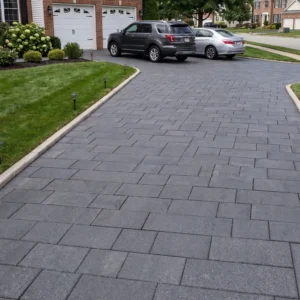
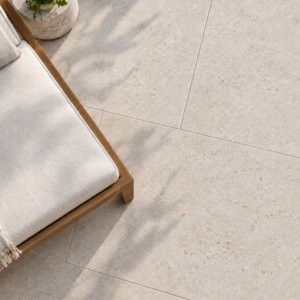
Grey flagstone — whether a cool blue-grey basalt, a warm taupe limestone, or a silver-toned quartzite — consistently outperforms darker materials in thermal mass management for Arizona conditions. The grey palette also aligns well with the dimensional flagstone pavers common in Scottsdale’s contemporary residential market, where large-format paving garden slabs and paving patio slabs are specified in colours that complement desert landscape plantings without absorbing excessive radiant heat. From a practical standpoint, mid-tone grey flagstone hides the calcium carbonate efflorescence that can appear in first-year installations better than either very light or very dark stone. Specifying paving grey slabs in Arizona for covered residential patios also extends the resealing interval by reducing direct UV degradation of the sealer carrier.

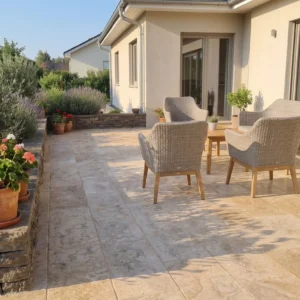
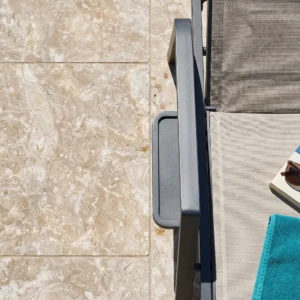
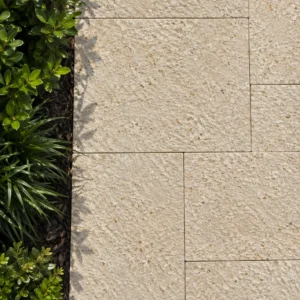
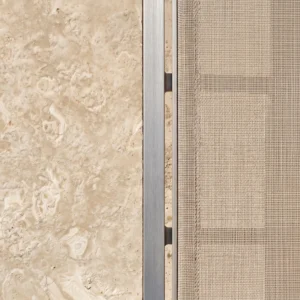
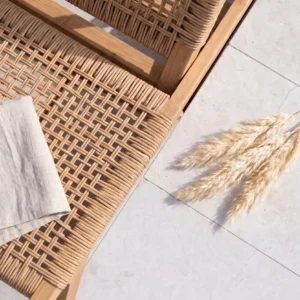
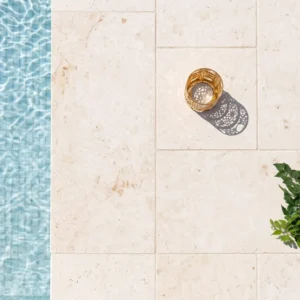
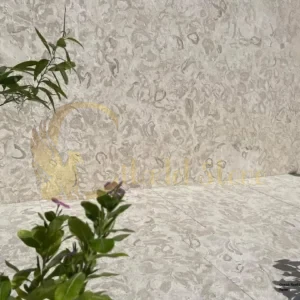
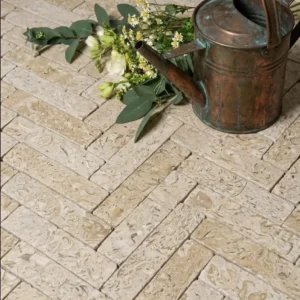
A light-colored flagstone slab is adorned with a golden glass and green foliage.

Large Format Flagstone Pavers: 900×600, 24×24, and Extra Large Specifications

Large flagstone pavers and extra large flagstone pavers bring structural considerations that smaller formats don’t — primarily because the unsupported span increases proportionally with format size, and the structural demands on both the slab and the setting bed are amplified. The 900 x 600 flagstones in Arizona that have become popular in contemporary residential design require a setting bed with full contact coverage — the 80% contact standard acceptable for smaller formats is inadequate for 900mm slabs. You need 95%+ mortar contact across the full underside of each slab, which demands back-buttering technique alongside the bed application.

The 24×24 flagstone pavers in Arizona market represents the crossover point between standard and large-format structural behavior. At 600mm square, these slabs begin to exhibit the flexural loading characteristics of large plates rather than thick blocks. Deflection under point loads becomes a meaningful variable, and the difference between a 1.5-inch and a 2-inch slab in this format is not marginal — it’s roughly a 100% improvement in flexural strength due to the cubic relationship between thickness and bending resistance. Dimensional flagstone pavers at 24×24 and above should always be specified at 2-inch minimum for outdoor paving applications in Arizona’s thermal environment.

  • 900 x 600mm format requires 95%+ mortar contact coverage — back-buttering is mandatory
  • 24×24 flagstone pavers: specify 2-inch minimum thickness for outdoor installations
  • Extra large flagstone pavers (above 900×600): engineer setting bed to 1.5-inch minimum polymer-modified mortar
  • Joint width for large format: 0.375–0.5 inch minimum to accommodate thermal differential movement
  • Lift capacity planning required for truck delivery of large-format slabs — verify site access and lifting equipment before scheduling delivery
  • Large slab breakage risk during installation increases with improper suction-cup handling — specify suction lifters rated above the slab’s wet weight

For projects requiring complementary stone elements and pricing structure, flagstone paving slabs for Arizona covers the cost framework alongside specification details that apply across large-format and standard installations alike. Understanding the cost structure early in the design process helps align format selection with project budget before large-format slab quantities are committed.

Installation Standards for Paving Patio Slabs Over Arizona’s Variable Soils

Soil variability across Arizona’s urban corridors creates specification challenges that a single base design can’t resolve. Projects in Tucson regularly encounter decomposed granite at shallow depths — a favorable sub-base material that drains well and compacts reliably, but one that requires careful moisture management during compaction to achieve the 95% Proctor density your structural base needs. Over-wetting decomposed granite during compaction causes particle breakdown that reduces long-term bearing capacity.

Expansive clay soils, present across portions of the Phoenix metro and in lower-elevation areas of the Verde Valley, are the most consequential soil type for paving patio slabs and paving garden slabs. Clay soils with a plasticity index above 20 can generate vertical movement of 0.5–2 inches over a seasonal wet-dry cycle — enough to crack mortared flagstone installations and shear setting bed adhesion progressively. The structural answer for high-PI soils isn’t a thicker slab; it’s a deeper, granular base that isolates the pavement from sub-grade volume changes, combined with a designed drainage layer that prevents moisture accumulation beneath the installation.

  • Decomposed granite sub-base: compact at 10–12% moisture content for optimal particle interlock
  • Expansive clay soils: minimum 8-inch granular base, geotextile separation, designed edge drainage
  • Caliche hardpan: scarify top 2 inches before base placement to prevent moisture lens formation at interface
  • Sandy loam soils (common in Yuma-area projects): excellent drainage but require compaction verification — density can appear adequate but fail under dynamic load
  • Never place a mortar setting bed over unverified compaction — require a proctor test result before proceeding

High-Elevation Considerations: Freeze-Thaw Performance for Flagstone Paving Slabs

Flagstaff‘s elevation above 6,900 feet introduces freeze-thaw cycling that simply doesn’t appear in low-desert Arizona specifications — and the structural implications for paving stone slabs are substantial. The frost line depth in Flagstaff reaches 18–24 inches, which requires a base design that extends below that depth for any mortared installation. Dry-laid flagstone over a granular base performs better in freeze-thaw environments because it accommodates seasonal movement without fracturing — but it sacrifices the structural rigidity that large-format slabs require under dynamic loading.

Stone density and absorption rate become critical selection variables in Flagstaff-area specifications. Flagstone with water absorption above 0.75% by weight (per ASTM C97) is vulnerable to spalling in freeze-thaw cycles — water enters the pore structure, freezes, expands, and fractures the stone face from the inside. Dense basalt and low-absorption limestone perform reliably in Flagstaff conditions; softer, more porous sandstone varieties that work beautifully in Phoenix patios become structural liabilities above the Mogollon Rim.

  • Frost line depth in Flagstaff: 18–24 inches — mortared base must extend below this depth
  • Maximum permissible water absorption for freeze-thaw zones: 0.75% by weight per ASTM C97
  • Dense basalt and low-porosity limestone: appropriate for Flagstaff and White Mountains installations
  • Sandstone and high-absorption limestone: restrict to low-desert Arizona zones only
  • Joint sealant selection matters in freeze-thaw zones — polyurethane-based sealants maintain flexibility at low temperatures; silicone-based products become brittle and fail

Sealing and Long-Term Maintenance for Arizona Flagstone Paving

Sealing protocols for paving slabs flagstone in Arizona differ from standard concrete maintenance in a way that catches many project managers off guard: the sealer application window is temperature-sensitive in both directions. Below 50°F and above 90°F, penetrating sealers don’t cure properly — and in Arizona, that means your usable application window in summer is limited to early morning hours, typically before 8:00 AM when surface temperatures are still manageable. Scheduling seal application on the day after a hot afternoon pour is a specification error that produces an uneven cure and early sealer failure.

The maintenance interval for sealed flagstone paving slab installations in Arizona’s low desert runs 2–3 years for exposed surfaces and 4–5 years for covered applications. That’s more frequent than the 5-year intervals you’ll see in generic national specs — the UV intensity at Arizona’s latitude degrades penetrating sealers faster than temperate climate data would suggest. Budget for this in your lifecycle cost model, and specify an impregnating sealer with a UV-stable carrier rather than a surface-film product, which chalks and peels under intense solar exposure.

  • Sealer application temperature range: 50–85°F surface temperature required for proper cure
  • Summer application window: typically 5:30 AM – 8:00 AM before surface temperatures rise
  • Resealing interval: 2–3 years for fully exposed installations, 4–5 years for covered areas
  • Specify impregnating (penetrating) sealers over surface-film products for UV resistance
  • First-year efflorescence on new installations: allow natural weathering through one monsoon season before final seal application
  • Sealer compatibility must be confirmed for the specific stone type — some limestone varieties react negatively to silane-siloxane carriers

Order Flagstone Paving Slabs in Arizona — Direct Supply from Citadel Stone

Citadel Stone maintains warehouse stock of flagstone paving slabs across multiple Arizona-accessible distribution points, which typically brings lead times to 1–2 weeks for standard formats — well inside the 6–8 week import cycle that direct-from-quarry procurement requires. Available formats include 900 x 600mm, 600 x 600mm, and 24×24 flagstone pavers in Arizona, as well as mixed random flagstone formats for irregular dry-lay installations. Thickness options run from 1.25 inches through 3 inches, with structural grades available for light vehicular applications.

You can request sample tiles, thickness calipered specifications, and absorption test data before committing to project quantities — a straightforward process through Citadel Stone’s technical consultation team. For projects requiring custom cuts or non-standard format combinations, their team can advise on lead times and cutting tolerances applicable to your specific stone selection. Trade accounts and wholesale enquiries receive project-specific pricing and dedicated scheduling support for truck delivery across Arizona, including coordination for sites with constrained access where standard flatbed delivery requires advance planning. To explore related applications, Flagstone Patio Pavers in Arizona provides specification detail on patio-specific installation requirements that complement the structural framework covered here. For flagstone paving slab projects across Arizona, Citadel Stone offers the regional expertise and material inventory needed to keep your work on schedule and on spec.

Why Arizona’s Builders Choose Citadel Stone?

Free AZ Comparison: Citadel Stone vs. Other Suppliers—Find the Best Value!

FeaturesCitadel StoneOther Stone Suppliers
Exclusive ProductsOffers exclusive Ocean Reef pavers, Shellstone pavers, basalt, and white limestone sourced from SyriaTypically offers more generic or widely available stone options
Quality and AuthenticityProvides high-grade, authentic natural stones with unique featuresQuality varies; may include synthetic or mixed-origin stone materials
Product VarietyWide range of premium products: Shellstone, Basalt, White Limestone, and moreProduct selection is usually more limited or generic
Global DistributionDistributes stones internationally, with a focus on providing consistent qualityOften limited to local or regional distribution
Sustainability CommitmentCommitted to eco-friendly sourcing and sustainable production processesSustainability efforts vary and may not prioritize eco-friendly sourcing
Customization OptionsOffers tailored stone solutions based on client needs and project specificationsCustomization may be limited, with fewer personalized options
Experience and ExpertiseHighly experienced in natural stone sourcing and distribution globallyExpertise varies significantly; some suppliers may lack specialized knowledge
Direct Sourcing – No MiddlemenWorks directly with quarries, cutting unnecessary costs and ensuring transparencyOften involves multiple intermediaries, leading to higher costs
Handpicked SelectionHandpicks blocks and tiles for quality and consistency, ensuring only the best materials are chosenSelection standards vary, often relying on non-customized stock
Durability of ProductsStones are carefully selected for maximum durability and longevityDurability can be inconsistent depending on supplier quality control
Vigorous Packing ProcessesUtilizes durable packing methods for secure, damage-free transportPacking may be less rigorous, increasing the risk of damage during shipping
Citadel Stone OriginsKnown as the original source for unique limestone tiles from the Middle East, recognized for authenticityOrigin not always guaranteed, and unique limestone options are less common
Customer SupportDedicated to providing expert advice, assistance, and after-sales supportSupport quality varies, often limited to basic customer service
Competitive PricingOffers high-quality stones at competitive prices with a focus on valuePrice may be higher for similar quality or lower for lower-grade stones
Escrow ServiceOffers escrow services for secure transactions and peace of mindTypically does not provide escrow services, increasing payment risk
Fast Manufacturing and DeliveryDelivers orders up to 3x faster than typical industry timelines, ensuring swift serviceDelivery times often slower and less predictable, delaying project timelines

Extra Benefits

Choosing Citadel Stone offers unique advantages beyond premium stone quality:

Exclusive Access to Durable Stones

Citadel Stone specializes in unique, regionally exclusive stones, sourced directly from the Middle East.

Transparent Pricing – No Hidden Costs

With no middlemen, Citadel Stone provides direct, transparent pricing that reduces unnecessary costs.

Flexible Customization for Bespoke Projects

Tailor your order to precise specifications, from sizes to finishes, ensuring your project aligns perfectly with your vision.

Streamlined Delivery & Reliable Stock Availability

Benefit from fast production and delivery timelines, designed to minimize delays and ensure reliable availability.

The Preferred Stone Supplier for Luxury AZ Developments.

Scale Your Vision: We Support Arizona's Largest Projects with Reliable, Fast Delivery.

With unlimited tiles, pavers, cobble setts, curbstones, and the fastest delivery options, What’s not to love? Say goodbye to unnecessary hassles!

Leading AZ Stone Suppliers are Loving Citadel Stone!

Don’t Settle for Less. Source the Best Stone for Your Local Stone Expert.

DanielOwner
Thank you, Kareem. We received the order. The stones look great!
FrankOwner
You are a good businessman and I believe a good person. I admire your honesty, this is why I call you a good businessman.
Gemma C
Gemma CPrivate Project
Undoubtedly the price was the reason that we chose Citadel stone, in addition to the fact that you offer a white limestone that is hard to source. Your products are very good value for money by comparison with other companies. You have helped at every stage of the process and have been quick and reliable in your responses. It was a big risk for us to pay everything up front including shipping and not know the quality. You did make me feel that I could trust you and your company however and we are very happy with the tiles. They appear to have been finished to a very high quality of smoothness and I can't wait to see them once they have been laid. We need to see now how easy they are to fit and maintain, yet you also sealed them before shipment so we think that they will be very durable. Our building project has been delayed for a few months now so it may be sometime before we see them laid, but I promise that I will send photos as soon as we have them down. Thank you so much Kareem and your team, you have done a great job. I am hoping that we can pay for, and receive our second shipment in the not too far future, so that we can finish everything off. Wishing you well. Gemma
Molly McK
Molly McKPrivate Project
I appreciate the quality of product and care for the custom order in packaging each crate to minimize breakage as well as the flexibility with the order to help us make the most of shipping. The timely communications are impressive from the beginning and throughout the process. It's reassuring to have gone through one order to know what the process will be like in the future. I am glad to have had some guidance through the importing process and recommendations for shipping partners to assist. It's incredible to think about the journey the stone traveled to get to our site and I'm grateful to have made it to the next stage of the project relatively smoothly and with from what I can tell

Frequently Asked Questions

If your question is not listed, please email us at [email protected]

What thickness of flagstone paving slabs is required for residential pathways versus driveways in Arizona?

For pedestrian pathways, most Arizona municipalities accept flagstone paving slabs at a minimum of 1.5 inches thick when properly bedded over a compacted base. Driveway applications typically require slabs of at least 2 to 2.5 inches to handle vehicle load distribution without cracking or displacement. Always verify the specific thickness requirement with your local building department before finalizing a material order, as codes vary between cities like Phoenix, Scottsdale, and Tucson.

Expansive clay soils, prevalent across much of the Phoenix metropolitan area, absorb moisture and exert upward pressure that can crack or shift flagstone slabs over time if the base is inadequately prepared. Engineers and experienced contractors typically recommend a compacted crushed aggregate base of 4 to 6 inches minimum depth on expansive soils, with geotextile fabric separation to prevent clay migration into the base layer. Skipping or under-engineering this step is one of the most common causes of premature slab failure in Arizona residential projects.

Arizona falls within ASCE 7 Seismic Design Category B in most regions, which has practical implications for hardscape installations attached to or abutting structures — particularly retaining walls, elevated patios, or steps. For ground-level flagstone paving slabs on flexible sand or gravel beds, seismic risk is generally low, but rigid mortar-set installations near foundations warrant a structural review. Consulting a licensed contractor familiar with Arizona’s adopted International Building Code provisions helps ensure the installation method aligns with local structural expectations.

Natural flagstone paving slabs in Arizona benefit from periodic sealing — typically every two to three years — to limit moisture infiltration during monsoon season and reduce surface staining from iron oxide minerals common in local soils. Joint material, whether polymeric sand or mortar, should be inspected annually, as thermal cycling between summer highs and winter lows can cause gradual joint degradation. Addressing minor joint failures promptly prevents water from undermining the compacted base, which is the more costly repair.

Citadel Stone natural flagstone paving slabs offer a distinct advantage in projects where surface texture, slip resistance, and visual character are part of the specification brief — qualities that uniform concrete pavers do not replicate. From a structural standpoint, natural stone slabs of appropriate thickness perform comparably to concrete pavers under pedestrian and light vehicular loads when installed over correctly compacted bases. The trade-off involves tighter dimensional tolerancing: flagstone requires more skilled installation to achieve consistent joint lines and surface plane, a factor worth weighing during contractor pre-qualification.

Citadel Stone streamlines the path from specification to site delivery by supporting contractors and homeowners through material selection, format confirmation, and quantity planning before an order is ever placed — reducing the risk of mid-project shortages or mis-specified thickness. Arizona projects benefit from Citadel Stone’s established freight routes across the state, which enable predictable scheduling and consistent material availability from initial order through final delivery. That logistics reliability makes project sequencing more manageable for contractors coordinating multiple trades on a tight timeline.