






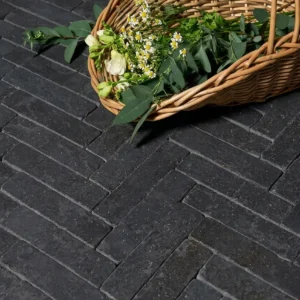
Why Citadel basalt is the top choice for commercial & private projects
When architects and designers demand uncompromising durability, Citadel basalt pavers deliver exceptional performance that outlasts conventional stone. Exclusive to Citadel Stone, our black basalt collection represents the pinnacle of natural stone engineering for heavy-duty commercial and luxury residential applications. Hand-selected from premium quarries, these black basalt tiles offer unmatched strength and timeless aesthetic appeal.
Key benefits at a glance
- Extremely durable natural stone: Our black basalt tiles are the toughest natural stone in the world
- Superior hardness: Three times harder than limestone, sandstone, or granite
- Low water absorption basalt: Typically 0.1-0.4% absorption rate
- Consistent deep black color: Rich, uniform appearance with subtle natural variations
- Minimal maintenance required: Resists staining and weathering with basic cleaning protocols
- Freeze-thaw resistant: Laboratory-tested performance in extreme climate conditions
- Heavy traffic rated: Ideal for commercial plazas, pedestrian zones, and high-use areas
- Complete size range: Citadel Stone supply in all thicknesses, sizes, and finishes
Material profile — what makes Citadel basalt different
Geological & visual characteristics
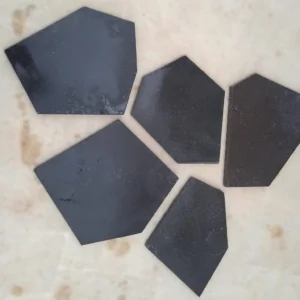
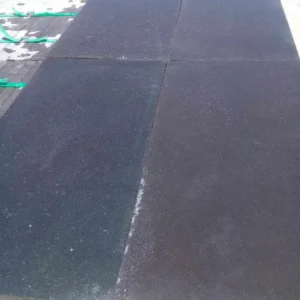
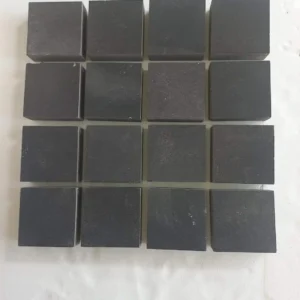
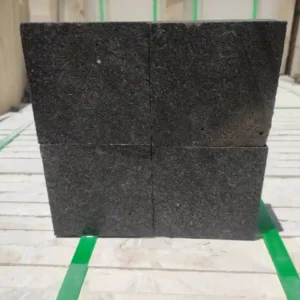
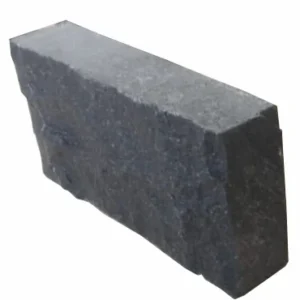
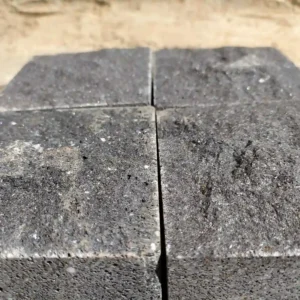
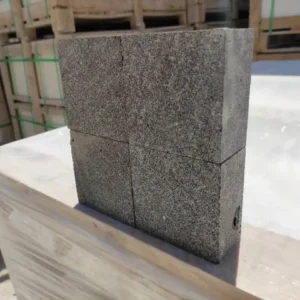
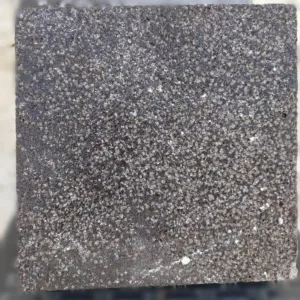
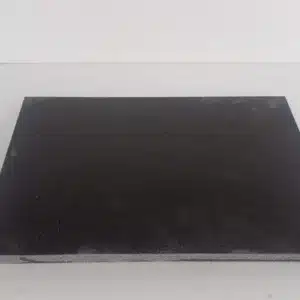
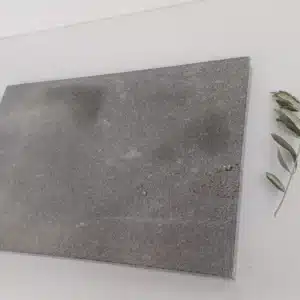
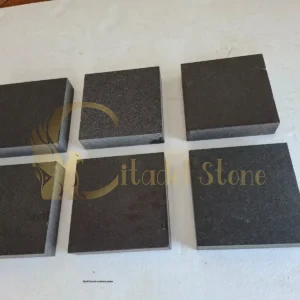
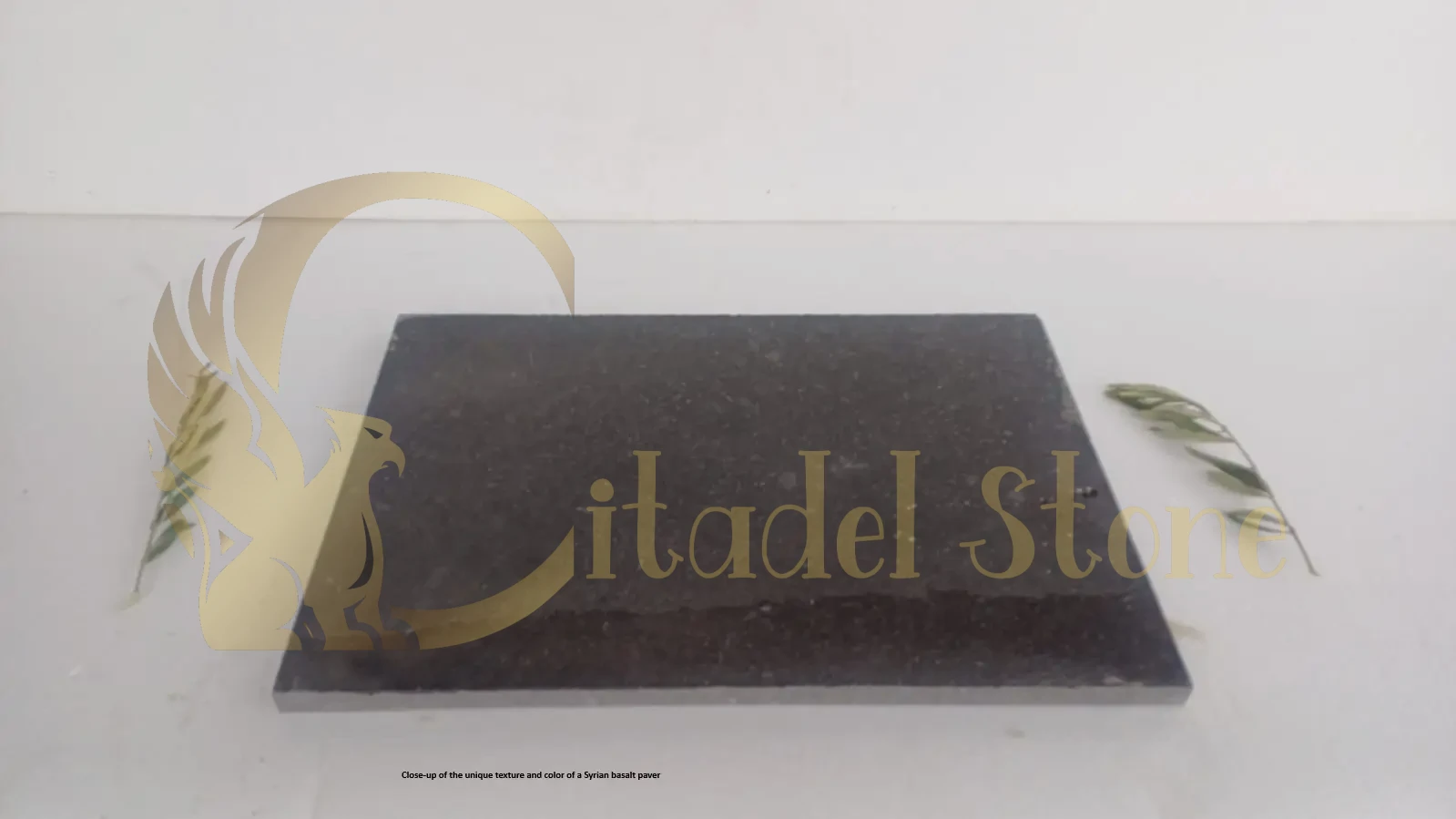
Our basalt exhibits a distinctive fine-grained volcanic structure with deep charcoal to jet-black coloration. The stone’s compact crystalline matrix creates subtle natural variations in texture and occasional mineral veining that adds character without compromising uniformity. This hard-wearing paving material maintains consistent color depth across large installations.
Typical finishes
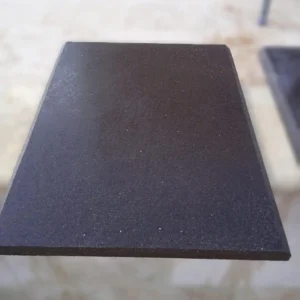
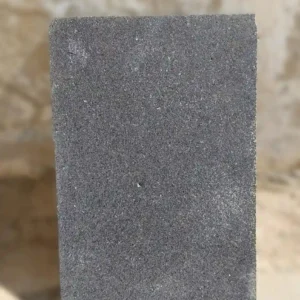
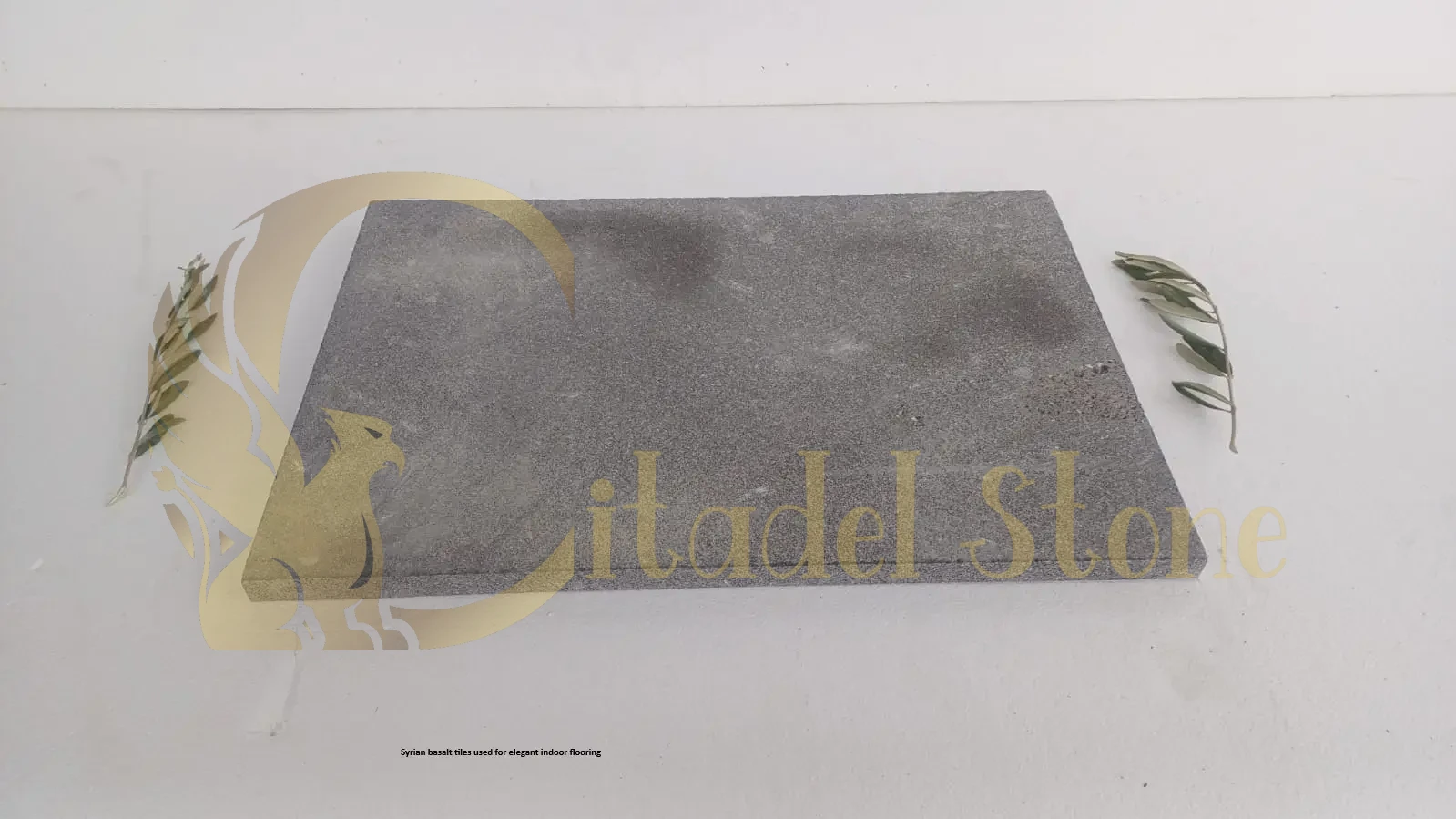
- Honed finish delivers smooth, matte surfaces ideal for commercial pedestrian areas and luxury residential applications. The refined texture provides excellent slip resistance while showcasing the stone’s natural depth.
- Sawn finish offers cost-effective utility with clean, straight edges perfect for tight joint installations and geometric patterns in commercial basalt paving projects.
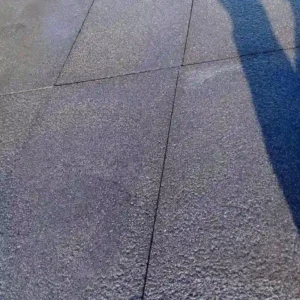
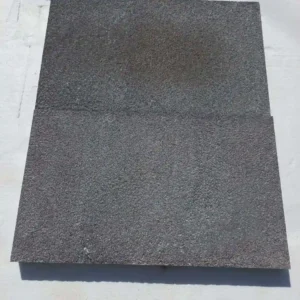
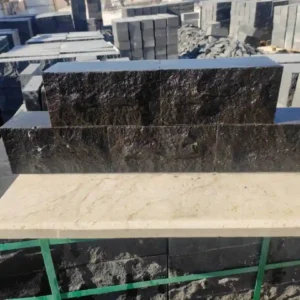
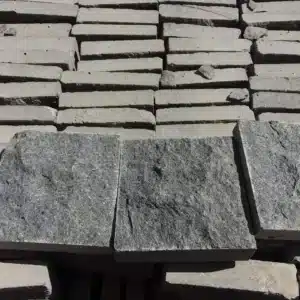
- Flamed finish creates textured surfaces with enhanced grip characteristics, making it the preferred choice for pool surrounds, ramps, and exterior heavy-traffic zones.
- Bush-hammered finish provides maximum texture and slip resistance for industrial applications while maintaining the stone’s inherent strength properties.
- Polished Finish creates a high-gloss surface that showcases the stone’s colors and patterns with dramatic effect. This finish is perfect for areas where a sophisticated and reflective look is desired, particularly in luxury residential interiors and high-end commercial settings.
- Brushed Finish offers a slightly textured surface that enhances the stone’s natural characteristics while providing a subtle sheen. This finish is popular for both indoor and outdoor spaces, combining functionality with an elegant appearance that complements a variety of design styles.
Performance & durability — the Citadel Stone advantage
Citadel basalt’s volcanic origin creates an abrasion resistant stone with exceptional compressive strength ratings. Laboratory testing by Citadel Stone demonstrates superior performance metrics compared to traditional paving materials.
The stone’s dense matrix structure results in low water absorption basalt characteristics. This minimal porosity translates to outstanding freeze-thaw performance and resistance to salt damage in harsh climates.
Durable basalt pavers from Citadel Stone are three times harder than limestone, sandstone, or granite. This makes them the ideal choice for projects demanding longevity. It will last forever, keeping its original condition when properly installed and maintained.
Compressive strength ratings exceed industry standards for heavy-duty natural stone applications, supporting both pedestrian traffic and light vehicular loads in designated areas.
Maintenance
Daily maintenance requires only basic sweeping and occasional water washing. The stone’s low porosity naturally resists most stains and organic growth. For heavy-use commercial installations, annual deep cleaning with pH-neutral stone cleaners maintains optimal appearance.
Sealing is typically unnecessary due to the stone’s inherent low absorption, though some high-traffic areas may benefit from breathable penetrating sealers applied every 3-5 years.
Specification & sizes — supply options for every project
Citadel Stone supply in all thicknesses, sizes, and finishes to meet diverse project requirements. Common tile dimensions include 300x300mm, 400x400mm, 600x600mm, 900x900mm, and 40x60cm formats, with bespoke cutting available for custom installations.
Standard thickness options range from 20mm for residential applications to 50mm+ for heavy-commercial and vehicular-rated installations. Large-format basalt tiles up to 120x60cm are available for contemporary minimalist designs.
Applications — where our basalt outperforms alternatives
Commercial basalt paving excels in high-traffic pedestrian plazas, airport terminal approaches, and transit station platforms where durability is non-negotiable. The stone’s superior abrasion resistance outperforms granite, limestone, and sandstone in comparative testing.
Hotel terraces and restaurant patios benefit from the stone’s consistent appearance and minimal maintenance requirements. Pool surrounds and spa areas utilize textured finishes for optimal slip resistance while maintaining elegant aesthetics.
Industrial pedestrian walkways and loading dock approaches leverage the stone’s exceptional load-bearing capacity. Luxury residential driveways and entry courtyards showcase the material’s sophisticated appearance while handling daily traffic loads.
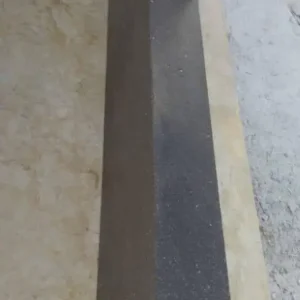
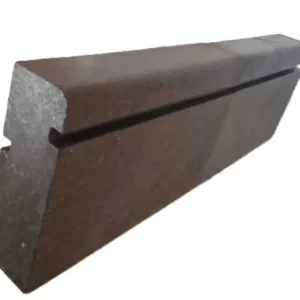
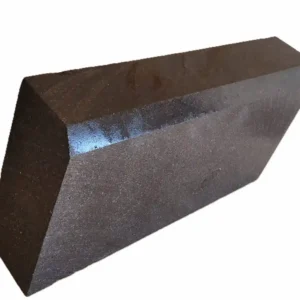
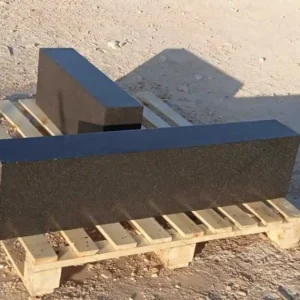
Our basalt coping provides unmatched durability for pool edges, retaining walls, and architectural details where weather exposure demands maximum performance.
Design & aesthetics — how to use black basalt in modern projects
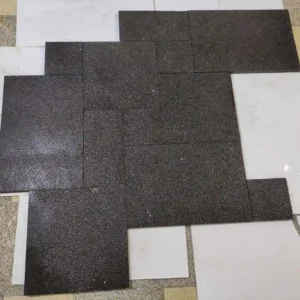
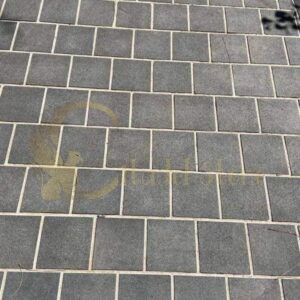
The deep black palette creates striking contrast when paired with light limestone, travertine, or contemporary metal elements. Minimal joint widths (2-3mm) emphasize the stone’s monolithic appearance in large-format installations.
Linear joint patterns complement modern architectural lines, while ashlar layouts add traditional sophistication. The stone’s uniform color depth enables seamless transitions between interior and exterior applications.
Bullnose and chamfered edge profiles soften harsh lines in residential settings, while sharp-cut edges maintain clean geometry in commercial installations. Consider contrasting grout colors to either highlight or minimize joint patterns based on design intent.
Visit Citadel Stone, the leading basalt supplier worldwide, at our showroom featuring comprehensive sample boards that showcase various finish combinations and joint details.
Sustainability & lifecycle
Quarry-direct basalt eliminates intermediate handling, reducing environmental impact while ensuring consistent quality. The stone’s exceptional durability extends project lifecycles significantly beyond conventional materials, reducing long-term replacement costs and waste generation.
Citadel Stone’s direct sourcing relationships ensure responsible quarrying practices and supply chain transparency. The material’s longevity makes it an affordable long-term investment when lifecycle costs are considered.
Quick spec checklist for procurement & installers
- Request current Technical Data Sheet (TDS) with lab test results
- Obtain hardness and abrasion test reports for project verification
- Review batch photos for color consistency approval
- Confirm recommended installation adhesives and sealants
- Verify installer certification and experience with basalt
- Establish delivery scheduling and site storage requirements
- Confirm warranty terms and coverage details
- Request project-specific sample boards for approval
- Obtain coefficient of friction ratings for finish selection
- Verify thickness recommendations for load requirements
- Confirm edge profile options and fabrication capabilities
- Establish maintenance protocols and recommended cleaning products
Technical downloads & sample requests
Download comprehensive technical documentation, including laboratory test reports, installation guidelines, and maintenance protocols from the Citadel Stone technical resource center. Request sample boards featuring all finish options and size combinations for hands-on evaluation.
Contact our technical specification team for project-specific performance data and installation recommendations.
Six Case Studies Showcasing Basalt Tiles & Pavers USA in Action
New York City — “Hudson Waterfront Promenade” — basalt pavers for a heavy-use public promenade
Project brief: A 2,800 ft waterfront promenade required durable, slip-resistant paving and elegant coping to match a mixed-use development’s modern aesthetic.
Challenge: Very high pedestrian loads, salt-air corrosion, strict stormwater/runoff and ADA regulations, and tight staging windows in a congested urban right-of-way.
Citadel Stone role: Early collaboration with the developer, lead architect and the city’s civil contractors to select a dense, low-porosity basalt with honed finish for traction. Citadel provided: site mockups, CAD detail blocks for architects, and A/E submittals clarifying thermal movement joints and anchoring details for basalt coping at planter walls.
Installation & coordination: Citadel coordinated pre-fabricated coping lengths with the contractor’s crane schedule, provided on-site cut-to-fit services and trained the masonry subcontractor on basalt adhesive spec and grout compatible with freeze/thaw cycles. Weekly coordination reduced rework and kept the staged traffic plan intact.
Outcome & value: Zero replacements in year one, improved slip resistance (measured during commissioning), and a cohesive look that matched the architect’s renderings. Client testimonial emphasized Citadel’s fast technical submittals and clear handling guidance.
Los Angeles — “Silvergrove Residential Courtyard” — honed basalt tiles for upscale podium decks
Project brief: A seven-story residential podium with pool, amenity terraces, and multiple material transitions. The owner wanted a modern dark stone that would stay cool under sun exposure.
Challenge: Heat island effects, pool chemical exposure, multiple trade interfaces (deck waterproofing, pool contractor, landscape), and code limits on surface temperatures.
Citadel Stone role: Provided thermal-performance spec options, recommended a honed basalt finish with integrated diatomaceous aggregate for reduced surface temperature, and produced connection details showing mechanical anchoring at coping to interface with pool tiles. Citadel worked directly with the pool contractor and the waterproofing manufacturer to approve a bedding mortar compatible with membrane warranties.
Installation & coordination: On-site training for the tile crew, mockups for edge details at deck/pool interfaces, and scheduled deliveries timed with waterproofing cure schedules to avoid delays. Citadel’s QA checks at 50% and 100% coverage minimized callbacks.
Outcome & value: Reduced surface-heat complaints, long-term color uniformity, and saved the GC one week on sequencing thanks to just-in-time deliveries and clear interface documentation.
Chicago — “River North Loft Conversion” — basalt tile floors & interior coping
Project brief: Adaptive reuse of a loft building converting industrial floors into luxury lofts with basalt tiles in entry lobbies and exterior alley paving.
Challenge: Historic preservation review, variable subfloors, and integrating radiant heating under basalt in lobby areas. Exterior alley needed porous paving to reduce runoff.
Citadel Stone role: Collaborated with the preservation architect and structural engineer to specify thin-bed basalt tile assemblies compatible with existing slab conditions and with engineered joints for radiant heat expansion. Supplied permeable basalt pavers rated for heavy service for the alley. Provided cut samples for the historic commission and shop drawings indicating anchor intensities for exterior coping.
Installation & coordination: Delivered custom-sized tiles to minimize waste, coordinated with electrical and radiant contractors for embedded conduits, and issued an installation checklist for the tile setter so warranty conditions were met.
Outcome & value: Approved by the preservation board, minimal thermal cracking with radiant heating, and a 30% reduction in surface runoff due to permeable paving sections. Owner praised Citadel’s coordination with multiple trades.
Houston — “Bayou Edge Corporate Campus” — basalt coping & drainage-friendly pavers
Project brief: New corporate campus needed resilient coping for stormwater channels and low-maintenance pavers for high-traffic plazas.
Challenge: Humid climate, intense summer storms, and chemical runoff from landscaping requiring chemically stable stone. Also required compliance with local stormwater BMPs.
Citadel Stone role: Recommended dense, chemically inert basalt for coping and pavers, supplied technical sheets proving low porosity and acid resistance, and worked with the civil engineer to detail linear drainage slots integrated with coping. Citadel provided joint-and-edge details for contractor bidding packages.
Installation & coordination: Precut coping units with mechanical anchoring provisions were delivered to match the campus’s modular plaza grid, and Citadel supervised drainage tie-ins ensuring the stone did not obstruct stormwater flow.
Outcome & value: No post-installation staining or efflorescence, simplified maintenance for the facilities team, and improved campus resilience during heavy storms. GC cited Citadel’s thorough submittals as essential for passing the stormwater compliance review.
Phoenix — “Desert Botanical Plaza” — heat-mitigating basalt pavers and decorative coping
Project brief: A civic plaza adjacent to a botanical garden needed a material palette that read contemporary while resisting extreme sun and thermal cycling.
Challenge: High daytime temperatures, UV exposure, and the need for slip resistance near visitor areas and water features. Also required sustainable sourcing and low embodied energy materials where possible.
Citadel Stone role: Sourced locally quarried basalt where feasible, recommended a textured honed finish to reduce glare and slip, and provided specifications for light-absorbing aggregates to moderate surface temperature. Citadel worked with landscape architects to create custom coping profiles that doubled as seating—designed, shop-drawn, and prefabricated for rapid installation.
Installation & coordination: Night deliveries and early-morning installs avoided peak heat for crews; Citadel’s install guides advised on joint spacing to accommodate thermal expansion. Citadel also provided sustainability documentation for LEED credit support.
Outcome & value: Comfortable visitor seating, fewer surface heat complaints, and LEED documentation that helped the city qualify for regional credits. The landscape architect praised Citadel’s creative coping-as-seating solution.
Philadelphia — “Old City Gallery Row” — basalt steps, coping & gallery exterior paving
Project brief: A cultural corridor connecting galleries required refined basalt steps, durable coping at low parapet walls, and tasteful exterior paving that resisted graffiti and heavy foot traffic.
Challenge: Tight historic streetscapes, stringent gallery owner finish expectations, and the need for graffiti-resistant surfaces that could be cleaned without damage.
Citadel Stone role: Coordinated with gallery owners and the architect to specify a textured basalt with a matte finish that accepted sacrificial anti-graffiti coatings. Supplied shop drawings for step nosings, integral slip-resistant detailing, and coping anchorage for parapets that concealed waterproofing terminations. Citadel also supplied cleaning test protocols to the facilities teams.
Installation & coordination: Staged deliveries during off-hours to minimize disruption to gallery openings, set up a mock step for client sign-off, and provided training on approved graffiti removal methods.
Outcome & value: Elegant, safe steps and coping with gallery owners reporting easy maintenance and no surface damage after cleaning tests. City tourism board highlighted the corridor as a durable, attractive pedestrian route.
Basalt Market in the USA: Size, Supply Chains & Specifier Guidance
Market Size & Growth
The U.S. basalt market is expanding quickly, driven by demand for basalt fiber, construction aggregates, and dimensional stone. Recent industry estimates place U.S. basalt-rock revenues in the low hundreds of millions (with single-digit CAGRs projected through the next decade), while the basalt-fiber segment is flagged as one of the fastest-growing submarkets due to its use in lightweight reinforcement and industrial composites.
Regional Supply & Typical Applications
Domestic supply concentrates around volcanic provinces—most notably the Columbia River Basalt region in the Pacific Northwest—where quarries supply slabs, pavers, and crushed aggregate for roads and hardscape. Basalt is prized for heavy-duty exterior uses (plazas, transit hubs), pool coping, and as an aggregate in high-performance concrete; imports fill specialty grades when domestic stocks are limited.
Opportunities, Risks & Specifier Tips
Opportunities: basalt fiber for rebar substitutes and high-durability tiles; recycled basalt aggregate for sustainable concrete mixes. Risks: raw-material availability can fluctuate with regional harvests and export competition, so keep dual sourcing and reserve-slab strategies. Specifier tips: request lab data for water absorption, freeze-thaw and ASTM/ANSI slip ratings; ask suppliers for EPDs or mill reports when targeting green certifications.
We Quarry, Manufacture, Supply & Deliver the World’s Toughest Natural Stone
Citadel basalt represents the ultimate fusion of natural beauty and engineering performance for demanding commercial and residential projects. When specification excellence is non-negotiable, choose the stone that delivers uncompromising durability with sophisticated aesthetics.
Request Citadel basalt samples and technical test reports to experience the Citadel Stone difference firsthand. Our technical team provides comprehensive project support from initial specification through installation completion.
Our black basalt — exclusive to Citadel Stone.