Natural stone bathroom floor tile ideas tend to separate into two camps: the ones that photograph beautifully and the ones that actually hold up over decades of daily use. The tile choices that score on both fronts share a set of performance characteristics — absorption rates below 0.5%, surface textures that meet the 0.42 wet DCOF minimum published in ANSI A326.3, and thickness tolerances tight enough to avoid lippage across large-format runs. Understanding these parameters before you browse bathroom floor tile options saves you from a costly specification reversal halfway through installation.
Why Material Choice Defines Bathroom Floor Performance
Your bathroom floor operates in an environment that cycles through humidity, standing water, cleaning agents, and temperature swings every single day. Ceramic and porcelain options are highly resistant to moisture, but natural stone bathroom floor tile ideas open up a different performance profile — one where the material’s mineral structure, porosity, and surface finish interact in ways that manufactured tiles simply can’t replicate. The trade-off is real: natural stone requires more deliberate specification and maintenance discipline, but the long-term aesthetic return is substantial.
According to NSI ASTM tile stone specifications, natural stone tiles are evaluated across absorption rate, modulus of rupture, and compressive strength — all of which directly predict how a material will behave in a wet, high-traffic bathroom environment. Knowing where your selected stone sits on those curves guides both finish selection and sealing frequency.
Travertine: The Versatile Classic
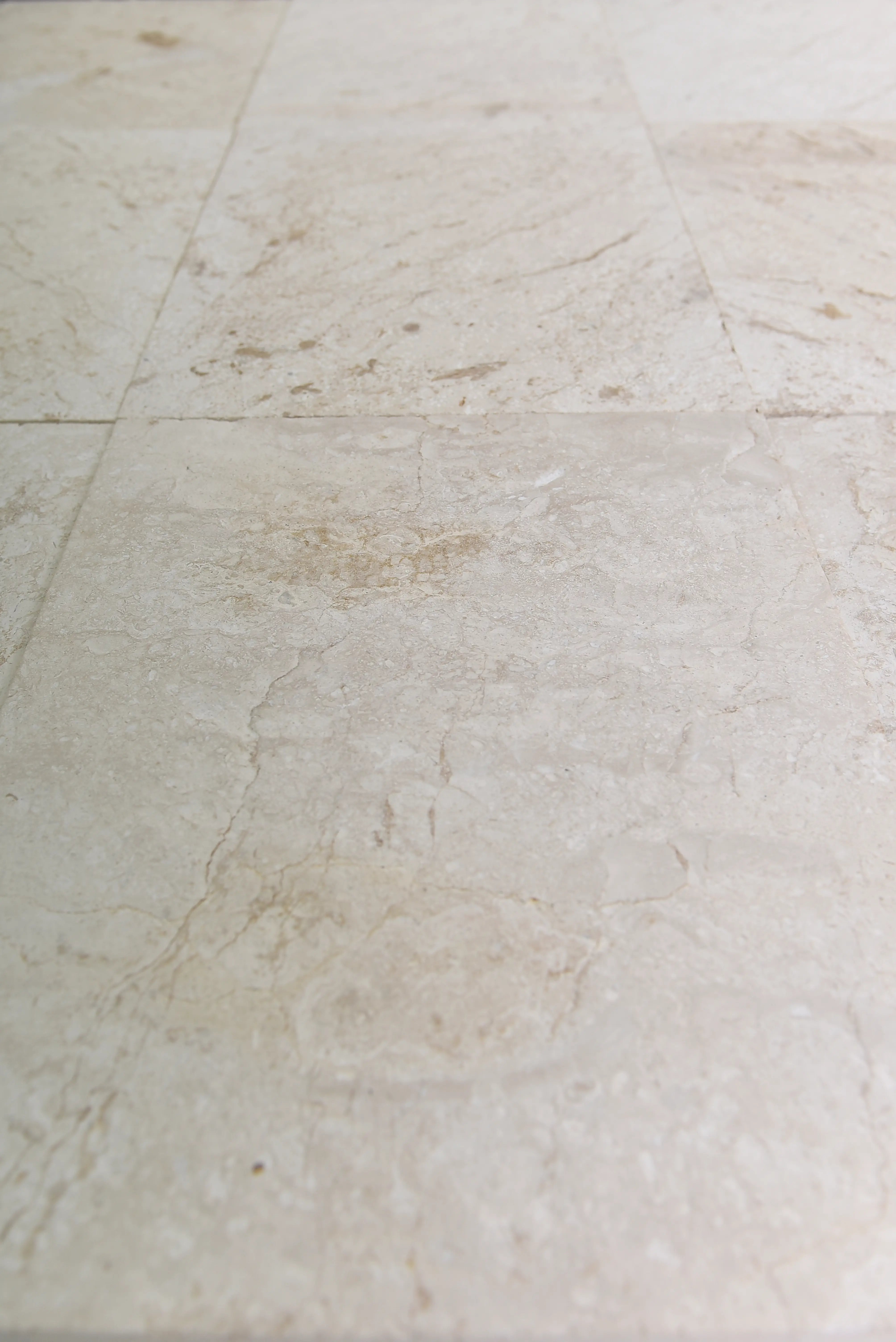
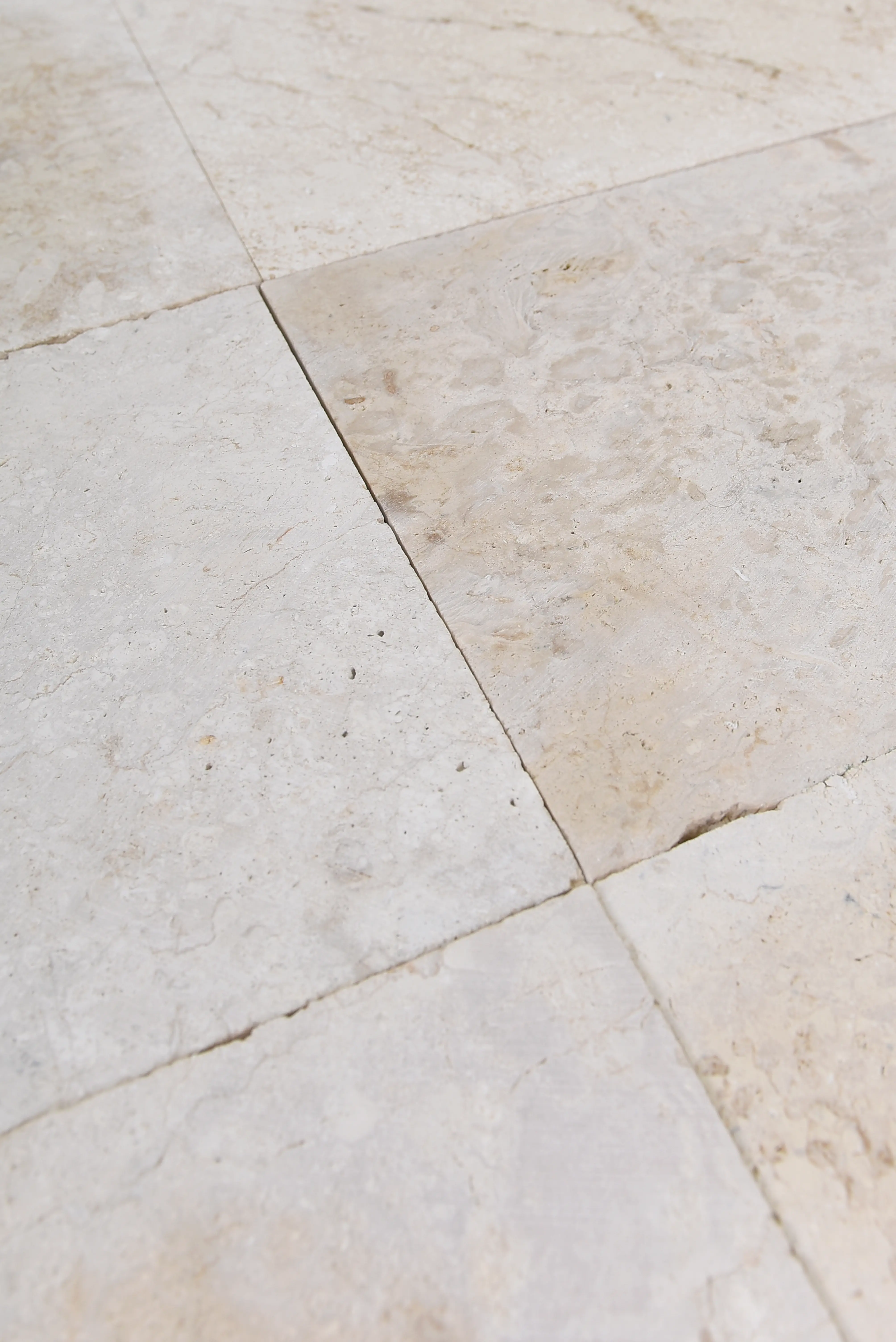
Travertine is one of the most technically forgiving natural stones you can specify for a bathroom floor — and one of the most frequently misspecified. The open-pore structure that gives travertine its warmth and visual depth is the same feature that demands proper grouting or filling before sealing. Unfilled travertine in a wet environment traps moisture in surface voids and accelerates surface fatigue. Specify either filled-and-honed or filled-and-polished travertine for bathroom floors, depending on your slip resistance targets.
For bathroom floor tile ideas centered on a spa-like aesthetic, honed travertine in 18×18 or 24×24 formats delivers a matte warmth that complements both modern and transitional interiors. The Citadel Stone 24×24 tile range offers calibrated thicknesses that reduce lippage risk considerably when you’re setting over a well-prepared substrate.
Limestone: Understated Depth with Real Performance
Limestone bathroom floors occupy a specific design register — quiet, sophisticated, and highly sensitive to finish selection. Honed limestone in mid-grey or warm cream tones reads as contemporary without the coldness of large-format porcelain. The material’s calcium carbonate base means it’s reactive to acidic cleaners, so a pH-neutral cleaning protocol needs to be established from day one.
- Absorption rates for dense limestone typically fall between 3–6%, which is manageable with a penetrating sealer applied every 18–24 months
- Surface hardness on the Mohs scale ranges from 3–4, meaning abrasive scrubbing pads should be avoided to protect the honed finish
- Thermal mass is genuine — limestone floors feel cool underfoot in summer but respond well to in-floor radiant heating systems
- Vein direction matters aesthetically: book-matched slabs create a dramatic effect, while random-lay tile formats keep the look grounded and approachable
According to NSI limestone technical specifications, absorption characteristics and flexural strength values for limestone vary significantly between formation types — the specific quarry source can shift your sealing schedule by a full year in either direction.
Basalt: The Underused Option Worth Specifying
Basalt is the material that surprises most clients when they first feel it underfoot. Dense, fine-grained, and exceptionally durable, basalt brings a depth of colour — predominantly charcoal to near-black — that photographs like nothing else in a bathroom setting. Its volcanic formation produces a tight pore structure with absorption rates often below 1%, which dramatically reduces maintenance demands compared to travertine or limestone.
- Compressive strength typically exceeds 25,000 PSI, making it one of the most structurally capable natural stones you can use on a bathroom floor
- Honed basalt provides a subtle sheen without the mirror-like reflection of polished finishes, which tends to show water spots more aggressively
- The material pairs well with warm timber vanity units and matte brass hardware — a design combination that’s gained significant traction in high-end residential bathrooms
- Thermal conductivity is higher than limestone, which means basalt feels distinctly cool underfoot — a point worth discussing with clients in heated bathroom projects
Finish Selection and UV Exposure in Sun-Exposed Bathrooms
Bathrooms with large skylights or full-wall glazing introduce a UV exposure variable that most bathroom floor tile ideas guides skip entirely. Direct UV radiation accelerates colour shift in certain stone varieties — particularly lighter limestones and travertines with iron oxide mineral inclusions, where prolonged sun exposure triggers oxidation that gradually shifts cream tones toward amber. The change is slow, but it’s cumulative and irreversible without resurfacing.
Finish selection plays a direct role in UV performance. Polished surfaces concentrate UV impact at the crystal boundaries of the stone, which can cause micro-differential fading — a patchy, uneven appearance that becomes visible within a few years in high-sun environments. Honed and brushed finishes distribute UV interaction more evenly across the surface texture, retaining a more consistent appearance long-term. For sun-exposed bathroom floors, a penetrating sealer with UV-inhibiting compounds provides a meaningful additional layer of protection — reapplication every 12–18 months is the realistic schedule in high-UV conditions.
Format Sizing and Pattern Options That Elevate the Design
The format of your bathroom floor tile determines how the space reads proportionally — a detail that’s easy to underestimate in a small room. Large-format tiles (24×24 and above) reduce grout line frequency, which creates a cleaner, more expansive visual field. However, large-format bathroom floor tile requires a flatter substrate than most bathroom floors naturally provide. Verify that your substrate deflection is within L/360 tolerance before committing to tiles above 15×15.
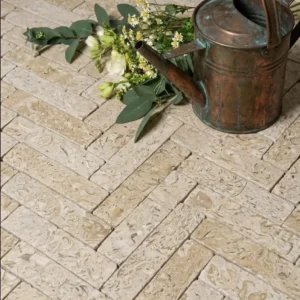
- Herringbone patterns in 4×12 or 3×9 brick formats add directional energy to narrow bathrooms and work particularly well in travertine
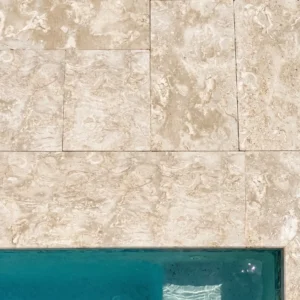
- Versailles pattern (a four-piece multi-size layout) introduces visual complexity without requiring custom sizing — it’s a proven format in limestone and travertine product lines
- Hexagonal mosaic formats in 2-inch or 4-inch scales create a period-appropriate aesthetic in honed marble or basalt that reads as curated rather than dated
- Large-format rectified tiles (24×24 and up) in a straight-lay pattern are the strongest choice for contemporary minimalist bathrooms — the critical variable is your setting bed and lippage control
Substrate flatness for large-format tile should not exceed 1/8 inch variation over a 10-foot span, per TCNA installation guidance. Checking this with a straightedge before any mortar work begins — catching high points early prevents costly correction after the tile is down. The TCNA installation standards provide detailed tolerance thresholds for natural stone tile in wet area applications, including bathroom floors.
Sealing and Maintenance Protocols You Can’t Skip
Sealing is where bathroom floor tile ideas either succeed or fail in practice. A well-chosen travertine or limestone floor that isn’t sealed correctly will show staining within months of installation — soap scum, hard water deposits, and cleaning agents all penetrate an unsealed surface faster than most homeowners expect. The sealing protocol depends on both the stone type and the finish.
- Polished surfaces need a surface-coat sealer that fills crystal micro-pores — reapply every 12–18 months in heavy-use bathrooms
- Honed and tumbled finishes need a penetrating impregnating sealer that doesn’t alter the matte appearance — apply before grouting, then reseal annually in wet areas
- Grout joints in natural stone installations benefit from a separate grout sealer application — standard tile grout sealers are appropriate, applied independently from the stone sealer
- Test your sealer’s water-bead performance every 6 months: water should bead and roll off easily; if it soaks in within 30 seconds, you’re overdue for reapplication
At Citadel Stone, we recommend completing a water absorption test on a sample tile from your specific batch before specifying your sealing schedule — absorption rates can vary enough between quarry runs to shift your maintenance intervals by several months in either direction. Our technical team advises clients on stone-specific sealing schedules as part of the project consultation process.
Ordering, Lead Times, and Project Planning
Your bathroom renovation timeline depends heavily on material availability — a detail that catches many projects off-guard. Natural stone tile, particularly in larger formats or specialty finishes, often carries lead times that extend well beyond standard ceramic or porcelain alternatives. Citadel Stone maintains warehouse stock across a broad national range of travertine, limestone, and basalt bathroom floor tile, which reduces lead times to 1–2 weeks for most standard product lines. Custom formats or special quarry selections run longer — factor 6–8 weeks for non-stocked material when building your project schedule.
Verifying warehouse availability before finalising your specification is a step that saves significant disruption. Tile batches from the same quarry run share consistent colour and veining characteristics; mixing batches from different production runs can produce visible variation across your floor that’s impossible to correct without relayering. Order 10–15% overage from a single batch to account for cuts, breakage during installation, and future repair needs.
Getting Your Bathroom Floor Tile Specification Right
The bathroom floor tile ideas that deliver the most lasting satisfaction are the ones where material selection, substrate preparation, finish choice, and maintenance planning align as a complete system rather than a sequence of separate decisions. You can choose the most visually striking travertine or the densest basalt on the market — but if the substrate isn’t flat, the sealer isn’t matched to the finish, or the grout colour overwhelms the stone’s natural character, the result falls short of its potential. Treat the specification as one interconnected decision, not four separate ones.
As you develop your stone project specifications, related technical considerations can inform your broader material decisions. Understanding how large-format tiles perform during installation — specifically the tolerances and correction methods that prevent lippage — is directly relevant whether you’re working with travertine, limestone, or basalt on a bathroom floor. managing large tile lippage in your installation covers the technical detail worth reviewing before your tiles are down. Travertine tiles from Citadel Stone arrive in calibrated 12mm thicknesses, sourced from quarries across the Mediterranean and Middle East.
Related reading: floor tile patterns · install floor tile · Stone Kitchen Floor Tile Ideas for Every Style.