

Basalt rock earns its place in serious tile specifications not because it photographs well, but because its crystalline structure — formed under rapid volcanic cooling — produces a material with genuinely consistent mechanical behavior across the face of a slab. Most specifiers focus on color uniformity when they first encounter basalt tile, which is understandable, but the property that actually governs long-term performance is the material’s characteristically low absorption rate and its tight, interlocking grain structure. Those two factors together determine how the tile responds to freeze-thaw cycling, thermal movement, and surface wear — the conditions that sort lasting installations from ones that require early intervention. If you’re putting together a specification for basalt rock, understanding those structural qualities before you choose a finish or a thickness will save you from mismatches that are expensive to correct after the tile is set.
What Basalt Is and Why It Matters for Tile
Basalt is an extrusive igneous rock — it forms when low-silica magma reaches the surface and cools rapidly, locking minerals into a fine-grained, aphanitic texture before larger crystals have time to grow. That rapid cooling is what gives basalt rock its characteristic visual uniformity: the mineral grains are too small to read individually at normal viewing distances, so the surface presents as an even, dark field with minimal pattern variation. For tile applications where a clean, consistent aesthetic is the design brief, that geological origin is a practical advantage rather than just a selling point. According to USGS basalt volcanic rock properties and composition, basalt is the most common volcanic rock type on Earth’s surface, which also means the material is well-documented in construction science.
The fine grain structure carries a mechanical consequence worth noting in your specification: the tight interlocking of plagioclase feldspar, pyroxene, and olivine minerals produces a material that is dense and resistant to surface abrasion under foot traffic. This is not the open, porous character you encounter in travertine or some limestones — basalt behaves more like a closed system, which simplifies sealing protocols and reduces the risk of deep staining from spilled liquids. That said, basalt is not uniform across all geological deposits, and color can shift between quarry batches. Sourcing from selected quarries with consistent geology matters more for basalt than for many other natural stone types.
Finish Options and What They Mean for Your Project
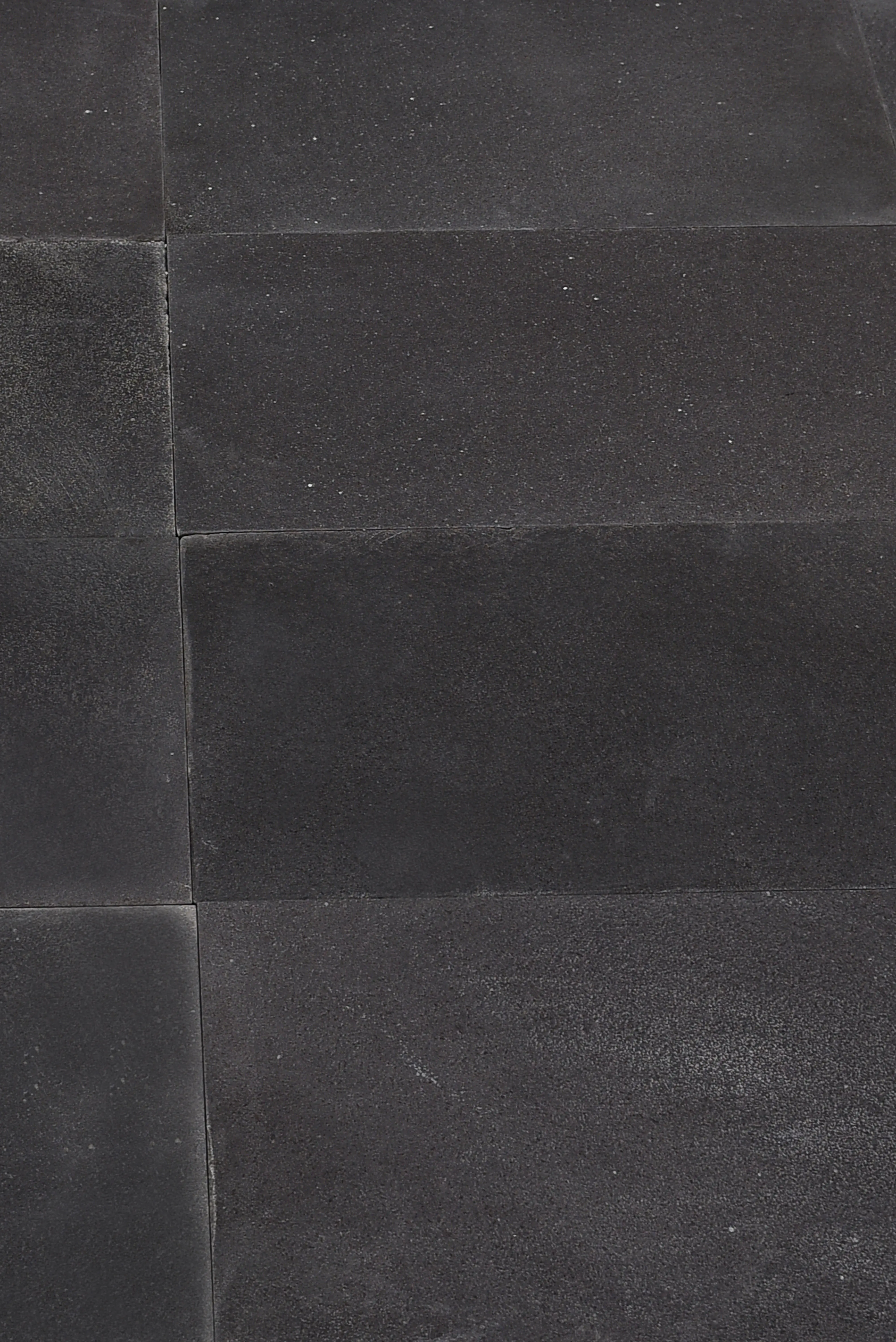
Your finish selection is the single decision that changes the daily performance character of basalt tile more than any other variable — more than thickness, more than joint width, more than sealer type. The three finishes you’ll encounter in commercial and residential specifications are honed, bush-hammered, and flamed, and each leaves a surface texture profile that affects how the tile reads visually, how it responds to cleaning, and how comfortable it is underfoot in different environments.
- Honed basalt presents a smooth, matte surface — the saw-cut face is ground flat and the micro-scratches from cutting are removed, leaving a consistent sheen without the mirror quality of a polish. Honed finishes suit interior flooring, wall cladding, and sheltered exterior terraces where the surface is unlikely to see standing water for extended periods.
- Bush-hammered basalt has a mechanical texture applied after cutting — a pneumatic head with a matrix of small pyramid points impacts the surface, fracturing the top layer and leaving a dimpled, rough texture. The result is an open, tactile surface that reads as casual and robust, well-suited to high-traffic outdoor areas.
- Flamed basalt is produced by applying an intense gas flame to the surface, which causes thermal spalling — crystals at the surface shatter and release, leaving a heavily textured, irregular profile. The process also lightens the surface color slightly, which some designers use deliberately to soften the dark character of the stone.
Slip considerations are a legitimate part of finish selection. The current standard for evaluating this property is ANSI A326.3, measured wet — the finish is the primary variable, and if you need test data for a specific finish on a specific project, the test report is available on request. What you should know as a specifier is that a honed surface and a bush-hammered or flamed surface behave very differently when wet, and that difference should inform your finish choice for any application involving water exposure.
Thickness Selection and Structural Load Requirements
Basalt tile thickness is not a preference — it’s a structural variable that has to be matched to the application’s point load and span conditions. The three nominal thicknesses you’ll encounter most often in the market are 10 mm, 20 mm, and 30 mm, and the right choice depends on your substrate, your installation method, and the type of traffic the installation will carry.
- 10 mm tiles are specified for interior flooring over rigid, fully bonded substrates — concrete slabs or cement backer board — where the tile is supported across its full face and has no unsupported span to carry a point load independently.
- 20 mm tiles are the standard for exterior pedestrian paving set on compacted aggregate or on a sand-set base. The additional thickness distributes point loads over a larger area and resists edge chipping at joints where the substrate might have minor voids.
- 30 mm or greater tiles are appropriate for vehicular areas, heavy commercial terraces, or any installation where an elevated base system creates unsupported spans between pedestals. Specifying too thin a tile in these conditions leads to fracture at the midpoint of the span — a failure mode that looks like random cracking but is purely a structural mismatch.
You should also account for the tile’s self-weight when specifying basalt for elevated structures or balconies. Basalt is a dense material — denser than most limestones and comparable to granite — and a structural engineer reviewing a rooftop terrace load calculation will want to see the actual density figure from a test report, not a generic assumption. Request the test report from your supplier; at Citadel Stone, our technical team can provide documentation tied to the specific batch you are ordering.
Basalt Rock in Outdoor Tile Applications
Outdoor specification for basalt rock requires you to think through two performance scenarios that interior installation avoids entirely: freeze-thaw cycling and UV exposure over multi-decade time frames. Basalt’s low absorption rate is its primary asset in freeze-thaw climates — the less water a tile absorbs, the less volume expansion occurs during freeze events, and the lower the risk of spalling or delamination. In regions where ground temperatures cycle above and below freezing repeatedly through winter, specifying a material with the absorption characteristics of basalt rock is a meaningful decision, not a marketing distinction.
UV exposure affects color stability differently in basalt than in lighter-colored stones. The dark mineral matrix of basalt does not bleach or yellow under prolonged sun exposure — what you see at installation is closely representative of what you’ll see decades later, apart from the patina that develops with cleaning and traffic. This stability makes basalt a dependable choice for terrace, pool surround, and pathway applications where long-term color consistency matters to the design intent. According to basalt volcanic rock formation and construction properties, the mineral composition responsible for this color stability is the same composition that contributes to the material’s surface hardness and resistance to abrasion.
For outdoor basalt rock pavers, your base preparation governs performance as much as the tile itself. A poorly compacted aggregate base that allows differential settlement will fracture tiles regardless of their thickness or quality. Specify a minimum compacted depth appropriate to your frost line depth and expected traffic, and ensure drainage falls are designed to carry water away from the tile field rather than letting it pond at low points.
Sealing Basalt Tile: What the Finish Changes
Sealing protocols for basalt tile differ from those for more porous natural stones, and the distinction matters because over-sealing a tight-grained stone can create a surface film that peels rather than wears gradually. Basalt’s low absorption rate means it accepts less sealer by volume than travertine or limestone — the first coat may saturate the surface and leave residue if application technique does not account for the material’s reduced uptake.
- Apply sealer in thin coats and allow full absorption between applications — with basalt, one coat is often sufficient on interior installations and two coats on exterior ones.
- Use a penetrating impregnator rather than a topical coating for outdoor basalt. Penetrating sealers work below the surface and are not displaced by thermal movement the way topical films can be.
- Re-sealing intervals depend on traffic intensity and the specific sealer product — follow the sealer manufacturer’s stated interval, not a generic schedule. High-traffic commercial floors may need attention sooner than a residential terrace.
- Test the sealer on an offcut from your batch before committing to the full area — some sealers slightly darken basalt, and on a material that is already dark, that shift is subtle but perceptible against unsealed areas.
The Natural Stone Institute provides guidance on stone sealing and maintenance protocols; the relevant standards are available through Natural Stone Institute igneous stone paving technical standards and are worth reviewing if you are writing a maintenance specification for a commercial project.
Cost Factors and Project Budgeting for Basalt Tile
Basalt tile pricing is shaped by factors that are not always visible at the point of quotation, and understanding them helps you build a project budget that holds rather than one that requires revision after materials are ordered. The material-to-labor cost ratio for basalt tile installations typically runs differently from ceramic or porcelain tile jobs — natural stone requires more skilled setting labor, and that labor cost is relatively consistent regardless of where your project is located. The material cost, however, varies significantly based on freight distance from the quarry source to your site.
- Freight is a real budget line for natural stone, particularly for heavier formats. A 30 mm basalt paver is substantially heavier per square foot than a 10 mm interior tile, and that weight multiplies across a full pallet. Delivery lead times and logistics are quoted with the order — confirming offloading arrangements at your site before the delivery date prevents costly redelivery fees.
- Regional availability of skilled stone setters affects labor costs in ways that are hard to predict from a national average. In markets where natural stone installation is common, setting labor is competitive. In markets where ceramic tile dominates, natural stone expertise may carry a premium that offsets any material savings you achieve by specifying a less expensive stone type.
- Value engineering decisions — substituting a thinner tile format, reducing the tile size to lower cutting waste, or choosing a bush-hammered finish over a honed finish that requires more fabrication time — can meaningfully reduce total project cost without compromising performance. Discuss these options with your supplier at the specification stage rather than after pricing has been locked.
- Ordering in complete pallet quantities reduces per-unit cost and minimizes the likelihood of a batch color mismatch if you need additional material partway through the installation.
For a project where basalt rock is the primary tile material, explore our selected basalt tile range — Citadel Stone cuts to order at our selected quarries, which means format and thickness can be confirmed against your project drawings before production begins rather than after.
Installation Jointing and Thermal Movement
Thermal movement is a variable that governs the long-term integrity of any tile installation, and basalt’s coefficient of thermal expansion — which belongs on a test report from your supplier — is the figure your setting material and joint width calculation must be built around. The common field mistake is to treat joint width as a purely aesthetic decision and choose the narrowest joint that looks clean, without checking whether it provides adequate accommodation for the movement the tile will actually experience between seasonal temperature extremes.
Expansion joints should be designed from your own movement calculation based on the tile’s tested thermal expansion coefficient, the temperature differential at your project location, and the panel dimensions in your layout. Generic rules of thumb for joint spacing that circulate in trade literature were developed for particular conditions and particular materials — they do not reliably transfer to basalt rock in all formats and climates. Your setting material manufacturer publishes a stated joint width range for their products; work within that range and reconcile it with your movement calculation before the installation crew starts laying tile.
- For large-format basalt tiles (600 mm and above on the long dimension), movement joints at the perimeter of every room are non-negotiable — thermal and moisture cycling over a full room span generates cumulative movement that narrow field joints cannot fully absorb.
- Outdoor basalt tile installations require perimeter soft joints wherever the tile field meets a wall, curb, or fixed structure. These joints are filled with flexible sealant, not grout — grout will crack at these locations in the first heating season.
- In freeze-thaw climates, the base preparation and drainage design carry more responsibility for preventing joint failure than the joint width alone — a well-drained, stable base prevents the differential movement that opens joints prematurely.
Basalt in the US Market: Sourcing and Availability
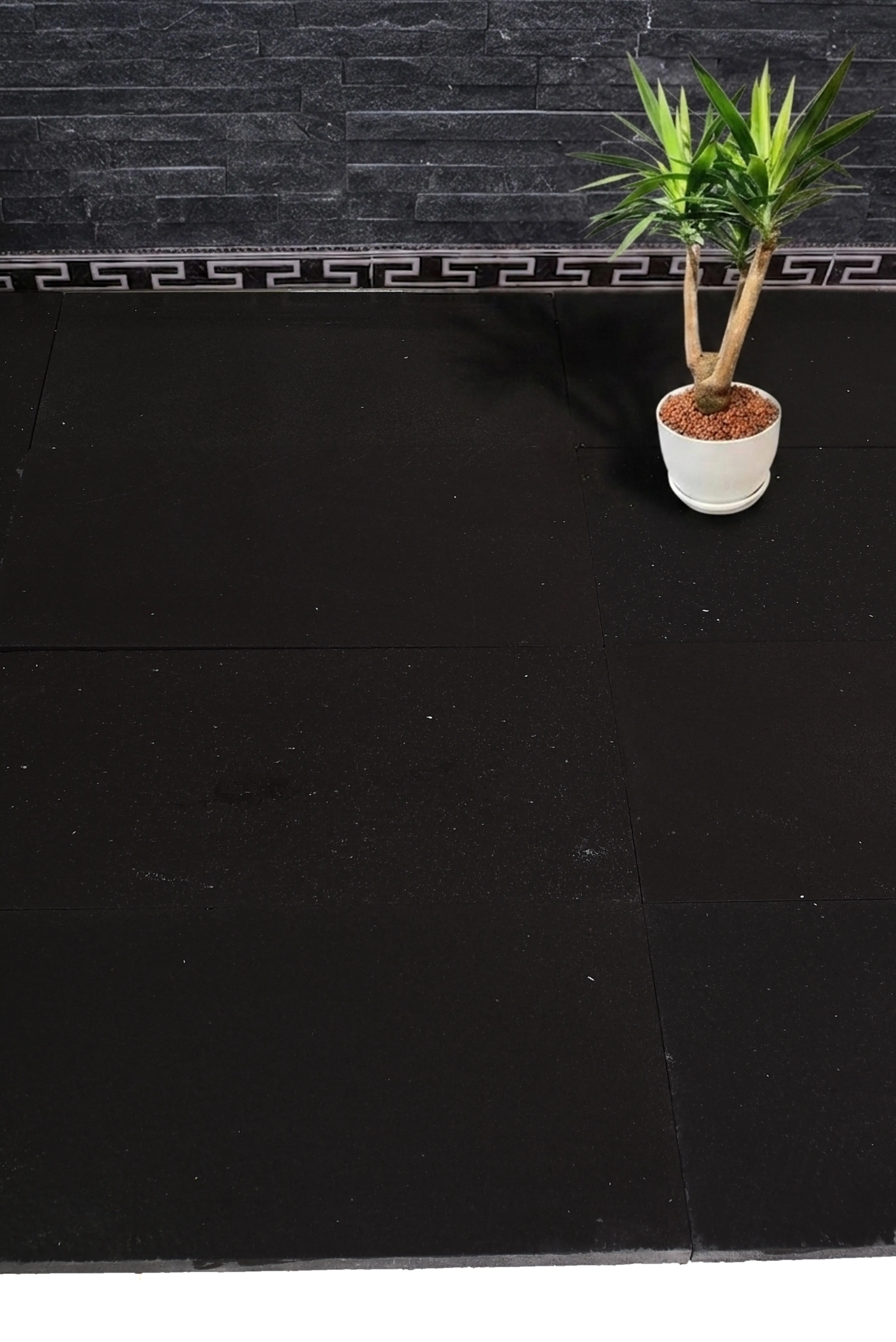
The phrase “basalt usa” appears frequently in sourcing searches, and it reflects a legitimate question about domestic versus imported supply. Basalt deposits are geologically abundant across volcanic regions of the United States, and the material is well-documented in construction science. However, commercial-grade basalt tile production for the architectural market is concentrated in regions with established quarrying and processing infrastructure that can deliver consistent color, calibrated thickness, and finished surfaces at the quality levels that residential and commercial projects demand. Citadel Stone sources from selected quarries with the geology and production capability to meet tight specification tolerances.
Domestic availability of basalt tile as a finished product — not raw geological material — is limited in most US markets, which means freight from the point of production to the project site is a planning reality you should build into your schedule. Lead times are quoted with each order, and your delivery schedule should be confirmed before the installation crew’s mobilization date is set. For larger projects where multiple deliveries are required, sequencing stone arrivals to match the installation program prevents the double-handling costs that come from storing material on site for extended periods. Site access for delivery — crane availability, forklift access, or manual handling requirements — should be assessed and communicated to the logistics team when the order is placed.
Parting Guidance for Basalt Rock Specifications
A well-specified basalt tile installation comes down to matching three things precisely: the tile’s physical properties to the application’s demands, the finish to the environment’s exposure conditions, and the jointing design to the movement the installation will actually experience. The material’s geological character — fine-grained, dense, low-absorption — gives it a strong performance foundation, but that foundation is realized only when the specification is complete rather than approximate. Request test reports for absorption, modulus of rupture, and abrasion resistance from your supplier, confirm thickness against your structural loading scenario, and design your joints from the tile’s actual thermal expansion data rather than a standard assumption.
Your maintenance program also deserves attention before installation rather than after. Sealing intervals, cleaning product compatibility, and the long-term plan for re-sealing are all decisions that are easiest to make when you can discuss them with the supplier at the point of specification. If you are planning complementary natural stone features alongside your basalt tile — a related stone surface that works in a different context — basalt stone maintenance and care covers the ongoing stewardship side of the material in practical terms. Basalt tiles from Citadel Stone are shaped from dense volcanic stone known for even color and consistent thickness.
Related reading: Basalt Porcelain Tiles vs Natural Basalt Compared · how basalt rock is formed · vesicular basalt rock.