

Basalt stones set around a garden — loose landscape stones, stepping stones, boulders, edging and wall stones — need only light, occasional attention, but they are not maintenance-free. The dense, fine-grained structure of basalt sheds water quickly, yet soil, leaf litter, moss and hard-water marks still settle on the surface, and stones that sit in soil can shift with the seasons. Good basalt stone care is mostly a matter of a few simple steps done at the right time of year, so the stones keep looking deliberately placed rather than neglected. This guide focuses on basalt stones set in the garden and landscape.
Understanding Basalt Stone Structure Before You Clean
Basalt is an extrusive volcanic rock with an exceptionally tight grain structure and low water absorption. According to USGS basalt volcanic rock properties, basalt forms when lava cools rapidly at or near the Earth’s surface, producing a dense matrix with minimal porosity compared to sedimentary stone types. For garden stones, that low absorption is practically useful: most dirt, pollen and organic staining sits on the surface rather than soaking in, so water and a brush remove much of it. The risk is the wrong chemistry. Acidic cleaners, strong alkaline products and bleach can attack the mineral surface over time and leave a dull, patchy finish, and their runoff also harms the soil and plants around the stones.
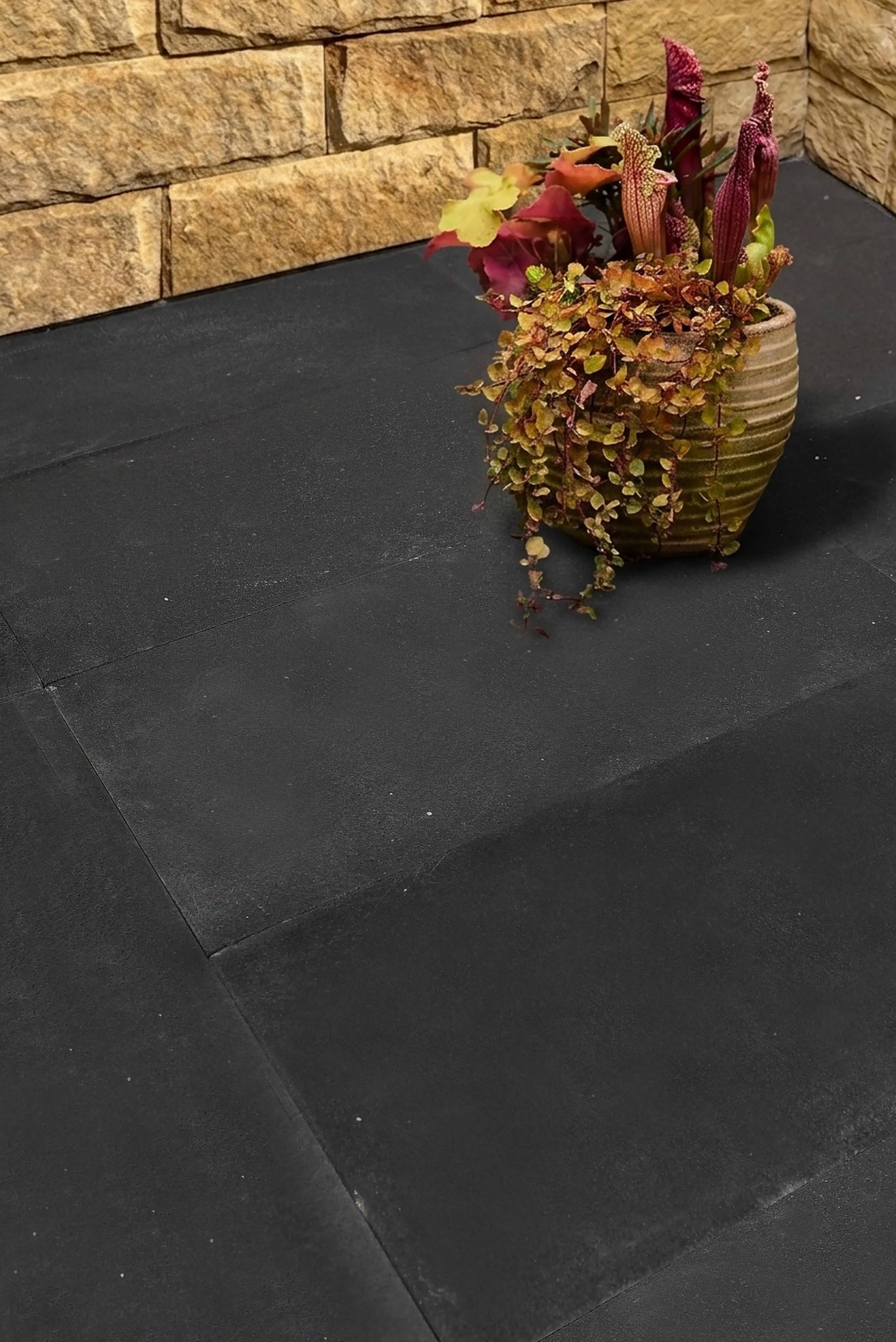
Texture matters too. Split-face and rough-cut wall stones, tumbled edging and natural boulders have small ridges and pockets where soil and spores lodge, while sawn or honed stepping stones have flatter faces that show water marks more readily. Knowing which surfaces you have tells you whether a stiff brush or a softer approach is the right tool.
A Seasonal Cleaning Routine That Actually Works
Basalt garden stones do not need weekly cleaning. A thorough clean in spring, once the last frost has passed, and a lighter one in autumn after the leaves have fallen cover most gardens. Between those visits, clearing leaf litter and grass clippings off stepping stones and edging stops organic matter from breaking down on the stone, which is the main source of dark tannin marks and green film.
For the clean itself, start dry: sweep or blow away loose debris, then scrub the stones with a stiff nylon brush and plain water. Where dirt remains, a pH-neutral stone cleaner diluted in a bucket of water is the correct next step — not dish soap, not household bathroom cleaner, and not anything marketed as a “degreaser” unless it is specifically pH-neutral and stone-safe. Soaps can leave a thin film that attracts dirt and makes dark stone look cloudy. The Natural Stone Institute stone care standards consistently point to pH-neutral chemistry as the baseline for maintenance of dense igneous stones, and the principle applies to garden stones exactly as it does to architectural finishes. Rinse thoroughly afterwards so no cleaner film is left on the stone.
A pressure washer is tempting for a fast result, but use it with care. Keep to a low setting with a wide fan nozzle, hold the lance well back from the surface, and never aim it at joints, mortar beds or the soil under stepping stones — a narrow jet can wash out bedding material and leave stones rocking or sunk on one side.
Removing Moss, Algae and Lichen From Basalt Stones
Shaded, damp corners of a garden are where basalt stones pick up green growth. The stone itself does not feed moss or algae, but the soil, pollen and leaf film that collect on its surface do, and on stepping stones that growth makes the walking surface slick when wet. Deal with it in this order:
- Scrape off thick moss with a plastic scraper or a stiff brush while it is dry — dry moss lifts away in clumps, while wet moss smears
- Scrub the remaining film with the same diluted stone cleaner and a stiff nylon brush, working into the ridges and pockets of textured faces
- If growth returns quickly, use a biocide labeled as safe for natural stone and for use near plants, following the label for dilution and dwell time
- Avoid wire brushes on stepping stones and edging — steel bristles can leave grey or rust-colored marks on dark stone
- Trim back overhanging shrubs and open up airflow where you can; more light and faster drying do more to keep growth away than any cleaner
Lichen is slower to remove than moss and can leave a faint pale outline after cleaning. On boulders and wall stones you may decide to leave it as part of a weathered, natural look; on stepping stones it is worth removing, because it holds moisture on the surface you walk on.
Keeping Stepping Stones and Edging Level
Much of the work on garden stones is not cleaning at all but keeping them where they were placed. Stepping stones bedded in soil, gravel or sand settle unevenly over time, frost heave lifts their edges, and roots push edging stones out of line. Walk your basalt stepping stones after winter and after long wet spells, and look for:
- Stones that rock underfoot — lift the stone, add or level the bedding material, and tamp it firm before resetting
- Stones that have sunk below the surrounding ground — they collect water and soil, so raise them back to the level of the path
- Raised edges that could catch a foot — reset the stone rather than leaving a trip point
- Edging stones that have leaned or drifted — reset them against a string line and firm the soil or gravel behind them
- Roots growing under stones — cut or redirect them before they lift the stone again
Keep turf and mulch trimmed back from the edges of stepping stones so the shape of each stone stays clear. Grass that creeps over the edges hides the stone, traps moisture against it and, over a few seasons, buries it.
Water, Drainage, and How Your Garden Affects Maintenance
The water that reaches your basalt stones has a visible effect on them. Sprinklers fed by hard water leave a thin calcium or magnesium film each time they run, and over a season that builds into a white haze that is easy to mistake for weathering of the stone itself. Adjust sprinkler heads so they water the planting rather than the stones, and remove light haze early with the same diluted stone cleaner; for heavier deposits, use a mineral-deposit remover that the label says is safe for natural stone, and try it on an inconspicuous spot first.
Drainage matters as much as water quality. Stones that sit in a low spot where water pools stay damp, grow algae faster and settle more as the soil beneath them softens. If stepping stones or edging sit in a wet area, improving the drainage around them — a gravel base, a gentle fall away from the path, or a dry well nearby — removes the conditions behind most long-term problems. This is the same logic applied to outdoor paving in high-rainfall regions: adequate drainage eliminates the conditions under which moisture does long-term damage.
In cold climates, clear snow from stepping stones with a plastic shovel or a stiff broom rather than a metal blade, which can chip edges. If you use a de-icer near the stones, choose one labeled safe for natural stone, use the smallest amount that does the job, and rinse the residue off in spring so it does not build up on the stone or in the soil around it.
Where the same dark stone continues from the garden onto a terrace, our honed basalt tiles show how the stone looks as a finished paving surface.
Inspecting Your Basalt Stones for Surface Wear
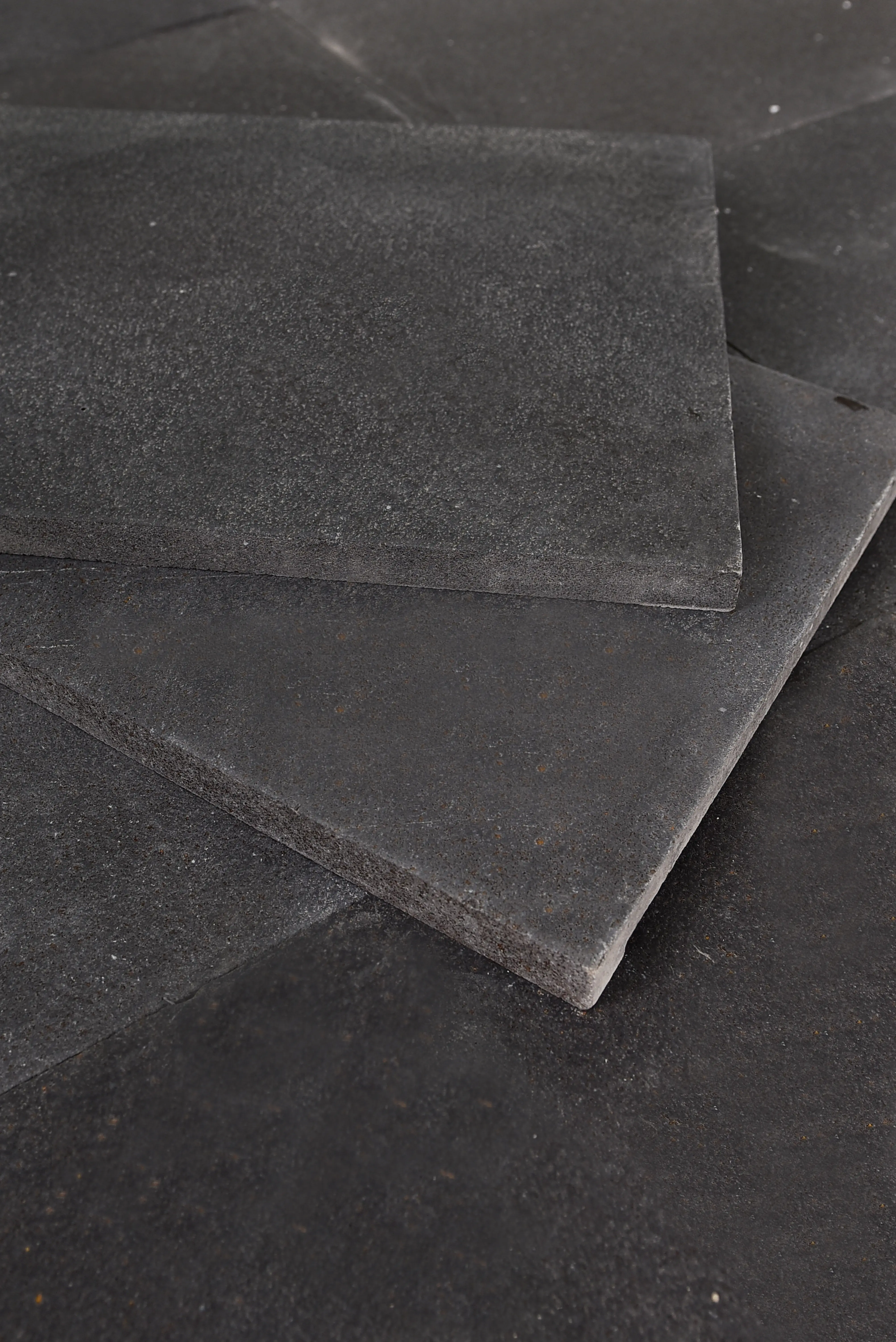
Regular inspection is the maintenance step most people skip until a problem becomes visible. Once or twice a year — spring is the natural time — walk the garden and look at each group of stones in low, raking light early or late in the day. Low-angle light reveals chips, hairline cracks, loose wall stones and patchy surface marks that are hard to see at midday.
- Check the edges and corners of stepping stones for chips — a sharp chipped edge on a walking surface is worth smoothing, or turning so it sits away from foot traffic
- Look along dry-laid wall stones and capstones for any that have loosened or shifted, and reset them before the stones around them move too
- Check boulders for undercutting, where rain or irrigation has washed soil away from one side, and backfill so the boulder stays firmly seated
- Photograph key areas each spring — comparing photos year to year gives you an honest baseline for spotting settlement, growth and staining
- Note patchy dark or pale areas; these usually point to organic staining, mineral deposits or cleaner residue rather than damage to the stone
According to Britannica’s basalt formation and properties, the mineralogical stability of basalt — dominated by pyroxene and plagioclase feldspar — gives it a surface hardness that resists scratching under normal use. What you are monitoring in a garden is rarely the stone itself; it is the bedding, soil and growth around it, and the condition of the surface you see every day.
Spot Cleaning Stains on Basalt Garden Stones
Most marks on garden basalt come from what lands on it: leaves and berries, bird droppings, rust from metal furniture or tools, and oil or fuel drips near a garage or a mower. Because basalt absorbs so little, these stains usually stay near the surface, and they lift more easily the sooner you deal with them.
- Organic marks from leaves, berries and droppings — rinse, then scrub with a pH-neutral stone cleaner; once the source is gone, light marks often weather away with sun and rain
- Rust marks — use a rust remover formulated for natural stone, not a general-purpose product, which is often acid-based and can etch the surface
- Oil and fuel drips — blot fresh spills straight away, then apply a stone-safe degreasing cleaner or a poultice made for oil stains
- Paint, mortar or concrete splashes from nearby work — remove them while fresh; once cured, use a plastic scraper and a cleaner the label says is safe for natural stone, not a general mortar remover
Whatever the product, test it first on a hidden stone or the underside of a loose one, and rinse the area thoroughly afterwards. Avoid citrus or vinegar cleaners sold as “natural” alternatives; they are acidic, and pH-neutral products are the safer choice for natural stone.
Knowing When to Reset or Replace Basalt Stones
Even with good care, some stones eventually need more than cleaning. These signs tell you a stone should be reset, turned or replaced rather than cleaned again:
- A stepping stone that keeps rocking after its bedding has been releveled — the stone may be too thin or too small for the traffic it carries
- Visible cracks, even hairline, in a stone that carries foot traffic — water freezing in a crack can widen it over time
- Chipped edges on stepping or wall stones that cannot be turned so the damage sits out of the way
- Edging stones pushed out of line again and again by the same root or by mower traffic — a deeper setting or a different position may be needed
Replaced stones are not necessarily waste. A cracked stepping stone can become edging or part of a dry-laid border, and smaller pieces work as accents among planting or around a water feature — the material keeps its character even when a piece no longer suits its original job.
Maintaining Your Basalt Stones: Key Habits for Long-Term Performance
Maintaining basalt stones in the landscape comes down to consistent habits applied at the right time of year: clear debris before it breaks down, clean with water and pH-neutral chemistry, deal with moss and algae while the growth is light, keep stepping stones and edging level, and inspect each spring. The material is forgiving in the sense that it doesn’t absorb contaminants readily — but that same density means surface residues are yours to manage, because they will not disappear on their own. Citadel Stone cuts basalt to order at our selected quarries, and the finish of the stone you start with directly affects how your maintenance routine performs over time. If you’re planning new feature stones alongside existing ones, columnar basalt as a design material explores how the same volcanic origin that suits basalt to garden use also lends itself to striking architectural applications. Basalt from our selected Middle East quarries responds well to pH-neutral cleaning, keeping its cool grey tone over years of use.
Related reading: choosing grey basalt tile · basalt rock types for tiles · basalt mosaic tiles.