Whether tile is considered a stone comes down to a classification question with real consequences for your specification — the wrong answer affects sealing schedules, adhesive selection, thermal behavior, and long-term maintenance. Natural stone tile and manufactured tile are fundamentally different categories of material, and confusing them leads to mismatched expectations on both sides of a project. The distinction is not cosmetic: is tile considered a stone depends entirely on whether the material was quarried from the earth or engineered in a kiln.
What Makes Something a Stone?
Stone, in the geological and construction sense, refers to material quarried directly from the earth — formed over millions of years through mineral crystallization, sedimentary layering, or metamorphic pressure. The critical distinction is origin: natural stone is not manufactured, engineered, or synthesized. It comes out of the ground as a cohesive mineral structure and is cut, honed, or finished to specification without altering its fundamental composition.
Manufactured tile, by contrast, is produced by mixing raw materials — clay, feldspar, silica, kaolin — and firing them in a kiln at high temperatures. The resulting product is uniform, consistent, and engineered to meet specific performance benchmarks. It’s a constructed material, not a quarried one. That distinction drives every performance characteristic that follows.
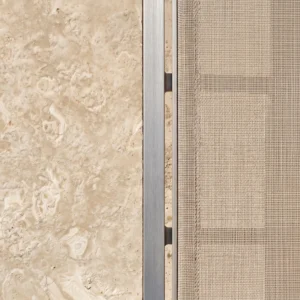
So when someone asks “is tile a stone,” the accurate answer is: only if it’s made from natural stone. Ceramic, porcelain, and glass tiles are not stone by any geological or material classification standard — they’re manufactured composites. Natural stone tiles — travertine, limestone, granite, marble, slate, basalt — are genuine stone cut into tile format.
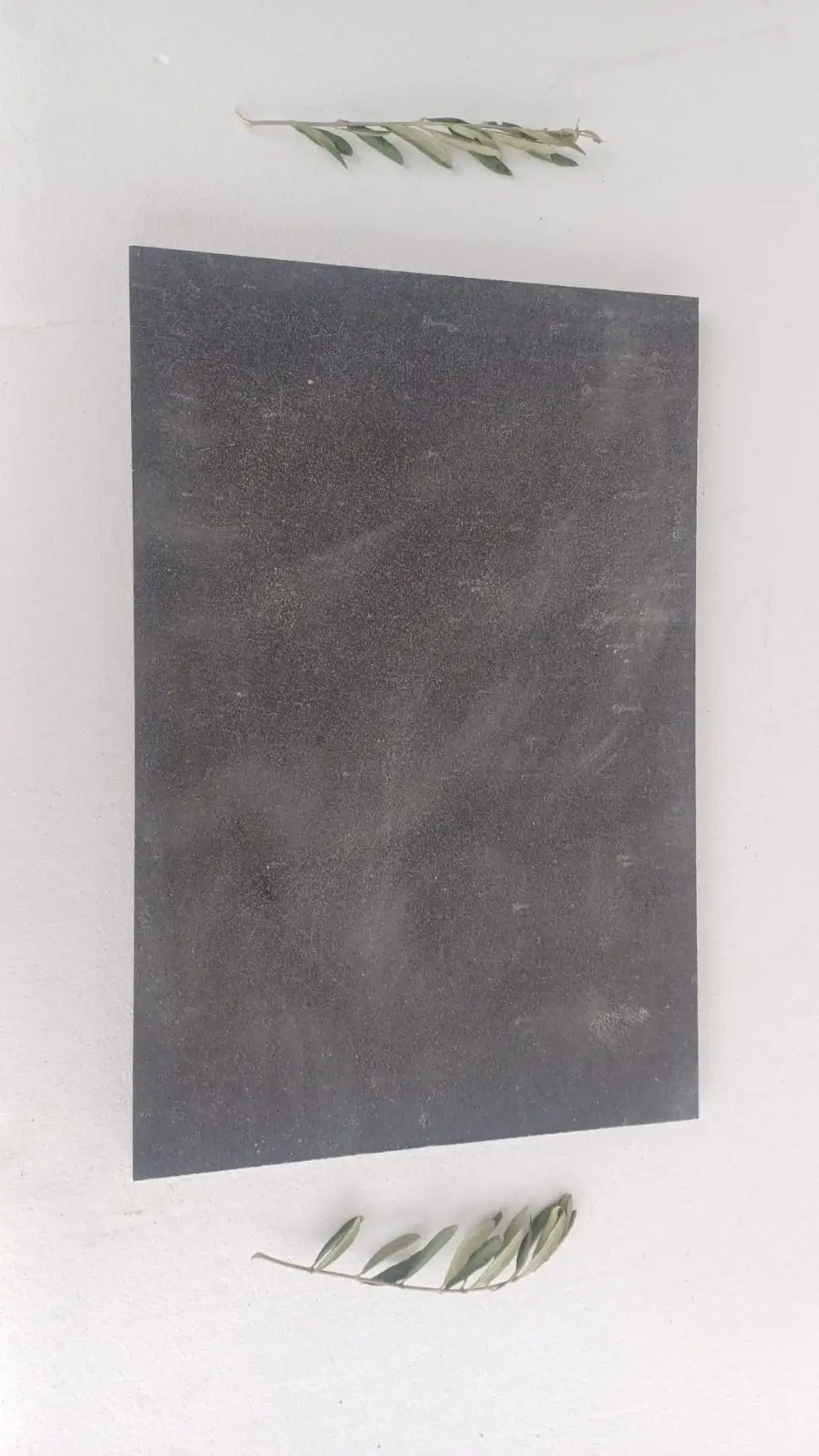
Natural Stone Tile vs Manufactured Tile: The Classification Breakdown
Understanding the classification differences between natural stone tile vs manufactured tile changes how you specify, install, and maintain each category. These aren’t interchangeable material groups — they perform differently under load, moisture, temperature cycling, and foot traffic.
Natural Stone Tile Characteristics
- Formed by geological processes — crystallization, sedimentation, or metamorphic pressure over millions of years
- Mineral composition varies between individual tiles from the same quarry batch
- Porosity ranges widely by stone type — travertine absorbs more than granite, limestone falls between the two
- Surface finish alters performance: honed finishes increase slip resistance but reduce stain resistance; polished finishes do the opposite
- Thermal expansion coefficients are material-specific and must be matched to your setting bed and joint spacing
- Requires sealing on a schedule matched to porosity — typically every 1–3 years depending on use intensity
- Color variation, veining, and mineral inclusions are inherent and cannot be controlled by specification
Manufactured Tile Characteristics
- Produced by firing clay and mineral blends in industrial kilns — ceramic at lower temperatures, porcelain at higher temperatures (typically above 2,300°F)
- Extremely consistent in color, dimension, and surface texture across the production run
- Porcelain achieves very low water absorption rates (typically below 0.5%) through the firing process
- Hard surface but brittleness under point load is a known performance characteristic — edge cracking is common in heavy-traffic or impact-prone areas
- Factory-applied glazes require no sealing but can scratch or dull under abrasive wear
- Dimensional tolerances are tight, making installation grout joints more consistent
The Natural Stone Institute ASTM tile stone specifications distinguish natural stone tile by material origin and require testing under separate ASTM standards than those governing ceramic or porcelain products — a clear indicator that these are not equivalent categories, even when they ship in the same tile format.
Granite Stone Tile as a Performance Benchmark
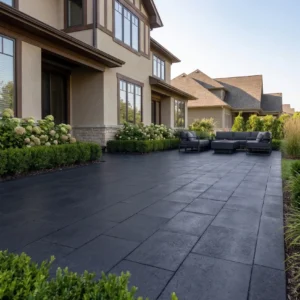
Granite stone tile sits at the high end of the natural stone tile performance spectrum. Its igneous origin gives it compressive strength commonly exceeding 19,000 PSI, making it one of the densest, most structurally sound natural tile options available. Granite stone tile appears in commercial lobbies, high-traffic corridors, and exterior cladding where long-term abrasion resistance matters more than material warmth or softness of appearance.
What makes granite particularly useful as a benchmark is that its low porosity — typically below 0.4% water absorption — puts it in the same performance range as high-fired porcelain, but with the mineral variation and depth that manufactured tile cannot replicate. That low absorption also means a less demanding sealing schedule: one application per year in high-use areas, potentially every 2–3 years in residential settings.
Granite also handles thermal cycling well. Its coefficient of thermal expansion sits around 4–8 × 10⁻⁶ per °F depending on specific mineral composition, which is manageable in most installation scenarios when you use expansion joints at appropriate intervals — typically every 8–12 feet in large-format exterior applications.
Porosity, Absorption, and Why They Matter More Than Stone Type
Here’s what often gets overlooked when specifiers focus on stone type rather than performance data: two tiles from different stone categories can perform nearly identically in moisture-sensitive applications, while two tiles from the same stone family can behave completely differently. The variable that actually drives performance is porosity — and it’s measured, not assumed.
ASTM C97 governs absorption testing for dimension stone. The test soaks a stone sample for 48 hours and measures uptake by weight. Travertine — a naturally porous carbonate — typically returns absorption rates of 3–8% by weight. Limestone ranges from 1–15% depending on density and geological formation. Dense granite and basalt come in well below 1%. Porcelain manufactured tile, by comparison, typically falls below 0.5% through the firing process.
According to ASTM natural stone tile absorption, strength, and slip resistance testing standards, absorption class directly informs where a tile can be safely installed — pool surrounds, exterior freeze-thaw zones, and food-service environments all impose minimum absorption thresholds that must be verified by material-specific testing, not assumed from stone family alone. This is where the natural versus manufactured distinction becomes a specification decision, not just a classification one.
Your tile selection for moisture-sensitive applications should lead with the absorption number, then work backward to material type. Specifying a travertine in an outdoor freeze-thaw environment without confirming its absorption rating against ASTM C97 benchmarks is a common field error that shows up as spalling within 3–5 winters.
Installation Timing and Seasonal Considerations for Natural Stone Tile
Natural stone tile installation has a seasonal dimension that manufactured tile typically doesn’t — and it’s not just about temperature. It’s about the interaction between adhesive cure chemistry, stone mass, and ambient conditions that determine whether your bond layer achieves full strength.
Thin-set mortars for natural stone operate within a working temperature window of approximately 40–95°F. Below 40°F, cure times extend dramatically and polymer additives in the mortar may not hydrate properly, resulting in a bond layer that tests soft even after apparent cure. Above 95°F, open time collapses — particularly on dark stone or south-facing exterior surfaces where the tile surface itself can reach temperatures 20–30°F above ambient air temperature.
Morning vs Afternoon Installation Windows
- In warm months, morning installation (before 10 a.m.) gives you the most stable surface temperature and maximum open time on your adhesive
- Afternoon work on exterior natural stone tile in direct sun frequently causes premature skinning of the adhesive before tiles are fully seated
- Large-format stone tiles — 24×24 and above — are particularly sensitive because the tile mass itself retains heat and accelerates moisture loss at the adhesive interface
- In cooler months, afternoon installation windows often outperform morning starts, especially on shaded or north-facing substrates where sub-40°F surface temperatures can persist into mid-morning
Scheduling natural stone tile installation around seasonal patterns is a real project management consideration, not a minor footnote. An exterior patio installation committed to a late-autumn timeline in a freeze-thaw region needs at least 28 days of curing above 40°F before the first hard freeze — which in many northern climates means a firm cutoff date in early October. Missing that window by two weeks can mean spending the following spring relaying tiles that lifted through frost action on an insufficiently cured bond layer.
Where Natural Stone Tile Fits Your Project
Natural stone tile vs manufactured tile isn’t a question of which is better — it’s a question of fit for application, maintenance commitment, and aesthetic intent. Natural stone tile belongs in projects where material authenticity, visual depth, and long-term patina matter. Manufactured tile belongs where dimensional consistency, low maintenance, and controlled performance parameters are the priority.
Consider natural stone tile for these applications:
- Interior floors where the natural variation in travertine, limestone, or marble becomes a design feature
- Bathroom surrounds and wet-room walls in honed finishes — honed stone grips better underfoot than polished, though both require appropriate sealing
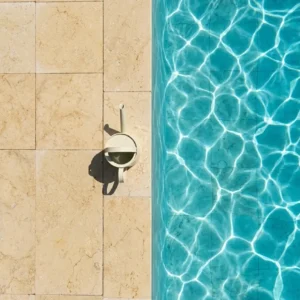
- Exterior patios in temperate and warm climates where freeze-thaw cycling is limited and stone absorption ratings support outdoor exposure
- Feature walls, fireplace surrounds, and entry halls where the visual weight of real stone reads differently than printed ceramic surfaces
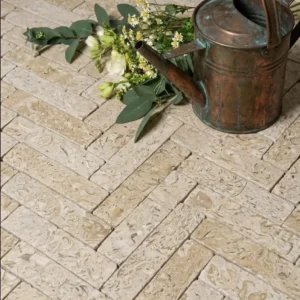
For a format that balances installation efficiency with natural stone authenticity, 6×12 Travertine Tile works well in both vertical and horizontal applications, offering a manageable size for solo or small-crew installation while maintaining the characteristic travertine variation that manufactured tile cannot replicate.
Sealing, Maintenance, and Long-Term Care Differences
The maintenance divide between natural stone tile and manufactured tile is significant, and specifiers who don’t address it clearly with clients create problems downstream. Natural stone tile requires an active maintenance program; most manufactured tile does not.
Natural Stone Sealing Schedule by Material
- Travertine and limestone: penetrating sealer applied at installation, refreshed every 1–2 years in residential applications and every 6–12 months in commercial or high-traffic environments
- Granite stone tile: sealer required but less frequently — typically every 2–4 years in residential settings due to lower porosity
- Marble: sealer every 12–18 months; marble’s calcium carbonate structure makes it reactive to acidic cleaners, which must be excluded from the maintenance protocol entirely
- Slate and basalt: sealer every 2–3 years; both are relatively dense but benefit from an impregnating sealer to reduce efflorescence on outdoor applications
Manufactured porcelain tile doesn’t require sealing, but the grout joints between tiles still do — a detail that surprises clients who assume a “low-maintenance” tile means a maintenance-free installation. You’ll still need grout sealer every 1–2 years on any manufactured tile installation with standard cement grout.
The TCNA natural stone tile installation standards outline material-specific setting bed requirements and joint sizing guidance that varies significantly between stone types and manufactured tiles — differences that affect both the installation process and the long-term maintenance approach for each material category.
Sourcing, Lead Times, and Logistics for Natural Stone Tile
Natural stone tile supply chains differ from manufactured tile in ways that affect your project schedule. Manufactured tile is produced in consistent batches with predictable lead times; natural stone tile is quarried in finite quantities from specific geological deposits, which means dye lot matching is a real constraint and warehouse availability determines your timeline.
Travertine, for example, is sourced from deposits in Turkey, Italy, Iran, and selected quarries from the Middle East — each producing material with distinct color characteristics, pore density, and vein structure. Your sample approval needs to happen from the same quarry batch that fulfills your order, or you risk visible variation between your sample board and the installed tile.
Citadel Stone maintains standing warehouse inventory of key natural stone tile formats, which typically compresses lead times to 1–2 weeks for standard sizes rather than the 8–12 week import cycle you face when ordering direct. That warehouse availability also means you can verify the actual tile — not just a sample — before committing to a specification, which matters on projects where color consistency is critical. Your project schedule should still account for a logistics buffer of 3–5 business days for truck delivery coordination, particularly for larger orders where freight scheduling adds a planning variable.
Is Tile Considered a Stone: The Specification Answer
Whether tile is considered a stone depends entirely on how it was made. Natural stone tile is quarried mineral material — granite, travertine, limestone, slate, basalt — cut and finished to tile format. Manufactured ceramic and porcelain tile is kiln-fired composite material engineered to perform consistently. Both serve legitimate purposes, but they are not interchangeable categories, and treating them as equivalent leads to mismatched specifications, incorrect adhesive selection, and maintenance programs that don’t match material behavior. Your specification decision should start with application demands — absorption tolerance, thermal cycling exposure, maintenance commitment, and aesthetic intent — and then select the material category that genuinely fits those demands. As you think through your stone tile project more broadly, related natural stone applications can complement your planning — classic checkerboard stone floor patterns show how natural stone tile performs in a timeless pattern format that manufactured tile often struggles to replicate with the same visual depth. Shoppers comparing products at Citadel Stone often note the visible mineral variation in natural stone tile that manufactured ceramic and porcelain options cannot replicate.
Related reading: natural stone tile thickness guide · rectangular travertine tile sizes compared.