The surface-level decision between a wood tile floor and natural stone comes down to more than aesthetics — it’s really a structural specification choice that determines how your floor performs under mechanical stress over the next two or three decades. Porcelain wood-look tile and genuine stone each carry distinct absorption rates, thermal mass values, and joint integrity profiles that don’t show up in showroom comparisons. Understanding the real performance gap between these two material categories is where durable, cost-effective floor decisions actually start.
What a Wood Tile Floor Actually Is
Most wood tile floors on the market today are porcelain tiles printed with high-definition wood-grain imagery — not ceramic, not luxury vinyl, and not anything close to actual timber. The manufacturing process involves pressing and firing at temperatures exceeding 2,200°F, which produces a dense, vitrified body with water absorption rates typically below 0.5%. That’s a meaningful spec when you’re evaluating performance in wet utility rooms, mudrooms, or any space with humidity cycling.
What you’re working with structurally is a rigid, inorganic tile body — not a floating plank, not a bonded veneer. That distinction matters for installation. Porcelain wood tiles require the same full mortar-bed or large-format thin-set system that any vitrified tile demands, including anti-fracture membrane consideration when substrate flex is a concern. According to TCNA installation standards, deflection in a wood tile floor substrate must not exceed L/360 under live load — stricter than the L/240 tolerance acceptable for some resilient flooring categories.
Wood tile floors come in plank formats — commonly 6×36 inches, 8×48 inches, or even 12×48 inches in large-format runs. Those elongated geometries create specific layout challenges: lippage control becomes harder as plank length increases, and your installer will need warpage tolerance data from the manufacturer before committing to a grout joint width.
Natural Stone’s Structural Profile
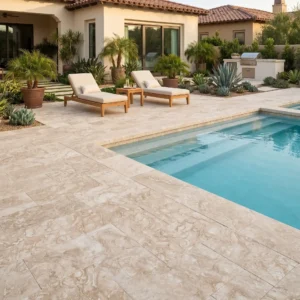
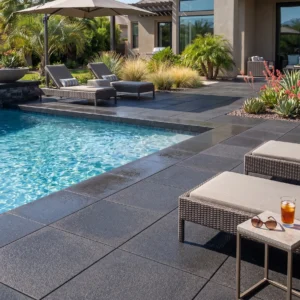
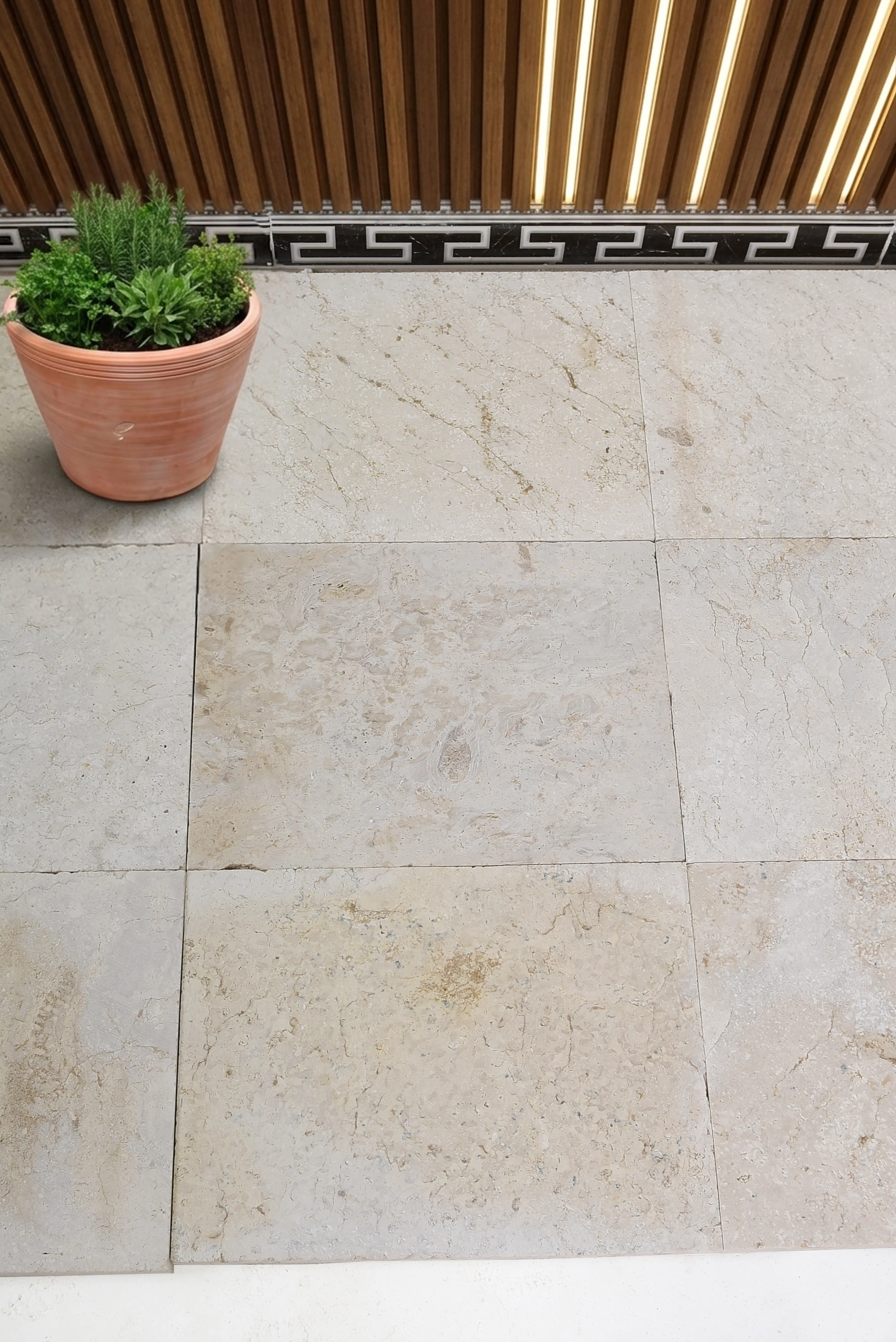
Natural stone — whether travertine, limestone, or basalt — is not a manufactured composite. Each slab or tile originates from geological processes spanning millions of years, and that origin directly determines its performance characteristics. Travertine, for instance, exhibits an interconnected pore structure that gives it a measured absorption rate ranging from 3% to 9% depending on finish and fill treatment. That’s a radically different moisture interaction than vitrified porcelain, and it shapes every decision from sealer selection to substrate waterproofing.
Compressive strength for natural stone used in flooring typically ranges between 5,000 and 19,000 PSI depending on the specific stone variety. Limestone sits in the lower-to-mid range of that band, while dense basalt and quartzite occupy the upper tier. The Natural Stone Institute ASTM tile stone specifications provide category-specific minimum performance thresholds — these are the benchmarks your specification should reference before material selection, not after.
Natural stone tiles used as flooring also carry real thermal mass. In spaces with radiant floor heating, stone absorbs and re-radiates heat more efficiently than porcelain, evening out temperature swings across the slab surface. That physical behaviour becomes a genuine performance differentiator in rooms where comfort uniformity matters — not just an aesthetic talking point.
Surface Finish and Slip Resistance
Here’s where the comparison gets technical in ways that showroom visits won’t reveal. Porcelain wood tile floors are manufactured with a controlled surface texture that’s calibrated at the factory — the coefficient of friction (COF) is baked in and stays consistent across the production run. Natural stone finishes, by contrast, vary based on the finishing process: honed, brushed, tumbled, or polished surfaces each deliver measurably different wet COF values.
- Polished natural stone surfaces carry noticeably less underfoot texture than honed, brushed or tumbled finishes, which is what matters for interior flooring
- Honed and brushed finishes on travertine or limestone carry more surface texture and are the usual choice where floors get wet
- Tumbled stone surfaces offer the highest friction profile of natural stone finishes of the common finishes
- Most commercial-grade porcelain wood tile floors are rated at a minimum 0.42 DCOF (Dynamic Coefficient of Friction) for interior use, per ASTM tile absorption, strength, and slip resistance testing standards
- Exterior or wet-area applications should meet the ANSI A326.3 wet DCOF threshold (0.42) — verify this against the specific product’s test report, not just the manufacturer’s category claim
Your finish selection is, in practical terms, a safety specification decision. Choose the finish based on your wet-use exposure profile, not based on which surface photographs best.
Installation and Substrate Requirements
Both material categories share a fundamental substrate requirement: flatness and rigidity. But the tolerance thresholds and failure modes differ in ways that affect your installation sequencing. Porcelain wood tile floors in large plank formats are especially sensitive to substrate irregularities — even a 1/8-inch deviation over a 10-foot span can telegraph through the finished surface as a lippage line that’s visible at raking light angles.
- Natural stone tiles up to 24 inches in the largest dimension typically require substrate flatness of 3/16 inch over a 10-foot run
- Large-format porcelain wood tile planks (48 inches or longer) often demand 1/8 inch over a 10-foot run — a tighter spec that may require self-leveling compound on older concrete substrates
- Back-buttering is mandatory for natural stone tiles larger than 15 square inches to ensure full mortar contact and prevent hollow spots
- Anti-fracture membranes are strongly advisable under either material category when substrate cracking or movement joints are present
- Movement joints should be specified at every 20–25 linear feet in both material types — do not rely on grout alone to accommodate thermal expansion in large floor fields
At Citadel Stone, our technical team advises specifying movement joints at field perimeters, at column bases, and wherever the floor transitions between structural slabs — these are the locations where substrate differential movement concentrates, and where grout failures begin.
Durability Under Weather and Mechanical Stress
For exterior applications — covered porches, sunrooms with operable walls, transitional indoor-outdoor spaces — the question of how each material handles mechanical stress from weather events becomes directly relevant. Wind-driven rain introduces moisture at joint interfaces under pressure, and the joint integrity of your floor system determines whether that moisture reaches the substrate or is shed at the surface.
Porcelain wood tile floors, with their sub-0.5% absorption rates, are highly resistant to moisture penetration through the tile body itself. The vulnerability point is always the grout joint. Epoxy grout systems effectively seal joint interfaces against wind-driven moisture ingress and resist the freeze-thaw cycling that degrades standard cement grout in exterior-exposed applications. Natural stone tile joints require the same attention — but the stone body itself is also a moisture management variable, and sealed travertine or limestone will perform measurably better in wet-exposure conditions than unsealed material.
Impact resistance is another mechanical consideration that indoor-outdoor specifications shouldn’t overlook. Hail events or wind-carried debris can impact exposed tile surfaces in transitional zones. Dense porcelain has high modulus of rupture values — typically 250 to 450 lbf in large-format tiles — but natural stone like basalt or quartzite can match or exceed those figures depending on thickness and species. What matters is specifying minimum tile thickness appropriate to the impact exposure level: 3/4-inch natural stone or 10mm porcelain for exterior transitional zones rather than the 8mm panels common in purely interior applications.
Maintenance and Long-Term Performance
Your maintenance commitment differs substantially between these two material categories — and that difference compounds over time in ways that affect total cost of ownership far more than the initial material price.
- Porcelain wood tile floors require essentially no sealing — the vitrified body is inherently highly resistant to staining, and routine maintenance consists of neutral pH cleaning
- Natural stone flooring — particularly travertine and limestone — requires impregnating sealer application every 2–4 years depending on traffic intensity and the specific stone’s absorption rate
- Grout maintenance applies equally to both materials — sanded grout joints in natural stone installations and unsanded joints in tight-tolerance wood tile floors both benefit from annual inspection and spot regrouting where needed
- Natural stone develops a patina over decades of use that many designers consider an aesthetic asset — porcelain’s printed surface remains static and does not evolve in the same way
- Chip or crack repairs in natural stone can be colour-matched and filled with relative invisibility — matching a broken porcelain wood tile requires finding an identical production run, which becomes progressively harder as time passes
Natural Stone Tile Formats and Layout Planning
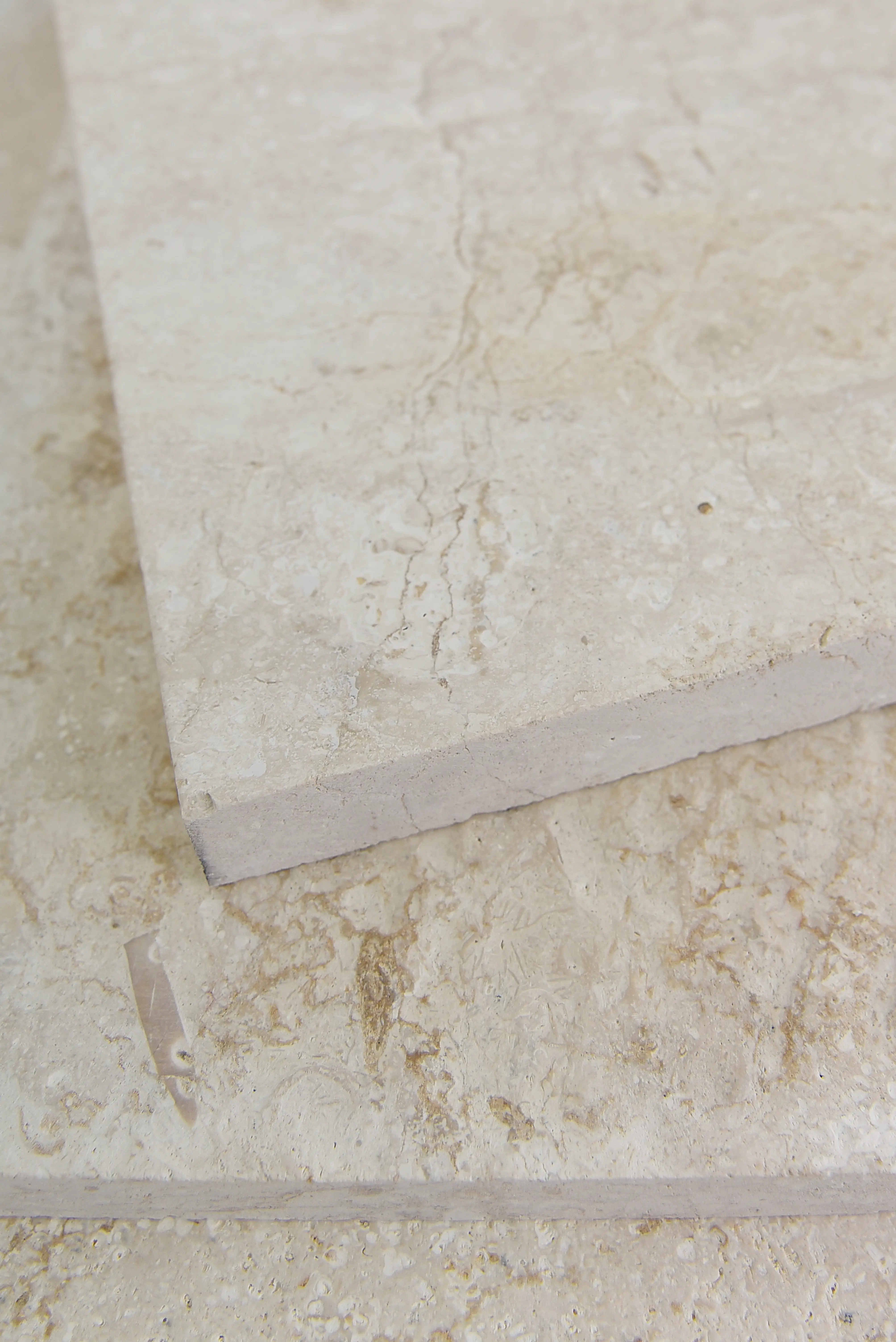
Layout planning for a wood tile floor is primarily a grout joint and plank orientation exercise. For natural stone, format selection also involves sourcing coordination — particularly when large-format tiles are specified. Tiles in the 24×24-inch range require consistent calibration across the production batch, because thickness variation of even 1mm will create lippage issues in a dry-lay review before setting begins.
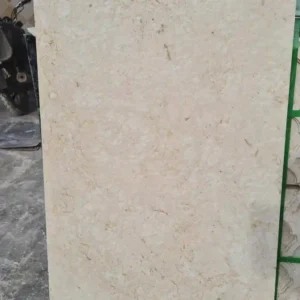
The Citadel Stone travertine formats include calibrated 24×24 options that are warehouse-checked for thickness tolerance before shipping — a quality-control step that matters when your installer is setting large fields without shimming every joint. For plank-format layouts that mimic a wood tile floor aesthetic using natural stone, rectangular formats in the 12×24 or 16×32 range offer the elongated proportion without the extreme lippage risk of very large single-piece formats.
Stagger pattern selection also affects both material categories differently. A standard 1/3 stagger on a 48-inch porcelain plank creates a repeating 16-inch offset that can produce a predictable visual rhythm — some designers prefer a randomized stagger for more natural variance. Natural stone plank formats achieve random variation organically through their colour and veining variation, so stagger pattern matters less for visual effect and more for structural load distribution across the mortar bed.
Cost and Sourcing Considerations
Material cost comparisons between porcelain wood tile floors and natural stone are rarely straightforward — the installed cost picture looks different from the material-only price point. Entry-level porcelain wood tile in standard plank formats starts at lower price thresholds than most natural stone categories, but the premium segment of the porcelain market (large-format planks with high-definition printing and rectified edges) routinely prices at levels comparable to mid-range natural stone tile.
Sourcing timelines are another practical consideration that affects project scheduling. Citadel Stone maintains warehouse inventory of natural stone tile formats nationally, which typically compresses lead times to one to two weeks compared to the six-to-eight week import cycle that custom-quarried stone orders often require. Verify warehouse stock levels before committing project timelines — particularly for large-format or specialty stone items that carry lower standard inventory volumes than commodity sizes.
Natural stone sourced from quarries in Turkey, Portugal, and selected quarries from the Middle East carries grading variations that you’ll want to review in sample lot review before ordering full project quantities. At Citadel Stone, we conduct warehouse quality checks on incoming stone shipments specifically to catch grading inconsistencies before material reaches your project site. That step prevents the scenario where a significant percentage of a delivered pallet falls outside acceptable colour or thickness tolerance.
Which Material Suits Your Project
The honest answer is that neither material is categorically superior — the right choice depends on a combination of performance requirements, maintenance tolerance, and design intent that’s specific to each project. A wood tile floor in a high-traffic residential mudroom with frequent wet exposure is a sound specification choice: the vitrified body handles moisture cycling exceptionally well, and the grout joint is the only maintenance variable. A natural stone floor in a formal living space or a spa-adjacent bathroom brings thermal mass, natural variation, and long-term character that porcelain cannot replicate regardless of print quality.
- Specify porcelain wood tile floors where: wet exposure is constant, maintenance resources are limited, or budget constraints favour lower material cost with equivalent installation quality
- Specify natural stone where: thermal mass performance matters, a unique visual evolution over time is valued, or the project context warrants the premium material narrative
- For transitional indoor-outdoor applications: evaluate both categories against your specific wind and moisture exposure profile before finalizing — joint system selection matters as much as the tile body in these environments
- For radiant heat systems: natural stone’s thermal mass typically delivers more consistent heat distribution across large floor fields than porcelain
- For historic or high-end renovation contexts: natural stone is often the specification requirement regardless of cost comparison
Spec Wrap-Up
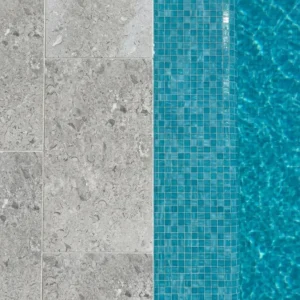
Choosing between a wood tile floor and natural stone is a technical specification exercise, not just a visual preference decision. Both material categories require the same rigorous substrate preparation, movement joint planning, and finish selection thought process — but they diverge meaningfully in absorption profiles, long-term maintenance requirements, and the performance characteristics that matter under real installation conditions. Your project’s wet exposure level, thermal mass requirements, and maintenance commitment are the three specification inputs that should drive the material decision before any showroom visit. As you finalize your flooring specification, it’s worth exploring how neutral stone tones work across different flooring contexts — grey tile floor design options covers how cooler stone palettes perform in modern interior applications and how format selection reinforces the overall design intent. Travertine from Citadel Stone brings warm, plank-friendly tones with calibrated 24×24 tile formats for even, seam-hiding layouts.
Related reading: large tile lippage problems · bathroom floor tile · Porcelain Floor Tile vs Travertine: A Buyer’s Guide.