Pavers bulk cost calculations shift dramatically once you cross the pallet threshold — and most buyers don’t realize how wide the per-unit spread actually is until they’re comparing quotes side by side. The finish, format, and material combination you choose can move your landed cost by $4 to $12 per square foot before a single piece is set. Understanding what drives that spread is what separates a well-budgeted project from one that runs over before the subgrade is even prepped.
What Actually Drives Bulk Paver Pricing
The sticker price on a pallet of natural stone pavers reflects four compounding variables: raw material density, quarry origin, finish processing complexity, and format size. Denser materials like basalt cost more per ton at the quarry face — but they also yield fewer square feet per pallet weight, which compounds the per-square-foot cost at the receiving end. You’ll find this compression effect most pronounced in formats above 18×18 inches, where both material and handling costs increase simultaneously.
- Material type and density — denser igneous stones carry higher extraction and transport costs
- Finish level — honed and brushed finishes add $1.50–$3.50 per square foot over natural split
- Format complexity — irregular flagstone is typically cheaper per square foot raw, but labor costs offset any savings
- Quarry origin — domestically quarried material varies widely by region; Middle East quarries often offer competitive pricing on limestone and travertine at volume
- Pallet configuration — mixed-size pallets generally cost more per unit than uniform format pallets due to sorting and packaging labor
At Citadel Stone, we track landed cost across multiple quarry sources for every material category, and the variance between sourcing regions can run 18–30% on identical finish specifications. That’s not a rounding error — it’s a real budget line item worth investigating before you commit to a material specification.
Natural Stone vs. Concrete: Where Bulk Pricing Diverges
Concrete pavers typically run $2.50–$5.00 per square foot in bulk, making them the entry point for most volume comparisons. Natural stone starts where concrete leaves off — expect $5.00–$9.00 per square foot for standard limestone formats and $8.00–$16.00 for premium granite or travertine in honed or filled finishes. The key nuance is that natural stone bulk pricing compresses much more aggressively at volume than concrete does, because the quarry-to-pallet logistics are more favorable once you’re ordering full truck loads.
- Concrete pavers (bulk): $2.50–$5.00 per sq ft, consistent across most formats
- Limestone pavers (bulk): $5.00–$9.00 per sq ft depending on finish and thickness
- Travertine pavers (bulk): $6.50–$11.00 per sq ft; filled and honed runs toward the top
- Basalt pavers (bulk): $9.00–$15.00 per sq ft; dense material pushes freight costs up
- Granite pavers (bulk): $7.50–$14.00 per sq ft depending on surface treatment
The pavers vs bluestone comparison is worth a dedicated look because bluestone occupies an interesting middle tier. Standard blue/grey bluestone in irregular format runs $5.50–$8.00 per square foot at volume, but thermal-finished or sawn bluestone in uniform dimensions can reach $10.00–$13.00. The finish premium is steeper for bluestone than for limestone because thermal processing is more energy-intensive on harder sandstone-family materials. According to USGS dimension stone production data, domestic sandstone and bluestone output has declined over the past decade, which applies upward pressure on domestic supply pricing at the wholesale level.
Format Size and Its Direct Effect on Bulk Cost
Format size is the variable most buyers underestimate when projecting pavers bulk cost. A 12×12 limestone paver and a 24×24 limestone paver from the same quarry, in the same finish, can carry a $2.00–$4.00 per square foot price difference at volume — and it’s not just because the larger piece has more stone in it.
Larger format pieces require more precise quarrying, more careful handling through the cutting process, and more protective packaging per pallet to prevent corner damage in transit. Breakage rates during truck delivery also run higher on large-format thin pavers, which wholesalers factor into their pricing. Your per-square-foot bulk cost for 24×24 pavers includes a built-in breakage allowance that smaller formats don’t carry at the same level.
- 12×12 format: lowest per-square-foot cost, highest pallet density, easiest logistics
- 16×16 and 18×18: moderate cost step-up, manageable handling on most jobsites
- 24×24: noticeable cost premium; verify truck access and unloading equipment before ordering
- Oversized slabs (36×36 and above): priced individually or per linear foot, not per square foot
Octagonal Pavers: Bulk Pricing Considerations
Octagonal pavers introduce a pricing dimension that standard square or rectangular formats don’t carry: cut waste. To produce an octagon from a rectangular slab blank, roughly 15–22% of the raw material is removed and discarded. That waste factor is priced into every octagonal paver you buy, which is why octagonal pavers typically cost 20–35% more per square foot than equivalent square formats from the same material and finish.
Your specification for octagonal pavers should also account for the dot-insert pieces that typically accompany them. Full octagonal sets include the small square infill units — usually in a contrasting material or finish — and those secondary pieces are often priced separately at a higher unit cost per square foot because of their small size. Budget for the full set, not just the primary octagonal field pieces, or your bulk cost projection will come in low.
- Base octagonal paver cost: typically 20–35% above square format equivalent
- Infill dot inserts: often $8.00–$18.00 per square foot separately, depending on material
- Pattern layout waste: add 8–12% to your square footage calculation for cuts at perimeter
- Lead time: less common at warehouse compared to standard square formats — verify stock depth before committing
Minimum Order Quantities and Volume Thresholds That Change Your Price
The pavers bulk cost equation doesn’t move linearly — it jumps at specific volume thresholds. Most wholesalers maintain three pricing tiers: single-pallet (retail-adjacent), multi-pallet (contractor pricing), and full-truck pricing. The difference between single-pallet and full-truck pricing on the same material can reach 22–30% per square foot. Knowing where those thresholds fall for your specific material is critical before you finalize your order quantity.
For Citadel Stone volume paver orders, full-pallet quantities are the baseline for wholesale pricing, and multi-pallet orders structured around full truck loads can unlock the most competitive per-square-foot rates available. Understanding your project’s square footage requirements precisely — rather than rounding up loosely — lets you hit the right pricing tier without over-ordering material you’ll store indefinitely.
- 1 pallet: standard pricing, no volume discount applied
- 3–5 pallets: first tier of contractor pricing typically begins
- 8–12+ pallets (full truck load): deepest per-square-foot bulk pricing available
- Split-pallet orders: usually priced at single-pallet rates or above — avoid if possible
Thickness Specifications and How They Affect Bulk Cost
Paver thickness is a direct cost multiplier — it controls how much material is in each piece and therefore how many square feet you get per pallet ton. Standard pavers run 1.25 inches (30mm) to 1.5 inches (40mm) for pedestrian applications, and 2 inches (50mm) for vehicular-rated installations. Stepping up from 1.25-inch to 2-inch specification adds roughly 35–50% to the per-pallet stone weight and increases your per-square-foot cost proportionally.
What often gets overlooked is that thicker pavers also change your freight cost per square foot, because you’re moving more weight per truck for the same coverage area. On a 5,000 square foot driveway project, the difference in freight between 1.25-inch and 2-inch material can easily reach $800–$1,500 depending on distance. Factor that into your pavers bulk cost comparison before you lock in a thickness specification. According to NSI limestone specifications, thickness recommendations vary with application load class — verify your spec against the intended use before purchasing.
How Soil Conditions Affect Your True Bulk Cost Per Square Foot
Here’s a cost variable most paver buyers don’t account for until they’re already on site: subgrade conditions can add $2.00–$6.00 per square foot to your effective project cost, and that’s money that makes your pavers bulk cost look lower on paper than it actually is in practice. Expansive clay soils — common across broad stretches of the interior — require deeper aggregate base depths, typically 8–12 inches of compacted base where a stable granular soil would need only 4–6 inches.
Sandy or loose subgrades present the opposite problem. They’re easier to excavate but offer less lateral support, which means edge pavers are vulnerable to migration over time without robust containment detailing. Caliche layers in arid-climate soils are their own challenge — the hardpan can be difficult to excavate and expensive to remove, but it also provides an unusually stable bearing layer once you’re through it. Your paver selection and thickness spec should respond to subgrade conditions, not ignore them.
- Expansive clay: use geotextile fabric plus minimum 10-inch compacted aggregate base; thicker pavers (2 inch) reduce flexing risk
- Sandy or loose subgrades: deeper edge restraint, 6-inch compacted base minimum, consider polymeric sand with a higher fine content
- Caliche or hardpan: excavation cost is higher, but bearing capacity is excellent once reached — thinner pavers acceptable in pedestrian applications
- Rocky or shallow-bedrock soils: excavation cost dominates; select thinner pavers to recover budget where subgrade cost runs high
Natural stone’s dimensional stability works in your favor on challenging soils. Unlike concrete pavers that can crack under differential settlement, well-specified natural stone pavers accommodate minor movement at the joints without structural failure — but only when joint sand is maintained at adequate depth. The Natural Stone Institute technical stone specifications provide application-specific guidance for matching stone grade to base preparation requirements.
Freight and Delivery Costs in Bulk Paver Orders
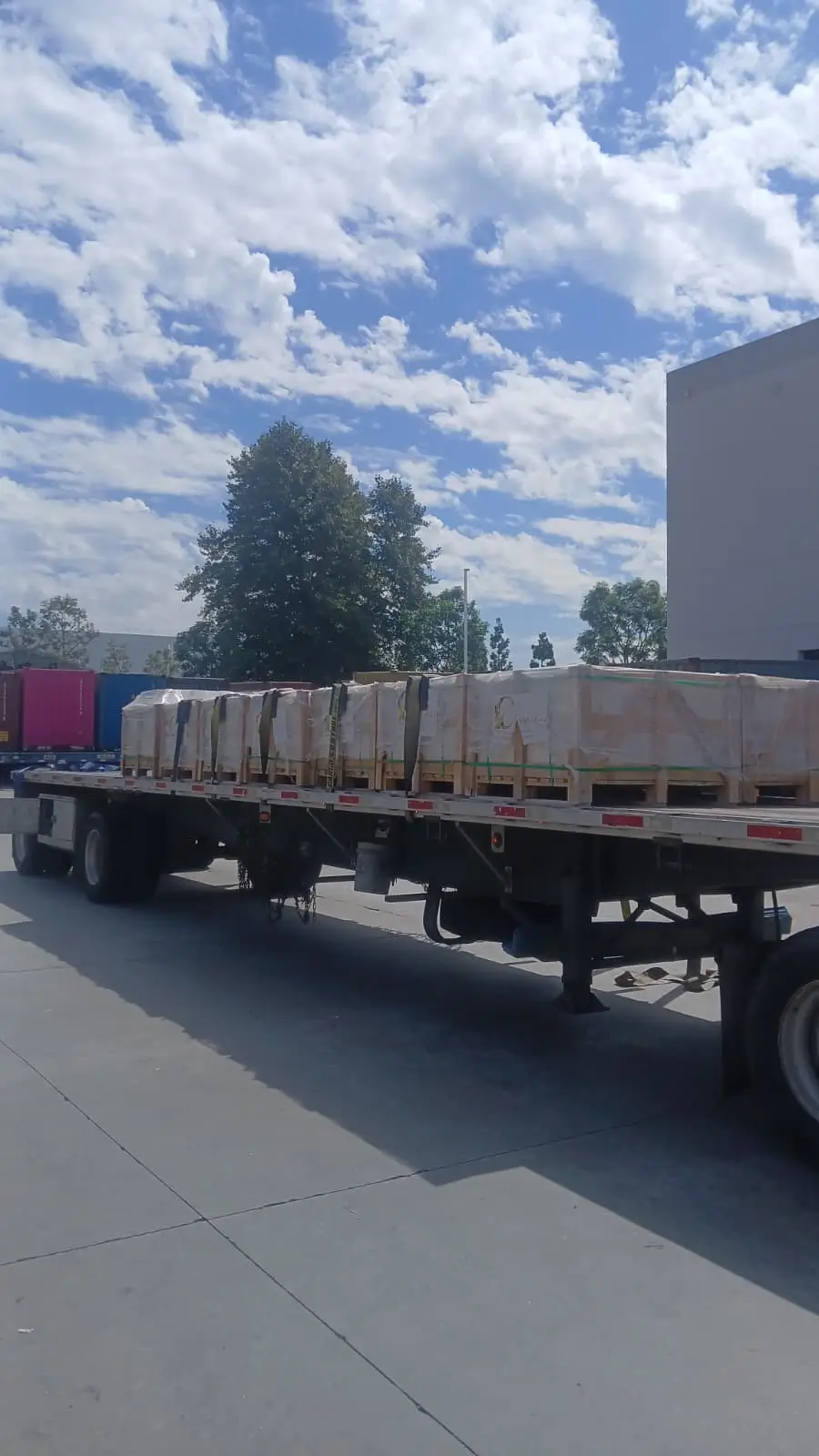
Freight is the invisible line item that can shift pavers bulk cost by 15–25% depending on project location and order size. Natural stone ships on pallets via flatbed or curtain-side truck, and full-truck loads typically move at a lower per-pallet freight cost than LTL (less-than-truckload) shipments. If your order falls between one and three pallets, you’ll almost certainly pay LTL rates, which can add $180–$350 per pallet depending on distance and fuel surcharges.
Citadel Stone coordinates nationwide delivery with truck access verified at point of order, which reduces the risk of delivery failure at the jobsite. Your site conditions matter here — a narrow residential driveway or a jobsite with low overhead clearance may require a smaller delivery vehicle, which changes both scheduling and cost. Flag truck access constraints early in the ordering process rather than discovering them on delivery day.
- Full truck load (FTL): lowest per-pallet freight cost, typically $80–$150 per pallet
- LTL (1–3 pallets): $180–$350 per pallet depending on distance, carrier, and market conditions
- Residential delivery surcharge: $75–$200 if a liftgate or pallet jack service is required
- Remote or limited-access sites: verify truck turning radius and overhead clearance before scheduling
Bulk pricing efficiency depends on coordinating the full truck load threshold with your actual material needs. If your project sits at 85% of a full truck minimum, it’s worth calculating whether the additional material for a future phase or an adjoining project closes that gap — because the freight savings at full truck load often exceed the holding cost of the extra material.
Finish Selection and What It Does to Per-Square-Foot Cost
The finish is where pavers bulk cost fans out most visibly across competing quotes. A natural cleft or sawn surface represents the base cost for any given material — from there, each additional processing step adds to the landed price in measurable increments. Honing adds $1.50–$2.50 per square foot. Brushing or antiquing adds $1.00–$2.00. Tumbling adds $0.75–$1.50. Filling travertine voids adds another $0.50–$1.00 on top of whatever finish you’ve selected.
- Natural split / sawn: base price tier — no secondary processing
- Honed: matte smooth surface, adds $1.50–$2.50 per sq ft
- Brushed / antiqued: aged texture, adds $1.00–$2.00 per sq ft
- Tumbled: rounded edges and corners, adds $0.75–$1.50 per sq ft
- Polished: highest finish cost, not recommended for exterior use due to slip risk in wet conditions
Finish selection also has a practical maintenance dimension. Honed surfaces on limestone and travertine show staining and foot traffic wear more visibly than brushed or tumbled surfaces, which means cleaning and resealing frequency tends to be higher. Over a 20-year service life, that maintenance differential has a real cost that’s worth factoring against the finish premium at purchase. The ASTM dimensional stone standards address surface finish specifications and absorption characteristics by stone type — useful reference when comparing finish options across different materials.
Spec Wrap-Up: Getting Pavers Bulk Cost Right
Getting pavers bulk cost right means looking past the per-square-foot sticker and accounting for the full landed cost — material, finish premium, format complexity, thickness, freight, and subgrade preparation requirements. The buyers who hit their budgets consistently are the ones who calculate volume thresholds before ordering, not after the quote comes in. Every one of those variables has a real dollar value, and they compound in both directions depending on how carefully you’ve specified the project.
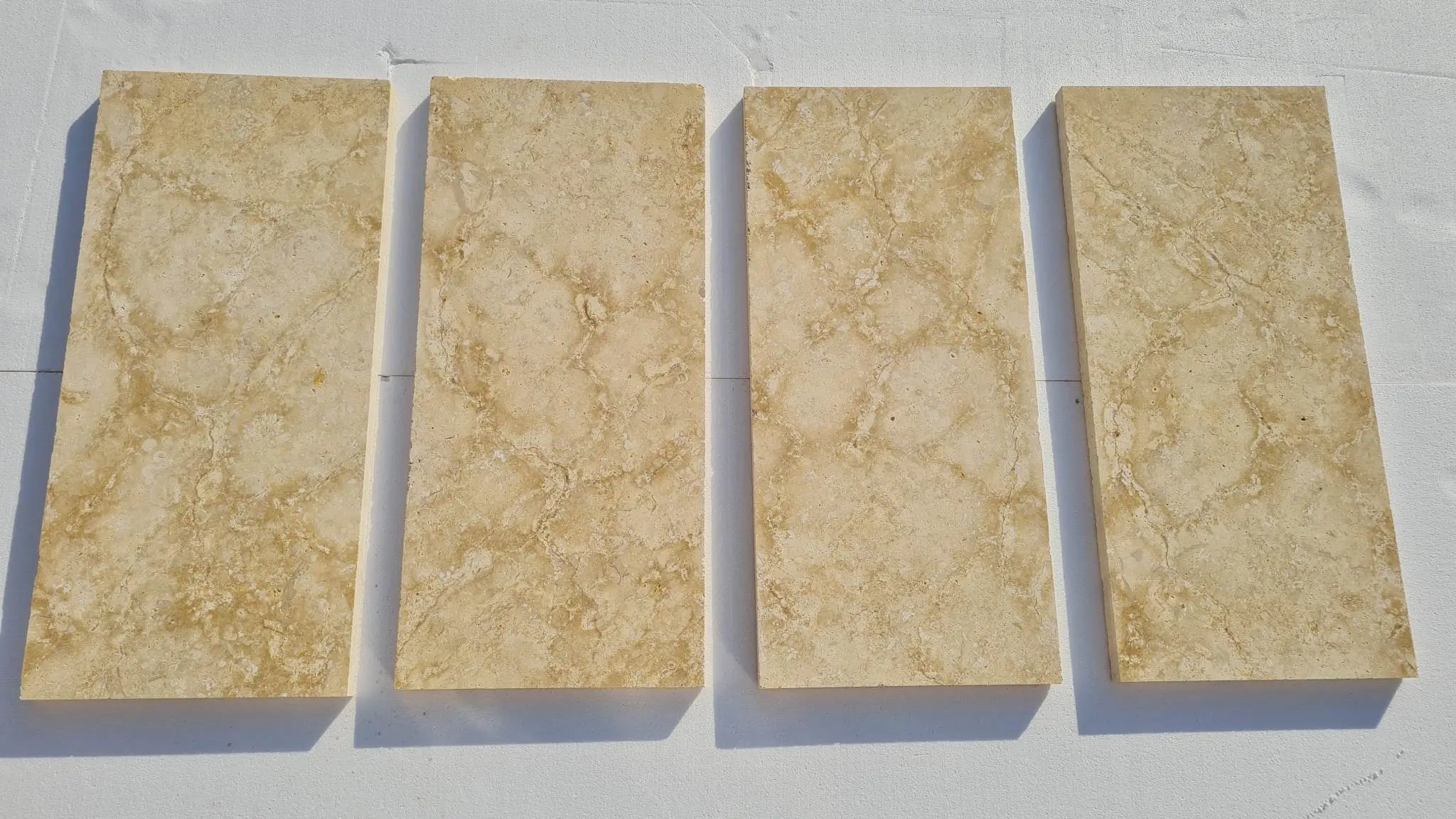
Your material choice sets the floor. Your finish, format, and order volume set everything above it. For projects where limestone makes sense on the spec, exploring limestone quarry blend paver options can offer a cost-effective path when your project benefits from natural variation in tone and texture without the premium of a tightly graded single-source material. Structure your order around full-pallet quantities, verify subgrade conditions before finalizing thickness, and confirm truck access before scheduling delivery — those three steps alone will protect your bulk pricing from the most common field-cost overruns. Limestone pavers from Citadel Stone reach large jobsites in full-pallet quantities, keeping per-square-foot bulk costs lower than piecemeal retail purchasing.
Related reading: limestone facade · gray limestone pavers · shellstone limestone pavers.