50 years quarry-direct·USA & worldwide·🛡️ Escrow payment for new clients·Contact me personally for the best wholesale prices: kareem@citadelstone.us

Natural Limestone Steps: Choosing Safe Outdoor Treads

Natural limestone steps combine dense stone strength with a textured surface that holds up under daily foot traffic. Homeowners and contractors choosing exterior stairs need a material that resists chipping, handles moisture, and keeps secure footing through repeated use. Limestone's naturally textured face gives it an edge over polished materials that turn slick after rain, and its density stands up to years of freeze-thaw cycling in colder regions. Selecting the right thickness, tread depth, and finish matters as much as the stone itself — undersized treads or overly smooth faces can undercut safety even with premium material. Proper drainage around each step also extends service life by keeping water from pooling against the stone. For projects needing dependable, weather-ready stair stock, our natural limestone steps are cut to standard tread sizes and ready for nationwide dispatch. Citadel Stone cuts natural limestone steps with textured tread faces that stay grippier when surfaces turn wet.

Table of Contents

Natural limestone steps fail more often from grade misidentification than from any weather event — a Grade C block sold as Grade A is the costliest mistake that crosses a fabrication yard floor. Compressive strength on limestone treads typically ranges from 4,000 to 24,000 PSI depending on formation density, and that spread is wide enough to separate a stair system built for decades of service life from one that spalls within five winters. Getting the stone type and grade right up front matters more than any sealant or finish decision made later in the project.

Grading Natural Limestone Steps by Stone Type

Limestone step material splits into three practical grading tiers that most supplier websites never spell out clearly. Dimension stone classification separates limestone by density category, and the absorption rate difference between the lowest and highest tiers can run as much as 12 percent. That absorption spread determines whether your natural limestone steps resist freeze-thaw spalling or start flaking within a handful of winter seasons.

Grade Classifications and What They Mean for Outdoor Treads

You’ll find the widest performance gap between dense micritic limestone and the coarser, more fossil-rich varieties pulled from the same quarry face. The dense stock costs more per block but holds up to de-icing salt and repeated wet-dry cycling far longer than open-textured material that looks nearly identical in a showroom sample.

  • Dense micritic limestone, similar to classic French-style beige stone, typically shows absorption under 3 percent, making it the preferred pick for step treads in freeze-thaw regions
  • Coarser fossiliferous limestone offers strong natural grip texture but carries higher porosity, so it needs a tighter resealing schedule
  • Shell-rich or coquina-type limestone suits low-traffic garden steps but rarely holds up under daily commercial stair use
  • Color-graded batches — buff, gray, or blue-gray — should be pulled from a single lot number to avoid visible seams across a full stair run

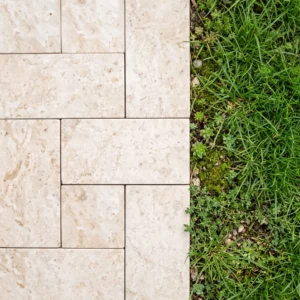
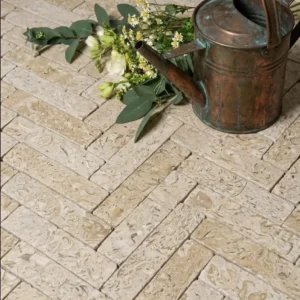
Homeowners upgrading a stair landing often pair dijon tumbled limestone pavers along the base walkway, matching the tread’s warm tone while keeping the ground-level surface tumbled for extra traction where foot traffic funnels off the last step.
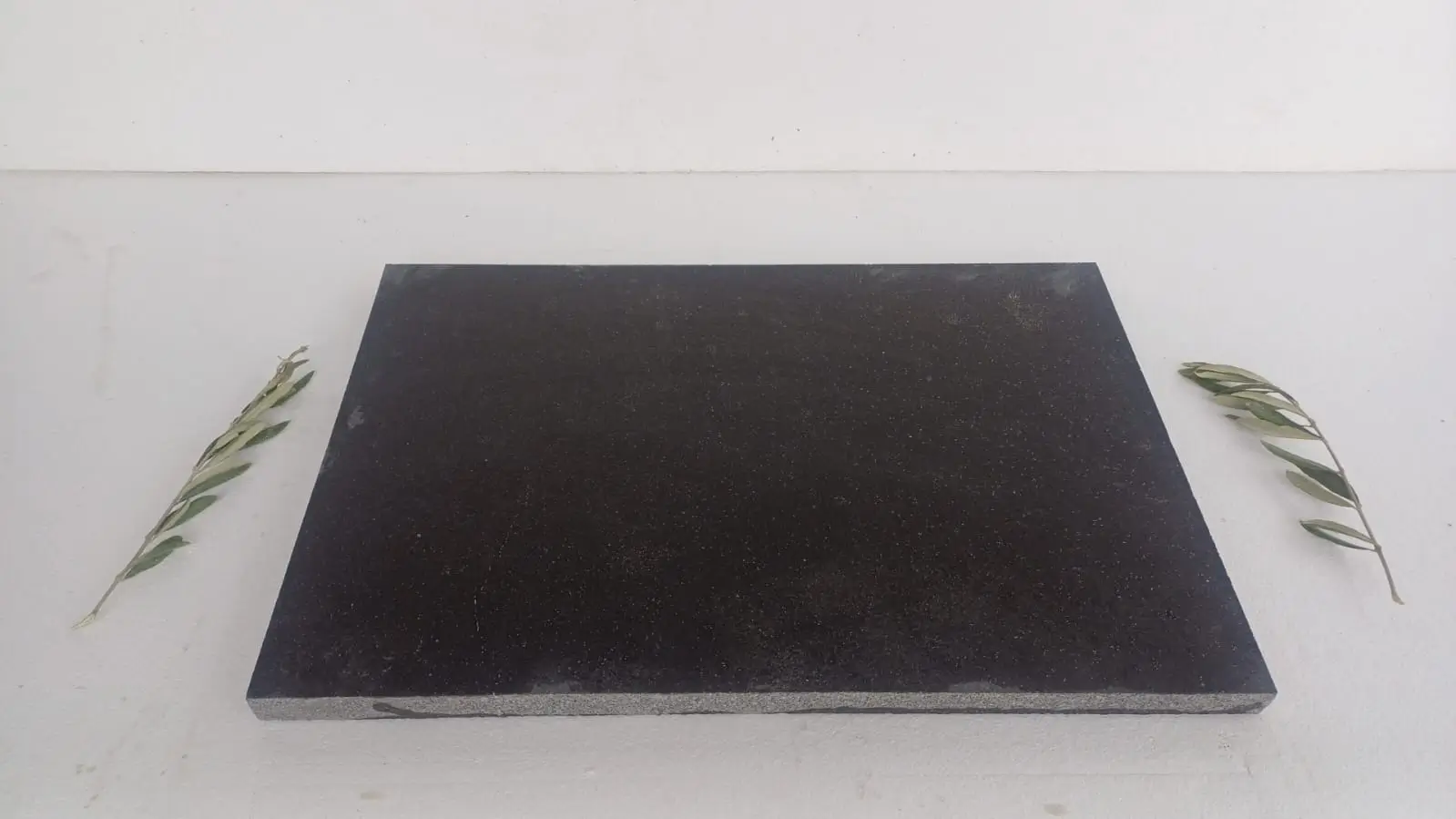
A dark limestone slab is displayed on a white surface with olive branches on either side, an example for natural limestone steps.
Showcasing the refined texture of this dark limestone slab, accented by natural olive branches for a touch of earthy elegance.

Thickness, Load Ratings, and Structural Sizing for Outdoor Treads

Outdoor stair treads carry point loads that flat paving never sees — a 200-pound heel strike concentrated near an unsupported edge, repeated thousands of times a year. astm.org”>ASTM flexural and compressive testing protocols for dimension stone set the baseline most fabricators use to rate tread thickness, and for limestone that generally means a 2-inch nominal minimum for cantilevered treads and up to 4 inches solid for freestanding outdoor stairs.

  • Freestanding stairs with no structural support beneath the nose need full-thickness solid blocks, typically 4 to 6 inches
  • Cantilevered treads anchored into a stringer can run thinner, generally 2 to 3 inches, provided the anchorage depth matches the overhang
  • Tread depth front to back should exceed 12 inches for comfortable single-direction use and 14 inches where two-way traffic is expected
  • Riser height variance beyond 3/8 inch across a flight is the single most common trip-hazard citation in stair inspections

Field measurements on installed natural limestone steps consistently show that undersized treads develop hairline cracking at the nose within three to five years, long before the stone itself rea

Authoritative industry references: Natural Stone Institute.

Also worth reading: Natural Limestone Floor Buyer’s Guide for Any Room.

Related reading: is limestone a natural stone · natural limestone colors guide · natural limestone pool surfaces.

Free Technical Consultation

Speak directly with our stone specialists about your project

Project Supply Pricing

Competitive rates for trade and commercial orders

You can book a free consultation at any time, with no fee commitments required.

Alternative Products Available

Product NameDescriptionPrice per Square Foot
TravertineBeautiful natural stone with unique textures$8.00 - $12.00
MarbleLuxurious and elegant, available in various colors.$10.00 - $15.00
GraniteExtremely durable and perfect for high-traffic areas.$7.00 - $12.00
SlateRich colors and textures; ideal for wet areas.$6.00 - $10.00
PorcelainVersatile and low-maintenance, mimicking natural stone.$4.00 - $8.00
CeramicAffordable with a wide variety of designs.$3.00 - $6.00
QuartziteStrong and beautiful, resistant to stains.$9.00 - $14.00
ConcreteCustomizable for patios; durable and cost-effective.$5.00 - $9.00
GlassStylish, reflective, and brightening.$15.00 - $25.00
CompositeEco-friendly options made from recycled materials.$5.00 - $10.00

Frequently Asked Questions

If your question is not listed, please email us at kareem@citadelstone.us

What makes natural limestone a good material for stair steps?

Limestone is a sedimentary stone that’s dense enough to resist heavy foot traffic while retaining a naturally textured surface. In practice, its consistent grain structure machines cleanly into treads and risers without the brittle edges you get from some sedimentary alternatives. That combination of strength and texture is why it’s specified for exterior stairs, entryways, and pool surrounds where safety underfoot matters as much as appearance.

Tread depth and riser height should match local building code minimums first, typically 11 inches deep and no more than 7.75 inches high for comfortable use. Beyond dimensions, a fine-textured or brushed finish holds traction better than a honed one, which matters most on exterior applications exposed to moisture. Thickness should scale with span length — thin treads can flex or crack under point loads.

Steps need a compacted, level base — usually gravel or a reinforced mortar bed — so each tread sits without rocking under load. Getting the slope and drainage right beneath and around the stair run keeps water from pooling on tread faces or seeping into joints, which reduces staining and freeze-thaw stress over time. Professional installers also check that riser heights stay consistent from step to step for safety.

Natural limestone steps typically cost more upfront than poured concrete or precast pavers because of quarrying, cutting, and transport. That higher initial investment offsets over time since limestone doesn’t chip, spall, or need resurfacing the way concrete often does within a decade or two. For long-term value on high-traffic entries, the reduced replacement and repair costs usually justify the difference in material price.

Limestone steps hold up for decades when properly installed, resisting cracking and heavy wear better than many cast alternatives. Routine care is minimal — periodic sweeping, occasional sealing in high-moisture climates, and prompt cleanup of acidic spills that can etch the surface over time. What people often overlook is that a textured finish needs less frequent resealing than a honed one because it hides minor wear more effectively.

Unlike suppliers who source stone only after an order comes in, Citadel Stone hand-selects material through direct quarry relationships and keeps popular step sizes and finishes in ready stock for immediate dispatch. Deliveries are coordinated with flatbed scheduling, pallet-level tracking, and site access planning so material arrives exactly when crews need it. Citadel Stone maintains nationwide supply coverage, giving contractors dependable access to inventory without long lead times.