What the Comparison Actually Comes Down To
Rubber pavers fail in ways most project specs never anticipate — not from impact or UV degradation, but from the compounding effect of subgrade movement beneath a material that can’t redistribute load the way dense stone does. When comparing rubber pavers against natural stone, you’re evaluating two fundamentally different structural philosophies: one absorbs energy and flexes, the other transfers it and holds. Understanding which philosophy fits your application determines whether you’re satisfied with your surface in year two or replacing it in year five.
Material Fundamentals: Rubber vs. Stone
Rubber pavers are manufactured from recycled tire crumb, compressed under heat and binding agents into tile or paver form. The result is a surface with meaningful shock absorption — typically 40–60% impact attenuation depending on thickness and density — but limited compressive strength, usually in the 200–400 PSI range depending on formulation. That’s a wide gulf from natural stone, which regularly clears 8,000–12,000 PSI in compression and holds those numbers across decades.
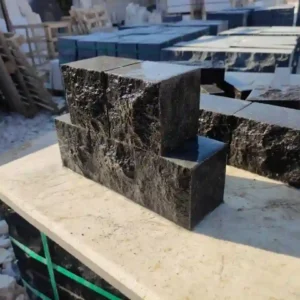
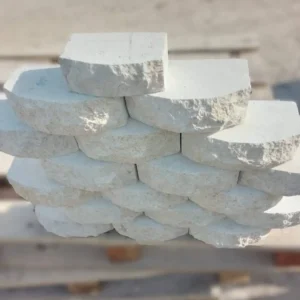
Natural stone pavers — limestone, granite, travertine, basalt — are quarried in solid form, cut to specification, and finished to varying surface textures. Their performance characteristics derive from geological composition, not manufacturing variables. That consistency matters at the specification stage: you can reliably predict thermal expansion, absorption rates, and slip resistance from material data sheets. Rubber formulations vary significantly between manufacturers, making apples-to-apples comparisons harder than they look on product spec sheets.
- Rubber pavers typically range from 1 to 3 inches thick; natural stone pavers run 1.25 to 3 inches depending on application load
- Rubber has a density of roughly 50–70 lbs per cubic foot; dense limestone and granite range from 150 to 175 lbs per cubic foot
- Natural stone exhibits thermal expansion coefficients of approximately 3–7 × 10⁻⁶ per °F, while rubber runs significantly higher at 60–100 × 10⁻⁶ per °F
- Stone surfaces can be refinished, honed, or resealed; rubber pavers cannot be resurfaced once surface wear becomes visible
Performance Comparison by Application
Your application type is the single clearest decision driver in this comparison. Rubber pavers genuinely outperform stone in environments where impact absorption is the primary functional requirement — children’s play areas, gym floors, and equestrian surfaces. The cushioning effect of rubber is real and measurable. ASTM F1292 impact attenuation testing confirms that properly specified rubber surfaces reduce fall-height injury risk in ways stone physically cannot replicate.
For pedestrian plazas, commercial courtyards, pool decks, driveways, and residential patios, stone pavers hold a decisive performance advantage. Surface hardness translates to longevity under foot and vehicle traffic, dimensional stability under load, and an aesthetic profile that ages well rather than degrading. According to Natural Stone Institute stone variety specifications, properly installed natural stone paving regularly achieves 30–50 year service life with standard maintenance — a benchmark rubber surfaces don’t approach in exterior applications.
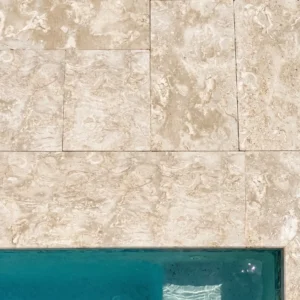
- Pool deck use: stone pavers (travertine, limestone) stay cooler underfoot through open pore structures that reflect rather than retain heat — rubber retains surface heat under direct sun significantly more
- Driveway use: rubber pavers are not rated for vehicle loads; stone pavers in 2.5-inch or greater thickness handle standard passenger vehicle loads reliably
- Play areas: rubber pavers are the correct specification — safety surface requirements under ASTM F1292 point clearly to compliant impact-attenuating surfaces, not stone
- Commercial pedestrian zones: stone pavers provide the abrasion resistance and load distribution that rubber cannot match under continuous high foot traffic
Slip Resistance and Safety Factors
The assumption that rubber automatically wins on slip resistance deserves more scrutiny than it typically gets. Fresh rubber paver surfaces are usually promoted on a dry coefficient of friction figure rather than a wet one. But aged rubber in exterior environments, particularly when algae or moss colonizes the surface (which happens faster on rubber than on properly sealed stone), can lose much of its wet traction and fall below 0.42, the ANSI A326.3 wet DCOF threshold.
Natural stone pavers keep their surface texture across decades with periodic cleaning; specify a honed, sandblasted or tumbled finish for wet areas and request the wet DCOF test report for the finish you specify. Polished finishes on stone are the one context where slip risk genuinely requires attention, particularly around water. For exterior applications, you should always specify textured or tumbled finishes rather than polished when the surface will encounter moisture.
Ground Conditions and Subgrade Behavior
Here’s where the comparison gets more nuanced than most product guides acknowledge. The subgrade beneath your paving does more work than either material above it, and the two materials respond to subgrade movement very differently. Rubber pavers flex under differential settlement — a surface that shifts unevenly due to expansive clay or sandy soil migration will show undulation in rubber far sooner than in a properly bedded stone installation.
Natural stone installations rely on rigid base systems: typically 6–8 inches of compacted crushed aggregate over native subgrade, with a 1-inch bedding sand layer. In expansive clay conditions — where soil swells 4–8% seasonally with moisture change — that base system needs to be extended and the aggregate gradation selected carefully to resist lateral migration. On sandy or loose subgrades, a geotextile fabric layer beneath the aggregate prevents fines migration into the base course over time. Rubber pavers, being lighter and more flexible, tolerate minor subgrade irregularity better in the short term, but they don’t correct the underlying problem. You’ll see joints open and surfaces become uneven as subgrade movement continues beneath a rubber installation just as readily as beneath a poorly prepared stone base.
- Expansive clay subgrades: extend compacted aggregate base to 8–10 inches; consider lime stabilization of native soil before base placement for stone installations
- Sandy or gravelly subgrades: use geotextile separation fabric and ensure aggregate base achieves 95% Proctor compaction before bedding
- Rocky or caliche subgrades: scarify to 4-inch depth before base placement to prevent point-loading on the underside of stone pavers
- Both rubber and stone require level, well-drained subgrade — neither material compensates for chronic standing water beneath the surface
According to USGS dimension stone production and use data, the long-term performance of natural stone in exterior paving is strongly tied to installation quality — subgrade preparation accounts for the majority of premature failure cases documented in field performance studies. That’s equally true for rubber installations, but the consequences show up differently: stone failure tends to be visible cracking or heave, while rubber failure presents as joint separation and surface waviness that becomes a trip hazard before it becomes aesthetically obvious.
Durability and Maintenance Over Time
The maintenance profiles of these two materials diverge significantly after year three of service. Natural stone pavers in exterior applications benefit from sealing every 2–3 years, periodic joint sand replenishment, and surface cleaning with pH-neutral products. That’s a predictable, manageable maintenance cycle. Rubber pavers require less sealing but are vulnerable to UV degradation, surface cracking from freeze-thaw cycling, and color fade that is not reversible without full replacement.
In freeze-thaw regions — where temperatures cycle repeatedly across the 32°F threshold — the thermal expansion differential between rubber and its substrate becomes a practical problem. Rubber’s high thermal expansion coefficient means joints open and close dramatically with temperature swings, eventually breaking the bond between pavers or widening to the point where debris accumulation accelerates deterioration. Natural stone’s lower thermal expansion coefficient means properly designed joint spacing holds stable across seasonal temperature ranges without significant movement.
- Rubber paver lifespan in exterior applications: typically 10–15 years before surface degradation becomes significant
- Natural stone paver lifespan with proper maintenance: 30–50 years is achievable; some historic stone installations exceed a century
- Rubber cannot be patched or resurfaced once degraded — failed sections require full paver replacement
- Stone pavers can be individually lifted, the base corrected, and the paver reset without visible evidence of the repair
Cost Analysis Across the Project Lifecycle
The upfront cost comparison consistently favors rubber pavers — standard recycled rubber paver products run $2–5 per square foot installed, while natural stone pavers range from $8–25 per square foot depending on stone type, thickness, and finish. That gap is real and it matters for budget-constrained projects. What the initial cost comparison doesn’t capture is the replacement and maintenance cost differential across 20–30 years.
The 15-year cost picture changes substantially when you factor in that rubber installations in exterior applications often require partial or full replacement at year 10–15, while a properly installed stone surface is still performing at year 15 with only routine maintenance costs. For commercial projects where surface replacement requires mobilizing crews, managing traffic disruption, and potentially replacing base materials, the lifecycle cost of rubber frequently exceeds natural stone over a 25-year horizon. For play areas and gym floors — applications where rubber is the technically correct choice — the cost comparison is irrelevant because stone is not a viable substitute.
When you’re evaluating options, explore our natural stone paver options across material types to compare actual per-square-foot costs against your project’s lifecycle requirements before committing to a specification.
Aesthetic Performance and Design Range
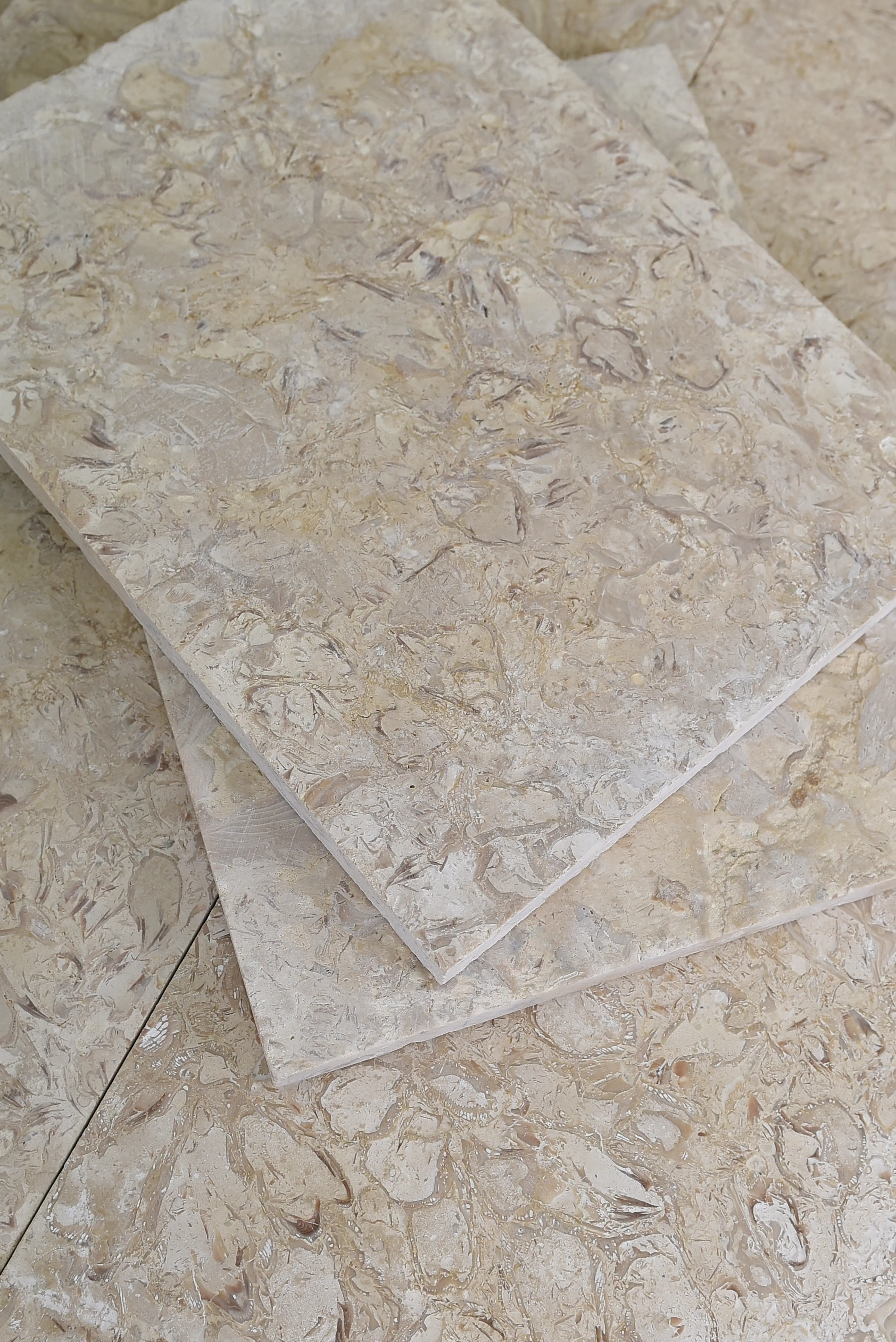
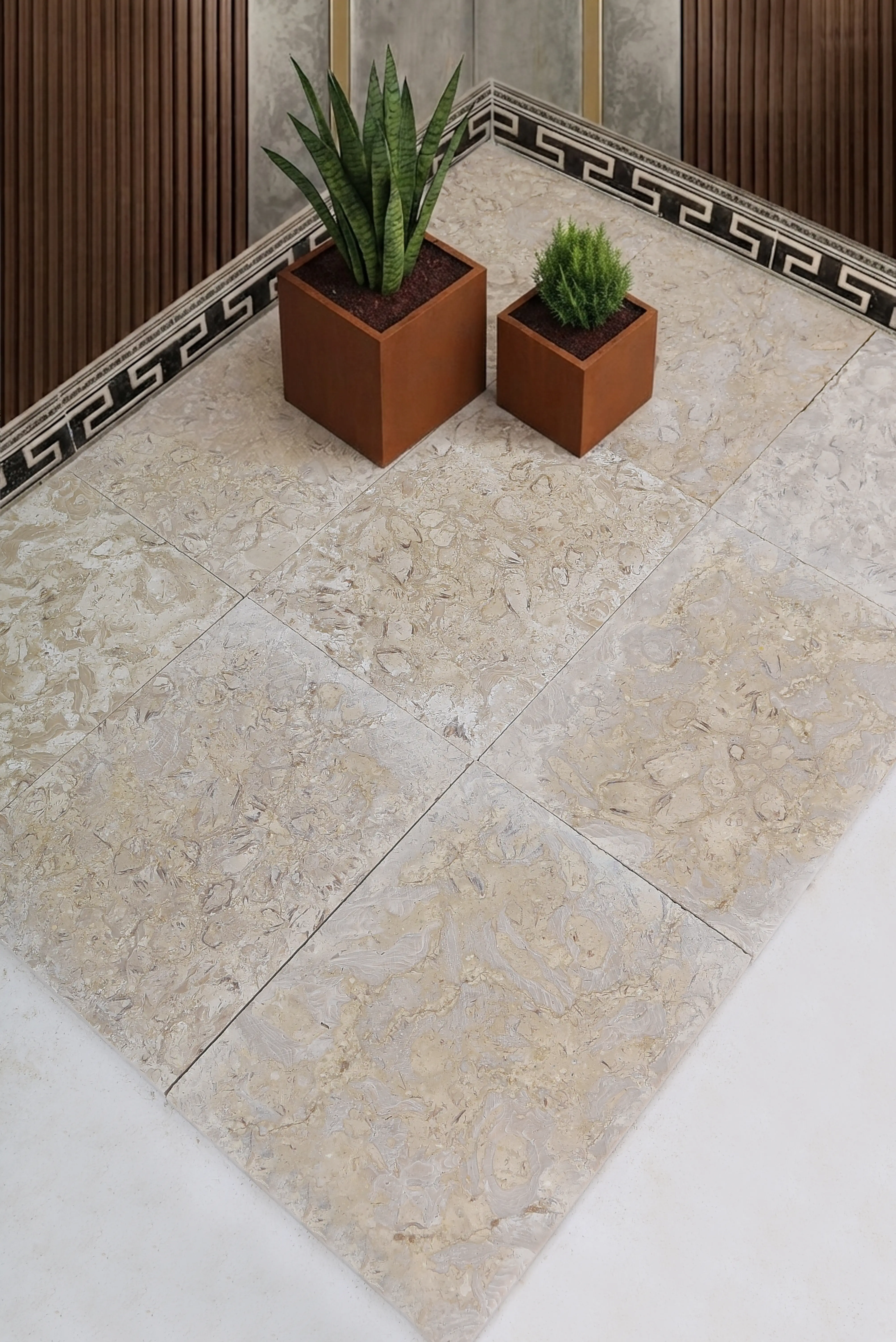
Natural stone pavers carry an aesthetic depth that manufactured surfaces don’t replicate. The variation in veining, surface texture, and color within a stone product is a feature, not a flaw — it creates visual interest that improves with age rather than degrading. Limestone develops a patina that deepens over years of exposure. Travertine’s natural surface variation catches light differently throughout the day. Granite’s crystalline structure remains visually consistent across decades of weathering.
Rubber pavers come in a limited palette of manufactured colors — typically black, grey, terracotta, and a few earth tones — that fade with UV exposure. The visual homogeneity that rubber presents at installation becomes more pronounced as UV degradation flattens color variation further. For design-sensitive projects — hotel courtyards, residential pool surrounds, commercial plazas, featured garden paths — the aesthetic case for natural stone is decisive. For utility installations, play surfaces, and gym flooring, rubber’s appearance is secondary to its functional role and the comparison shifts accordingly.
Ordering, Logistics, and Project Planning
Both materials require accurate quantity calculation before ordering, but stone requires more precise planning because waste factors differ by stone type and cut. For rectangular-cut natural stone pavers, plan for 5–8% waste. For irregular or tumbled formats, plan for 10–12% waste. Rubber pavers, being manufactured to consistent dimensions, typically require only 3–5% waste allowance.
Citadel Stone maintains warehouse inventory of natural stone pavers nationally, which typically brings lead times to 1–2 weeks for in-stock material — a meaningful advantage when your installation timeline is set. Imported stone that isn’t warehoused domestically can carry 6–10 week lead times, which has cascading effects on your project schedule. Your truck access and delivery logistics are worth confirming early: natural stone pallets run 2,500–4,000 lbs, and a standard pallet delivery truck requires adequate site access that some residential projects constrain. Rubber pavers are significantly lighter — a comparable pallet quantity typically runs 800–1,500 lbs — which simplifies truck delivery logistics for tight access sites.
- Confirm warehouse stock availability before finalizing your project schedule — stock levels for specific stone types fluctuate
- Account for pallet staging area at the delivery point: natural stone pallets should be stored on a firm, level surface to prevent pallet shifting
- Order 10% additional material in the primary stone type to allow for future repairs using matched material — color and texture matching years later is difficult without reserved stock
Making the Right Call Between Rubber Pavers and Natural Stone
The rubber pavers versus natural stone comparison isn’t a close call once you’ve identified your application type clearly. Play surfaces, gym floors, and safety-rated impact zones belong to rubber — that’s not a preference, it’s a functional requirement backed by ASTM safety surface standards. Everything else — patios, pool decks, driveways, commercial pedestrian zones, garden paths, courtyards — belongs to natural stone if your budget and timeline can support it. The combination of compressive strength, aesthetic longevity, subgrade load distribution, and lifecycle durability that natural stone delivers in those applications isn’t matched by rubber at any price point. As you finalize your specification, paver adhesive selection for caps and steps is worth reviewing if your project includes raised elements or step details alongside your paver surface. Stone for nationwide projects arrives from quarries across the Mediterranean and Middle East, giving buyers a stone alternative to rubber surfaces.
Related reading: how permeable pavers work · How to Seal Patio Pavers: Finishes Compared · paver joint filler problems.