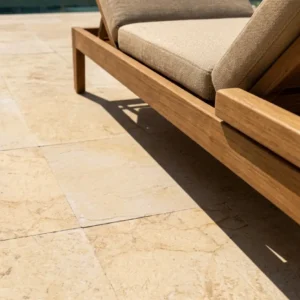
Anguilla curates its arrivals: no cruise piers, no jet bridges — the island is reached by ferry and small aircraft, mostly via St. Martin’s hub next door, and the crossing itself is the brand’s first act: the twenty-minute ride over the channel, the Blowing Point terminal’s island welcome, the drive through The Valley to the villa door. The arrival economy is infrastructure as hospitality, and its ground — terminals, aprons, thresholds — is the island’s handshake. Here is the gateway guide.
The ferry gateway
Blowing Point carries the island’s front door: the rebuilt terminal — Irma took the old one — running the channel-terminal craft at boutique pitch, arrival halls and queuing ground on the public-duty specification with island-scale warmth, luggage-and-porter flows on step-free honesty, and the private-charter tier the luxury market rides — dedicated lounges and landings on the arrival-choreography standard — sharing the harbor with the public boats: one gateway, two registers, both Anguillian.
The airport’s small-field craft
Clayton J. Lloyd receives the island’s aviation: island-hoppers and private aircraft on a field scaled to the island’s taste, FBO and terminal thresholds at the executive-arrival register, apron-edge ground on working-grade specification, and the expansion question the island debates on its own terms — the low-volume thesis applied to runways: growth that serves the brand, never volume that spends it. The airport-era lessons from the wider cluster inform the caution; Anguilla watches, and chooses smallness deliberately.
- Design the ground plane so a later expansion does not mean relaying it.
- Keep a documented setting-out grid so a phase two lines up exactly.
- Reserve matched material against future extension rather than hoping to rematch.
- Choose a format that will still be available in five years.
The transfer as experience
Between gateway and villa runs the island’s first impression at road speed: the drive through The Valley and the villages on the island-life register — visitors see the real island first, by design — hotel and villa transfer fleets staging on honest aprons, welcome protocols at property thresholds on the service-craft standard, and the luggage-to-veranda sequence rehearsed like theater: the guest who lands at four swims at five, and the ground between — terminal, apron, drive, threshold — is the stage machinery that makes it look effortless.
Freight through the same doors
The island’s supply rides the same gateways: everything from provisions to building stone crossing by barge and ferry on the island supply line, cargo aprons and customs yards on working stone beside the passenger polish, the restaurant larder arriving daily through Blowing Point’s freight lane, and the dual-use truth of small-island gateways: the terminal that welcomes the honeymoon also lands the honeymoon suite’s marble — and both flows deserve ground that works.
- Specify for wheeled luggage, trolleys and pallet traffic on the same surface.
- Keep the freight route separate from the passenger route where possible.
- Use thicker units where loaded trolleys turn or brake.
- Detail thresholds flush, since every wheel crosses them all day.
Storm gateway, first to reopen
Irma’s lesson concentrated at the gateways: the island’s recovery ran through its terminals — relief in, rebuilding material in, the reopen-for-season imperative out — and the rebuilt infrastructure carries the resilience-grade standard with gateway priority: terminals engineered to survive and restart, aprons and landings on the reopening-first principle, and the national understanding the storm taught: the island breathes through its gateways, and their stone is respiratory infrastructure.
Specifying the handshake
Gateway work blends public duty, boutique welcome, working freight and storm resilience on the cluster’s most curated arrival: terminal-grade surfaces, executive thresholds, cargo-honest aprons and reopening-first engineering — served by the island supply guide through the very gateways it supplies. The channel sparkles, the terminal welcomes, the villa waits twenty minutes up the road — and the island’s handshake, first to last, is offered on stone that understands what arrival means here: the luxury of being expected.
Leaving well: the departure as last impression
The arrival economy’s mirror is the departure, and the island that curates its welcomes has learned to choreograph its goodbyes. The villa’s last morning runs on the service-craft calendar: the unhurried breakfast, the luggage collected without the guests packing the car themselves, the checkout that happens around them rather than to them — and the transfer timed to the ferry table or wheels-up slot with the buffer the crossing’s moods deserve. Blowing Point’s departure side carries its own craft: the lounge tier’s farewell standard for the private-charter market, the public hall’s shade, seating and porter flow keeping the ordinary goodbye gracious, and the dockside’s step-free, luggage-wheel ground doing its quiet work one last time. The airport’s version compresses the same sequence — curb, counter, lounge, apron — at the small-field scale that keeps departures human.
The commercial logic is retention: the luxury market rebooks on how a stay ended more than how it began, the departure hour is when next year’s dates get discussed, and the operators who send guests off well — the villa’s farewell ritual, the transfer driver’s timing, the terminal’s calm — are selling the return while the memory peaks. The infrastructure’s contribution is friction’s absence: no jolted luggage run, no baking queue, no last-image of chaos to overwrite a week of understatement.
The island’s goodbye has one more audience: its own people, for whom the gateways’ dignity is daily infrastructure rather than holiday theater — and the ground that serves both audiences at once, durable, level and honestly made, is the gateway craft’s whole point. The channel sparkles on the way out too; the last impression is built as deliberately as the first.
The tests a public arrival floor has to satisfy
A terminal floor is a liability question as much as a design one. The Natural Stone Institute testing program sets out the criteria: ASTM C97 for absorption and bulk density, C170 for compressive strength, C880 for flexural strength, C1353 for abrasion resistance and ANSI A326.3 for slip resistance measured as dynamic coefficient of friction. On a gateway floor all five apply at once.
- Read abrasion resistance first, since every arriving passenger crosses this floor.
- Check compressive and flexural strength where loaded trolleys run.
- Meet the slip benchmark across the whole route, not only at the doors.
- Require batch data rather than a generic family sheet.
- Keep the test record, because a public building will be asked for it.
Wet feet arriving from a boat
A ferry landing is the wettest arrival floor there is. Guidance from Use Natural Stone on frictional testing sets ANSI A326.3 as the method with a dynamic coefficient of friction of 0.42 as the benchmark for level interior surfaces expected to be walked on wet, notes that no published exterior threshold exists, and records that polished stone generally fails the wet test.
- Specify a textured finish from the dock through the hall and out to the road.
- Keep grip identical across the covered threshold, which is the danger point.
- Design a drainage and mat zone at the entrance rather than relying on drying.
- Retest after a season, since salt and grit both polish an entrance floor.
Fifteen seconds to make a first impression
A gateway is the only part of an island most visitors experience before they form an opinion, and it does that job in the time it takes to walk from a boat or a plane to a taxi. It also has to survive luggage, freight, crowds and weather, which is a genuinely difficult brief to satisfy in one material.
- Keep the palette calm, since arriving passengers are already overloaded.
- Use the material to direct movement rather than adding more signage.
- Design for the peak arrival rather than the average one.
- Provide shade and a clear waiting area outside the building.
Arrival gateway stone as first impression and hard duty
A terminal floor has to be photogenic on the first walk and still intact after a decade of luggage wheels and wet feet. Test the batch, meet the slip benchmark across the whole route, separate freight from passengers, and keep the palette quiet enough to calm people down. Our Anguilla stone supply guide sets out the formats, finishes and lead times that suit this island. Everyone who visits this island crosses that floor twice, and it is the only surface on Anguilla with no second chance.