What Surface Texture Reveals About Marble Performance
Marble texture for interiors does far more than determine how a surface looks under light — it governs how the stone interacts with foot traffic, moisture, cleaning chemistry, and long-term wear. The texture profile you specify directly controls porosity exposure, slip resistance, and how aggressively the stone ages over time. Understanding these mechanics puts you ahead of the majority of design decisions that go wrong at the surface level. Your finish choice is, in every practical sense, a structural decision.
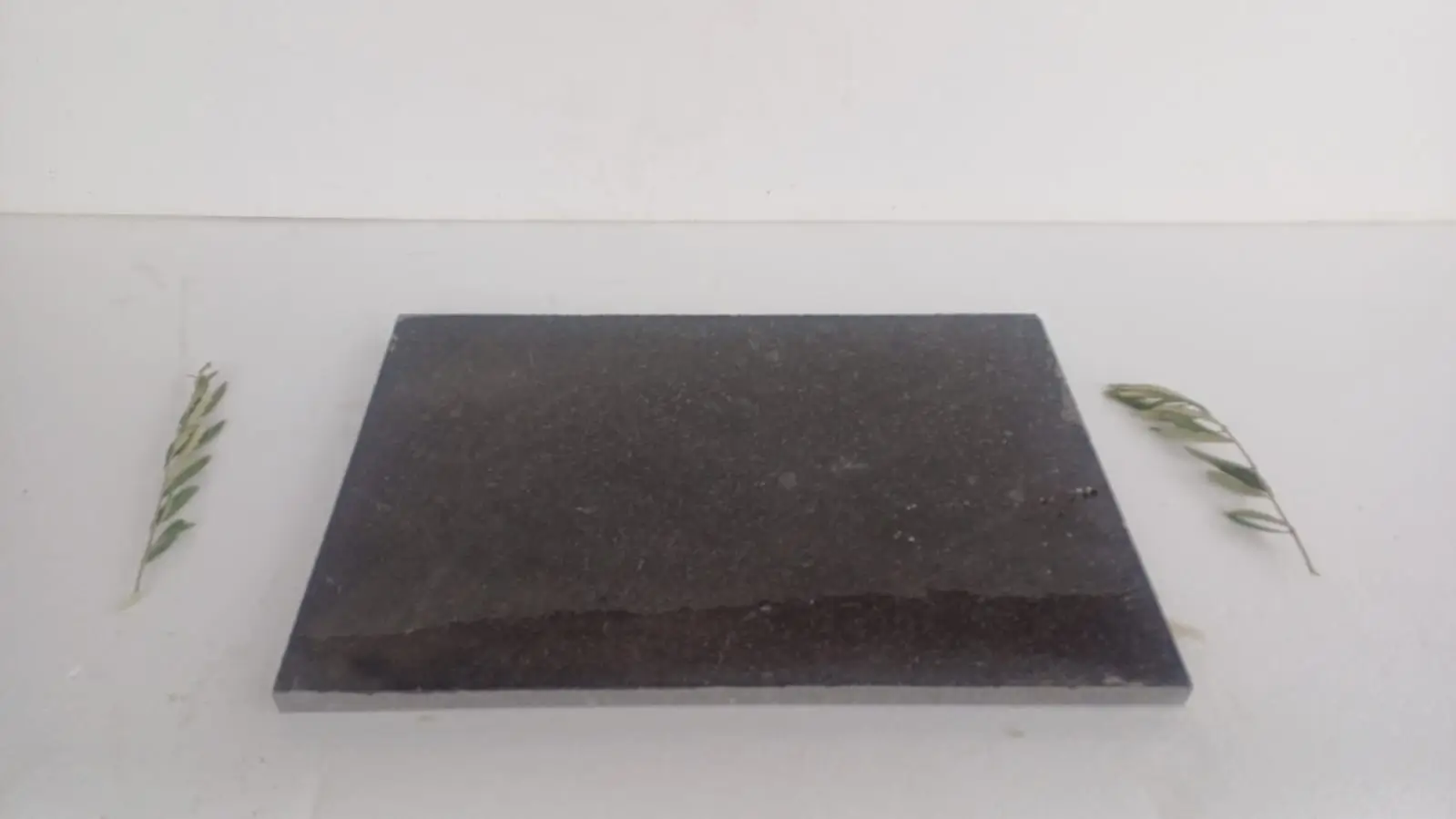
Primary Texture Options Explained
Four texture categories cover nearly every interior marble application you’ll encounter. Each produces a distinct surface character and a different maintenance obligation.
- Polished: A glossy, mirror-like surface achieved through progressively finer abrasive passes down to 3,000-grit buffing. It maximises colour depth and veining clarity, but it also opens the pores less — making it the most visually saturated and the most slippery when wet.
- Honed: A matte or satin surface typically brought to 400-grit or 800-grit, stopping before the reflective stage. Honed marble texture for interiors reads quieter under light, hides minor scratches better than polished, and offers a more forgiving surface for everyday household use.
- Brushed: Mechanical wire brushing creates a lightly textured, slightly aged appearance. The process raises the softer calcite crystals slightly, giving the surface a tactile quality and modest slip resistance improvement over polished finishes.
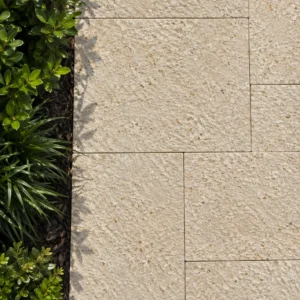
- Leathered: A brushed finish taken a step further, typically through a series of diamond-tipped brushes that leave a slight undulation and a natural sheen. This texture traps less fingerprint residue and performs well in spaces that see heavy daily contact.
Each option produces a measurably different coefficient of friction. ASTM natural stone tile absorption strength and slip resistance testing provides the framework most commercial specifiers reference when evaluating wet and dry COF values for interior stone surfaces. For residential projects, the practical test is simpler: if the space will see bare feet or wet conditions, honed or leathered finishes are the more defensible specification.
How Veining and Pattern Scale Affect Texture Perception
The visual texture of marble isn’t limited to its surface finish. Veining density, colour contrast, and pattern movement create a second layer of texture that interacts with the physical surface in ways that trip up even experienced specifiers.
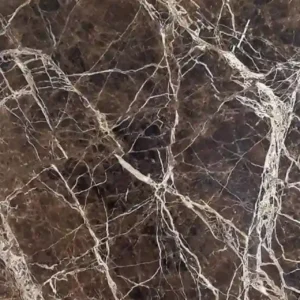
Large-format slabs in dramatic vein patterns — bold diagonal movement across 24″ × 48″ tiles, for example — carry a visual weight that competes with architectural features. In rooms with strong millwork or patterned upholstery, that competition creates visual fatigue. Quieter veining or a granite marble texture approach, where mineral speckle replaces directional flow, tends to read as grounding rather than dominating in complex interiors.
- Tight, consistent veining amplifies the polished finish’s depth — ideal for feature walls and vanity tops
- Wide, irregular veining reads best in honed or leathered finishes, where the matte surface lets the natural pattern carry without reflective distraction
- Book-matched pairs require precise warehouse inventory coordination — you need consecutive slabs cut from the same block to achieve continuity
- Randomly matched tiles suit most flooring applications and simplify procurement logistics significantly
Texture and Light Interaction in Indoor Spaces
The direction and quality of light in a space should drive your texture specification as much as the material itself. Polished marble under warm incandescent or LED sources produces a dynamic, jewel-like effect in evening settings — but the same surface under flat, diffuse daylight from north-facing windows can look clinical and flat. Mock up samples under the actual lighting conditions of the finished space, not under generic showroom fluorescents.
Honed finishes perform more consistently across varied lighting conditions. The matte surface doesn’t shift dramatically between morning and evening light, which makes it the more neutral specification for spaces without a controlled lighting environment. Brushed textures introduce micro-shadow at the surface, which creates a warm, tactile quality under raking light — particularly effective in corridors and gallery-style spaces where long wall runs catch oblique window light.
According to Natural Stone Institute ASTM tile stone specifications, finish selection directly influences reflectance values — a factor that matters in commercial interior design where glare compliance can be a project requirement. Don’t overlook this if you’re specifying marble texture for interiors in healthcare or hospitality settings where LEED or WELL standards apply.
Marble Texture Design for Varied Aesthetic Traditions
Marble texture design doesn’t exist in isolation from the broader aesthetic context of a home or project. The surface treatment you select should respond to the design language of the space and, where relevant, the material palette surrounding the building.
In interiors aligned with desert minimalism or dry-climate modernism — clean planes, warm neutrals, restrained material palettes — leathered or brushed marble textures carry an earthy, organic quality that reinforces that language without overstatement. The tactile surface complements rough-edged ceramics and raw linen in ways polished marble simply doesn’t. A granite marble texture approach works equally well in these contexts, with its mineral speckle providing visual grounding across open-plan layouts.
- Traditional and colonial interiors typically favour polished white or cream marble with tight veining — the high-gloss surface reinforces the formality of the architectural language
- Modern minimalist spaces benefit from large-format honed marble with soft grey veining, where the matte surface reads as refined restraint
- Organic and biophilic interiors respond well to brushed or leathered finishes in warmer tones — the tactile quality connects visually to natural landscape materials
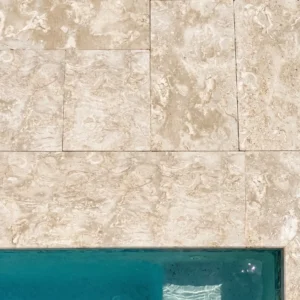
- Transitional spaces that bridge indoor and outdoor living benefit from honed finishes that maintain continuity with exterior stone without the glare contrast a polished surface creates at thresholds
Explore our marble surface finishes to review how different texture profiles align with specific interior design directions — the visual comparison is useful when narrowing finish options for client presentations.
Thickness and Application Match for Interior Marble
Texture selection and tile thickness are interconnected decisions that most specifications treat as separate — but they’re not. The physical surface treatment changes how much material is removed from the face during finishing, and that affects the nominal thickness you need to specify for structural integrity.
- Polished 3/8″ (10mm) tiles: suitable for wall cladding and low-traffic countertop applications only — the surface is dense but the cross-section is thin for floor use
- Honed 1/2″ (12mm): the standard interior floor specification for most residential applications under typical point loads
- Leathered or brushed 3/4″ (20mm): recommended for commercial flooring, heavy residential kitchens, and any application where rolling loads are a factor
- Slabs for countertops: typically 3/4″ to 1-1/4″ (20–30mm) regardless of finish — substrate support and overhang geometry matter more than texture at this thickness
Citadel Stone maintains consistent warehouse stock of marble texture design options across multiple thickness profiles, which allows your project to source coordinated finishes without the 6–8 week import lead time that single-thickness orders often face when sourced internationally.
Maintenance Obligations by Texture Type
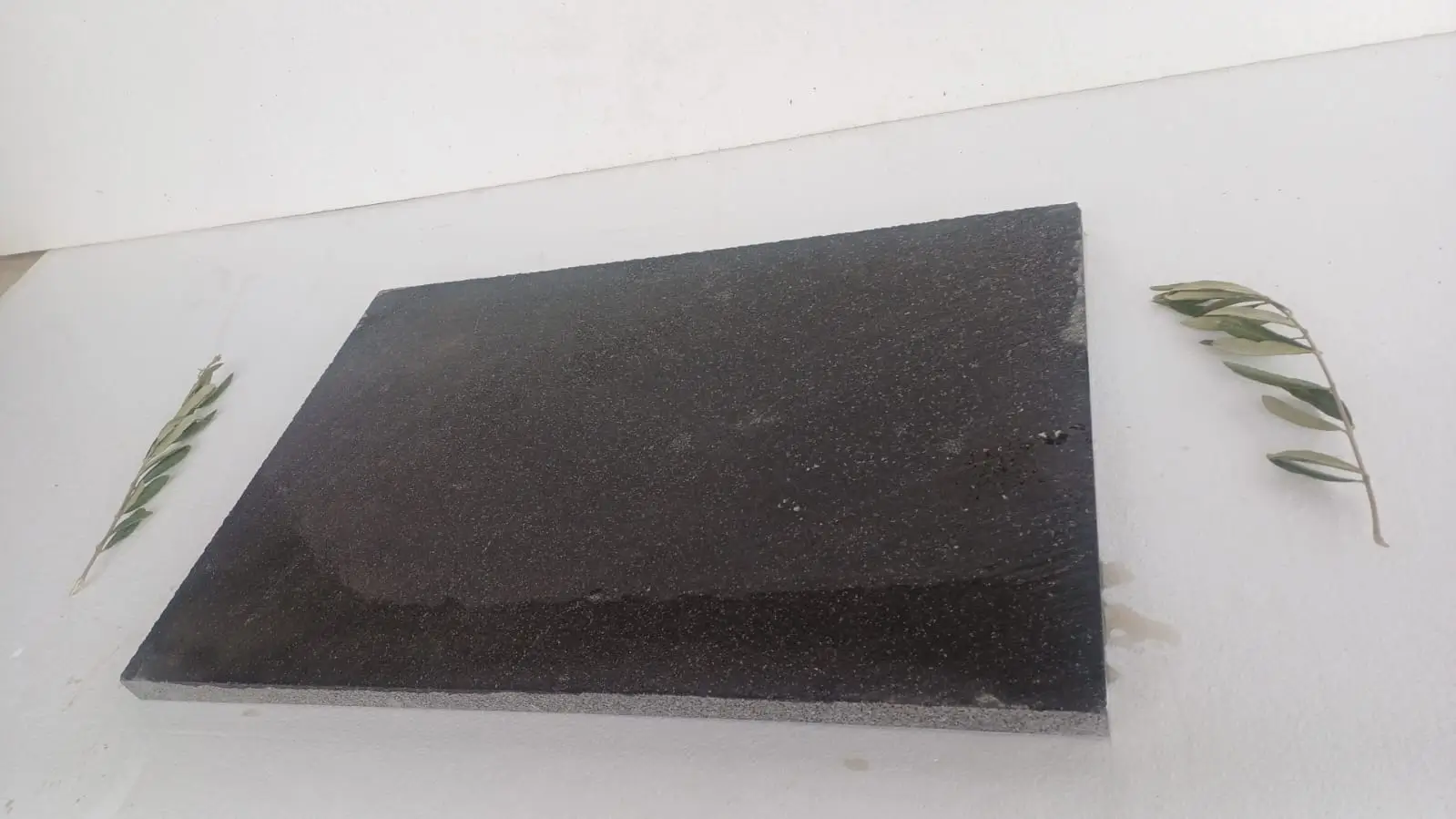
Long-term satisfaction with marble texture for interiors depends almost entirely on whether the maintenance protocol matches the surface. Polished marble requires pH-neutral cleaning exclusively — acidic cleaners etch the calcite surface and dull the polish permanently. That’s not a theoretical risk; it’s the most common damage pattern seen in residential kitchens where standard household cleaners contact the stone.
- Polished: seal annually with a penetrating impregnator, clean with pH-neutral stone soap, avoid any acid-based products including vinegar and citrus
- Honed: reseal every 12–18 months, slightly more tolerant of minor cleaning chemistry errors because the surface isn’t reflective — scratches and etch marks read less dramatically
- Brushed: the micro-texture can trap fine particulates, so dry dust-mopping frequency matters — weekly in high-traffic zones
- Leathered: generally the most low-maintenance interior marble texture because the slight undulation conceals minor surface variations and fingerprints don’t adhere as readily to the non-planar surface
The Tile Council of North America natural stone tile installation standards provides detailed guidance on setting mortar compatibility and grout joint sizing for textured marble tiles — both factors that affect how the finished surface performs under real-world maintenance conditions.
Ordering, Logistics, and Project Planning
Project timelines for marble interior work should account for the texture-specific lead times that affect production scheduling. Polished marble in standard sizes is typically the most readily available format from domestic warehouse stock. Leathered and brushed finishes, especially in larger formats, often require custom production runs — build 4–6 weeks of additional lead time into any project schedule that specifies non-polished textures in sizes above 24″ × 24″.
Truck access at the delivery site is a practical factor that gets overlooked during the specification phase. Large-format marble slabs for countertops or feature walls ship on flatbed trucks with specific clearance and offloading requirements. Verify your site’s truck access constraints early — particularly for urban townhouse renovations or properties with restricted driveway access — and communicate these to your supplier before confirming delivery scheduling.
- Confirm warehouse availability of your exact texture and thickness before finalising tile quantities — textured finishes can have limited stock runs
- Order 10–15% overage for marble texture floors to account for cuts, pattern matching, and future repairs
- Request batch-matched tiles from a single production run for large open-plan floors — colour variation between batches is more visible under the even light of large interior spaces than in smaller rooms
What Matters Most in Marble Texture Specification
The specification decisions that define marble texture performance in interior spaces come down to three factors working together: the physical surface treatment, the lighting environment, and the maintenance capacity of the end user. Getting one of those wrong undermines the other two. Specifying a polished finish for a client who uses general-purpose cleaners, or choosing a leathered texture in a space where the raking light doesn’t reveal its tactile quality — both outcomes represent a misalignment between the material and its context. Take the time to assess all three factors before the finish is confirmed.
Marble texture for interiors rewards careful specification. The difference between a surface that looks tired at five years and one that deepens and improves with age often traces back to a single finish decision made early in the design process. For a complementary perspective on stone care that extends across different marble applications, caring for red marble surfaces covers maintenance approaches that apply across finish types and colour ranges. Marble from Citadel Stone comes in honed and leathered finishes to match varied lighting conditions indoors.
Related reading: how to install marble threshold · granite that looks like marble · how to choose green marble.