Why Grey Granite Slabs Work in Nearly Every Design Context
Grey granite slabs deliver compressive strength consistently above 19,000 PSI — a structural baseline that outperforms most engineered alternatives and means your countertop, flooring, or cladding surface won’t flinch under heavy daily use. The tonal range within the grey spectrum is genuinely broad: from silver-white with micro-black speckle to deep charcoal with bold feldspar veining, you’re not choosing one look but an entire palette. That variability is exactly what makes grey granite slabs a reliable foundation for both minimalist and layered interior schemes.
Reading the Tone: Light, Mid, and Dark Grey Granite
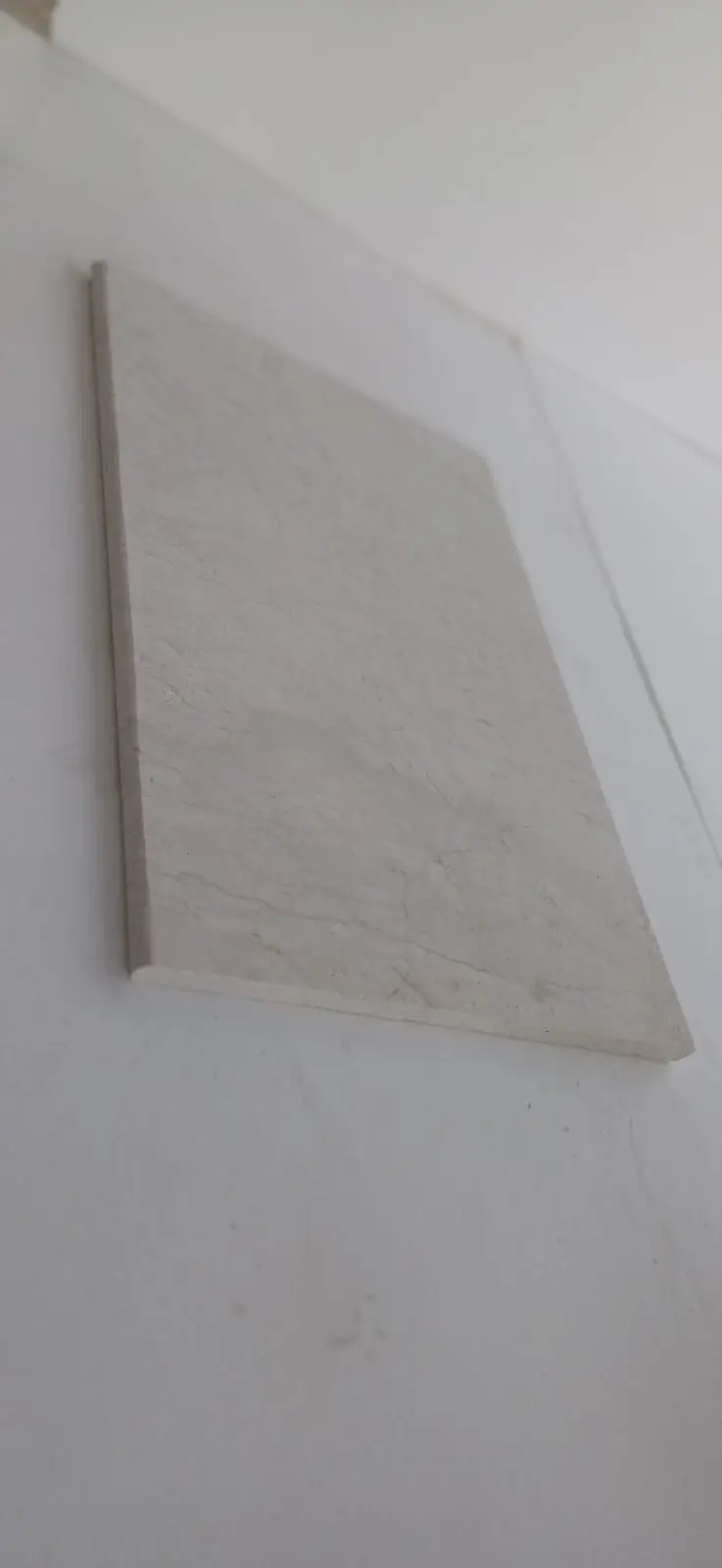
Your design outcome depends heavily on which tonal register of grey granite you’re working with, and the difference between a light silver-grey and a deep slate-grey slab is more significant than most specifiers initially expect. Light grey variants — typically high in feldspar content with visible quartz and mica — bounce ambient light and keep large surfaces from feeling heavy. They pair cleanly with warm white joinery, polished nickel hardware, and pale oak flooring without creating tonal competition.
Mid-grey granite occupies the most versatile position in the spectrum. It reads as neutral against bold cabinetry colours, anchors an all-white kitchen without disappearing into it, and transitions naturally between indoor and outdoor applications. Dark charcoal grey granite, by contrast, commands attention — it works best when your design deliberately contrasts light and dark planes, and it demands adequate ambient or task lighting to prevent surfaces from absorbing too much of a room’s visual energy.
- Light grey: pairs with white oak, brushed nickel, matte white cabinetry, and soft linen textiles
- Mid-grey: compatible with nearly every palette, from monochrome to warm-toned schemes
- Dark charcoal grey: strongest impact alongside high-contrast whites, raw concrete, and matte black fixtures
- Blue-toned grey: connects well with navy, slate blue, and cooled-white colour schemes
Blue Pearl Granite as a Design Counterpoint
Blue pearl granite occupies a specific niche within the grey-blue spectrum that deserves separate consideration. Its labradorescent shimmer — caused by light refracting off feldspar crystals — creates movement in a surface that a flat grey granite slab doesn’t replicate. That optical quality makes it a strong choice for feature islands, bathroom vanity tops, or accent cladding where you want the surface itself to act as a design moment rather than a neutral background.
The pairing potential for blue pearl granite is genuinely different from standard grey. It reads cooler, so warm-toned cabinetry — particularly honey oak, walnut, or warm white — offsets its blue undertone without creating a colour clash. Specifying it alongside brushed brass or aged bronze hardware deepens the contrast further and gives the installation a considered, layered quality. Where grey granite recedes elegantly, blue pearl granite advances — a useful distinction when you’re planning surface hierarchy across a space.
Indoor Applications for Grey Granite Slabs
Countertop and flooring applications represent the highest-volume use cases for grey granite slabs in residential and commercial interiors, and they each have specific specification requirements that go beyond aesthetics. For countertops, your finish selection directly affects daily maintenance: a honed finish conceals fingerprints and light scratches more effectively than a polished surface, but it requires more frequent sealing — typically annually versus every two to three years for polished granite.
Flooring installations demand attention to slab thickness and sub-floor deflection. The Natural Stone Institute granite application and durability standards specify that floor installations in high-traffic commercial settings should use material tested to ASTM C615 for granite dimension stone quality, ensuring consistent modulus of rupture values across the full slab area. For residential floors, 3/4-inch nominal thickness is the practical minimum; for commercial applications, 1.25 inches provides the deflection resistance your sub-floor demands.
- Countertops: 3 cm thickness standard; honed finish for low-maintenance daily use
- Flooring: 3/4-inch minimum residential, 1.25-inch commercial; check sub-floor deflection rating
- Wall cladding: 1/2-inch or 3/4-inch acceptable; back-buttering coverage must reach 95% for vertical applications
- Fireplace surrounds: verify coefficient of thermal expansion with your fabricator — granite handles cyclic heat well, but joint sizing must account for temperature differential
Outdoor Applications and Thermal Cycling Considerations
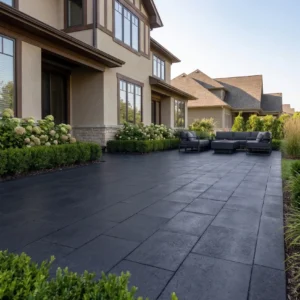
Grey granite slabs perform exceptionally well outdoors precisely because granite’s thermal expansion coefficient — approximately 4.4 to 8 × 10⁻⁶ per °F depending on mineralogy — is low enough to tolerate significant temperature swings without joint failure. That number matters in practice: in regions where daily temperature ranges span 40°F or more between pre-dawn and midday, improperly specified expansion joints will telegraph that stress directly into slab cracking or lippage within two to three seasons.
Freeze-thaw performance is another dimension where grey granite outpaces sedimentary alternatives. Granite’s water absorption rate typically falls below 0.4% by weight — well under the threshold where freeze-thaw cycling creates progressive internal fracturing. Per ASTM C615 granite dimension stone standards, dimension granite must meet minimum absorption and flexural strength thresholds specifically because freeze-thaw durability is a primary field performance factor. For outdoor paving in freeze-thaw regions, this absorption rate advantage over limestone or sandstone is decisive.
Your expansion joint specification for outdoor grey granite slabs should target 1/8-inch joints at 8- to 10-foot intervals in exposed conditions, widening to 3/16-inch in environments where the daily temperature swing consistently exceeds 50°F. Grout or joint compound selection must match — a rigid, non-flexible grout will fail before the granite does.
Pairing Grey Granite with Adjacent Materials
Material pairing decisions become most visible at transitions — where your grey granite slab countertop meets the backsplash tile, where outdoor granite paving transitions to a timber deck, or where an interior floor meets a contrasting threshold stone. These junction points are where poorly considered pairings announce themselves most loudly, and where good pairings create the quiet coherence that distinguishes a well-resolved project.
For backsplash pairings with grey granite countertops, the principle is tonal direction: either extend the grey palette upward with a lighter grey or silver glass tile, creating a tone-on-tone depth effect, or introduce a deliberate contrast with warm cream, soft white, or aged terracotta. Avoid pairing mid-grey granite with a cold-white subway tile at the same tonal value — the result is visual flatness, not sophistication. European granite, with its tighter grain structure and more uniform grey tones, often pairs more cleanly with large-format minimalist tiles than higher-variation granites with bold feldspar patterning.
- Backsplash: tone-on-tone grey glass tile, warm cream ceramic, or polished white marble mosaic
- Hardware: brushed nickel and matte black work with cool grey; brushed brass elevates warmer grey varieties
- Cabinetry: white, light grey, deep navy, and natural timber all pair effectively depending on granite tone
- Adjacent flooring: maintain a 1/8-inch transition reveal between grey granite and timber or tile to prevent lipping
Ordering and Logistics for Grey Granite Slabs
Colour matching across multiple slabs is where grey granite projects most commonly run into trouble, and it’s a logistics issue as much as a design one. Granite is a natural material — even within the same quarry lot, tonal variation between slabs can be noticeable. For countertop runs exceeding 8 linear feet, or for flooring installations where multiple slabs must read as a cohesive field, you need to review slab photos or physical samples from the same warehouse batch before committing to your order.
Citadel Stone maintains consistent warehouse stock of grey granite slabs, which allows you to confirm lot availability before your fabricator schedules templating — a step that eliminates the frustrating mid-project substitution problem. For large-format projects, your truck delivery scheduling also matters: slabs require A-frame transport and specialized offloading equipment, so confirming site access for delivery vehicles early in the project timeline prevents last-minute delays. Citadel Stone grey slabs are available with lead times that typically allow for coordinated delivery alongside fabricator scheduling windows.
Finish Options and Their Design Implications
The finish applied to a grey granite slab changes its visual identity more dramatically than most clients anticipate before they see physical samples side by side. A polished finish maximises reflectivity and deepens the apparent colour — a mid-grey becomes almost charcoal-dark under polishing, and the speckled patterning sharpens into high definition. This finish reads as formal and high-contrast, and it works best in settings where you want the surface to own the design narrative.
Honed and leathered finishes move in the opposite direction. A honed grey granite surface reads softer and more matte, losing the tonal deepening of polishing but gaining a tactile quality that suits transitional and contemporary residential settings. The leathered finish — achieved by brushing the polished surface with diamond-tipped tools — preserves some of the tonal depth while adding a subtle texture that diffuses light rather than reflecting it. According to USGS dimension stone production data, honed and textured finishes have grown steadily in specification share for both residential and commercial granite applications, reflecting a broader design shift away from high-gloss surfaces.
- Polished: highest reflectivity, deepest colour saturation, formal aesthetic — most common for countertops
- Honed: matte, tactile, colour appears lighter — suited to flooring and casual interiors
- Leathered: textured, mid-depth colour — popular for island tops and hospitality applications
- Flamed: rough surface with opened grain structure — outdoor paving and slip-resistant applications
Getting Your Grey Granite Slab Specification Right
Narrowing down the right grey granite slab for your project starts with three decisions made in order: tonal register first, finish second, and pairing materials third. Getting the sequence right prevents the most common specification error — choosing a beautiful slab in isolation and then struggling to build a cohesive palette around it. Request slab samples from the same warehouse batch as your intended order, review them under both artificial and natural light conditions, and confirm that your fabricator has reviewed thermal expansion and joint specifications before templating begins.
For projects that span indoor and outdoor zones — a kitchen countertop that connects visually to an outdoor kitchen or terrace paving — selecting grey granite slabs from the same material family for both surfaces creates a resolved, continuous aesthetic. The outdoor specification will need the additional freeze-thaw and thermal cycling considerations detailed above, but the design continuity is worth the extra specification rigor. As you plan your broader hardscape and interior stone selections, finding the right granite wholesale partner is a practical next step worth exploring for project-scale orders. Grey granite from Citadel Stone pairs cleanly with white cabinetry, and its speckled patterning hides everyday crumbs and light wear.
Related reading: granite slab size guide · granite edge profiles guide · how to remove granite stains.