What Separates Reliable Granite Wholesale Distributors from the Rest
Granite wholesale distributors who consistently deliver on large commercial and residential contracts share one trait that rarely appears in a sales pitch — slab-level quality control before material ever leaves the warehouse. Most specifiers focus on price per square foot, but the shops that avoid costly mid-project surprises are the ones that audit a distributor’s inventory management, bundle consistency, and lead-time reliability before signing a purchase order. Your project timeline depends on those factors far more than the listed price.
The distinguishing variables between a capable distributor and a problematic one show up in the details: lot traceability, minimum order thresholds, slab thickness tolerances, and whether their team can actually read a quarry certificate. Knowing what to look for across each of those dimensions puts you in a much stronger negotiating position — and protects the final installation quality.
Slab Quality and Grading Standards You Should Demand
Granite grading is not standardized the way lumber or steel is, which means the word “first quality” means something different to every distributor. Your specification should require the distributor to define their grading criteria in writing — specifically referencing ASTM C615 granite dimension stone quality standards as the baseline for compressive strength, absorption, and flexural strength minimums. Distributors who cannot reference that standard in their documentation are working from informal internal benchmarks that may not hold up under project scrutiny.
Here’s what grading distinctions actually mean in practice:
- First-quality slabs meet quarry-certified thickness tolerances, typically ±1/16 inch for 3/4-inch material and ±3/32 inch for 1-1/4-inch slabs
- Commercial-grade slabs may carry surface fissures, edge chips, or color variation outside the accepted bundle range — acceptable for some applications, problematic for others
- Bundle consistency means slabs within a lot share the same quarry block, so veining and color run predictably across the installed field
- Calibration consistency is critical for mechanical installation — uncalibrated slabs can vary 3–5mm in thickness within a single bundle, causing lippage issues at the setting bed
Ask your distributor for quarry block certificates on any project where pattern continuity matters. A reputable granite wholesale distributor can trace material back to its extraction lot. If that traceability isn’t available, you’re buying commodity stone, not specified stone.
Inventory Depth and Warehouse Management
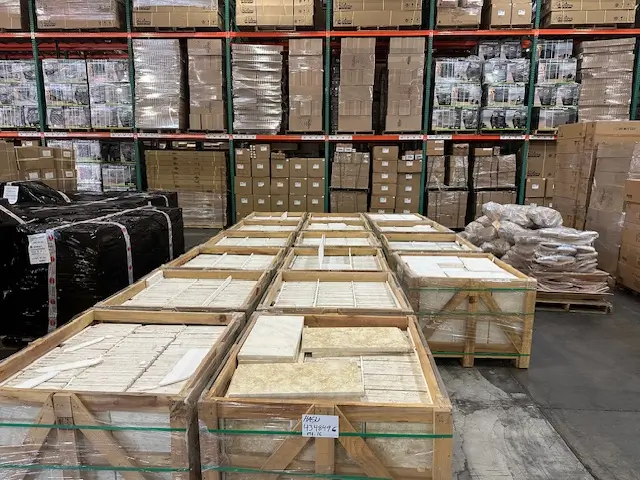
Inventory depth is the variable most specifiers underestimate until they’re three weeks into a project and discover the lot they sampled is sold out. Reliable granite wholesale distributors maintain warehouse stock levels that cover not just initial order quantities but realistic re-order scenarios. A distributor running lean inventory — under 200 slabs of a given material — creates real risk for any project exceeding 1,500 square feet.
Your pre-order conversation with any distributor should include these warehouse-level questions:
- Current on-hand quantity for the specific lot you are sampling, not the material category generally
- Replenishment lead time if stock runs low — import cycles typically run 8–12 weeks from quarry origin
- Hold policy: will they reserve material against a purchase order deposit, and for how long
- Whether their warehouse is climate-controlled or open storage, which affects how resin-backed slabs and polished finishes arrive on your jobsite
At Citadel Stone, we maintain verified warehouse inventory across slab dimensions before releasing any lot to the active product catalog — material that doesn’t meet our internal threshold for available square footage doesn’t get listed as readily available, because promising what we can’t deliver creates project failures. That warehouse discipline matters more to your schedule than a low per-foot price.
Sourcing Across Wholesale Granite, Marble, and Tile Categories
When your project scope spans multiple stone categories — you’re specifying wholesale granite marble and tile across different applications in the same build — the distributor’s multi-category depth becomes a critical factor. Working from a single source for all three material types reduces coordination complexity and minimizes the risk of conflicting lot deliveries arriving on different truck schedules. It also gives you better leverage on blended-order pricing.
The practical distinction between single-category and multi-category distributors comes down to warehouse organization and buyer expertise. A granite-only shop can be highly competent on granite but may lack the technical knowledge to discuss honed marble absorption rates or rectified porcelain tile tolerances. Your distributor’s team should be able to speak credibly about finish selection, thickness specifications, and application suitability across wholesale granite marble and tile categories, not just quote pricing.
For projects where granite serves the exterior hardscape, marble handles interior flooring, and tile covers wet areas, coordination between those three material streams is where project managers lose the most time. Verify that your distributor can stage all three materials from the same warehouse location, and confirm that truck deliveries can be sequenced by installation phase rather than arriving in a single bulk drop that overwhelms your staging area.
Cost Factors and How Market Dynamics Affect Your Budget
The spread between distributor pricing and what that material actually costs your project is wider than most project managers budget for at the outset. Freight distance from the distribution point to your jobsite is the single largest variable outside the material cost itself. A $12-per-square-foot slab that requires a 900-mile truck delivery can land at a higher total cost than a $14 material sourced from a warehouse 200 miles out. Your specification decisions need to account for freight as a real line item, not an afterthought.
Material-to-labor cost ratios shift depending on the stone category and finish type. Polished granite slabs require more careful handling, specialized equipment on-truck, and slower unloading compared to honed or flamed finishes — that handling time translates directly into labor costs at your jobsite. Consider these dynamics when budgeting:
- Polished finishes require edge protection during transit and on-site staging, which increases handling time by 15–20% compared to honed material
- Thicker slabs — 1-1/4 inch versus 3/4 inch — add shipping weight and may require lift-gate delivery, which carries a surcharge from most carriers
- Markets where granite wholesale distributors compete heavily tend to produce sharper pricing than regions served by a single dominant supplier
- Value engineering through finish substitution — specifying flamed rather than polished for exterior applications — can reduce material cost by 8–12% without compromising performance
The total installed cost equation — material plus freight plus labor — is where experienced specifiers find the real budget levers. A distributor who helps you model that full picture is worth more than one who only quotes material off a price sheet.
Lead Times, Delivery Logistics, and Project Scheduling
Your project schedule lives or dies by lead time accuracy. Granite wholesale distributors who quote “2–3 weeks” without distinguishing between warehouse-on-hand stock and inbound import containers are setting you up for a schedule gap. The distinction matters: in-stock material from a domestic warehouse ships in 3–7 business days in most cases. Material on an inbound container is realistically 8–14 weeks from order confirmation, depending on port of entry and customs clearance.
Delivery logistics require more planning than most specifiers build into their schedules. Before confirming an order, verify the following with your distributor:
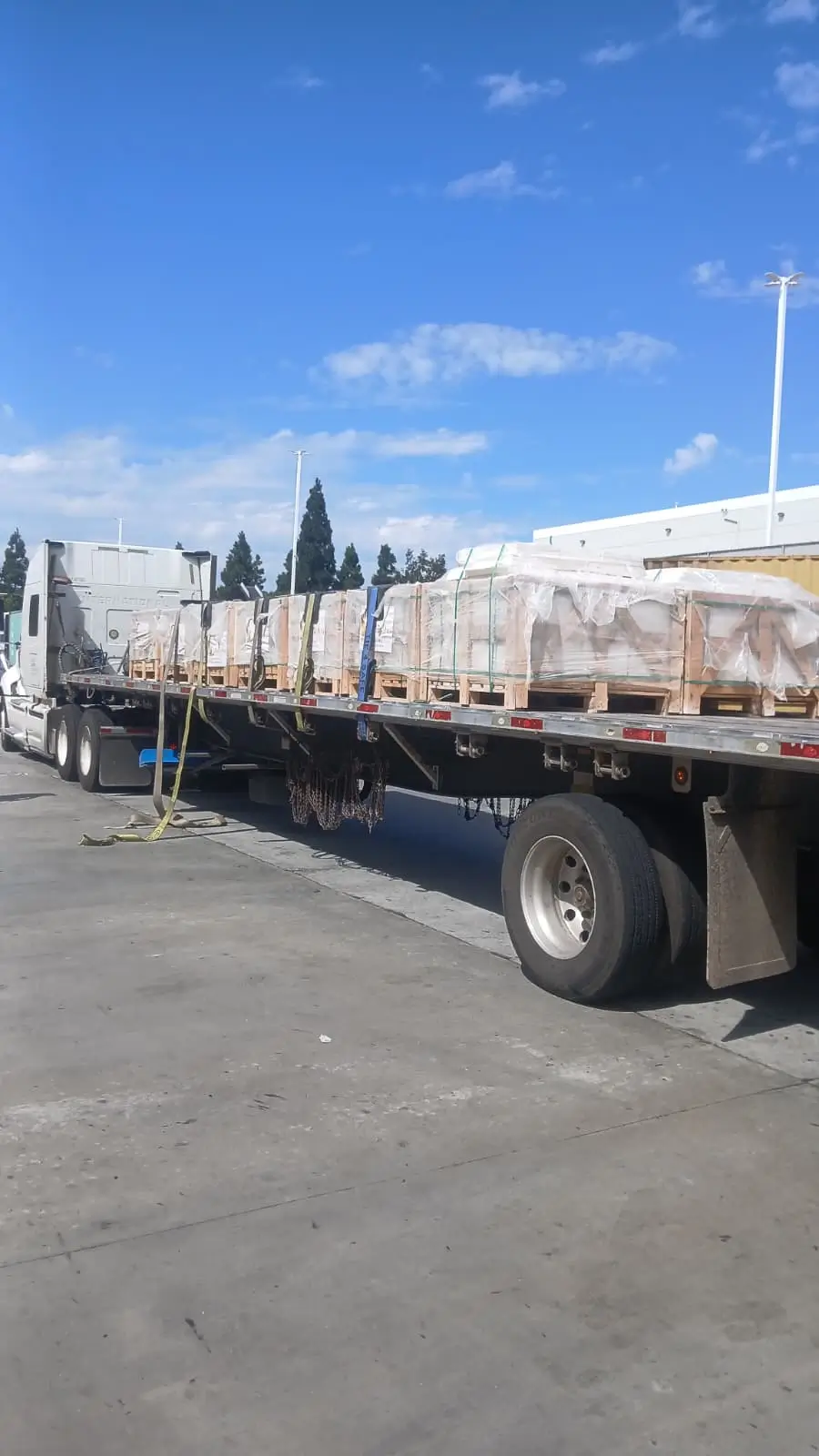
- Truck access at your delivery point — full flatbed trucks require a 53-foot clearance radius that many urban or residential sites cannot accommodate
- Whether the delivery includes inside delivery or curb-drop only — curb-drop transfers the unloading burden and equipment requirement to your crew
- Slab crating or A-frame configuration — crated material protects edges but requires forklift access, while A-frame bundles can be unloaded manually with proper equipment
- Damage policy and photographic documentation requirements at delivery — establish this before the truck arrives, not after a dispute develops
For multi-phase projects, the ability to stage deliveries matters enormously. A distributor who can hold confirmed material in their warehouse and release it by phase — rather than forcing a single bulk truck delivery — saves you significant on-site staging cost and protects material from weather exposure during long construction phases.
Evaluating Technical Expertise and Specification Support
The technical support a distributor provides before and after the sale is where long-term supplier relationships justify themselves. Granite’s material properties — compressive strength typically ranging from 19,000 to 23,000 PSI, thermal expansion coefficients around 4.4–5.9 × 10⁻⁶ per °F, and absorption rates below 0.4% for quality material — affect specification decisions in ways that a pricing-only conversation won’t surface. According to Natural Stone Institute granite durability and application specifications, finish type, thickness, and end-use application are the three variables that most often determine whether a granite specification succeeds or requires costly remediation.
Technical expertise from your distributor should cover these areas:
- Finish selection relative to application — flamed and brushed finishes provide meaningful slip resistance improvement over polished in wet or exterior environments
- Thickness specification by load condition — 3/4-inch slabs perform well in residential countertop and light commercial applications, while structural flooring under heavy point loads requires 1-1/4 inch minimum
- Edge profile compatibility with installation method — some profiles require additional fabrication that affects lead time
- Sealer compatibility across different granite densities — low-absorption granites sometimes reject penetrating sealers that perform well on more porous material
A distributor whose sales team can navigate those distinctions in a specification conversation is operating at a fundamentally different service level than one who can only confirm stock and quote price. That expertise difference often predicts whether the installation goes smoothly or generates callbacks.
Product Range and Granite Slab Selection Criteria
The breadth of a distributor’s granite slab range matters differently depending on your project type. For commercial work where you’re specifying a single material across a large square footage, consistency within a narrow selection is more valuable than variety. For residential and hospitality work where material selection is a design differentiator, access to a broad range of origins — Brazilian, Indian, European, domestic — gives you the creative flexibility clients expect at those project budgets.
The selection decision should begin with end-use performance requirements before aesthetic preferences are applied. Granite selections for exterior paving applications, for example, should prioritize freeze-thaw resistance and surface texture over color preference — those performance criteria narrow the field considerably before aesthetics enter the conversation.
For shops purchasing from granite wholesale distributors as regular supply partners, catalogue stability matters as much as current selection depth. A distributor who discontinues materials frequently forces your shop to re-specify for clients who return for matching lots on additions or repairs. Ask about material continuity commitments and how long specific lots typically remain available in their warehouse rotation.
Certifications, Documentation, and Compliance Requirements
Project documentation requirements have increased substantially in commercial construction, and granite wholesale distributors who stay current with compliance needs save their clients significant time during closeout. LEED documentation, material health declarations, and country-of-origin certifications are no longer edge-case requests — they’re standard on any publicly funded or institutional project. Your distributor should be able to produce these documents without a two-week delay.
The documentation hierarchy for most commercial granite specifications runs as follows:
- Quarry certificates confirming extraction origin and lot identification
- Test reports against ASTM C615 for compressive strength, modulus of rupture, absorption, and abrasion resistance
- Country-of-origin declarations for projects subject to trade compliance requirements
- VOC content documentation for interior applications under LEED v4 indoor air quality credits
- Chain-of-custody records if the project specification requires responsible sourcing verification
The USGS dimension stone production and use data provides useful context for understanding domestic versus imported supply proportions — a reference point that becomes relevant when projects specify domestically sourced material for sustainability or procurement reasons. Verify that your distributor can distinguish domestic from imported stock at the lot level, not just at the product category level.
Ordering Process and Building a Long-Term Shop Relationship
The operational mechanics of how you order from granite wholesale distributors determine how smoothly projects run once design decisions are made. Minimum order quantities, sample availability, hold policies, and payment terms all affect your shop’s cash flow and project flexibility. Establish these terms explicitly before your first large order — they’re rarely as flexible after a business relationship is established as they are during the initial negotiation.
For fabrication shops ordering on a recurring basis, the distributor relationship pays its biggest dividends in re-order matching. Bundle-to-bundle consistency for client additions and repairs is a quality issue that only a distributor with deep lot traceability can reliably address. Citadel Stone slab distribution maintains detailed lot records that allow shops to match material for phased projects months after the initial purchase — a capability that prevents the costly outcome of visible material mismatches in a finished installation.
Sample management is another undervalued aspect of the distributor relationship. Shops that maintain an active sample library need distributors who update sample sets when lots change, communicate material discontinuations proactively, and provide large enough sample sections to give clients an accurate preview of installed appearance. A 4×4-inch chip tells you almost nothing about how a slab with prominent veining will read across a kitchen island.
What Granite Wholesale Distributor Selection Comes Down To
The selection criteria for granite wholesale distributors ultimately come down to three operational realities: slab quality you can verify, inventory you can rely on, and a team that understands the material well enough to support your specification decisions. Price matters, but it matters last — after you’ve confirmed that the distributor can deliver consistent material on a schedule your project can actually use. The shops that treat distributor selection as a procurement formality tend to be the ones absorbing re-selection and remediation costs that far exceed any savings on the initial per-foot price.
Your broader stone procurement strategy benefits from understanding how granite relates to complementary materials in your project scope. For projects that span multiple stone types, wholesale marble and granite sourcing covers how to align procurement across categories efficiently — a natural extension when your specification already bridges granite with marble or tile on the same build. Establishing that broader context keeps your material decisions coherent rather than treating each stone category as an independent purchasing decision. A distributor like Citadel Stone holds slab inventory in standard sizes, so shops can reorder matching lots without long lead times.
Related reading: Wholesale Granite Direct: How Bulk Buying Works · Discount Granite: How to Spot Real Savings · wholesale tile supply.