Why Stone Edging Fails Before Its Time
Maintaining stone edging effectively starts with understanding the primary mechanical cause of premature failure: lateral creep. Your edging stones shift outward incrementally each time a load passes nearby, and without the right restraint system, that movement compounds over years until entire paver fields lose their geometry. Understanding the forces acting on your edge course is the foundation of any effective maintenance strategy.
Stone edging maintenance also intersects directly with local building code requirements more often than most contractors realize. Edge restraint depth, base compaction specs, and minimum stone thickness are increasingly governed by municipal codes — particularly in jurisdictions that reference the Interlocking Concrete Pavement Institute’s edge restraint standards or carry frost-line provisions that affect base depth. If your project sits on a permit, those specs aren’t optional.
Reading the Signs of Edge Deterioration Early
Your eye is your first diagnostic tool. Look for lateral displacement — any edging stone that has shifted more than 3–4 mm outward from its original line is already compromising the structural integrity of adjacent paver courses. Catch it at that stage and you’re resetting one stone; miss it and you’re releveling a 40-square-foot section.
Beyond displacement, watch for these warning indicators during your routine inspections:
- Hairline cracks running parallel to the long axis of the edging stone — a sign of flexural stress, not surface wear
- Sand migration below the edge course, visible as voids when you probe the joint with a thin tool
- Rising or tipping of individual stones at the perimeter, which points to sub-base settlement or water infiltration beneath the base layer
- Joint gaps wider than 6 mm, which allow root intrusion and accelerate moisture cycling damage in freeze-thaw regions
- Surface spalling or delamination on the top face of the stone, especially in honed or polished finishes
The distinction between a surface problem and a structural problem matters enormously. Surface spalling on stone edging is typically a sealing or finish issue. Displacement and cracking below the midpoint of the stone’s thickness is structural — and it requires base-level intervention, not a topical fix.
Base Preparation, Code Compliance, and Long-Term Stability
Field performance data shows that roughly 70% of edge failures trace back to inadequate base preparation at install — not to the stone itself. Your edging stones carry both the lateral load from the paver field and the point loads from traffic or pedestrian use, so the compacted aggregate base beneath them must meet a higher standard than the interior field.
According to ASLA landscape edging and border stone design guidance, edge restraint systems require careful integration with the surrounding permeable or drainage layer to prevent subsidence. That guidance aligns with what we see in the field: edges set over poorly drained clay-heavy soils shift twice as fast as those over engineered aggregate, regardless of stone quality.
From a code standpoint, your project’s base depth requirement depends on the frost line depth for your jurisdiction. In regions where frost penetrates 24 inches or deeper, base aggregate must extend well below the frost line — typically 6–8 inches of compacted gravel minimum for pedestrian edging, and 10–12 inches for vehicular-adjacent applications. Confirm the specific requirement for your permit jurisdiction before specifying base depth.
- Use a minimum 3/4-inch clean angular aggregate — not rounded pea gravel — for proper interlocking and compaction
- Compact in lifts no deeper than 4 inches using a plate compactor, not a hand tamper
- Verify 95% Modified Proctor compaction at the base surface before setting any stone
- In freeze-thaw regions, consider a geotextile fabric layer at the subgrade interface to prevent fines migration into the aggregate
Reseating and Resetting Displaced Edging Stones
Your maintenance schedule should include a full perimeter walk every spring after the final freeze cycle. That’s when accumulated frost heave reveals itself — and when minor displacement is still correctable without a full relay.
Resetting a displaced edging stone correctly means addressing the cause, not just the symptom. Lift the stone, remove the bedding sand layer entirely, and inspect the base aggregate beneath. If you find a void or soft spot, add fresh compacted aggregate before re-bedding. Using a 1-inch screed bed of coarse bedding sand — not cement-modified sand for most natural stone edging applications — gives you the repositioning flexibility you need while maintaining the load-transfer capacity the edge course requires.
For Citadel Stone edging care, one practical tip worth noting: always check the adjacent interior paver course after resetting an edge stone. The two systems are interdependent — an edge that shifted usually pushed interior stones out of level slightly, and you’ll want to verify joint alignment across at least 18 inches inward before calling the repair complete.
Joint Sand and Sealing Protocols for Stone Edging
Joint sand management is the most overlooked element in maintaining stone edging — and it’s one of the fastest ways to extend the life of your installation by a decade. Your goal is to keep joint sand at 90–95% of joint depth at all times. Below that threshold, the interlocking mechanism between stones degrades, load transfer becomes uneven, and edge stones begin to rock under foot or wheel traffic.
Polymeric sand has become the default recommendation for most stone edging maintenance applications, and for good reason. Its binder system resists erosion from irrigation overspray, heavy rain, and the narrow turbulent flow that accumulates at perimeter edges. Recharge joints with polymeric sand every 3–5 years, or whenever probing reveals voids below 1 inch of depth.
Sealing protocols for stone edging differ meaningfully from standard interior paver sealing. Edging stones receive more direct UV exposure, more edge-face moisture contact, and — in high-traffic installations — more abrasive wear on their chamfered or bullnose profiles. According to ASTM stone compressive strength and durability standards for kerb stones, the stone itself must meet specific absorption and modulus of rupture thresholds before a sealer provides meaningful additional protection. Seal a structurally compromised stone and you’re locking moisture in, not out.
- Apply a penetrating impregnator sealer — not a topical film-former — on natural stone edging to avoid surface bubbling at exposed edges
- Test sealer compatibility on an off-cut before full application; some limestone and travertine edging profiles react to solvent-based carriers
- Seal in ambient temperatures between 50°F and 85°F — outside this range, carrier evaporation is too fast or too slow for proper penetration
- Reapply every 3–5 years for honed finishes, every 5–7 years for bush-hammered or tumbled profiles that are naturally more resistant to moisture ingress
Material-Specific Maintenance Considerations
Not all stone edging maintenance tasks apply equally across material types. The variance in porosity, hardness, and surface finish between limestone, granite, and travertine kerb stone profiles requires a calibrated approach — what works on a polished granite edge will damage a filled travertine profile if applied without adjustment.
Limestone edging, particularly in light-toned finishes, requires pH-neutral cleaners exclusively. Acidic solutions — even diluted vinegar used casually on nearby hardscaping — etch calcium carbonate surfaces and create microscopic roughness that accelerates dirt embedding. The Natural Stone Institute limestone technical specifications are explicit on this point: any cleaner with a pH below 7.0 is contraindicated for limestone maintenance, regardless of product labeling.
Granite edging is significantly more forgiving under maintenance. Its silica-dominant crystal structure resists acid attack and wears slowly under abrasive traffic. Granite kerb stones typically need sealing far less frequently — sometimes not at all in sheltered applications. Travertine edging, by contrast, demands the most attentive maintenance program of the common natural stone edging materials. Its open-pore structure traps organic matter, and voids left unfilled accelerate surface delamination when freeze-thaw cycling applies repeated pressure below the surface plane.
Drainage and Lateral Load Management
Drainage design is inseparable from the long-term performance of your stone edging. Water that pools behind the edge course — between the edging stone and adjacent soil or lawn — creates hydrostatic pressure that progressively tilts and displaces stones from the inside face. This failure mechanism is among the most difficult to diagnose after the fact because the damage appears as outward lean, which looks like traffic loading when the real cause is behind the stone.
Build a positive drainage slope away from the edging line at a minimum 1% grade — 1/8 inch per foot — and install a 4-inch perforated drain tile at the base of the edging course wherever the surrounding grade is flat or adverse. That single detail extends edge stone service life by preventing the saturation cycles that degrade both the bedding sand and the sub-base aggregate.
Lateral load management becomes a structural specification issue at vehicular-adjacent applications. Maintaining stone edging in these contexts must include periodic inspection of the mechanical edge restraint system — typically a staked plastic or steel restraint run continuous along the back face of the edge course. Restake loose sections immediately; a restraint that has pulled free from the sub-base provides zero lateral resistance and allows the entire edge course to migrate outward under load.
Ordering and Planning for Maintenance Repairs
One detail that catches contractors off guard on maintenance projects: matching existing edging stone profiles is harder than it sounds, particularly if the original installation used a non-standard profile or a material that has since been discontinued. Order sample pieces from your supplier before committing to a replacement run — warehouse stock changes, and quarry color lots vary between production batches even for nominally identical stone types.
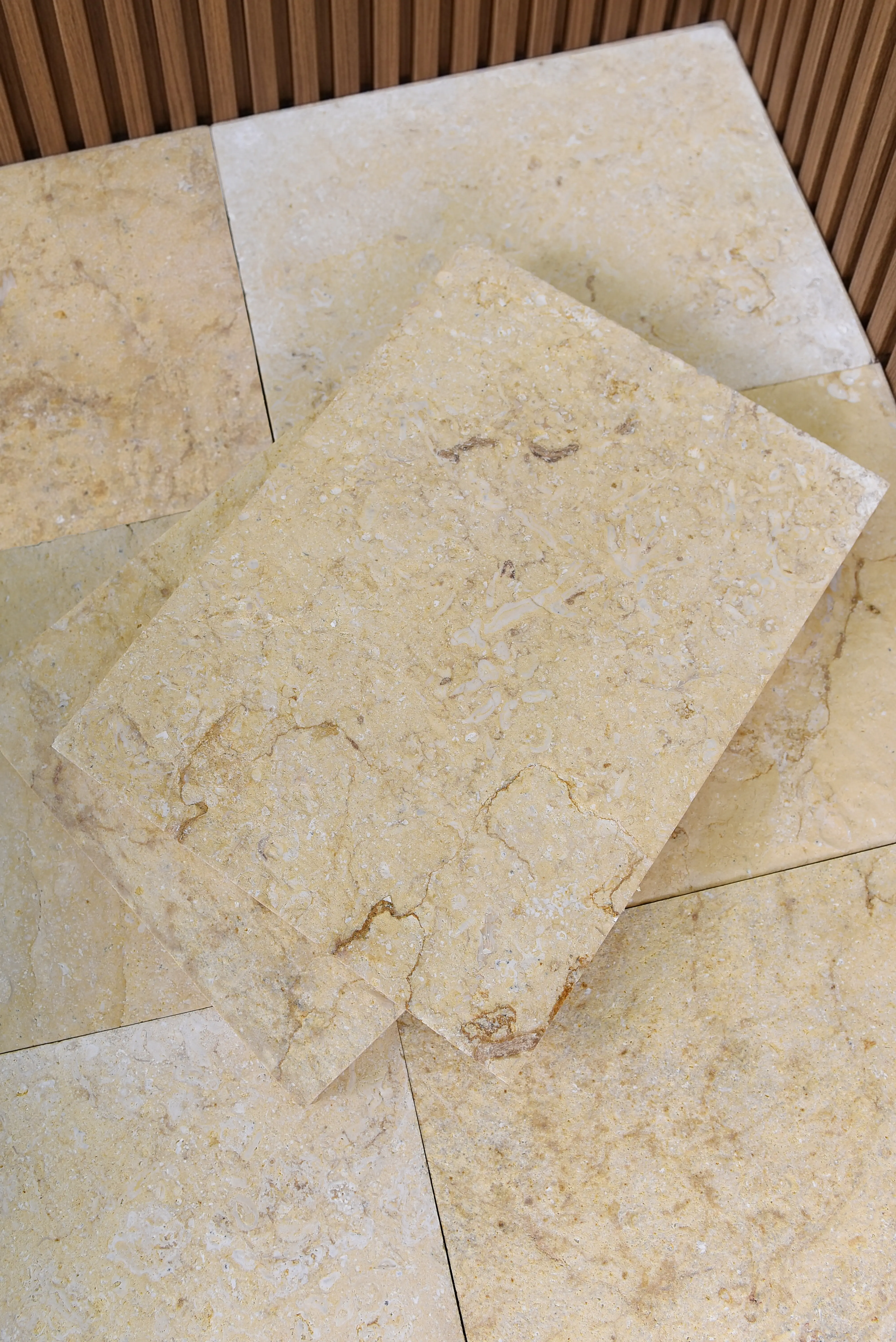
Citadel Stone maintains consistent warehouse inventory of kerb stone and edging profiles, which typically reduces lead times to 1–2 weeks — a meaningful advantage when a maintenance repair is holding up the rest of a project schedule. Verify available stock and dimensional specs before your truck delivers the base materials to site, so your edging replacement stones arrive in the same logistics window. Nothing stalls a maintenance repair faster than a two-week material gap mid-project.
- Document the original stone species, finish, and nominal dimensions before beginning any maintenance work
- Order 10–15% overage on replacement stone to account for cuts, color selection, and incidental breakage during handling
- Confirm whether your replacement stone is a dimensional match or requires re-cutting to the original profile
- Verify that replacement material meets the same compressive strength specification as the original — particularly for vehicular-adjacent applications
Your Stone Edging Maintenance Action Plan
Effective maintaining stone edging comes down to a consistent inspection cycle, a disciplined joint sand program, and the judgment to distinguish surface wear from structural movement. Set a biannual inspection schedule — spring and late autumn — and document displacement, joint sand levels, and sealer condition at each visit. That record becomes your maintenance history and your early warning system.
Beyond the edging line itself, your hardscape system’s performance depends on how all its elements interact. As you develop your stone maintenance strategy, related components like kerb blocks and border stones inform your approach — why kerb stones crack over time is worth reviewing to understand the structural failure patterns that affect the broader edge system. Catching these issues early is always less costly than a full reinstallation.
At Citadel Stone, we supply edging and kerb stone profiles used in projects nationwide, and our technical team consults directly on specification and maintenance questions before material leaves the warehouse. The investment in getting maintenance right — the right sand, the right sealer, the right base depth — pays back in decades of stable, visually consistent hardscape performance. Sourced from premium quarries in Turkey and the broader Middle East region, edging stone needs minimal sealing in dry climates.
Related reading: Pebble Edging Design Ideas for Beds and Pathways · interlocking edging stones · how to install edging stones.