

Limestone driveway ideas look best on paper when the material selection already accounts for the full performance picture — not just aesthetics. The choices you make about finish, format, and joint width determine whether your driveway holds up through hundreds of temperature cycles or starts showing edge spalling within a few winters. What most people discover too late is that the same stone behaving beautifully in one configuration can underperform dramatically in another, simply because the thermal expansion variables weren’t factored into the layout.
1. Classic Cut Stone Grid
A tight-jointed cut limestone grid for formal driveways is one of the cleanest limestone driveway ideas available and one of the most forgiving to install correctly. Rectangular or square formats in 24×24 or 24×36 inch dimensions give you a clean, symmetrical layout that reads as intentional from the street. For vehicle-load applications, you’ll want a minimum 3-inch nominal thickness to handle point loads without flex cracking.
The grid pattern also makes expansion joint planning straightforward. A consistent module means you can calculate joint spacing in advance — target one expansion joint every 10 to 12 feet in both directions, not the 15 to 20 feet often cited in generic specs. Limestone’s thermal expansion coefficient runs approximately 4.4 × 10⁻⁶ per °F, meaning a 20-foot run experiences roughly 0.14 inches of cumulative movement across a 60°F seasonal temperature swing. That number seems small until you multiply it by years of daily thermal cycling.
2. Tumbled Limestone for Old-World Character
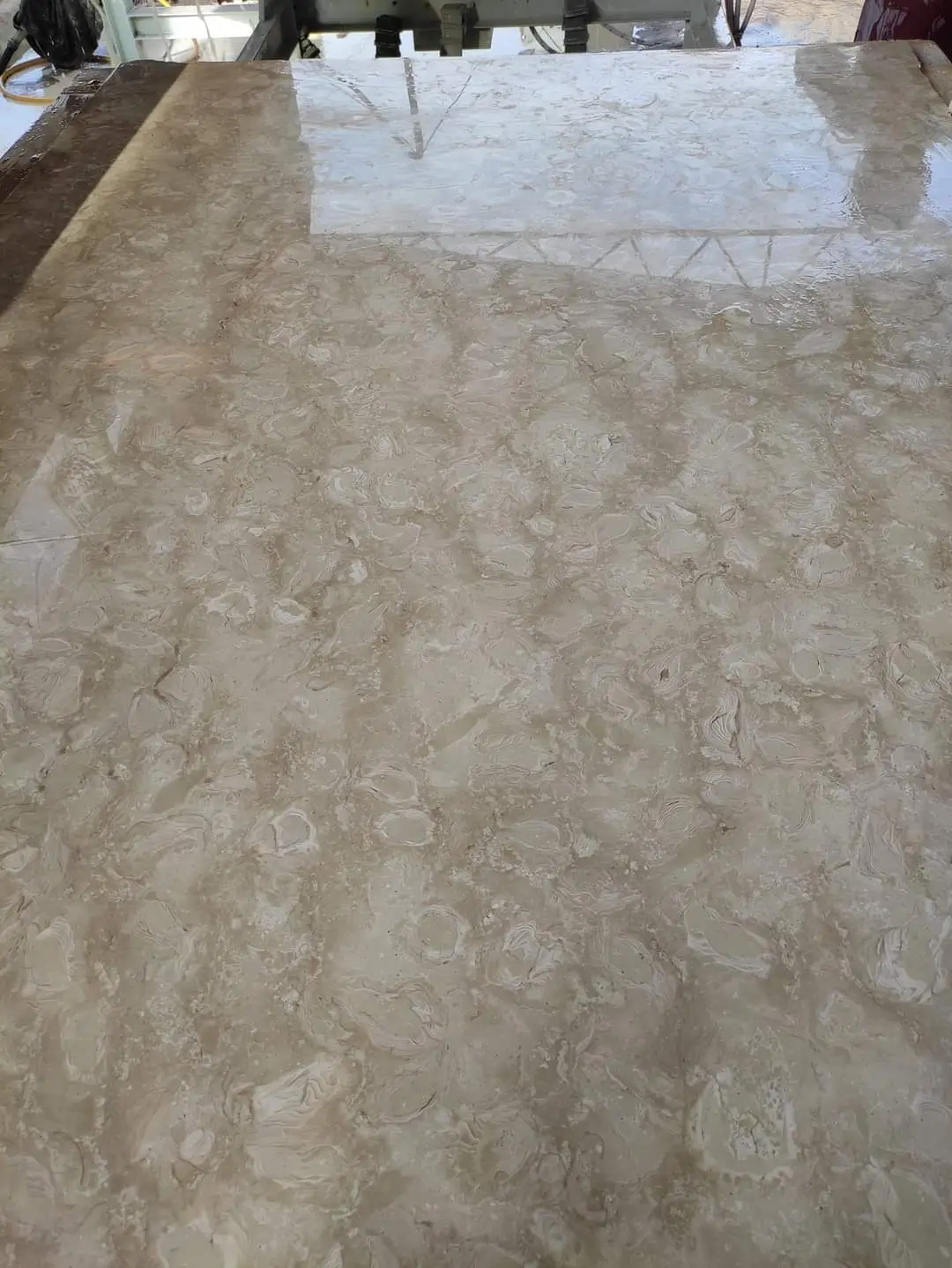
Tumbled limestone pavers bring an aged, European character that’s difficult to replicate with any other material. The rounded edges and worn faces that come from the tumbling process aren’t just cosmetic — they also eliminate the sharp edge relief that tends to chip under vehicle traffic. Your installation benefits from this built-in durability detail, especially at border transitions where wheel tracking is highest.
Tumbled formats in yellow limestone pavers are particularly effective here. The warm, golden tones read as naturally weathered even on a brand-new installation, which means your driveway doesn’t go through an awkward “new” phase before it looks right. Tumbled surfaces also have a naturally higher coefficient of friction than honed finishes, which matters when you’re evaluating wet-weather traction. According to NSI limestone technical data, surface texture directly correlates with slip resistance ratings — a consideration worth documenting in your project specification.
3. Limestone Screenings as a Base or Fill Material
Limestone screening for driveway applications is a separate design and specification decision from the surface layer, but it’s equally important to get right. Limestone screenings — the fine angular particles produced when limestone is crushed and graded — compact into a dense, interlocking base that resists lateral movement better than rounded gravel. Your base layer should target 4 to 6 inches of compacted screenings beneath a rigid paving surface, or 4 inches minimum beneath a permeable gravel finish.
- Angular particle shape creates mechanical interlock that rounded aggregate cannot replicate
- Permeability remains adequate to manage subsurface drainage without washout
- Compaction density should reach 95% modified Proctor before any surface layer goes down
- Avoid using screenings thicker than 8 inches in a single lift — compact in two lifts for uniform density
Limestone screenings also serve as a standalone driveway surface for rural and semi-rural properties. A well-graded screenings surface at 4 inches compacted depth handles standard vehicle loads cleanly and self-repairs through traffic compaction over time. It’s one of the most cost-effective limestone driveway ideas for long access roads or secondary driveways where function takes priority over aesthetics.
4. Random Ashlar Pattern for Visual Texture
The random ashlar layout — interlocking rectangular pieces in three or four size variations — produces a driveway surface with considerably more visual movement than a uniform grid. Working with a mix of, say, 12×24, 16×24, and 24×24 modules, arranged so no continuous joints run through more than two stone lengths, is both structurally significant and visually effective. This joint staggering distributes point loads across multiple stones rather than concentrating stress at a single joint line.
For the ashlar pattern to read cleanly at the driveway scale, consistent joint widths matter — 3/8 inch is the working standard for exterior limestone installations with polymeric sand. Wider joints invite weed establishment and allow fine debris to accumulate in ways that accelerate joint erosion. Narrower joints below 1/4 inch don’t leave adequate room for thermal movement accommodation, which creates spalling pressure as the stone expands during warm months and contracts during cold snaps.
5. Border and Field Contrast Designs
One of the more visually sophisticated limestone driveway ideas involves using two distinct limestone formats — or two finishes of the same stone — to create a defined border and field composition. A honed or sawn border in a darker limestone tone frames a tumbled or brushed field material effectively. The contrast works because both materials share the same calcium carbonate base, so thermal expansion rates stay consistent across the full surface. Mixing limestone with a different stone species in the same plane introduces differential expansion that can cause joint failures at the material boundary over time.
Browse our limestone driveway stone range to compare border and field options that share compatible thermal performance characteristics — this coordination at the specification stage prevents costly remediation later. At Citadel Stone, we review color batch documentation before shipping multi-material orders to confirm the field and border pieces were quarried from compatible stock, because even within a single stone variety, batch-to-batch tone variation can undermine a contrast design.
6. Yellow Limestone Pavers for Warm-Tone Driveways
Yellow limestone pavers deliver a warmth that grey or white limestone simply can’t match — the ochre and gold tones read differently at every light condition throughout the day, which gives the surface a liveliness that flat-toned materials lack. This is one of those limestone driveway ideas that photographs well but also looks even better in person, where the natural variation in veining and tone becomes more apparent.
- Yellow limestone typically exhibits higher iron oxide content than grey varieties, which produces the warm coloration
- Iron-rich stone can show surface oxidation staining over time — a pre-sealing protocol with a penetrating impregnator mitigates this
- Thermal performance is comparable to grey limestone — the mineral content shift doesn’t meaningfully change expansion coefficients
- Pair with buff or sandstone mortar joints rather than standard grey — the tonal match reads far more natural
The USGS limestone composition data confirms that the iron and clay mineral fraction in limestone varies significantly by formation, which is why yellow and cream stones from different quarries can behave differently even when their bulk compressive strength is similar. This is worth knowing when sourcing replacement pieces years down the line — always record the quarry of origin for your original supply.
Freeze-Thaw Cycling and Joint Design
This is where limestone driveway installations either succeed long-term or start showing distress within a few seasons. Freeze-thaw cycling creates hydraulic pressure inside stone pores when absorbed water expands approximately 9% upon freezing — and limestone, depending on its absorption rate, is moderately susceptible to this mechanism. The critical variable isn’t whether freeze-thaw occurs, but how frequently the stone cycles through the threshold temperature and how saturated the joints are when it does.
Daily temperature swings between night lows and afternoon highs in freeze-prone regions can push limestone through dozens of partial freeze-thaw cycles per season — far more damaging than a sustained deep freeze because each cycle introduces expansion and contraction stress at the joint interface. Your specification should address this with:
- Polymeric sand joints that resist water infiltration better than standard bedding sand
- A 2% minimum cross-slope to accelerate surface water runoff before it reaches the joints
- Penetrating sealer applied at installation and renewed every two years to reduce absorption
- Expansion joints at all fixed boundaries — walls, steps, garage slabs — to accommodate dimensional movement
Limestone with an absorption rate below 3% (ASTM C97) performs best in freeze-thaw regions. At Citadel Stone, we specify absorption data for every limestone variety we stock because it’s the single most predictive number for long-term performance in cycling-temperature environments — more useful than compressive strength alone for driveway applications.
7. Permeable Limestone Layouts
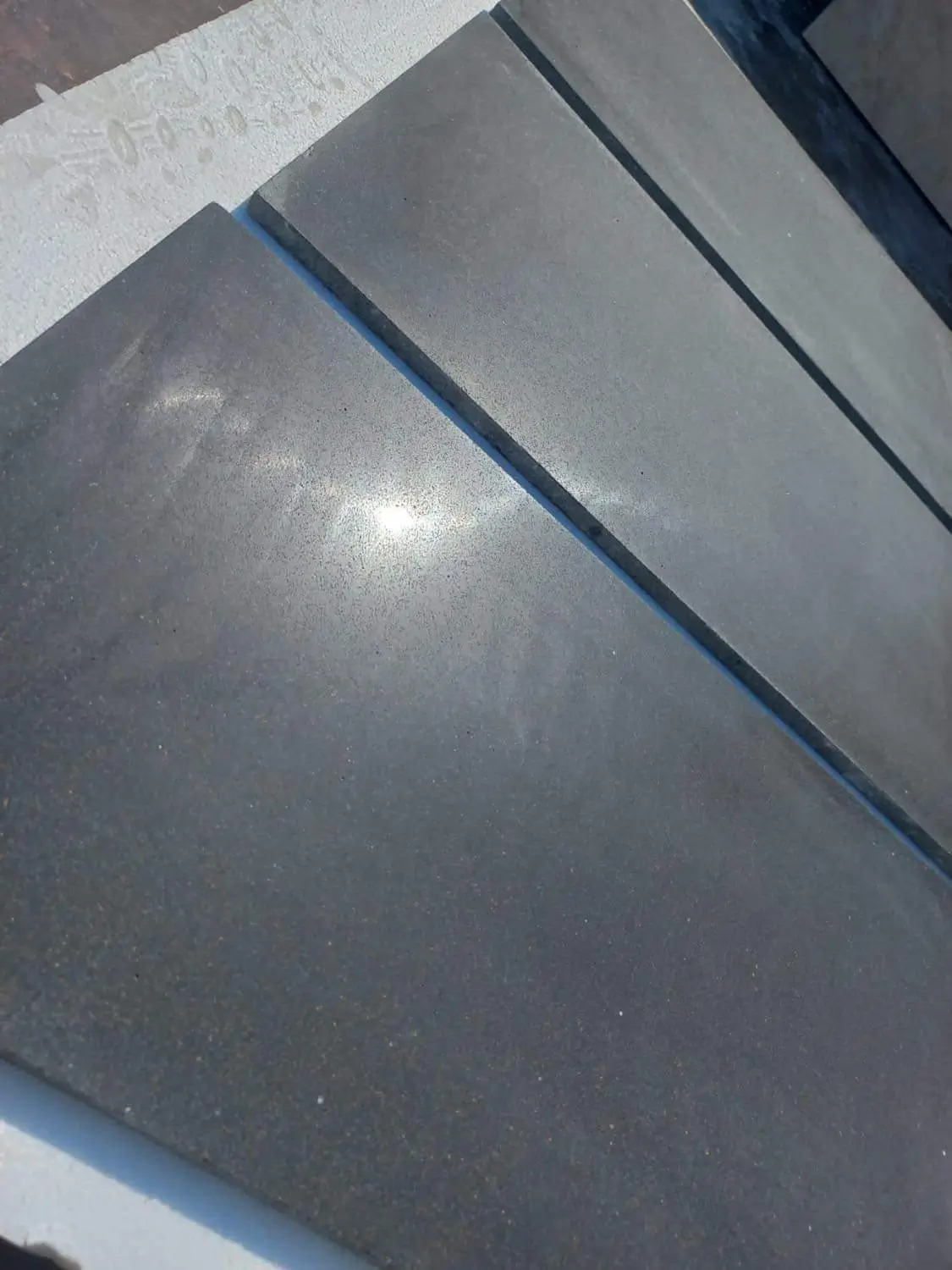
Permeable driveway designs using open-jointed limestone pavers are gaining traction as stormwater management becomes a project requirement in more jurisdictions. The concept is straightforward: wider joints — typically 3/4 inch to 1.5 inches — filled with washed angular aggregate rather than polymeric sand allow surface water to pass through the paving plane into a sub-base reservoir layer below. The ASLA driveway paving material guidance outlines the base system design considerations for permeable stone installations, including aggregate gradation requirements that determine infiltration capacity.
Your limestone selection for a permeable layout should prioritize formats with consistent thickness — irregular flagstones tend to create uneven joint widths that defeat the drainage geometry. Cut stone at 2.5 to 3 inches nominal thickness works best here. The trade-off to manage is that open joints collect fine debris over time, reducing infiltration rates. A flush-cleaning with a garden hose every season keeps the joint aggregate clear in most conditions.
8. Large-Format Slab Driveways
Large-format limestone slabs — think 36×48 inches or larger — create a dramatically clean driveway surface with minimal joint lines. The design reads as contemporary and confident, particularly when paired with a honed or brushed finish rather than a split face. Close attention to base preparation is essential for large formats: any differential settlement across a 4-foot stone reads as a visible step at the joint, while a smaller module distributes the same settlement across multiple stones and disguises it.
- Sub-base compaction to 98% modified Proctor is essential — no shortcuts for large-format installations
- Mortar bed thickness should stay consistent at 1 to 1.5 inches — thicker beds allow more bedding variation, which translates to lippage
- Thermal movement in a 48-inch stone run is approximately 0.025 inches per 10°F change — manageable but worth calculating for your project’s annual temperature range
- Crane or mechanical placement equipment may be required for slabs above 200 lbs — confirm truck access to the site before scheduling delivery
9. Mixed-Material Approaches
Limestone driveway ideas don’t have to be limited to a single material. Combining limestone pavers with a complementary hardscape element — cobblestone channels, granite border setts, or a poured concrete structural band — expands the design vocabulary considerably. The practical rule when combining materials: keep the limestone and any adjacent stone species in separate thermal expansion zones with a flexible joint between them. This joint absorbs differential movement and prevents the harder material from imposing stress on the softer one.
Cobblestone drainage channels in a contrasting limestone tone are particularly effective at driveway aprons, where they both define the edge and manage surface runoff. A channel width of 12 to 18 inches handles typical residential runoff volumes without requiring a formal catch basin.
Professional Summary
The best limestone driveway ideas share a common thread: they’re designed with the full performance picture in mind, not just the visual outcome. Surface finish, format size, joint width, base preparation, sealer selection, and thermal expansion accommodation all interact — getting one element wrong can compromise an otherwise well-specified project. Verify warehouse stock availability before locking in your project schedule, since lead times on specialty limestone formats can extend your timeline if inventory isn’t confirmed upfront.
For your installation phase, the joint and base decisions you make before the first stone goes down are more consequential than the stone selection itself. Once you’ve confirmed your material, the next step is understanding the laying methodology in detail. For practical guidance on the installation process, laying limestone pavers correctly covers the field techniques that separate a durable outcome from a remediation job. Stone for nationwide projects from Citadel Stone lets you turn limestone driveway ideas into finished layouts with matched color batches.
Related reading: black rocks for driveway · Driveway Limestone: A Complete Buyer’s Guide · crushed limestone for driveway.