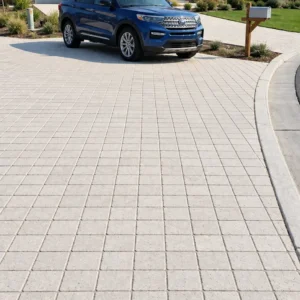
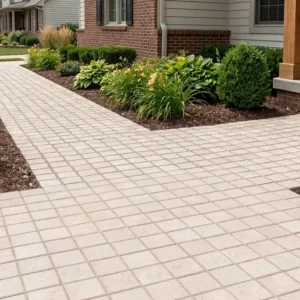
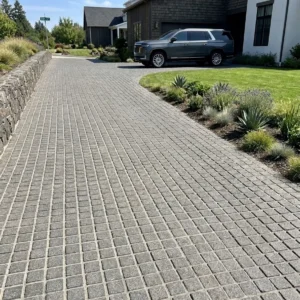
Black rocks for driveway applications carry a performance trade-off that most buyers don’t fully evaluate until after installation: the relationship between surface absorptivity, long-term color retention, and weed pressure in the gaps. These aren’t minor cosmetic concerns — they directly affect whether your driveway looks sharp in year three or becomes a maintenance headache you didn’t plan for. Understanding the real-world behavior of dark aggregate and black slate pavers before you commit saves you from costly corrective work later.
Heat Absorption: What the Numbers Actually Mean
Dark stone surfaces absorb 85–95% of solar radiation compared to 30–50% for light-colored alternatives. For black rocks for driveway use, that translates to surface temperatures that can exceed 160°F on peak summer days. That thermal load matters in two ways: it radiates back toward the house and any adjacent landscaping, and it accelerates the breakdown of any polymeric joint sand or weed barrier fabric beneath the material.
The thermal mass effect works in your favor in cooler months — stored heat helps melt frost faster. But in sustained heat, you’re looking at a surface that stays hot well into the evening. Field performance data shows that black driveway stone in exposed, south-facing orientations can run 30–45°F hotter than equivalent light-gray surfaces at peak afternoon hours. According to NSI natural stone variety specifications, material density and surface finish both play significant roles in thermal behavior — a honed surface runs slightly cooler than a rough-split face because of its reduced air-pocket absorption.
Fading and Color Stability in Dark Aggregate
Color fading is the complaint that catches most homeowners off guard. Black rocks for driveway surfaces don’t typically bleach to white — they shift toward a washed-out charcoal gray, which can look uneven and tired within three to five years if left unsealed. The mechanism behind this is UV oxidation acting on the iron and manganese minerals that give dark stone its depth.
Basalt holds color better than most dark alternatives because it’s an igneous rock with uniform mineral distribution throughout, meaning UV oxidation affects the surface layer without changing the overall character of the stone. Black slate pavers are more vulnerable — the layered metamorphic structure means that surface delamination and surface oxidation can work together, creating an uneven patchy appearance faster than you’d see with basalt or dark limestone.
- Basalt: highest UV color stability, dense mineral structure resists surface oxidation
- Dark limestone: moderate fading risk, responds well to penetrating sealer applied every 2–3 years
- Black slate pavers: highest fading and delamination risk in exposed driveway conditions, requires regular sealing and inspection
- Honed finishes on any dark stone tend to show fading less than split-face finishes because the surface layer is denser
Your sealing protocol matters more with dark stone than with lighter alternatives. A quality penetrating impregnator — not a topical coating — applied before first use and refreshed every 24–36 months will preserve color depth and reduce the surface bleaching effect significantly. Topical coatings look rich initially but tend to peel under driveway traffic, creating a worse visual outcome than no sealer at all.
Weed Pressure and Joint Management
The weed problem with black rocks for driveway installations is more nuanced than most guides suggest. Loose aggregate installations — where material is spread in bulk without a set base — create perfect germination conditions: warmth from the dark surface below, organic matter that accumulates in gaps, and moisture that gets trapped between irregular pieces. The irony is that the thermal mass of dark stone that helps in winter actively promotes weed germination in spring by warming the soil below earlier in the season.
Pavers black in color installed with tight joints and polymeric sand perform far better for weed suppression than loose aggregate. The key is keeping joint sand at 90–95% fill capacity — voids allow weed seeds to find purchase and organic debris to accumulate. Inspect joints annually and top up polymeric sand wherever settlement has created gaps. For loose black rock installations, a heavy-duty landscape fabric rated at 4–6 oz/sq yd (not the lightweight 2 oz material sold in big-box stores) under a minimum 3-inch material depth gives you the most effective weed barrier.
- Minimum 3 inches of loose aggregate depth over heavy landscape fabric for weed suppression
- Polymeric sand in paver joints must be maintained at 90–95% fill capacity
- Annual inspection of joint integrity prevents weed colonization before it becomes established
- Edge restraints prevent lateral migration that opens gaps for weed establishment
- Avoid organic mulch layers beneath or adjacent to dark aggregate — they accelerate seed bank buildup
Subgrade and Soil Conditions That Affect Dark Stone Driveways
Your subgrade is the variable that determines whether a dark stone driveway holds its geometry for 20 years or begins showing settlement and edge failure within three. Expansive clay soils are the most common subgrade problem across a wide range of geographic regions — clay swells when wet and contracts when dry, creating cyclical movement that works paver joints loose and shifts base material. A well-compacted crushed aggregate base of 6–8 inches minimum over a geotextile separator layer is the correct response to clay subgrade, not just the standard 4-inch base that works adequately on stable ground.
Sandy or gravelly native soils present a different challenge: they drain well, which is positive, but they don’t provide lateral resistance for edge restraints and can allow base material to migrate downward over time. Here, a cement-stabilized base layer or a granular base compacted to 98% Proctor density gives the long-term stability that loose sandy subgrade alone cannot provide. For installations on caliche subgrade — that calcium carbonate hardpan layer common in arid regions — drainage must be addressed carefully because caliche creates perched water tables that can destabilize even well-compacted bases above it.
The thermal cycling that black driveway stone experiences amplifies whatever subgrade instability exists beneath it. Hot surfaces expand during the day and contract at night, and those micro-movements transfer through the base to the subgrade. On stable, well-compacted subgrade, this is a non-issue. On expansive clay or poorly compacted fill, it accelerates joint opening and edge failure. Get the subgrade right before you specify the stone — it’s a cheaper fix at that stage than after the driveway is laid. For deeper guidance on material selection for driveway installations, explore our limestone rock driveway materials, which covers base requirements alongside material options.
Limestone as a Performance Alternative
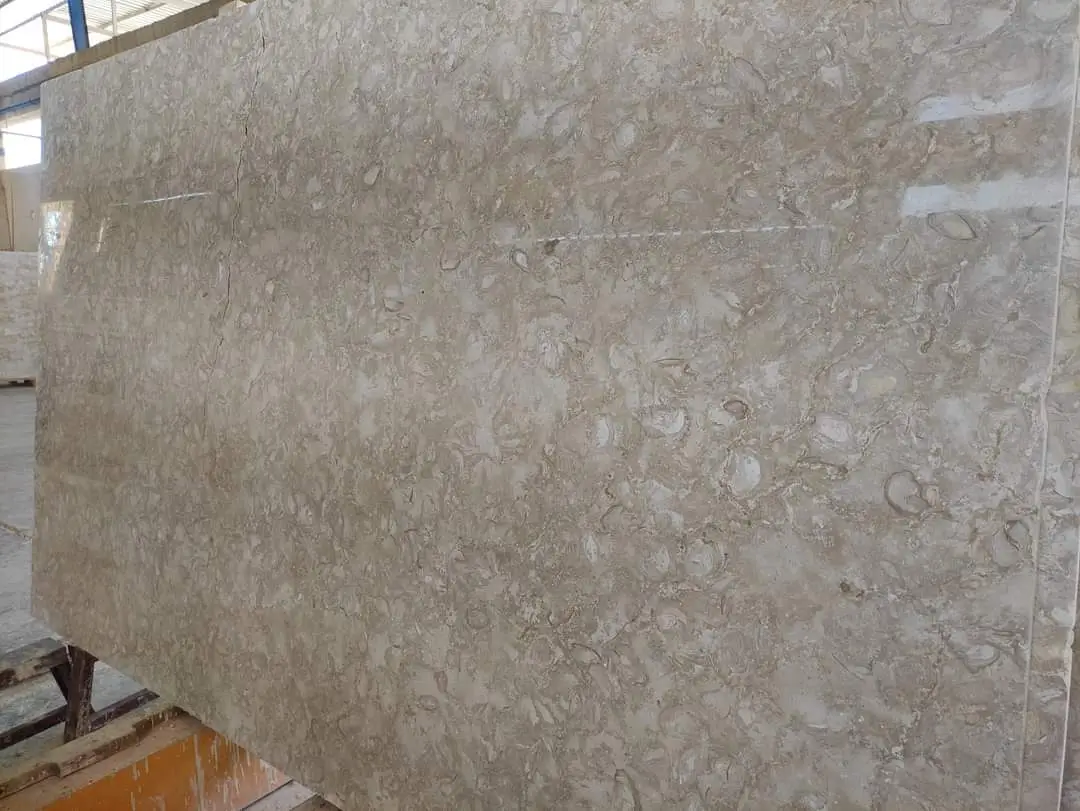
Limestone rock driveway installations in darker tones — charcoal limestone, blue-grey limestone — offer a practical middle ground for buyers who want the visual weight of dark stone without the thermal extremes of true black aggregate. Dark limestone absorbs significantly less heat than basalt or black slate pavers, running 15–25°F cooler at peak conditions while still delivering the aesthetic depth that makes dark driveways appealing.
According to USGS geological data on limestone composition, limestone’s calcium carbonate structure gives it a slightly higher reflectance than igneous dark stone, which is the physical reason it runs cooler. The practical implication is that a charcoal or blue-grey limestone driveway reduces the heat-island effect on your immediate property more effectively than a true black basalt or black slate surface. For high-traffic applications, look for limestone with a compressive strength above 8,000 PSI — softer limestone grades with compressive strength below 4,000 PSI will show vehicle-load wear within a few years on driveways that carry regular traffic.
At Citadel Stone, we source dark limestone directly and run quality assessments on density and surface finish consistency before it reaches warehouse stock — the variation in color uniformity across a pallet is something you want to verify before installation, not after the material is laid. Warehouse availability on darker limestone grades can fluctuate seasonally, so confirming stock before your project schedule is locked in avoids the delays that come with waiting on a fresh import cycle.
Surface Finish and Slip Resistance
Finish selection for black rocks for driveway applications isn’t purely aesthetic — it directly affects traction, especially on steeper grades or in regions with frequent rain. Rough-split and natural-cleft finishes provide the highest slip resistance but are harder to sweep clean and accumulate organic debris in their surface texture faster. Honed finishes look sharper and are easier to maintain, but on any grade steeper than 3%, you should verify slip resistance ratings before specifying them.
The relevant benchmark is the minimum wet DCOF of 0.42 that ANSI A326.3 sets for level wet surfaces. Request the wet DCOF test report for the finish you specify rather than assuming a textured finish clears it. Honed black slate pavers and polished basalt can fall below it when wet, which creates a genuine safety risk on inclined surfaces. Flame-textured or bush-hammered finishes on basalt are the best option when you need the dark aesthetic with reliable wet traction.
- Natural-cleft finish: highest traction, harder to maintain cleanliness
- Honed finish: sharp appearance, verify DCOF above 0.42 for any grade above flat
- Flame-textured basalt: best combination of dark aesthetic and wet traction
- Bush-hammered finish: good traction, uniform texture works well for paver formats
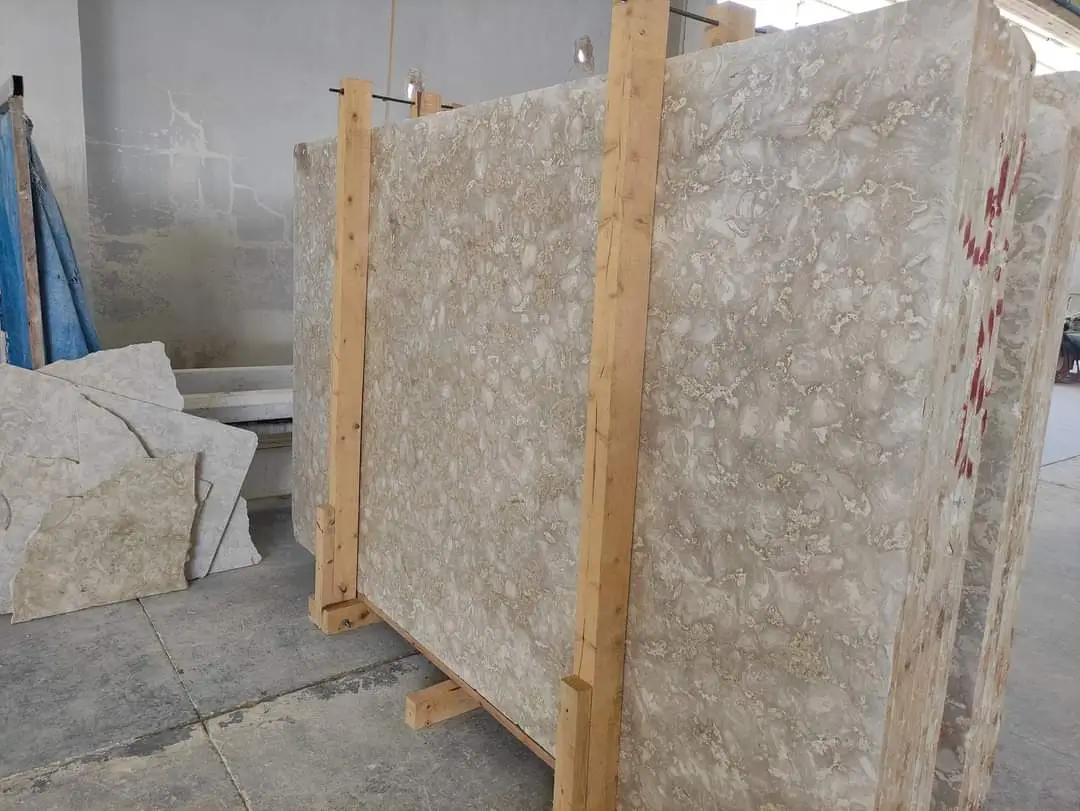
Ordering, Logistics, and Project Planning
Dark aggregate and pavers black in color are not always stocked in the same depth as standard grey or buff stone. Your project planning should account for warehouse lead times — typically 1–2 weeks for in-stock material, but 6–8 weeks if the specific grade or format requires an import order. Locking in material quantities early and confirming truck delivery access to your site avoids the schedule compression that forces compromises on material quality or format consistency.
Calculate your tonnage requirements accurately before ordering. Loose black rocks for driveway coverage typically run 1 ton per 80–100 square feet at a 3-inch depth for standard-sized aggregate. For paver formats, your installer’s waste factor should be 8–10% for rectangular cuts and 12–15% for any pattern with diagonal joints. Citadel Stone’s team can work through quantity calculations with you directly — it’s a step that prevents the short-order problem that happens when a second delivery lot doesn’t match the color of the first.
Truck access to your site affects more than just scheduling. Heavy aggregate deliveries via dump truck require a stable access route — soft shoulder approaches or steep grade changes at the entry can limit what delivery configuration works. Communicate your site constraints when ordering so the delivery method is matched to your access conditions from the start.
Making Dark Driveway Stone Work for Your Project
Black rocks for driveway projects deliver a distinctive, high-contrast aesthetic that genuinely holds its appeal — but the performance variables around heat, fading, and weed pressure require deliberate specification decisions, not afterthoughts. Your material choice, finish selection, base preparation, subgrade assessment, and sealing protocol all interact. Getting one element right while overlooking another is the pattern that produces the disappointing 5-year outcomes that give dark driveway stone an undeserved bad reputation. For projects where the dark aesthetic is a priority but thermal performance is a concern, reviewing limestone driveway grades and performance will give you a direct comparison worth factoring into your final specification. Dark driveway aggregate is known to absorb significantly more radiant heat than lighter limestone alternatives — a practical consideration that Citadel Stone highlights for buyers in sun-heavy climates.
Related reading: crushed limestone walkway ideas · crushed limestone driveway pros and cons · crushed limestone driveway cost.