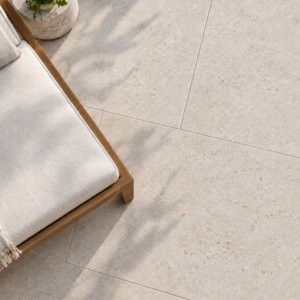
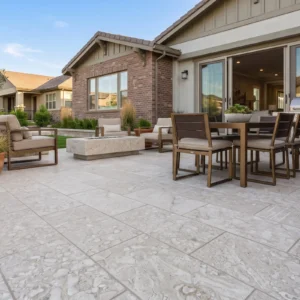
Limestone driveway grades aren’t interchangeable — and the gap between a well-specified grade and a poor one shows up within the first winter or the first heavy rain, not years down the road. The best limestone for driveway applications depends on a combination of load requirements, compaction characteristics, drainage design, and how you intend the surface to look and behave over time. Getting that selection right means understanding how each grade behaves structurally, not just what it’s called.
Why Limestone Grade Is the First Decision You Make
Your base and surface layer choices set every other driveway specification in motion. Choose a grade that’s too coarse for your compaction method and you’ll end up with a loose, unstable surface that migrates under tire pressure. Choose one that’s too fine without managing drainage and you’ll deal with ponding, ruts, and early surface failure. Limestone is available in a range of grades — from large angular aggregate down to fine screenings — and each occupies a specific structural role.
The key variable most specifiers underestimate is angularity. Angular crushed limestone interlocks mechanically when compacted, which is fundamentally different from rounded river gravel that shifts under load. For driveways carrying regular vehicle traffic, that interlock is what holds the surface together between compaction events. According to NSI limestone technical properties, crushed limestone’s angular particle geometry creates significant mechanical stability advantages over rounded aggregate in load-bearing applications.
You’ll also want to account for your base layers separately from your finish layer. A properly engineered driveway typically uses a coarser grade at depth for load distribution and a finer grade on top for surface stability and rideability. That layered approach is where most residential driveway specs fall short — single-grade installations may compact adequately at first but lose structural integrity faster under cyclic loading.
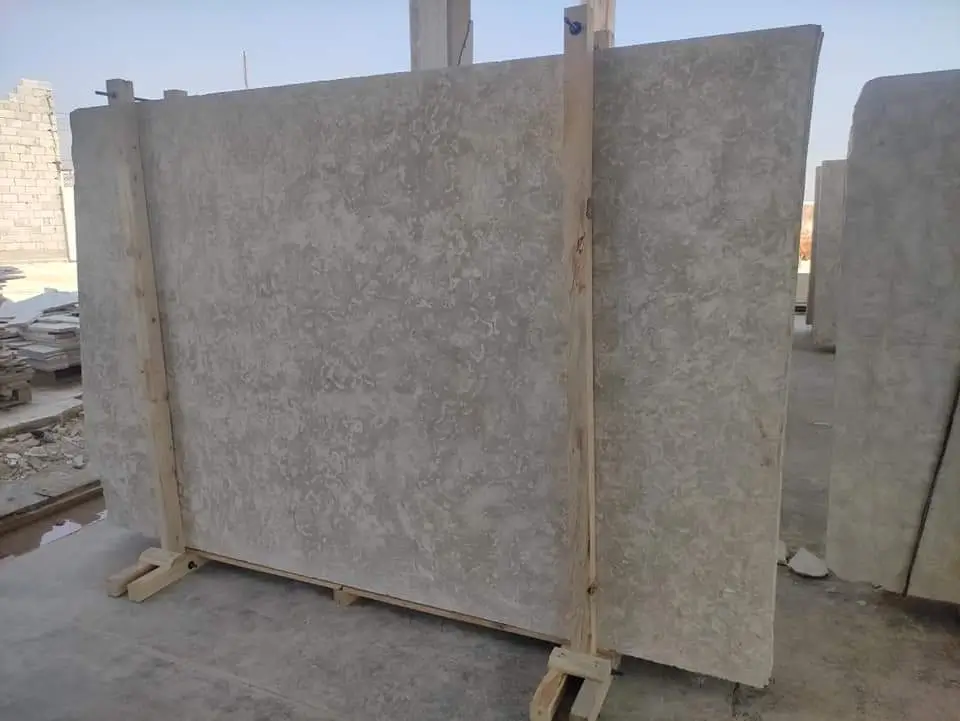
610 Limestone: The Driveway Workhorse Grade
610 limestone — sometimes called processed gravel or road base — is the most commonly specified grade for residential and light commercial driveways, and for good reason. It’s a blend of crushed limestone aggregate ranging from ¾-inch down to fine dust, and that gradation is exactly what makes it perform so well under compaction.
The dust fraction in 610 acts as a binding agent, filling voids between larger particles and locking the matrix together once moisture is introduced and compaction pressure is applied. A properly compacted 610 base will behave almost like a low-grade concrete pad — firm underfoot, resistant to rutting, and stable under repeated vehicle loads. For a standard passenger vehicle driveway, a 4-inch compacted depth of 610 over a prepared subgrade handles normal loads without issue. Bump that to 6 inches for pickup trucks, SUVs, or any regular heavy vehicle access.
The limestone aggregate driveway built on 610 base is also one of the easiest to maintain. Surface replenishment is straightforward — you add material, wet it lightly, and re-compact. That’s not possible with asphalt or concrete, where surface damage requires more disruptive repair. For residential applications, that maintainability is a real long-term advantage. You can explore our 610 limestone driveway supply for gradation specifications and tonnage guidance for your project footprint.
When to Use #57 Limestone for Drainage Performance
Field experience with drainage-sensitive driveways consistently points to one grade when hydrology is the primary concern: #57 limestone. This open-graded aggregate, typically ¾ inch to 1 inch with minimal fines, allows water to pass through rapidly rather than holding it at the surface.
In freeze-thaw regions, that drainage capacity is critical. Water that ponds or saturates a compacted base freezes, expands, and heaves — and that heave breaks apart the surface matrix. An open-graded #57 installation manages water before it becomes a structural problem. The trade-off is that #57 doesn’t compact to the same rigid surface as 610 — it remains somewhat loose underfoot and requires edge restraints to prevent lateral migration.
- #57 limestone suits driveways where surface water management outweighs surface firmness requirements
- Edge restraints — timber, concrete curb, or steel edging — are mandatory for #57 installations to prevent spreading
- Layer depth for #57 should be a minimum of 4 inches, ideally 6 inches in high-infiltration scenarios
- Geotextile fabric beneath the #57 layer prevents fines migration from the subgrade into the aggregate
- Annual raking and occasional top-dressing maintain the surface level over time
The limestone screenings driveway approach uses the fine end of the gradation spectrum — particles under ¼ inch — and behaves differently again. Screenings compact to a near-solid surface when properly installed but are highly susceptible to erosion on any slope greater than 3%. Use them only on near-flat sites or as a top-dressing cap over a coarser base layer.
Grade Comparison: What Each Limestone Type Actually Delivers
Comparing limestone grades side by side clarifies the performance trade-offs quickly. Here’s how the common driveway grades stack up across the factors that matter most for long-term performance.
- 610 limestone: best all-around compaction, high surface stability, suits most residential driveways, moderate drainage, widely available
- #57 limestone: excellent drainage, open-graded structure, lower surface firmness, requires edge restraint, ideal for high-infiltration sites
- #8 limestone (⅜-inch chip): fine surface texture, good for top-dressing and decorative finish layers, compacts well but erodes faster under concentrated flow
- Limestone screenings: finest gradation, very firm when compacted on flat sites, prone to dust in dry weather and erosion on grade, best used as a thin cap layer
- #4 crushed limestone (1.5–2.5 inch): coarse base material for deep fill and poor subgrade stabilization, not a finish layer option
The 610 limestone driveway grade remains the first choice for most projects because it delivers structural stability and reasonable drainage in a single material. That simplicity — one grade, one compaction pass, predictable results — is worth a lot when you’re managing a project timeline. According to USGS limestone composition and construction data, limestone’s calcium carbonate composition and hardness characteristics make it one of the most durable aggregate materials for high-traffic surface applications.
UV Exposure and Long-Term Surface Appearance
Most driveway stone discussions skip UV exposure entirely because crushed limestone isn’t a decorative tile — but for projects where the driveway surface appearance matters, sun exposure has a measurable effect on limestone over time. Exposed limestone surfaces lighten progressively under sustained UV, not through degradation of the stone itself, but through oxidation of surface minerals and the breakdown of any organic residue that migrates from surrounding soil.
For decorative limestone driveway installations — particularly light-colored or white-tone limestone — you’ll notice surface color shift within the first year of full sun exposure. This is largely cosmetic, but if you’re matching an existing hardscape or maintaining a consistent aesthetic, it’s worth factoring into your material selection. Darker limestone grades, which tend to be higher in iron and clay mineral content, show UV-related lightening more visibly than naturally pale grades.
- Penetrating sealers rated for UV stabilization significantly slow the surface oxidation process on decorative limestone driveway applications
- Sealing schedules for sun-exposed limestone surfaces typically run every 2–3 years depending on UV intensity and traffic volume
- Honed or natural-cleft finishes on limestone driveway pavers retain appearance better under UV than polished finishes, which show chalking more visibly
- A lightly textured surface finish also provides better traction across all weather conditions — an advantage that compounds with UV-related surface wear over time
For crushed and aggregate limestone driveways rather than paved limestone surfaces, UV’s primary effect is surface bleaching of the top layer, which is visually neutral to most applications. Where it matters most is in limestone paver driveways, where the aesthetic investment is higher and sealing protocols carry real maintenance value.
Base Preparation: Where Driveway Longevity Is Actually Determined
Your limestone grade selection matters — but your base preparation determines whether that grade performs for 8 years or 25. This is where most residential driveway installations cut corners, and where field performance diverges most dramatically from specification intent.
Subgrade compaction is the non-negotiable starting point. Before any limestone goes down, the native soil must be compacted to a minimum of 95% standard Proctor density. In clay-heavy soils, that means addressing moisture content first — compacting wet clay locks in expansion potential that will displace your base layers during the next dry season. In sandy or loose subgrades, a stabilizing geotextile layer before your base aggregate prevents differential settlement over time.
- Minimum 4-inch compacted base depth for light residential use; 6–8 inches for heavy vehicles or frequent truck access
- Compact in lifts of no more than 3 inches loose depth — attempting to compact thicker lifts produces a surface crust with an unconsolidated layer beneath it
- Moisture content at compaction should be within 2% of optimum — too dry and particles won’t bind, too wet and you’re compacting mud
- Edge restraints installed before finish layer application prevent lateral creep under load, particularly critical for screenings and open-graded grades
- Crown your driveway surface at 2% minimum cross-slope to direct water to edges rather than into the base
The interaction between your limestone grade and subgrade soil type affects long-term performance more than any other variable. On expansive clay subgrades, even a perfectly specified 610 limestone aggregate driveway will heave if the subgrade isn’t stabilized. On well-drained sandy subgrades, even a lighter-duty installation will hold up for decades. Know your soil before you specify your depth.

Calculating Tonnage: Getting the Numbers Right Before You Order
Tonnage errors are the most common and most expensive mistake in limestone driveway projects. Under-ordering means a second truck delivery, additional mobilization cost, and a gap in your project timeline. Over-ordering means excess material to dispose of or stockpile. Neither outcome is acceptable on a well-managed project.
Crushed limestone weighs approximately 1.4 to 1.5 tons per cubic yard in its loose state — slightly denser once compacted. A standard formula: multiply your driveway area in square feet by your intended depth in inches, divide by 12 to get cubic feet, divide by 27 for cubic yards, then multiply by 1.45 for tons. That gives you a working estimate. Add 10–15% overage for waste, compaction loss, and edge spillage.
Your truck access also affects your delivery logistics. A standard aggregate delivery truck carries 12–15 tons, which covers roughly 800–1,000 square feet at a 4-inch compacted depth. Longer driveways or those requiring deeper base depths will need multiple loads. Confirm your truck access width and overhead clearance before scheduling — overhanging branches and tight gate entrances cause delivery delays that cascade through project timelines. At Citadel Stone, we review project dimensions before confirming orders to help you avoid under- or over-specifying tonnage based on our warehouse stock and delivery logistics.
Limestone Driveway Pavers: When Aggregate Isn’t Enough
Aggregate limestone handles most residential driveway applications well — but some projects call for a paved limestone driveway surface rather than a compacted aggregate one. Formal entry drives, high-value properties, and applications where long-term aesthetics carry weight all benefit from considering limestone driveway pavers as the finish layer over a well-prepared compacted base.
Limestone pavers in driveway applications should be specified at a minimum 2-inch thickness for standard passenger vehicle loads, and 2.5 to 3 inches for any application that will see truck or heavy SUV traffic. Pavers thinner than 2 inches will crack under point loads regardless of how well the base is prepared — the stone simply doesn’t have the section depth to distribute the load laterally. According to ASLA driveway paving material guidance, permeable stone paving systems — including open-jointed limestone pavers — provide both structural performance and environmental drainage benefits when properly installed over free-draining base material.
The natural stone driveway paver surface also presents the UV exposure and sealing considerations discussed earlier in a more visible way. You’ll want to apply a penetrating sealer to limestone driveway pavers within 30 days of installation and maintain a 2–3 year resealing schedule for sun-exposed surfaces. The Britannica reference on limestone formation and characteristics confirms that limestone’s calcium carbonate matrix is susceptible to both acid etching and UV-related surface mineral changes over time — sealing slows both processes significantly.
Selecting the Best Limestone for Driveway Projects: Final Specification Guidance
The best limestone for driveway projects isn’t a single grade — it’s the right grade for your specific conditions, load requirements, and drainage design. 610 limestone delivers reliable all-purpose performance for most residential applications. #57 serves drainage-critical sites where water management is the primary concern. Screenings work as a fine cap on flat, low-traffic surfaces. Limestone pavers elevate the application when aesthetics and long-term appearance justify the investment. Run your subgrade assessment first, calculate your tonnage with the 10–15% overage buffer, and confirm truck access before scheduling delivery. Citadel Stone maintains consistent warehouse inventory across these grades, which means lead times are typically in the 1–2 week range rather than the extended import cycles you’d face with specialty materials. For stone project planning that extends beyond the driveway, crushed limestone walkway applications offer another dimension of natural stone hardscape worth considering alongside your driveway specification. In wetter climates, open-graded #57 limestone is generally preferred for drainage, while arid regions often favor compacted screenings — Citadel Stone stocks both for that reason.
Related reading: crushed limestone driveway cost · limestone size for driveway · How to Install a Crushed Limestone Driveway.