

Not all types of limestone rock for edging perform the same way — and the failure mode that shows up most often isn’t structural cracking, it’s differential settlement caused by mismatched density and base preparation. You’ll see installations where the edging stones shift unevenly within the first two seasons, not because the stone was weak, but because the buyer selected a porous, high-absorption variety and set it directly into unstable subgrade without compensating for vertical movement. Understanding which type of limestone rock suits your specific edging application — and why — is what separates a clean, lasting border from a recurring maintenance headache.
Why Limestone Type Matters for Edging
The term “limestone” covers a wide range of rock types, and their performance as edging material varies significantly depending on formation age, grain structure, and carbonate content. Dense, fine-grained limestone behaves almost like a low-grade marble under load — it resists chipping, holds a crisp edge profile, and weathers slowly. Coarser, more porous varieties absorb moisture readily, which accelerates spalling in freeze-thaw regions and can cause surface scaling within just a few years if left unsealed.
Your edging application matters too. Garden bed borders operate under completely different load and drainage conditions than driveway edging or hardscape transition strips. Each demands a different limestone specification, and the variety you choose should match the performance profile of your project — not just the aesthetic.
According to Natural Stone Institute limestone technical specifications, absorption rates across commercially available limestone range from under 1% to above 7% by weight — a sevenfold difference that has direct implications for freeze-thaw durability and long-term surface integrity in edging applications.
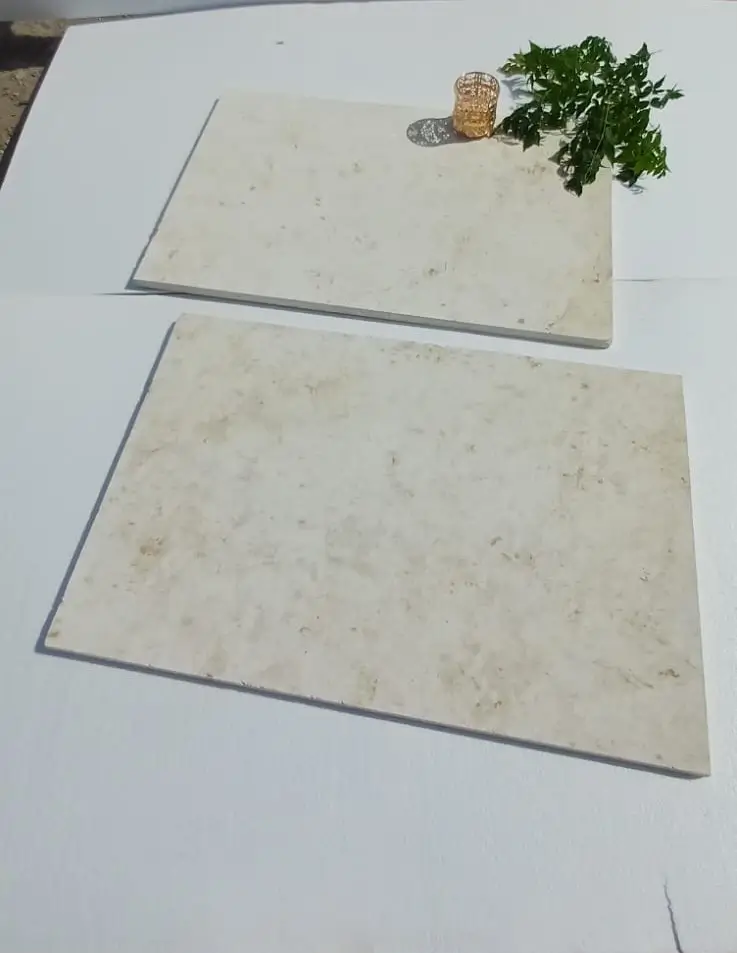
Dense Crystalline Limestone: The High-Performance Standard
Dense crystalline limestone sits at the top of the performance spectrum for edging use. Formed under sustained geological pressure, this type of limestone rock develops interlocked calcite crystals with minimal void space — typically less than 2% porosity by volume. The result is a material that handles both lateral load from soil pressure and vertical load from foot traffic without deforming or chipping at the edge profile.
This variety appears most often in formal garden edging, driveway borders, and hardscape perimeters where a sharp, consistent edge line is critical. It cuts cleanly, holds dimensional tolerances well, and resists the micro-fracturing that causes softer limestone varieties to crumble at corners over time.
- Porosity typically below 2% — well-suited for freeze-thaw exposed installations
- Compressive strength commonly exceeds 10,000 PSI, comparable to mid-grade concrete
- Smooth, dense surface accepts honed or natural-cleft finishes without compromising edge integrity
- Less susceptible to efflorescence because its low absorption limits moisture-driven salt migration
- Requires sharp tooling during cutting — standard masonry blades dull faster on dense crystalline varieties
The trade-off is weight and cost. Dense crystalline limestone is heavier per linear foot than its porous counterparts, which affects both truck delivery logistics and on-site handling. Factor this into your project planning early — a 200-linear-foot edging run using 4-inch by 12-inch dense limestone pieces will require significantly more physical labour to set than an equivalent run using a lighter, more porous variety.
Oolitic Limestone: Classic Texture, Specific Limitations
Oolitic limestone is the variety most people picture when they think of traditional natural stone edging — warm buff tones, slightly granular surface texture, and that characteristic soft-edged weathering profile that blends naturally into planted borders. Formed from tiny spherical carbonate grains, oolitic limestone has a uniformly grainy structure that gives it a distinctive visual appeal but also limits its performance in certain conditions.
The grain structure that makes oolitic limestone so visually appealing also makes it more vulnerable to surface abrasion and moisture penetration. Absorption rates for oolitic varieties commonly fall between 3% and 7%, which means water uptake in rainy seasons or irrigated beds can be substantial. In freeze-thaw regions, this becomes a real durability concern — the water that soaks into the stone expands upon freezing and progressively fractures the grain bonds, causing surface spalling that typically starts at the exposed top edge.
- Best suited for garden bed edging in mild climates or well-drained sites
- Apply a penetrating silane-siloxane sealer before installation to reduce absorption below 2%
- Avoid use as primary edging in areas with heavy foot traffic or vehicle overhang
- Warm buff and cream tones age gracefully in cottage and naturalistic garden styles
- Resealing every two to three years extends serviceable life considerably in humid environments
For limestone edging pavers in the oolitic category, selecting pieces with consistent grain density across the face matters more than most buyers realise. Reject any pieces with visible shell fragments or large void pockets — these are the first points of failure once moisture cycling begins.
How Quarry Origins Shape the Type of Limestone Rock You Receive
The region where limestone is quarried determines more about its performance than most specifications acknowledge. Limestone deposited in shallow marine environments tens of millions of years ago tends to be consistent in grain size and carbonate purity — ideal for edging applications that require dimensional predictability. Limestone from deeper or more geologically complex formations often contains clay mineral inclusions that weaken its freeze-thaw resistance significantly.
The question of where is limestone found intersects directly with performance for edging buyers. Domestic limestone quarries operating across different geological zones produce material with differing profiles — some yielding tight, dense stone, others producing softer, higher-porosity material that requires more careful application selection. At Citadel Stone, we evaluate stone at the quarry level, not just by visual inspection at the warehouse — because two pieces that look identical can behave very differently once they’re in the ground and subject to moisture cycling.
According to USGS limestone composition and construction applications, commercial limestone in the United States varies from nearly pure calcite formations to mixed carbonate-clay compositions — and that variation directly affects absorption behaviour, freeze-thaw performance, and surface durability in exposed edging applications.
- Pure calcite limestone (98%+ CaCO3) offers the tightest grain structure and lowest absorption
- Dolomitic limestone (high MgCO3 content) tends to be harder and more resistant to surface wear
- Argillaceous limestone (with clay mineral content) is more prone to delamination under freeze-thaw stress
- Always request a petrographic description or absorption test data from your supplier before specifying for edging use
Quarrying Limestone: Why It Affects What You Install
The process of quarrying limestone shapes the dimensional consistency and surface quality of edging pieces more directly than many buyers appreciate. Limestone quarried using wire-saw or diamond-blade cutting produces clean, flat faces with consistent thickness tolerances — typically within ±1/8 inch for commercial-grade material. Hand-split or guillotined limestone produces more natural, irregular face profiles that suit informal garden edging but make tight linear installations much harder to execute cleanly.
Quarrying limestone at different depths in the same quarry produces stone with measurably different density. Upper quarry layers, closer to the surface, typically show higher weathering and greater porosity — this is the material most likely to fail early in edging applications. Deeper quarry stone is generally denser, less porous, and more dimensionally stable. Reputable suppliers will identify the cut depth or grade tier in their specifications.
- Wire-saw cut limestone: tightest tolerances, best for formal linear edging runs
- Guillotined limestone: natural split face, suits informal or rustic edging styles
- Sawn-top, split-face edging: combines installation consistency with natural visual character
- Always confirm whether the material is full-quarry-run or graded — full-quarry-run includes upper-layer pieces that perform inconsistently
Browse our limestone edging stone selection to compare dimensional grades and surface finishes across the varieties we carry — each listing includes the formation type and recommended application context.
Soil and Ground Conditions: The Variable That Determines Long-Term Success
Your limestone edging can be perfectly specified and still fail within a few seasons if the subgrade isn’t addressed properly. This is the part of the installation most buyers skip over — and it’s where the real durability decisions happen.
Expansive clay soils are the single most destructive subgrade condition for natural stone edging. Clay expands significantly when saturated and contracts as it dries — that cycle of movement applies lateral and vertical pressure to edging stones that no surface specification can counteract. Limestone edging set directly into clay subgrade without a compacted aggregate base will shift, tilt, and heave within one to two seasons regardless of how dense or well-formed the stone itself is.
- In clay-heavy soils: excavate 6–8 inches below finish grade and install a compacted crushed stone base before setting edging
- Sandy soils offer better drainage but less lateral stability — use a bedding layer of compacted coarse sand or decomposed granite to prevent lateral drift
- Caliche-heavy subgrade in arid regions creates an almost impermeable hardpan — drainage must be managed carefully above the caliche layer to prevent water pooling at the base of edging
- Rocky or gravelly subgrade provides excellent stability but makes consistent depth control difficult — use a sand setting bed to fine-tune finished height
- Organic-rich soils near garden beds decompose over time, creating settlement voids under edging — always remove organic material and replace with compacted inorganic fill
Dense crystalline limestone edging tolerates subgrade movement better than porous varieties simply because it’s stiffer and less prone to internal fracturing when point loads concentrate at corners. Even the best stone won’t survive poorly prepared subgrade indefinitely — base preparation is the foundation of any lasting edging installation.
Grey and Buff Limestone: Choosing Between the Two Most Common Edging Tones
The two dominant colour groups in limestone edging — grey and buff — correspond to real geological differences, not just aesthetic preferences. Grey limestone typically indicates higher silica or clay mineral content, or a formation environment with less biological carbonate input. It tends to be harder and more resistant to surface abrasion than its buff counterparts. Buff limestone derives its warm tones from iron oxide minerals and often correlates with the oolitic formation type — which, as discussed earlier, carries specific performance considerations.
For landscape edging that transitions between paving and planted beds, buff limestone’s warmer tones integrate naturally with soil, mulch, and foliage. Grey limestone reads as more architectural and suits formal hardscape borders, driveway edging, and contemporary landscape styles where a cooler, more neutral palette is deliberate.
- Grey limestone: harder, more abrasion-resistant, suits high-traffic edging and driveway borders
- Buff limestone: warmer aesthetic, best in planted garden contexts with less mechanical stress
- Both tones weather naturally — grey limestone develops a silver patina, buff limestone mellows toward a pale cream
- Mixing tones within a single edging run creates visual inconsistency — order from a single warehouse batch to ensure colour uniformity across the full linear footage
Citadel Stone maintains consistent warehouse inventory across both grey and buff limestone edging grades, which matters more than it might seem — colour variation between batches from different quarry cuts can be significant, and sourcing your full order in a single consignment eliminates that risk entirely.
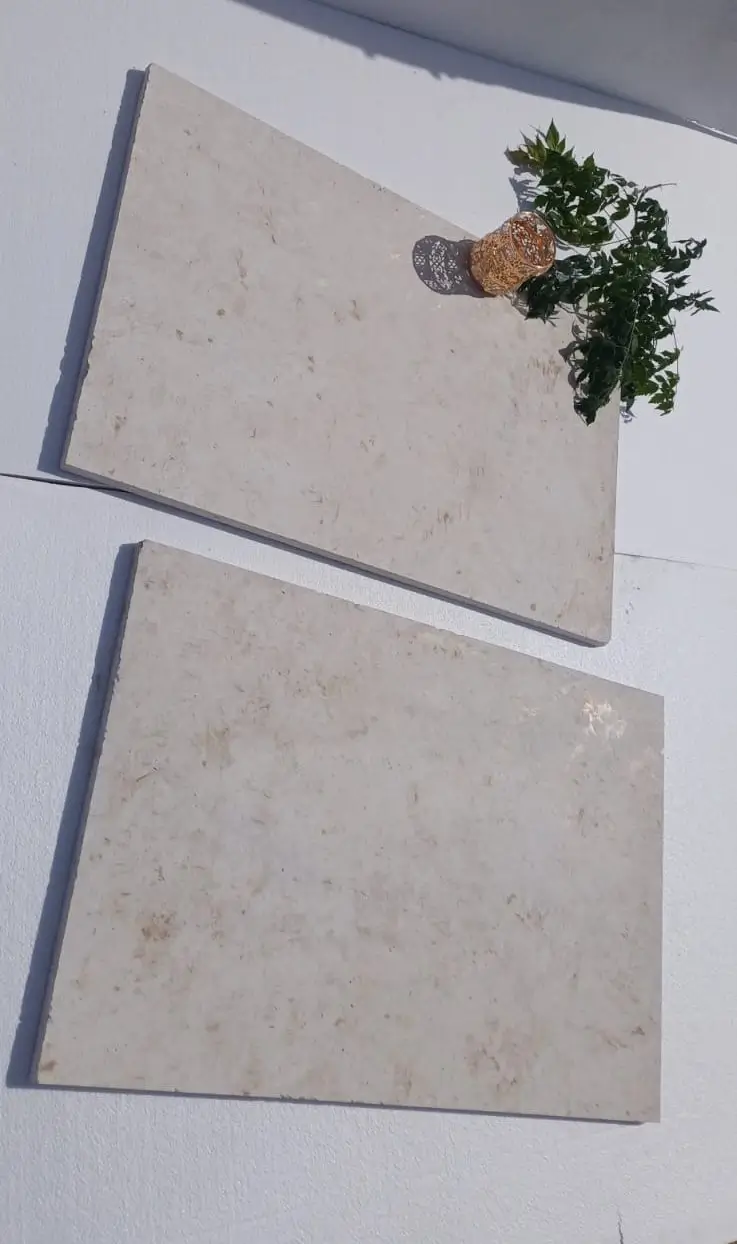
Thickness, Sizing, and Format: What the Spec Sheet Doesn’t Tell You
Standard limestone edging pieces come in nominal thicknesses ranging from 1.5 inches to 4 inches, and that range reflects genuinely different structural capacities. Thin-format edging (1.5–2 inches) works well for flush garden bed borders where the stone is primarily a visual and organisational element rather than a structural one. Thicker formats (3–4 inches) are appropriate where the edging functions as a retaining element, holds back mulch under slope conditions, or transitions between two hard surfaces at different elevations.
Length selection affects both the visual rhythm of the finished installation and the handling logistics on-site. Long pieces — 24 inches and above — create a cleaner, more architectural edge line but are heavier to set and more prone to cracking if the subgrade has even minor voids beneath mid-span. Shorter pieces — 12–18 inches — are more forgiving on uneven subgrade and easier to adjust during installation, but they create more visible joints that require careful alignment to look intentional rather than random.
- 1.5–2 inch thickness: appropriate for garden bed borders with stable subgrade and no lateral load
- 2.5–3 inch thickness: the most versatile format — handles light slope retention and moderate foot traffic at path edges
- 3.5–4 inch thickness: specify this for driveway edging, elevated bed retention, or wherever vehicle tyres might overhang the edge
- Lengths above 24 inches require a continuous, void-free bedding layer — any gaps under long pieces concentrate stress at mid-span
- Confirm actual dimensions, not nominal, before ordering — natural stone tolerance ranges mean nominal 2-inch pieces can vary from 1.75 to 2.25 inches
Truck delivery configuration matters here too — longer edging pieces (30 inches and above) need careful loading and unloading to prevent corner chipping during transport. Confirm with your supplier whether pieces are palletised individually or bulk-stacked, as bulk stacking of long thin limestone edging pieces consistently produces edge damage before the stone even reaches your site. Checking warehouse stock levels for your preferred thickness and length before finalising an order avoids the frustration of substituting formats mid-project.
Sealing and Maintenance by Limestone Type
The sealing protocol for limestone edging should be driven by the specific variety’s absorption rate — not a generic “seal all natural stone” recommendation. Dense crystalline limestone with sub-2% absorption may not require sealing at all in moderate climates, and applying a sealer to a very low-absorption surface can actually trap moisture beneath the sealer film rather than repelling it.
Oolitic and higher-porosity limestone varieties, on the other hand, genuinely need a penetrating silane-siloxane sealer applied before installation and renewed every two to three years. The penetrating formulation soaks into the pore structure and lines the internal channels without forming a surface film — which is critical for edging that sits partially buried, where a surface-film sealer would trap ground moisture rather than manage it.
- Dense crystalline limestone (sub-2% absorption): sealing optional in moderate climates, recommended in freeze-thaw regions
- Oolitic limestone (3–7% absorption): penetrating silane-siloxane sealer mandatory, applied to dry stone before installation
- All types: clean the stone surface with pH-neutral cleaner before sealing — alkaline or acidic cleaners etch carbonate surfaces and compromise sealer adhesion
- Reapplication schedule: test with a few drops of water annually — if water absorbs within 60 seconds rather than beading, the sealer needs renewal
- Never apply a topical acrylic or polyurethane sealer to buried or partially buried edging stone — it seals moisture in rather than out
According to Britannica’s overview of limestone formation and characteristics, the variable pore structure in limestone is a direct function of its depositional environment — understanding this helps explain why two visually similar pieces can behave so differently under the same sealing and maintenance regime.
Selecting the Right Types of Limestone Rock for Edging
Choosing among the types of limestone rock for edging comes down to matching formation type, absorption rate, and dimensional format to the specific demands of your installation — not just choosing a colour or price point. Dense crystalline varieties deliver the best long-term performance in high-stress applications, oolitic limestone suits informal garden contexts when properly sealed, and dolomitic limestone sits in a reliable middle ground for buyers who want durability without the premium weight of the densest grades. Subgrade preparation matters as much as the stone selection itself — clay expansion, sandy drift, and caliche hardpan each demand a different base approach that no surface specification can substitute for.
For buyers planning an edging project, it’s worth confirming warehouse stock levels before finalising quantities — natural stone edging is often available in limited pallet runs per colour batch, and ordering in stages from different batches introduces colour variation that’s difficult to manage aesthetically. As you develop your full landscape scope, the principles of level setting and long-term stability that apply to edging carry directly into flower bed borders as well — installing limestone flower bed edging correctly covers the base preparation and levelling techniques in more practical depth. Understanding grain density before purchasing is important, and Citadel Stone’s range allows buyers to match limestone geology directly to their climate and load requirements.
Related reading: curved limestone edging ideas · limestone stepping stones · bullnose limestone.