










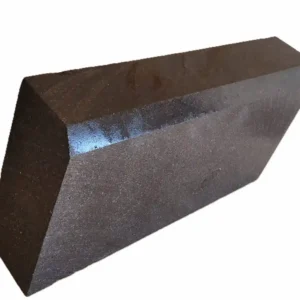
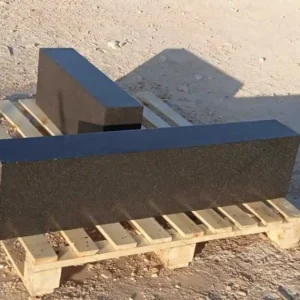

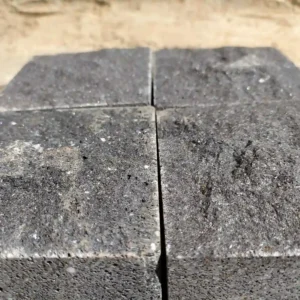







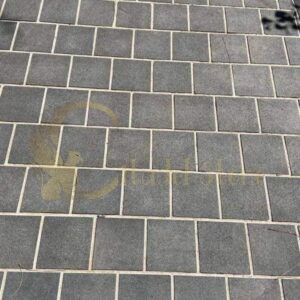

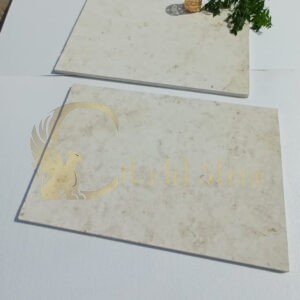
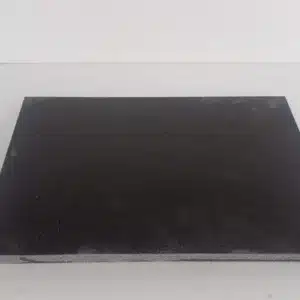
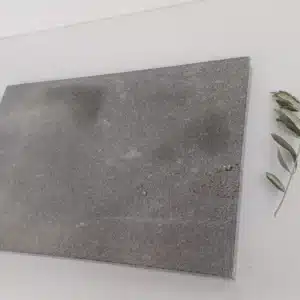





Granite driveway slabs in Arizona perform at an entirely different standard than most stone catalogs suggest — not because of peak summer heat, but because of what happens between 3 a.m. and 3 p.m. on a February day in the high desert. The thermal range across a single 24-hour period routinely exceeds 45°F in many Arizona communities, and that cycling — not any single temperature extreme — is what separates durable granite driveway slabs in Arizona from ones that start cracking at the joint lines within five years. Understanding how granite responds to that expansion-contraction rhythm is where real specification work begins.
How Thermal Cycling Shapes Granite Driveway Performance in Arizona
Granite’s thermal expansion coefficient sits between 4.4 and 5.1 × 10⁻⁶ per °F, which sounds abstract until you calculate what that means across a 24-inch slab experiencing a 50°F daily swing. You’re looking at linear movement in the range of 0.005 to 0.006 inches per slab face — small individually, but cumulative across a 40-foot driveway run. That’s why joint spacing of 12 to 15 feet is the professional standard for Arizona granite driveway installations, not the 20-foot spacing you’ll sometimes see in general concrete specifications.
The cycling itself is more structurally demanding than sustained heat. A slab that stays at 130°F all day is under static thermal stress. A slab that goes from 38°F pre-dawn to 88°F by early afternoon is experiencing dynamic fatigue — repeated micro-expansion and contraction at the crystal grain boundaries. In coarse-grained granites with larger feldspar and quartz crystals, this cycling gradually widens micro-fractures that weren’t visible at installation. You won’t see the result for three to four years, which is exactly when warranty conversations get uncomfortable.
- Select fine to medium-grained granite varieties for Arizona driveways — tighter crystal matrices resist thermal fatigue better than coarse-grained equivalents
- Specify a minimum 1.25-inch thickness for residential driveway applications; 1.5 inches where vehicle overhangs or heavy trucks are expected
- Thermal cycling demands flexible joint-fill compounds, not rigid mortar — polymeric sand rated for temperature ranges above 120°F surface temp is the minimum standard
- Granite’s low water absorption (typically below 0.4% by ASTM C97) limits freeze-thaw spalling even in Flagstaff elevations where overnight lows dip well below freezing
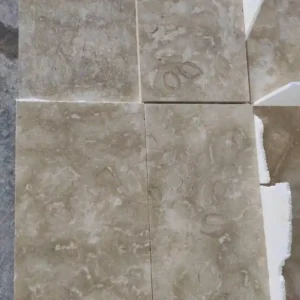
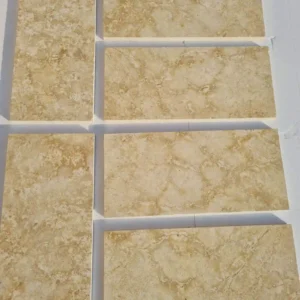
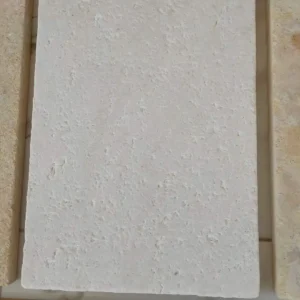
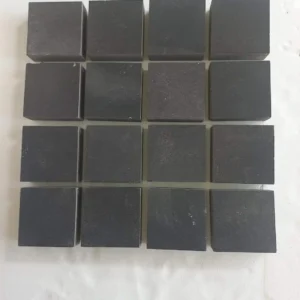
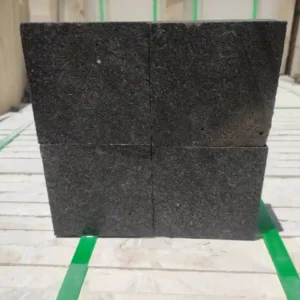
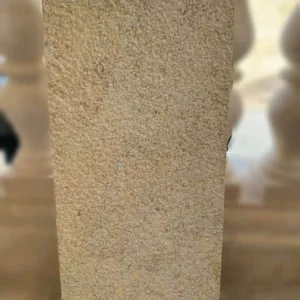
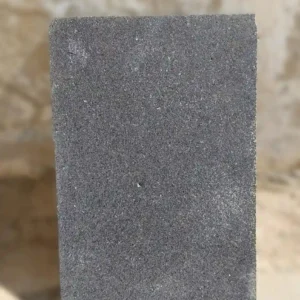
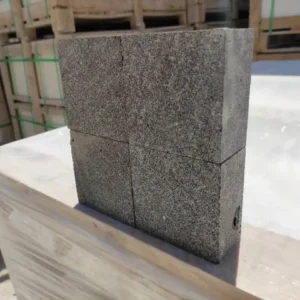
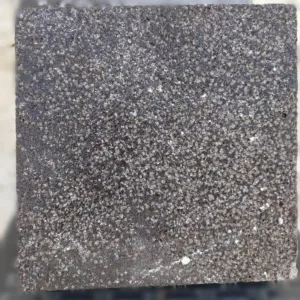
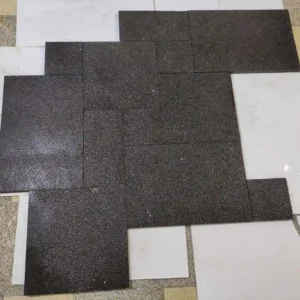
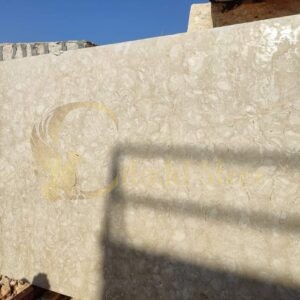
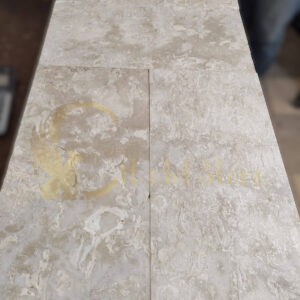
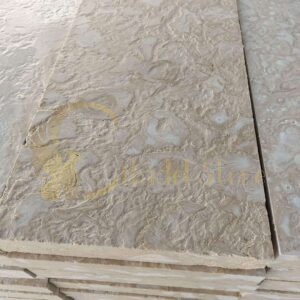
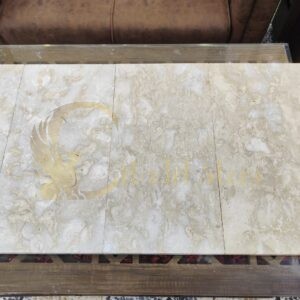
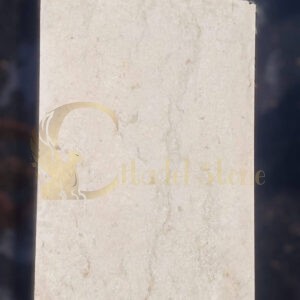
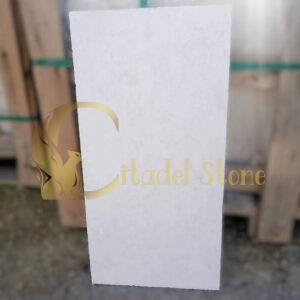
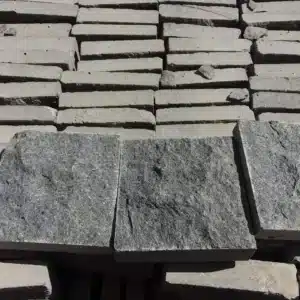
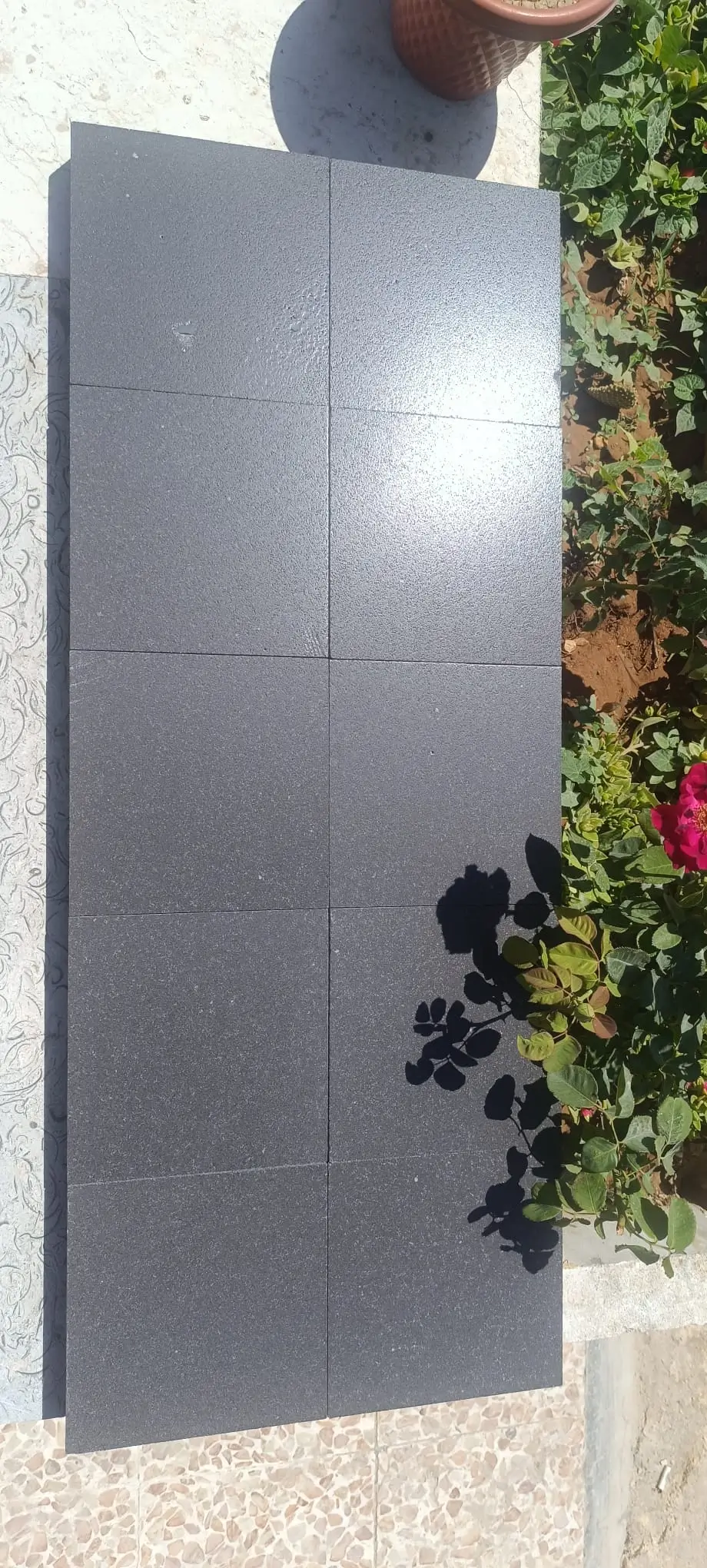
Citadel Stone stocks granite driveway slabs in standard formats including 24×24, 24×36, and irregular flagstone cuts, sourced from quarry partners whose material is tested for thermal stability across multi-cycle freeze-thaw protocols before warehouse inventory is accepted. You can request thickness specifications or material data sheets before committing to a quantity order.
Freeze-Thaw Cycles and Elevation: What Arizona’s Zones Actually Require
Most Arizona driveway specifications treat the state as a monolithic heat zone. That’s accurate for Phoenix and Mesa at low desert elevations, but it misses roughly a third of the state’s built environment. In Flagstaff, sitting at 6,900 feet, you’re specifying into a climate that delivers 100+ freeze-thaw cycles per year — conditions that would challenge even mid-grade limestone but that properly sourced granite handles with confidence, provided the base system is built for the moisture regime.
The freeze-thaw vulnerability in granite isn’t the stone face — it’s the joint and the substrate beneath it. Water infiltrating an improperly sealed joint freezes, expands by roughly 9% in volume, and applies upward hydraulic pressure against the slab underside. Across 50 to 100 cycles annually, that pressure wedges slabs apart and begins to undermine the compacted aggregate base. Your specification needs to address this at two levels: material selection (absorption rate, surface finish, joint compound) and base design (drainage geometry, aggregate type, compaction depth).
- For elevations above 5,000 feet, specify granite with water absorption below 0.3% — request ASTM C97 test certificates from your supplier
- Base depth increases to a minimum 8 inches of compacted aggregate at elevations where freeze-thaw is present, compared to 4–6 inches at low desert sites
- Honed or flamed finishes outperform polished granite in freeze-thaw zones — polished surfaces accumulate meltwater in micro-surface depressions that accelerate spalling
- Polymeric joint sand with freeze-thaw rated binders is non-negotiable at high-elevation sites; standard polymeric sand softens and loses particle cohesion under repeated freeze-thaw stress
Front driveway pavers in Arizona high-elevation zones also benefit from a slight cross-fall specification — 1.5% to 2% grade away from the structure ensures meltwater drains before it has opportunity to re-freeze in the joint system overnight. This is a detail that gets cut in value-engineering discussions and shows up as a callback three winters later.
Base Preparation for Arizona Soil Conditions
The sub-base under your granite driveway slabs determines longevity more than the stone specification itself, and Arizona soils vary enough across the state to require genuine site-specific assessment. In Scottsdale and the broader Phoenix metro, decomposed granite and caliche layers create a relatively stable sub-base when properly moisture-conditioned and compacted. The challenge is expansion clay pockets, which appear in many low-desert valley soils and can generate 2 to 4 inches of vertical movement seasonally — enough to buckle any rigid paving system regardless of stone quality.
Soil testing before excavation isn’t an optional preliminary — it’s the document that drives your base specification. An expansive soil index above 20 requires either geotextile stabilization or full soil replacement to a depth that clears the active zone, which in some Mesa and Gilbert neighborhoods can mean going down 18 to 24 inches before you hit stable material. Front driveway paving in Arizona that skips this step typically shows edge heave within two to three seasonal cycles.
- Minimum 4-inch compacted base of 3/4-inch crushed aggregate in low-desert zones with stable soils
- 6-inch base depth where clay soils or moderate expansion index soils are present
- Geotextile fabric between native soil and aggregate base in any expansive soil situation — this is a $0.15/sq ft addition that eliminates clay migration into your drainage aggregate
- Compact in two layers maximum, each receiving full compaction passes — never compact 8 inches of aggregate in a single lift expecting uniform density
- For front sidewalk pavers in Arizona that connect to municipal sidewalk grades, match the existing cross-fall to avoid ponding at the transition
Garden walkway slabs and driveway applications share the same base-failure mode in Arizona: thermal cycling works on a weakly compacted base the way it works on improperly jointed stone — slowly and invisibly until the settlement becomes too significant to ignore. Getting this stage right at the beginning is genuinely the single most important specification decision on the whole project.
Selecting the Right Granite Finish for Arizona Driveways and Paths
Finish selection for granite driveway slabs in Arizona intersects with three performance concerns simultaneously: slip resistance, heat absorption, and thermal cycling fatigue. These don’t always point to the same answer, which is where specification judgment separates a functional installation from a premium one.
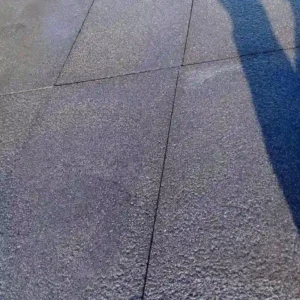
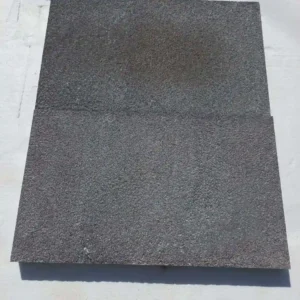
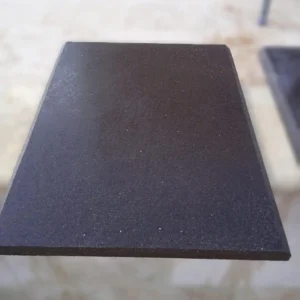
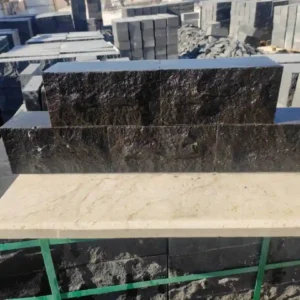
Flamed finishes are the professional default for driveways — the thermal texturing process opens the surface micro-texture, delivering a static friction coefficient consistently above 0.60 (dry) and above 0.50 (wet) per ASTM C1028 protocols. That puts them comfortably above the 0.42 threshold typically specified for exterior pedestrian surfaces. The textured face also dissipates direct solar absorption more efficiently than polished granite by reducing specular reflection and increasing surface area exposed to convective cooling. For front path pavers in Arizona where bare-foot traffic occurs seasonally, surface temperatures on flamed granite run approximately 8 to 12°F cooler than polished equivalents under identical solar exposure conditions.
- Flamed finish: best all-round performance for driveways — slip-resistant, thermally stable, low maintenance
- Honed finish: appropriate for covered entry paths and garden walkway pavers in Arizona where direct sun exposure is limited and a smoother aesthetic is desired
- Brushed finish: good middle ground for garden path block paving in Arizona where a softer texture is preferred without the full tooth of a flamed surface
- Polished finish: restrict to interior applications or fully covered exterior zones — polished granite in full Arizona sun reaches surface temperatures that exceed comfort thresholds and shows thermal cycling wear faster at the grain boundaries
For projects where you’re combining driveway and garden path areas, specifying a consistent material with varied finishes across zones creates visual hierarchy without material complexity. Your truck deliveries are simplified, your base specification stays consistent, and your maintenance program stays unified — practical advantages that compound over the project lifecycle.
Integrating Garden Walkway and Path Pavers with Granite Driveways
The transition from granite driveway slabs to garden walkway pavers in Arizona is a design and engineering decision that most residential specs treat as purely aesthetic. In reality, the grade transition, drainage geometry, and material compatibility at that interface determine whether the garden path area stays stable over time or begins to diverge from the driveway plane as thermal cycling accumulates differential movement.
Garden path pavers in Arizona typically carry lighter load profiles than driveways, which allows you to reduce slab thickness to a 1-inch nominal for pedestrian-only applications. But the base depth shouldn’t be reduced proportionally — the same thermal cycling that stresses a driveway slab stresses a garden walkway slab, and the lighter dead load means there’s less mass stabilizing the slab against hydraulic uplift from a saturated base. Maintaining a 4-inch compacted aggregate base even for lightweight garden walkway slabs in Arizona is the professional standard, not an overspec. For project specifications combining driveway and garden path applications, Granite Driveway Slabs from Citadel Stone provides material compatibility guidance that helps you align finish, thickness, and joint specification across both application zones without creating a visual or structural seam at the boundary.
- Align joint widths between driveway and garden path zones — mismatched joints catch debris and create visual noise at the boundary
- Maintain continuous drainage geometry across the transition — a drainage break at the driveway-to-garden interface creates a ponding point that accelerates base saturation in both zones
- Specify the same polymeric sand throughout — using different joint compounds in adjacent zones creates differential maintenance requirements and different visual aging profiles
- Garden walkway slabs in Arizona benefit from a stepping-stone layout option: 24×24 slabs on 18-inch centers with planted groundcover joints — this reduces thermal mass while maintaining a cohesive aesthetic with the driveway material
Sealing Schedules and Maintenance for Arizona’s Temperature Extremes
Granite’s natural density gives it a significant advantage over softer stones in terms of sealing requirements — properly sourced granite driveway slabs in Arizona don’t need sealing for structural protection the way limestone or travertine does. The sealing argument for granite is primarily cosmetic and stain-resistance oriented, with a secondary benefit of reducing moisture ingress at the joint interface where freeze-thaw cycling matters at elevation.
The sealing schedule that actually works in Arizona differs from the biennial application that generic stone care guides recommend. In low-desert Phoenix and Tucson climates, UV degradation of penetrating sealers is the limiting factor — not wear or moisture. An impregnating silane-siloxane sealer applied at the correct coverage rate (follow the manufacturer’s wet-out standard, not a square-footage formula) typically lasts 18 to 24 months in full-sun low-desert exposure before water beading performance drops below an acceptable threshold. Testing with a simple water droplet is your maintenance indicator — when water absorbs within 30 seconds rather than beading, it’s time to reseal.
- Apply sealer at temperatures between 50°F and 85°F — Arizona’s midday heat causes sealer to flash before adequate penetration depth is achieved
- Pre-dawn or late-evening application is the professional approach in summer months — surface temperatures below 85°F allow proper wet-out time
- Never apply sealer to newly installed granite within 28 days — the joint compound needs full cure time before sealer locks it in position
- At Citadel Stone, we recommend impregnating sealers over topical coatings for all exterior Arizona granite applications — topical coatings peel under UV exposure and create a maintenance liability
- Two-component epoxy joint fillers in high-traffic driveway zones outperform polymeric sand for longevity but require professional installation — the trade-off is worth evaluating for driveways exceeding 800 square feet
Sizing, Format, and Layout Options for Front Driveway Paving in Arizona
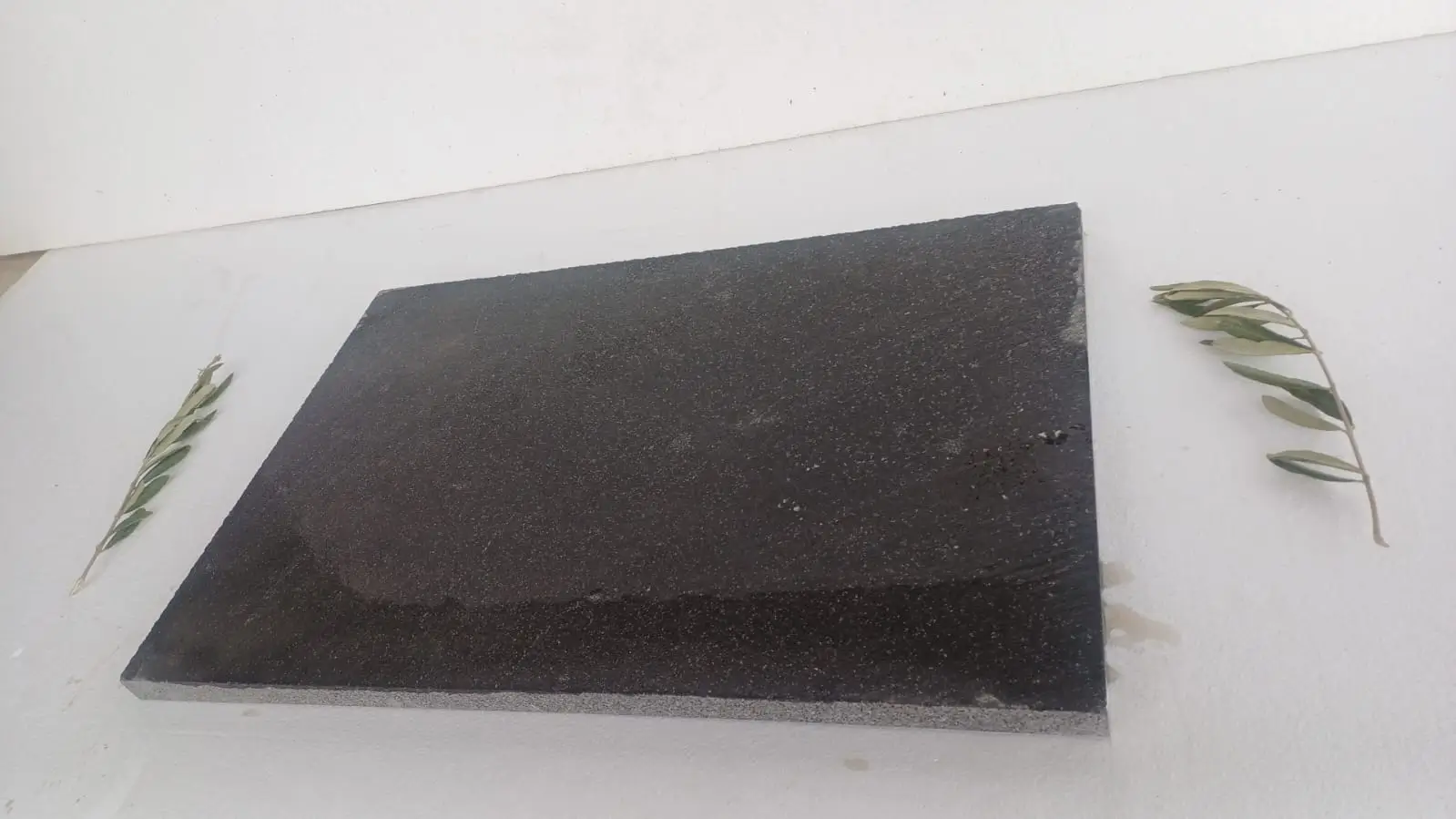
Format selection for front driveway paving in Arizona involves a trade-off that doesn’t get discussed enough: larger slabs mean fewer joints, which reduces thermal cycling stress at joint interfaces but increases the structural demand on each individual slab. A 24×36 granite slab spanning a soft spot in an improperly compacted base will crack through the body before a 12×12 slab would, simply because there’s no nearby joint to accommodate differential movement. Your format choice and your base preparation quality are directly linked.
The 24×24 format represents a practical equilibrium for most Arizona residential driveways — manageable installation weight for two-person crews, adequate coverage efficiency, and a joint frequency that allows thermal expansion to distribute across multiple interfaces rather than concentrating stress in single large slabs. For front sidewalk pavers in Arizona connecting the driveway to an entry, 12×24 or 16×24 formats in a running bond pattern provide excellent dimensional stability and visual integration with the driveway field stone.
- 24×24 at 1.25 inches nominal: standard residential driveway format, suitable for passenger vehicle loads
- 24×36 at 1.5 inches nominal: appropriate where SUV and light truck traffic is consistent
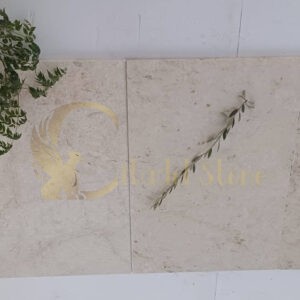
- Irregular flagstone format: suitable for garden path pavers in Arizona and garden walkway applications where informal aesthetics are desired — less appropriate for vehicle-rated driveway zones
- Running bond layout: provides inherent structural interlock that resists differential movement better than stacked joint (grid) layouts in thermal cycling conditions
- Herringbone format: rarely specified in granite for driveways due to cutting waste — reserve for garden path block paving in Arizona accent areas where the format adds visual interest without the material cost penalty of a full driveway field
Citadel Stone ships granite driveway slabs across Arizona from regional warehouse inventory, which typically reduces project lead times to one to two weeks for standard formats. For non-standard sizes or custom cut requirements, the sourcing and cutting process adds approximately three to four weeks — factor this into your project schedule before the base preparation phase is complete.
Get Granite Driveway Slabs Delivered Across Arizona
Citadel Stone supplies granite driveway slabs in standard residential and commercial formats across Arizona, with warehouse stock available for most project sizes without extended lead times. You can request sample tiles in your preferred finish — flamed, honed, or brushed — along with ASTM C97 absorption data and compressive strength certificates before committing to a full material order. Trade accounts and wholesale enquiries receive project-specific pricing based on quantity, format mix, and delivery location within the state.
Delivery scheduling across Arizona accounts for truck access conditions at your site — if your project is in a development with restricted access widths or weight limits on private roads, flagging this at the quoting stage allows the logistics team to plan appropriately and avoid delays. Standard delivery coverage reaches Phoenix, Scottsdale, Tucson, Flagstaff, Sedona, Mesa, Gilbert, Chandler, Tempe, Peoria, and Yuma, with freight rates calculated per project. For large commercial installations requiring phased material delivery, Citadel Stone’s team can coordinate staged truck drops that align with your installation schedule.
To request a quote, material samples, or a consultation on specification details for your Arizona project, contact Citadel Stone directly through the website. Beyond driveway applications, your Arizona property may also benefit from complementary large-format stone features — Extra Large Patio Slabs in Arizona covers another dimension of Arizona hardscape specification worth reviewing as you plan the broader outdoor environment. Homeowners in Flagstaff, Sedona, and Yuma source Granite Driveway Slabs through Citadel Stone for Arizona residential and commercial installations.