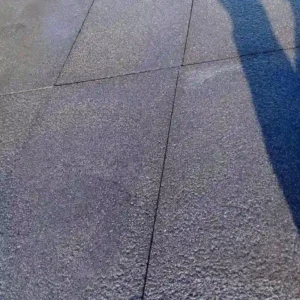
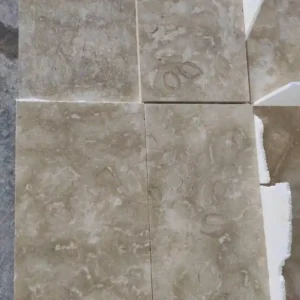

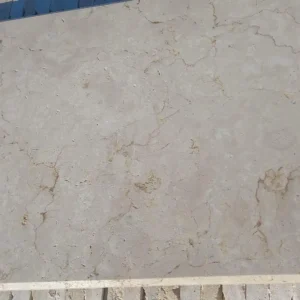
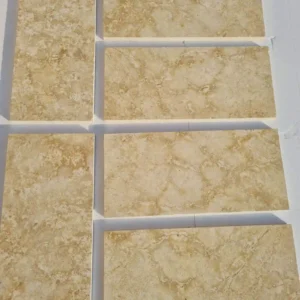




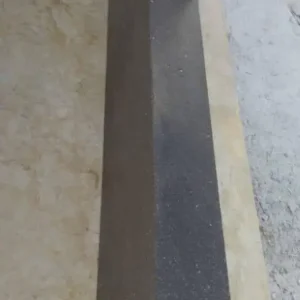
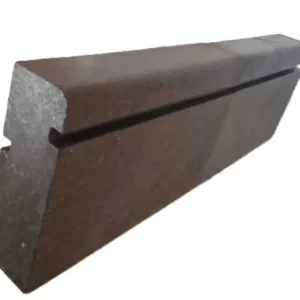
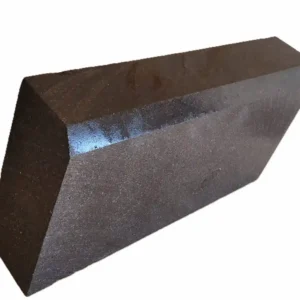
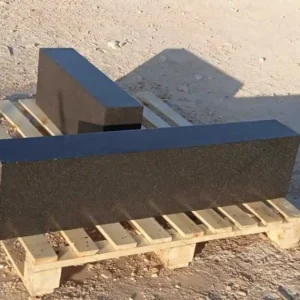










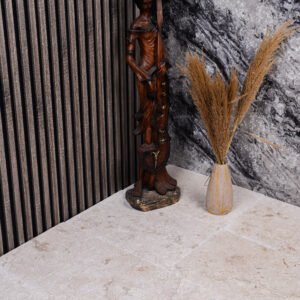
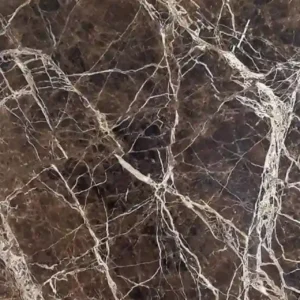
Edging stones for patio installations in Arizona face a mechanical stress challenge that most specifications underestimate — the lateral displacement forces generated during haboob season and monsoon-driven wind events can exceed 60 mph sustained, exerting enough horizontal pressure on unsecured border pavers to shift an entire perimeter by a quarter inch within a single storm cycle. Understanding how to anchor, specify, and detail your edging stone selection around these wind and storm dynamics is what separates a patio edge that holds its geometry for two decades from one that requires annual resetting. This guide covers the structural and material decisions that matter most when Arizona’s storm events are the primary design constraint.
How Wind Loads and Storm Events Affect Stone Edging Performance
Arizona’s storm profile is genuinely unlike most of the continental United States. The combination of haboob walls, monsoon microbursts, and high-elevation wind shear in regions like Flagstaff creates impact and lateral load scenarios that a standard residential patio spec never anticipates. Natural stone edging in Arizona must be treated as a structural element, not a decorative trim — because the physics of a 70 mph gust hitting a 4-inch-tall border stone creates horizontal force vectors that challenge even well-set installations.
The failure mode most installers encounter isn’t the stone cracking under impact — it’s the bond between the stone base and the compacted aggregate below releasing under repetitive lateral cycling. Each storm event nudges the edging incrementally outward. Over two to three monsoon seasons, you can accumulate enough drift that your patio field pavers lose lateral restraint, and joint sand begins to migrate. Specifying edging blocks for patios in Arizona with this dynamic in mind means prioritizing mass, embedment depth, and mortar bond over aesthetics alone.
- Specify a minimum 6-inch embedment depth for border edging blocks in exposed patio perimeters — standard 4-inch depth is insufficient in high-wind zones
- Hail events in central Arizona regularly produce 1-inch diameter stones that generate point impact loads on exposed stone edges — harder materials like basalt and dense limestone resist chipping at exposed corners better than softer travertine grades
- Wind-driven debris during monsoon season — gravel, irrigation pipe fragments, pool equipment — creates lateral impact loads that accumulate micro-fractures in lower-density stones over time
- Mortar bedding on the downwind side of border pavers in Arizona should extend a minimum of 2 inches wider than the stone footprint to resist uplift and lateral creep
Citadel Stone’s technical team has reviewed storm damage patterns from patio installations across the Phoenix metro and Tucson basin — the consistent finding is that embedment depth and mortar continuity outweigh material hardness as the primary resistance factor against wind-driven displacement.
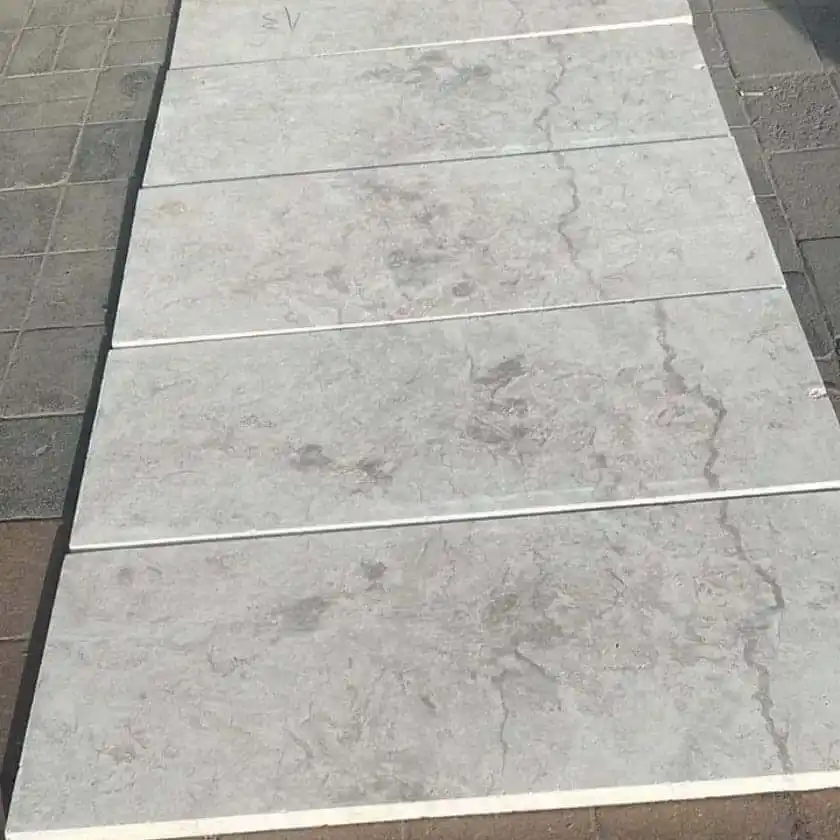
Selecting Natural Stone Edging in Arizona for Storm-Resistant Installations
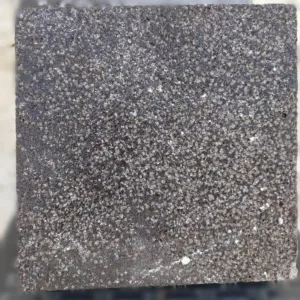
Material density is your first filter when evaluating edging stone pavers in Arizona under a wind and storm resistance framework. Dense basalt — typically in the 170–185 lb/ft³ range — resists both the impact from wind-borne debris and the lateral creep that repetitive gusting induces. Granite-based block edging stones in Arizona perform similarly well in the 165–175 lb/ft³ range. What you want to avoid in exposed perimeter positions is high-porosity travertine or soft limestone under 140 lb/ft³, particularly on the windward face of the patio where storm exposure is maximum.
That said, material density alone doesn’t determine storm performance — geometry does a significant share of the work. Wider, lower-profile border patio stones with a broad base footprint resist tipping and lateral displacement more effectively than tall, narrow edging profiles. A 6-inch-wide by 4-inch-tall block embedded 6 inches generates almost three times the resistance to lateral rotation as a 3-inch-wide by 6-inch-tall profile of the same material. In Scottsdale, where residential patios are often oriented to catch prevailing southwest winds, this geometry consideration matters especially for the southwest-facing patio perimeter.
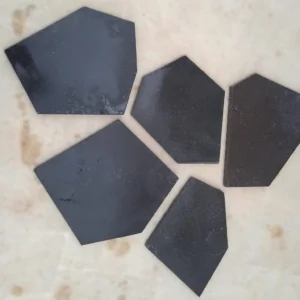
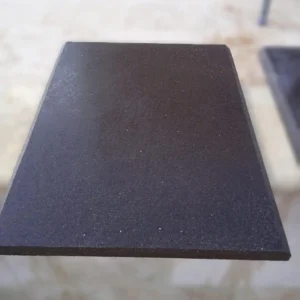
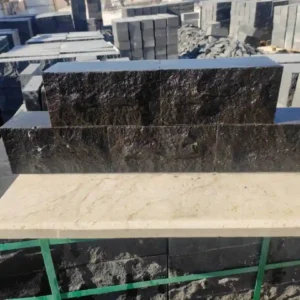
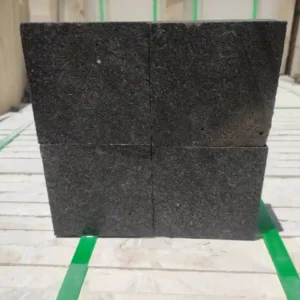
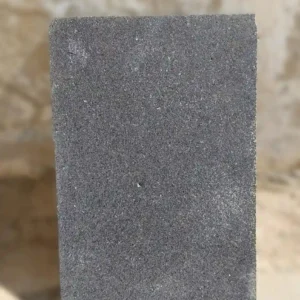
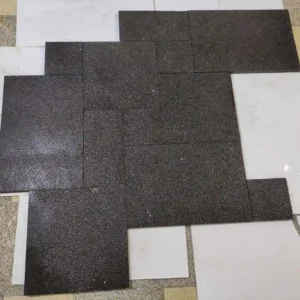
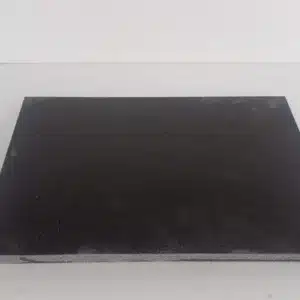
- Dense basalt border pavers in Arizona: 170–185 lb/ft³, excellent hail impact resistance, minimal water absorption under 1%
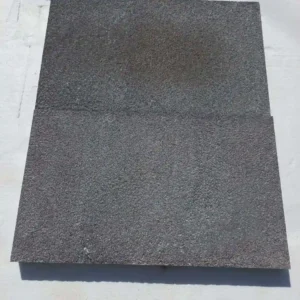
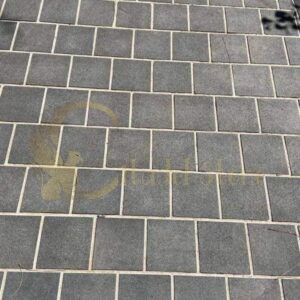
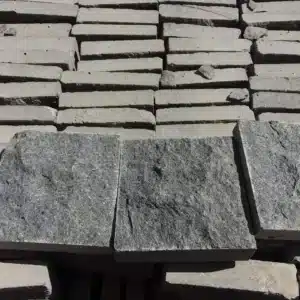
- Granite-based block edging stones: 165–175 lb/ft³, high compressive strength, performs well under point impact from wind-driven debris
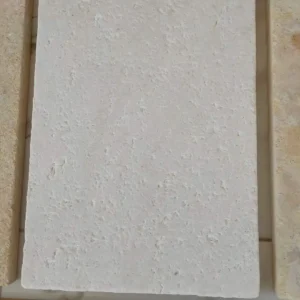
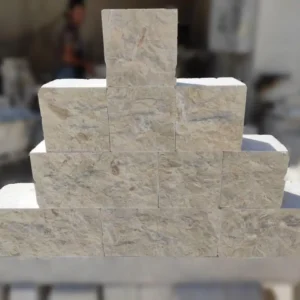
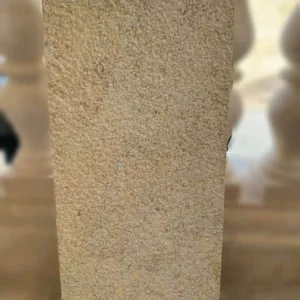
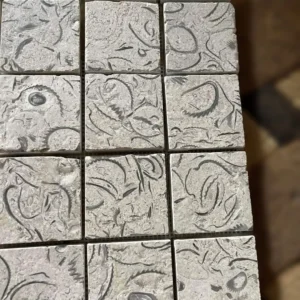
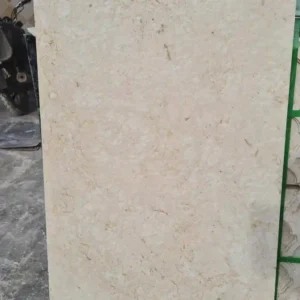
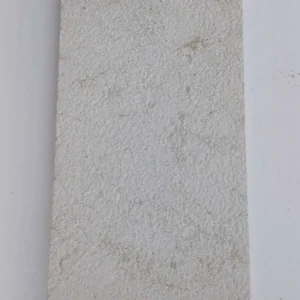
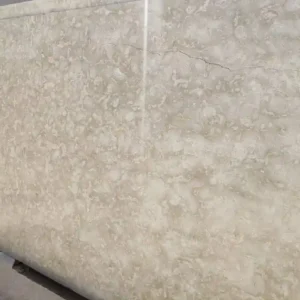
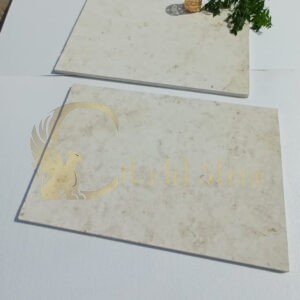
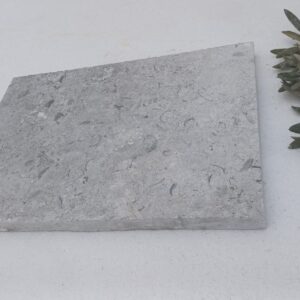
- Dense limestone border edging blocks: 140–160 lb/ft³, good performance when properly sealed, avoid porous grades in high-exposure positions
- Travertine edging: suitable for sheltered or interior patio perimeters, not recommended as primary windward edging without additional mechanical anchoring
- Prefer low-profile, wide-base formats for exposed perimeter positions over tall narrow profiles
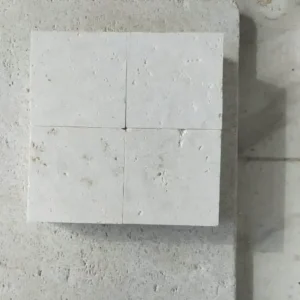
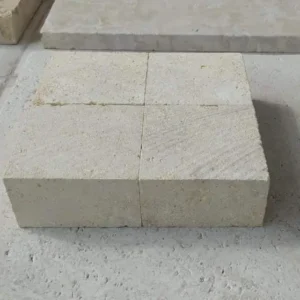
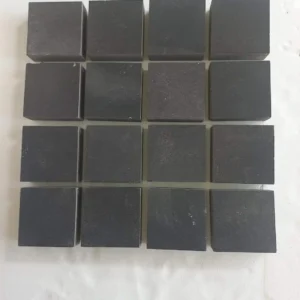
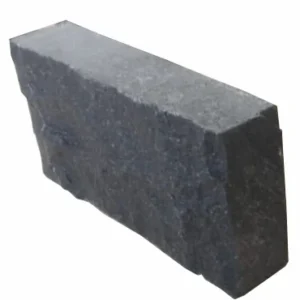
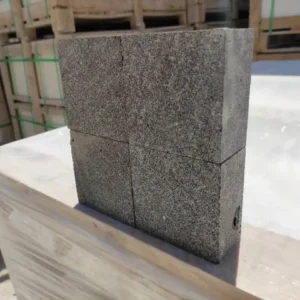
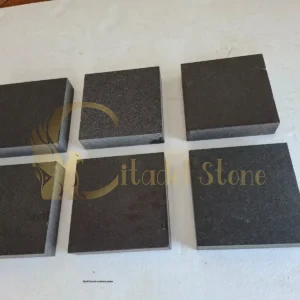
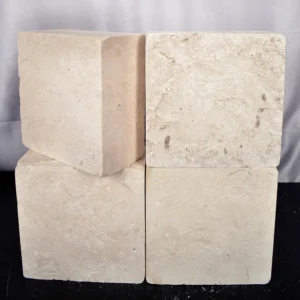
Citadel Stone stocks edging stone pavers in Arizona in standard formats including 6×6×4-inch and 8×4×4-inch block profiles, with both basalt and limestone options available from warehouse inventory for most projects. You can request sample pieces and thickness documentation before committing your specification to a particular profile.
Base Preparation That Holds Through Storm Season
The base system under your edging stones for paving in Arizona determines how well the entire patio edge survives storm season — and this is where most installations that look fine at completion reveal their weaknesses two monsoon cycles later. Arizona’s soils introduce a compounding variable: expansive clay content in many Phoenix-area and Tucson-basin soils means the ground itself is shifting beneath your base, adding upward pressure to the lateral storm loads on the edging perimeter.
For clay-heavy soils, you’ll need a geotextile separation layer between native soil and your aggregate base to prevent clay migration into your compacted material during saturation events. A 4-inch compacted Class II base is the minimum — 6 inches is the correct specification for border edging blocks in Arizona on any clay-bearing soil. Projects in Phoenix‘s west valley frequently encounter this combination of expansive soils and high monsoon exposure, making robust base depth non-negotiable. For a closer look at how complementary stone elements integrate with these base requirements, natural stone patio edging options provides detailed cost and specification context relevant to similar site conditions in Arizona.
- Minimum aggregate base depth: 4 inches compacted for non-expansive soils, 6 inches for clay-bearing profiles
- Geotextile separation layer: required wherever clay content exceeds 20% in native soil — prevents base contamination during monsoon saturation
- Mortar setting bed for perimeter edging: use Type S mortar minimum, extended 2 inches beyond stone footprint on the downwind face
- Concrete toe on high-exposure corners: a 6-inch concrete footing behind the corner edging blocks prevents rotation under combined wind and soil pressure
- Joint sand specification: polymeric sand with a storm-rated binder rated for wind-driven water infiltration — standard joint sand migrates under sustained monsoon rain events
Installation Detailing for Wind and Hail Exposure Zones
Edging with stone pavers in Arizona under actual storm conditions requires detailing decisions that go beyond the standard installation guide. The joint between your field pavers and the edging border is the most vulnerable point during a wind event — not because the joint opens, but because wind-driven water infiltrates at pressure and saturates joint sand faster than the drainage layer can evacuate it. That saturated joint sand then behaves as a lubricant under the horizontal load of a wind gust, and your edging starts to walk outward.
The solution is a combination approach: full mortar bed under the edging border (not just spot-setting), and polymeric joint sand rated specifically for wind-driven rain infiltration in the field-to-border joint zone. In Tucson, where monsoon events regularly deliver 2+ inches of rain in under 90 minutes, this joint detailing is what distinguishes installations that survive intact from those that require post-storm resetting.
- Full mortar bed setting for all perimeter edging stones — no spot-setting in wind-exposed perimeter positions
- Back-butter each edging block with Type S mortar before placement to eliminate voids that collect water under storm pressure
- Field-to-border joint width: maintain 3/8 inch minimum to allow polymeric sand adequate fill depth and binder engagement
- Expansion joint placement: every 12 feet along the edging perimeter — not the 15–20 feet recommended in generic guides — because storm-driven thermal cycling in Arizona compresses and expands stone more aggressively than moderate-climate specs anticipate
- Edging cap overhang: limit to 1 inch maximum on the outward face to prevent wind uplift on the leading edge during high-velocity events
Hail Impact and Debris Resistance in Arizona Stone Edging
Hail events are a more significant material selection factor in Arizona than most landscape architects acknowledge at specification stage. Central Arizona, particularly the Chandler-Mesa corridor, regularly experiences 1-inch diameter hail events during monsoon season. At terminal velocity, a 1-inch hailstone delivers enough point impact force to chip exposed corners on softer stone grades — and the edge corner of a border paving stone is exactly where this impact concentrates.
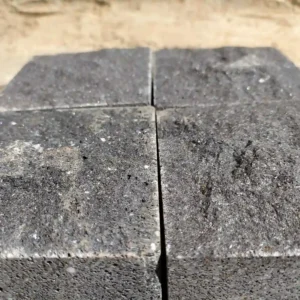
Dense volcanic basalt and quarried granite-based block edging stones in Arizona handle hail impact without surface degradation at standard hail sizes. Medium-density limestone in the 140–160 lb/ft³ range shows minor corner chipping after sustained hail events but maintains structural integrity. What you want to avoid in hail-exposed positions is travertine with open-face voids — the void structure creates stress concentration points that propagate fractures from hail impact. Edging blocks for patios in Arizona specified in hail-exposed zones should have a minimum Mohs hardness of 5.5 and a maximum water absorption rate of 3% to resist both impact and the freeze-thaw cycling that follows a hail event’s water infiltration.
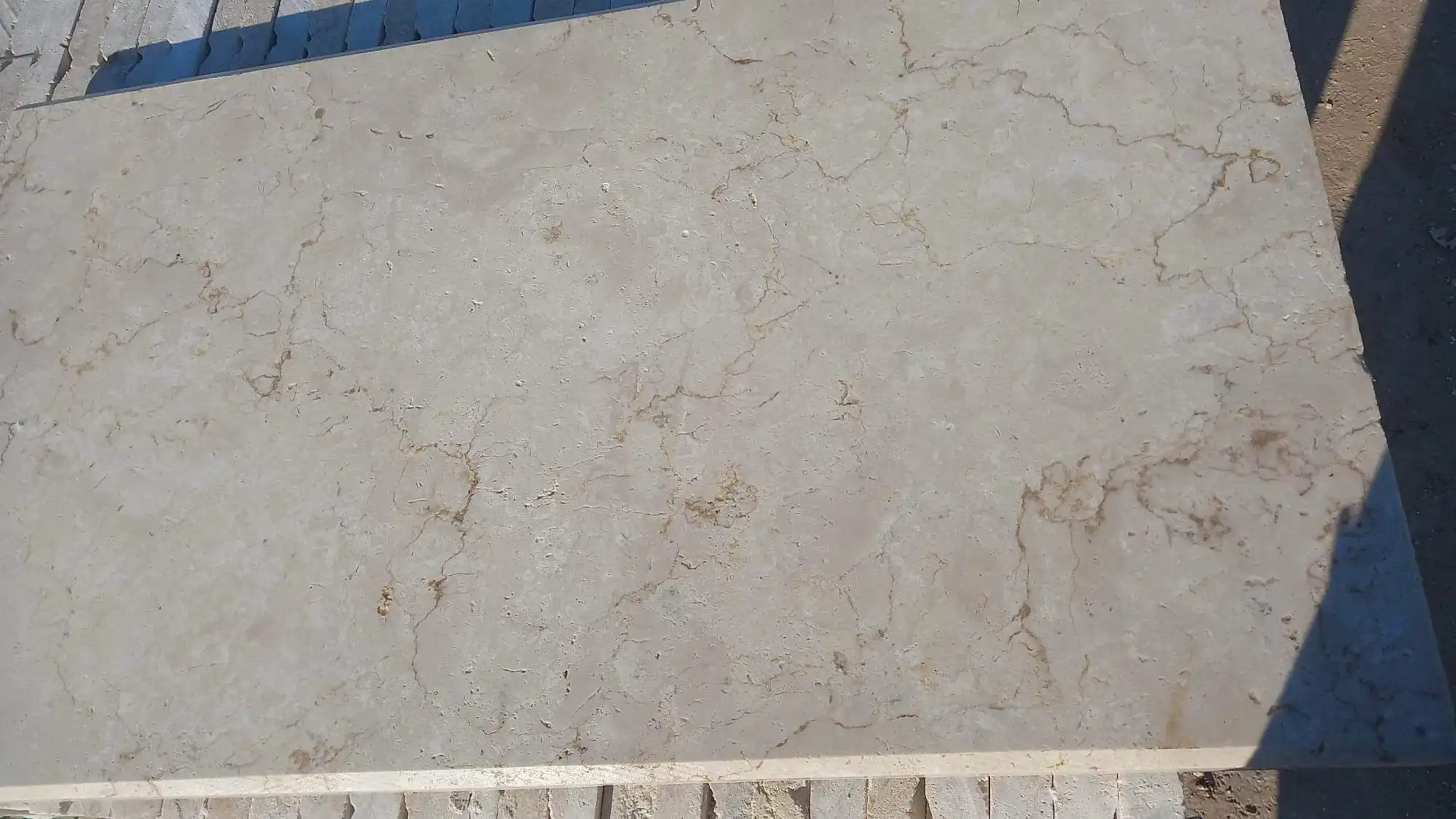
Maintenance and Sealing Protocols After Storm Events
Your maintenance schedule for natural stone edging in Arizona needs to be structured around monsoon season, not calendar year. The productive inspection window is late September through October — after the monsoon season concludes and before the mild winter period begins. This is when you’ll identify any edging stones that have shifted beyond tolerance, any joint sand that has migrated, and any hairline cracking at mortar joints that needs addressing before winter thermal cycling widens the damage.
Sealing protocol for border patio stones in Arizona should use a penetrating silane-siloxane sealer rated for both UV resistance and hydrostatic pressure — not the topical acrylic sealers commonly sold at retail. Penetrating sealers preserve the stone’s vapor permeability, which is critical in Arizona because sealed stone that cannot breathe retains moisture from monsoon saturation events, accelerating subsurface deterioration. Resealing cycle for dense basalt and granite edging: every 4–5 years. For limestone-based edging stone pavers in Arizona: every 2–3 years given the higher porosity profile.
- Post-monsoon inspection checklist: joint sand level, lateral drift measurement, mortar joint continuity, surface chipping from hail, drainage channel clearance
- Acceptable lateral drift tolerance: 3mm maximum before requiring re-setting — beyond this, field paver lateral restraint is compromised
- Joint sand top-up: always use the same polymeric sand specification as the original installation — mixing binder chemistries reduces joint strength
- Mortar joint repointing: use Type S mortar matching the original bed — avoid fast-set mortars for outdoor repointing in Arizona due to thermal shock cracking during temperature swings
- Sealer application: apply only when surface temperature is below 90°F — early morning application in summer months, mid-morning in shoulder seasons
Format and Size Selection for Border Edging Blocks in Arizona
The format you choose for your border edging blocks in Arizona affects both the installation’s storm resistance and its long-term aesthetic coherence. Longer edging units — 12-inch and 16-inch lengths — span more of the perimeter per joint, which means fewer joints where lateral force can initiate movement. However, longer units also require more precise base preparation because differential settlement across a longer span creates a lever arm that can crack the unit at midspan under thermal cycling stress.
The practical sweet spot for most Arizona patio perimeters is a 6×6×4-inch or 8×6×4-inch block format — compact enough to accommodate slight base irregularities, dense enough to provide meaningful lateral restraint mass, and dimensionally compatible with standard field paver formats. Edging stones for patio installations in Arizona using a block-to-field paver height differential of no more than 1/4 inch above finished patio surface creates a clean transition detail while maintaining the gentle lip that helps retain polymeric joint sand during wind events.
- 6×6×4-inch block: best for curved perimeters and tight radii, minimal cutting waste, good mass-to-size ratio
- 8×6×4-inch block: ideal for straight or gently curved runs, fewer joints per linear foot, slightly better lateral resistance
- 12×6×4-inch block: suits long straight perimeter runs on well-prepared bases, requires precise sub-base compaction to avoid midspan cracking
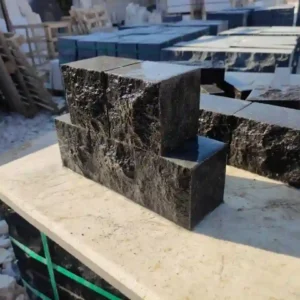
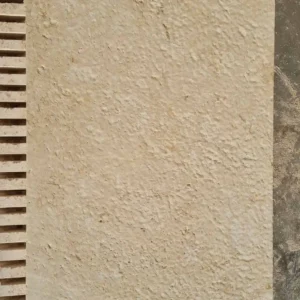
- Tumbled finish vs. sawn finish: tumbled edges reduce chipping appearance from minor hail and debris impacts — sawn profiles show impact damage more visibly
- Height above field pavers: 1/4 inch proud is the practical maximum — higher differential creates trip hazard and concentrates storm water impact force at the joint
Sourced from established quarry partners and inspected at the warehouse for dimensional consistency before dispatch, Citadel Stone’s edging block inventory covers the standard format range in both basalt and limestone variants. For non-standard format requests or custom cut profiles, the Citadel Stone team can advise on lead times — typically 2–3 weeks beyond standard warehouse availability for custom work.
Order Edging Stones for Patio in Arizona — Nationwide Delivery from Citadel Stone
Citadel Stone stocks edging stones for patio projects across Arizona in a range of formats, materials, and finishes suitable for both residential and commercial installations. Standard inventory includes dense basalt block edging in 6×6×4-inch and 8×6×4-inch profiles, limestone border edging blocks in multiple finish options, and granite-based edging stone pavers in sawn and tumbled surfaces. Delivery covers the full Arizona market from regional inventory, with standard truck lead times of 1–2 weeks for in-stock items and 2–4 weeks for non-standard specifications.
You can request material samples, thickness certificates, and absorption rate data before committing your specification — a critical step for any project where storm resistance performance needs to be documented. Trade accounts and wholesale enquiries for contractors, landscape architects, and developers are handled through the Citadel Stone project consultation process, which includes format recommendations based on your specific site exposure and base conditions. For projects in the Flagstaff elevation zone where freeze-thaw cycling compounds the monsoon-season storm stress on edging details, the Citadel Stone technical team can provide climate-specific specification guidance to ensure your material and installation method are matched to local conditions.
As you finalize your Arizona stone project scope, related hardscape elements often influence the overall specification — Big Paving Slabs in Arizona covers another dimension of Citadel Stone’s Arizona stone range that may complement your edging and field paver selection. For Arizona projects requiring reliable natural stone edging, Citadel Stone provides materials and guidance suited to the region’s demanding soil and temperature conditions.