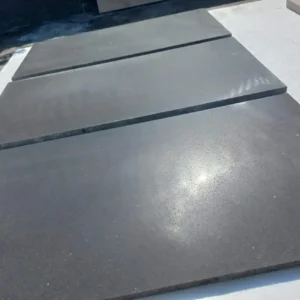
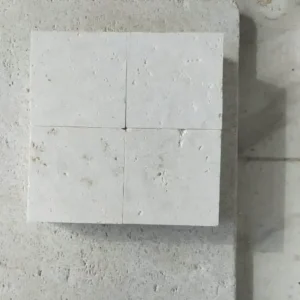
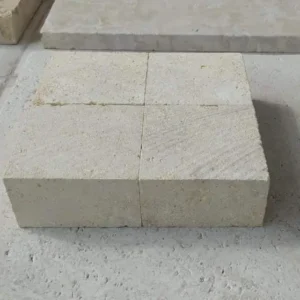
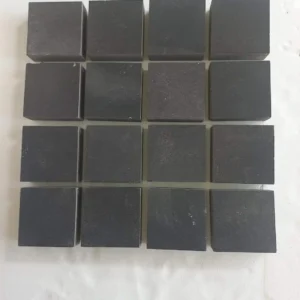
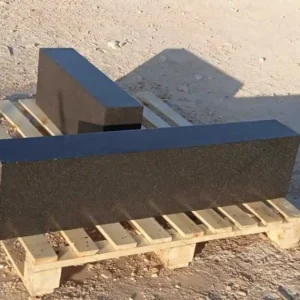
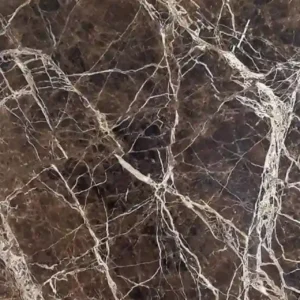
Spec failures in outdoor paving slabs in Arizona trace back less often to material quality and more often to joint design decisions made before the first slab ever lands on site. Storm-driven debris, high-velocity wind loads from haboob events, and episodic hail strikes all create mechanical stress patterns that most standard installation guides aren’t written to address. Getting your joint spacing, base depth, and format selection calibrated to Arizona’s storm profile — not just its temperature extremes — is what separates a 25-year installation from one that needs releveling after the third monsoon season.
How Wind and Storm Events Actually Affect Outdoor Paving Slabs in Arizona
Arizona’s monsoon season delivers wind gusts that regularly exceed 60 mph across the Phoenix metro, and haboob walls can deposit fine particulate at pressures that undercut poorly consolidated joint sand almost overnight. The mechanical problem isn’t the slab itself — natural paving slabs in Arizona are dense enough to resist surface abrasion — it’s the loss of edge restraint and interlock integrity when fine material migrates out of joints under sustained wind pressure. Once a slab shifts even 3–4 millimeters laterally, the loading geometry changes and point-load cracking becomes likely under foot traffic.
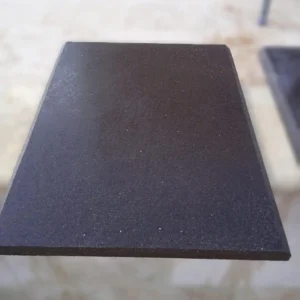
Hail presents a different challenge. In the Tucson corridor and across higher-elevation zones near Flagstaff, hail events produce impact energies that can microfracture polished or honed surface finishes. That doesn’t mean you should avoid smooth paving slabs or polished paving slabs in Arizona — it means you need to select material with compressive strength above 8,000 PSI and surface hardness that can absorb impact without spalling. Most quality natural stone in the 30mm thickness range handles hail well; thinner formats in the 20mm range are where you’ll see impact damage accumulate over multiple seasons.
Format Selection: Large, Extra Large, and Mixed Paving Slabs in Arizona Storm Zones
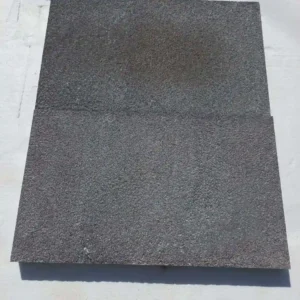
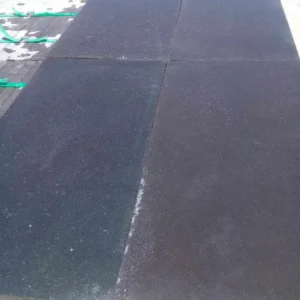
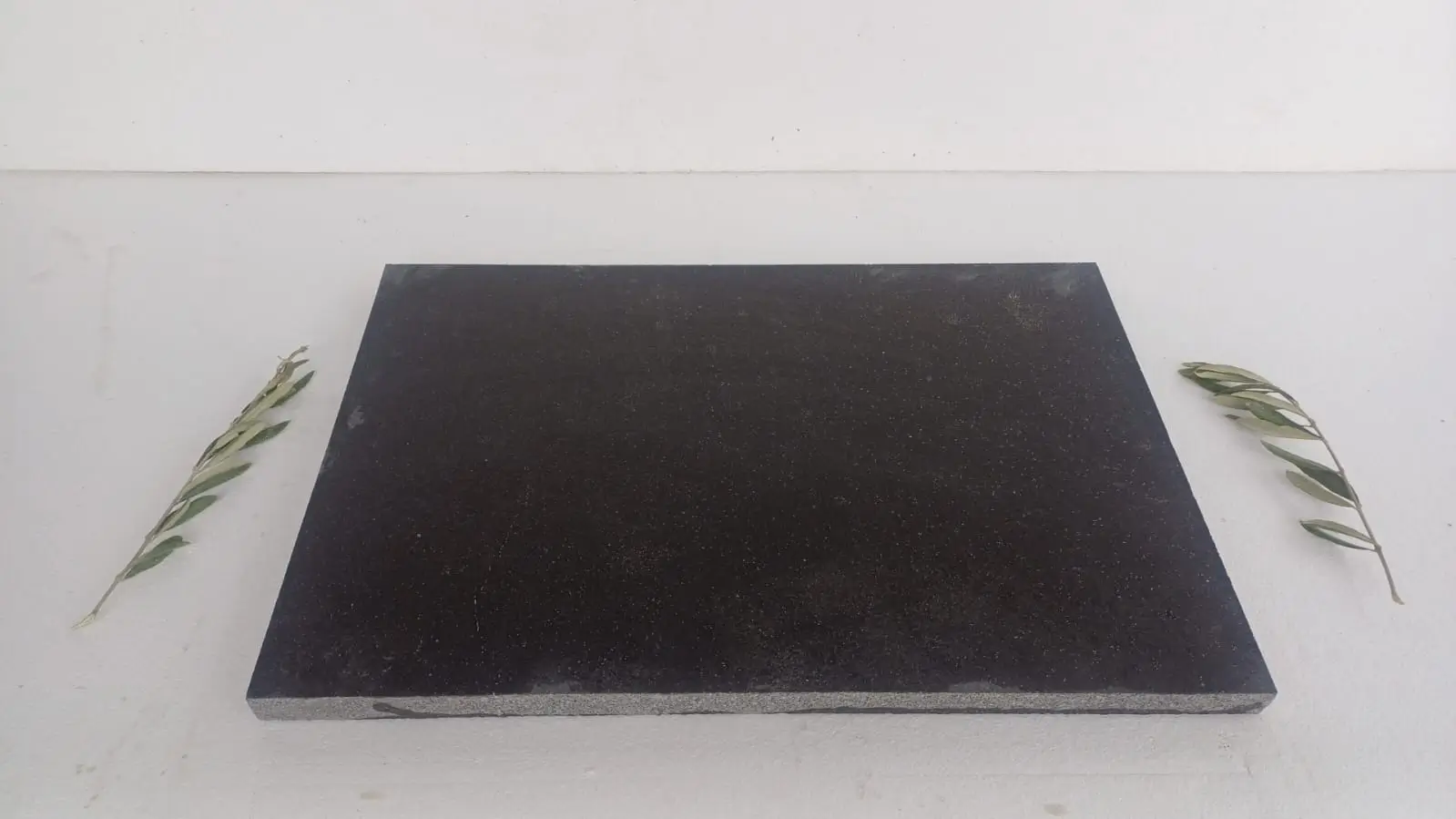
Format size has a direct relationship with storm resilience that most project specs ignore. Large paving slabs in Arizona — typically 600mm x 600mm and above — have a mass advantage that resists wind-induced displacement, but they require a more precise base because any differential settlement becomes visible across a wider span. Extra large paving slabs in Arizona in the 900mm x 600mm or 1200mm x 600mm range amplify this effect further: they stay put during storm events, but a 2mm base variation that would be invisible under a smaller slab creates a noticeable lip at the joint.
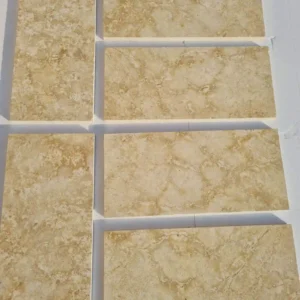
Rectangular paving slabs in Arizona offer the best compromise for storm-exposed areas. The elongated geometry — formats like 600mm x 300mm or 900mm x 300mm — creates a mechanical interlock pattern when laid in staggered bond that resists lateral movement better than square formats laid grid-pattern. Square paving slabs in Arizona are fine for sheltered courtyard applications, but for exposed terraces in Phoenix or Scottsdale, where prevailing monsoon wind directions are a real design constraint, the rectangular format gives you a structural advantage without requiring different base preparation.
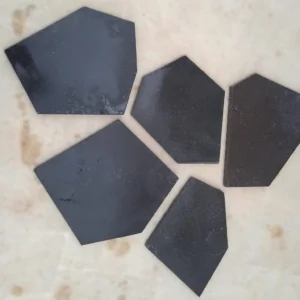
Long paving slabs in Arizona — formats running 1200mm or longer in one dimension — perform well on level, well-compacted bases but are particularly vulnerable to edge lift during storm events if the base has any soft spots. You’ll want to specify a minimum 150mm compacted aggregate base for these formats, stepping up to 200mm in areas with expansive clay sub-soils. Mixed paving slabs in Arizona — using two or three complementary sizes in a random layout — can actually improve storm resistance by eliminating the continuous grout lines that act as preferred paths for wind-driven water infiltration.
Base Preparation for Storm-Resilient Installations
Your base system is doing more work in Arizona than the slabs above it. During monsoon events, soil saturation can occur rapidly in low-lying areas — the Sonoran Desert’s caliche hardpan layers, which are common across Mesa and surrounding East Valley communities, create perched water conditions that destabilize even well-compacted aggregate bases if drainage isn’t engineered correctly. Caliche acts as an impermeable barrier at depth, so surface drainage gradients need to be steeper than you’d spec in other regions — 1.5% minimum, with 2% preferred for exposed outdoor installations.
- Minimum aggregate base depth of 150mm for standard residential applications, 200mm for extra large paving slabs in Arizona or vehicular-rated areas
- Geotextile separation layer between native soil and aggregate to prevent fines migration during saturated storm conditions
- Edge restraints installed to manufacturer’s specified depth — wind loading transfers lateral force to perimeter restraints during storm events
- Bedding sand layer of 25–40mm compacted depth — thicker bedding creates instability under point loading
- Expansion joints at 4.5–5m intervals, not the generic 6m figure — Arizona’s thermal cycling combined with storm moisture creates more cumulative movement than temperate-zone tables predict
For projects specifying natural paving slabs in Arizona, the bedding material choice matters during storm season. Concrete sand (sharp-grained) holds position better than masonry sand under water infiltration events. The difference shows up in the first post-monsoon inspection — concrete sand bedding maintains surface planarity, while masonry sand installations often show 5–8mm differential movement at slab edges after heavy rainfall.
Anti-Slip and Non-Slip Paving Slabs in Arizona: Wet Weather Performance
Arizona’s storms arrive fast and dump significant rainfall in short periods — the Phoenix metro regularly records 1–2 inches of rain in under an hour during peak monsoon events. That means surfaces that are perfectly safe when dry need to perform under sudden saturation conditions. Anti-slip paving slabs in Arizona aren’t just a swimming pool specification requirement; they’re a practical safety consideration for any outdoor paving area that will be used by foot traffic during or after storm events.
Non-slip paving slabs in Arizona achieve their slip resistance through either inherent surface texture or applied mechanical treatment. Here’s the performance hierarchy from field observations across multiple installation types:
- Sawn and brushed finishes: consistent slip resistance across wet and dry conditions, Pendulum Test Value (PTV) typically in the 45–55 range — suitable for most residential outdoor applications
- Honed paving slabs in Arizona: smooth surface with some residual texture, PTV typically 35–45 when wet — acceptable for sheltered areas but marginal for monsoon-exposed terraces without sealer selection that maintains wet grip
- Polished paving slabs in Arizona: PTV often drops below 35 when wet — limit these to covered outdoor areas or interiors, or specify a slip-resistant sealer with surface aggregate in the topcoat
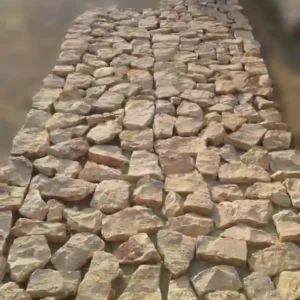
- Riven or split natural stone: highest inherent wet grip, PTV typically 55–65, best performance on garden paving slabs in Arizona where aesthetic character is also a priority
- Smooth paving slabs in Arizona with applied grip coating: performs well initially but reapplication is needed every 2–3 years — factor this into your maintenance schedule
Citadel Stone’s team regularly discusses finish selection alongside storm exposure during the specification phase — it’s the kind of detail that gets missed when surface choice is made on aesthetics alone and only revisited after a slip incident post-monsoon.
Patterned Paving Slabs and Modern Designs That Hold Up Outdoors
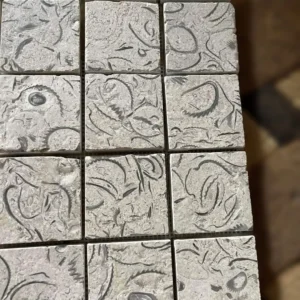
Patterned paving slabs in Arizona serve both an aesthetic function and a structural one. A well-executed herringbone or staggered bond pattern creates mechanical interlock between adjacent slabs that resists the lateral creep common in exposed outdoor installations during repeated storm cycles. This isn’t just about visual interest — the interlocking geometry transfers load across multiple slabs rather than concentrating stress at individual edges.
Paving slabs modern in Arizona tend toward large-format, low-profile aesthetics — clean lines, minimal joint widths, and monolithic surface appearance. These designs require more precise installation than traditional smaller-format patterns because there’s nowhere to hide base irregularities. For projects where contemporary architectural styles are common and outdoor living spaces are prominent design features, modern large-format outdoor paving slabs in Arizona are frequently specified with mortar-bed installation rather than loose-lay, which significantly improves storm resistance at the cost of flexibility for future access.
Garden paving slabs in Arizona in patterned layouts benefit from a design consideration that’s easy to overlook: the joint width needs to be consistent enough to maintain pattern integrity through seasonal movement cycles. Wider joints — 10–15mm — allow for more thermal and moisture-induced movement without visible disruption to the pattern. Tighter joints look cleaner but are more likely to show displacement after storm events in clay-heavy soil areas.
Material Durability: Which Stone Types Handle Wind, Hail, and Storm Debris Best
Sourced from established quarry partners, each batch of natural stone Citadel Stone supplies is inspected for consistency in density, surface integrity, and thickness tolerance — the three variables that directly affect storm performance. Density matters because denser stone resists impact fracture from hail and storm-driven debris. Thickness tolerance matters because slabs that vary more than 3mm from nominal create high-and-low edges that concentrate storm-load stress at transition points.
For a detailed look at how to evaluate material specifications before committing to a format, natural paving slabs for Arizona covers the specification criteria that apply across installation types and climate zones within the state. The material comparisons there are particularly useful when you’re deciding between stone types with similar aesthetics but different mechanical properties.
Here’s how common stone types compare for Arizona storm conditions:
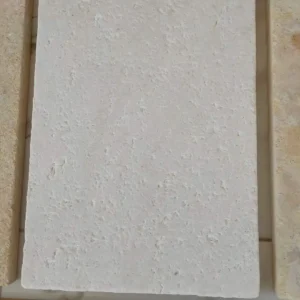
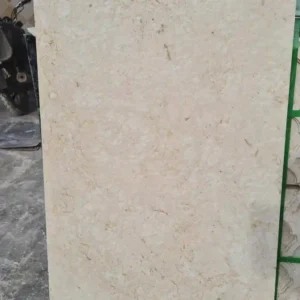
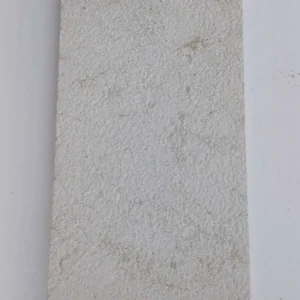
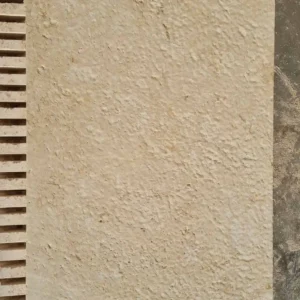
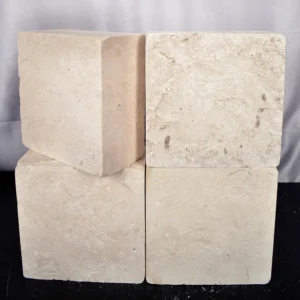
- Limestone: compressive strength typically 4,000–8,000 PSI depending on formation — adequate for residential applications, select denser grades (above 6,500 PSI) for storm-exposed areas subject to hail or debris impact
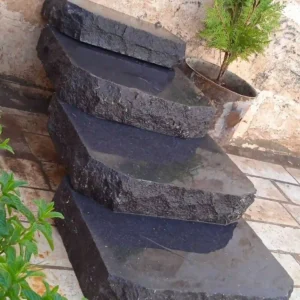
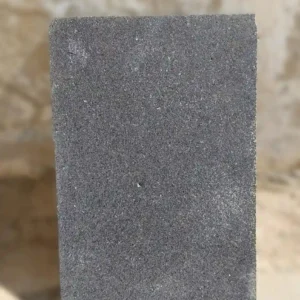
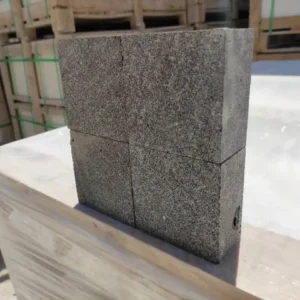
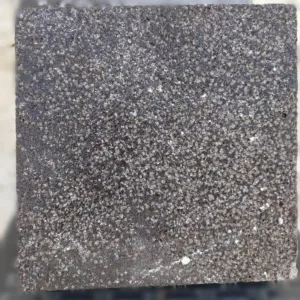
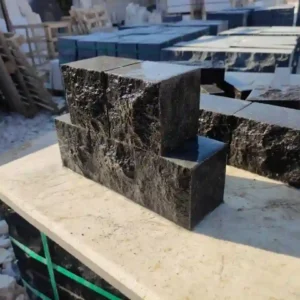
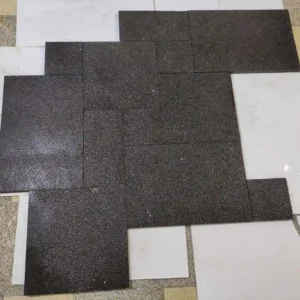
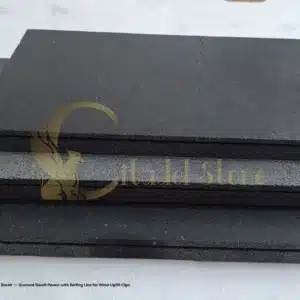
- Basalt: among the highest compressive strengths in natural paving stone, often exceeding 15,000 PSI — excellent storm and impact resistance, darker tones absorb more heat but surface hardness resists mechanical damage well
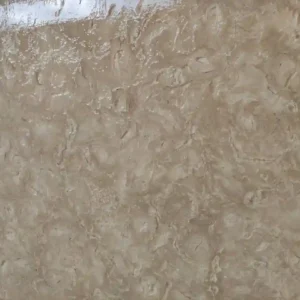
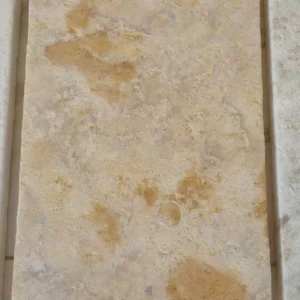
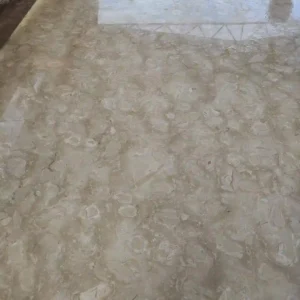
- Travertine: porosity requires attention during storm events — unsealed travertine in low-lying areas can absorb storm water rapidly, affecting joint sand stability and long-term integrity
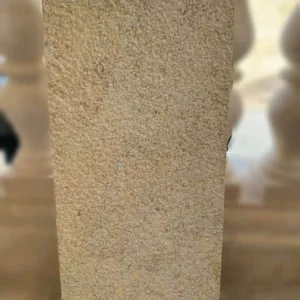
- Sandstone: variable density by source — specify minimum 4,500 PSI compressive strength and confirm water absorption rate below 8% for outdoor use in storm-exposed zones
- Granite: exceptional hardness and weather resistance, minimal maintenance requirement — a premium choice for high-exposure locations but typically commands a higher price point than limestone-based options
Bulk paving slabs in Arizona projects — large commercial terraces, resort pool decks, extended driveway aprons — benefit from material consistency across the full project quantity. Ordering in bulk from a single production run reduces the colour and thickness variation that creates visual inconsistency after installation. You can verify warehouse stock levels with Citadel Stone before committing to a project timeline — for large quantities, confirming that a single warehouse batch covers the full area is worth doing before finalizing the specification.
Budget Paving Slabs in Arizona: Specifying for Value Without Compromising Storm Performance
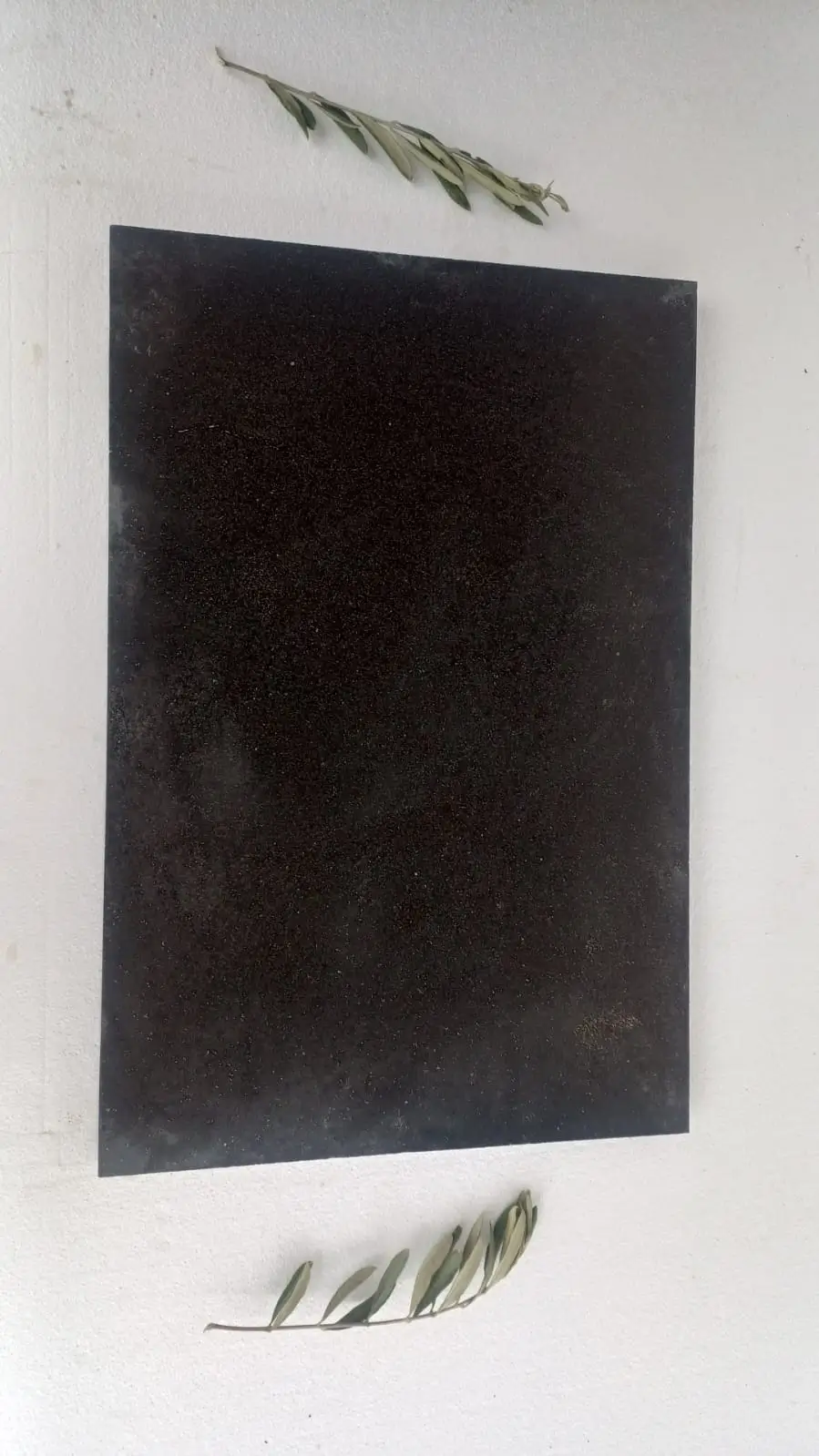
Budget paving slabs in Arizona don’t have to mean compromised storm performance — the specification decisions that affect durability most significantly (base depth, edge restraint, joint material, sealer type) are independent of the slab unit cost. A modestly priced natural limestone slab on a correctly prepared 200mm aggregate base with proper edge restraint will outlast an expensive format on a shallow, inadequately drained base every time.
The cost efficiency calculation for outdoor paving in Arizona needs to account for the full lifecycle. Material unit cost, base preparation, installation labor, sealing at installation, and resealing every 3–5 years (or 2–3 years in high-UV exposure areas) form the real cost picture. What looks like a budget option at $8–12 per square foot can end up costing significantly more than a $15–18 option if the lower-cost material requires more frequent maintenance or replacement after storm damage cycles.
- Prioritize base preparation budget over surface material unit cost — the base is where storm resilience is built
- Natural stone in the 30mm thickness range offers better storm resistance than 20mm formats at a modest price premium — worth specifying for exposed areas
- Ordering full pallet quantities rather than partial pallets reduces per-unit cost and ensures batch consistency — check warehouse availability before finalizing quantities
- Factor sealant into the project budget from the outset — applying sealer at installation is significantly more cost-effective than post-installation application to trafficked surfaces
In Yuma, where intense UV exposure compounds the storm weathering cycle, the cost of annual inspection and reactive repairs on an under-specified installation consistently exceeds the upfront cost difference between budget and mid-range material choices. Getting the specification right at the start is the real budget strategy.
Post-Storm Maintenance for Outdoor Paving Slabs in Arizona
Your maintenance schedule needs to include post-storm inspection as a standard item, not just calendar-based checks. After any wind event exceeding 50 mph or significant rainfall, a walk-over inspection looking for four specific issues will catch developing problems before they become structural failures:
- Joint sand migration — look for voids at slab edges where sand has been displaced by wind-driven water; repack with polymeric sand as soon as conditions allow
- Edge lift — slabs that have shifted even slightly vertically at edges create both trip hazards and accelerated drainage infiltration pathways; reset promptly before the next storm season
- Surface staining from storm debris — organic material deposited by haboobs can stain honed paving slabs and polished paving slabs if left to dry on the surface; clean within 48 hours of the event
- Sealer integrity — high-velocity wind events can accelerate surface sealer breakdown; check surface water-beading performance after major storms and reschedule sealing if needed
Polymeric joint sand is strongly preferable to standard sand for Arizona storm installations. The polymer binders maintain joint fill integrity under the water infiltration and wind pressure that standard sand can’t consistently resist through multiple monsoon seasons. The cost premium over standard joint sand is minimal relative to the maintenance labor saved over a 5–10 year period.
Source Premium Outdoor Paving Slabs in Arizona — Citadel Stone Supply
Citadel Stone stocks outdoor paving slabs in Arizona across a broad format range — from standard 600mm x 600mm square formats to extra large 1200mm x 600mm rectangular slabs — in multiple surface finishes including honed, brushed, riven, and polished. Stock is held in regional warehouse inventory to support project timelines across Arizona, with lead times typically running 1–2 weeks for standard formats compared to the 6–8 week import cycle that applies to non-stocked special orders. Truck delivery is coordinated to project site access requirements, including large-format slab deliveries that require ground-level offloading clearance.
You can request sample tiles and thickness specification sheets from Citadel Stone before committing to a full project quantity — this is standard practice for commercial and residential projects alike, and it’s the best way to confirm colour consistency and surface finish match your design intent before pallets are dispatched. For projects requiring non-standard sizes, custom cuts, or mixed format packs, the technical team can advise on lead times and minimum order quantities. Trade and wholesale enquiries are handled directly, with pricing available on request for recurring supply arrangements. Delivery coverage extends across the full Arizona market, including Phoenix, Tucson, Scottsdale, and regional areas.
As you finalize your Arizona stone project plans, related outdoor hardscape elements often inform the full material specification — Patio Pavers in Arizona covers complementary paving options that work alongside slab installations for complete outdoor living areas. For reliable material sourcing across Arizona, Citadel Stone offers a considered range of natural paving slabs selected to perform in the region’s demanding outdoor conditions.