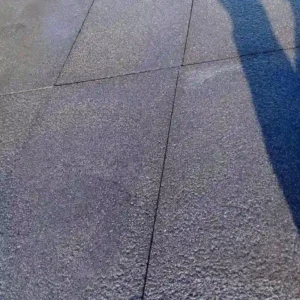
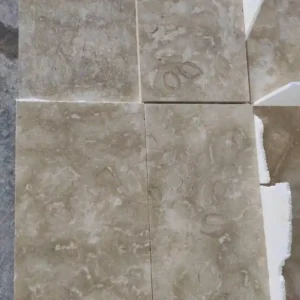

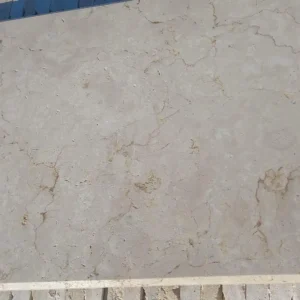
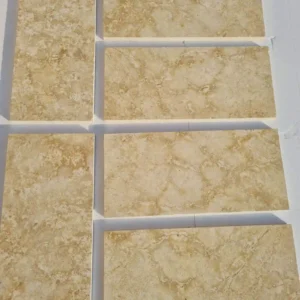

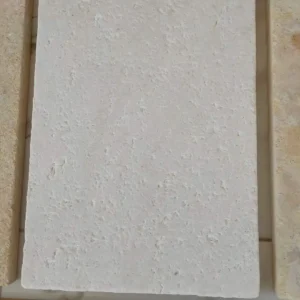

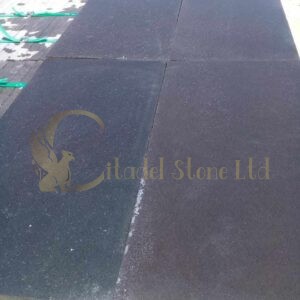

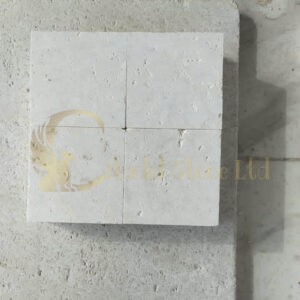
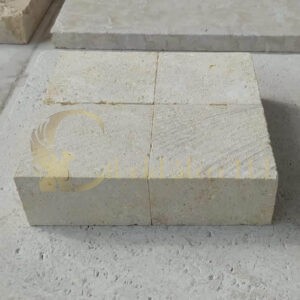
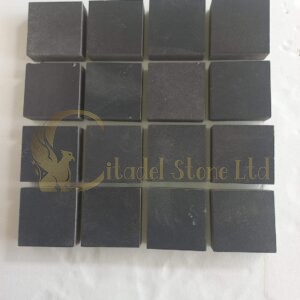
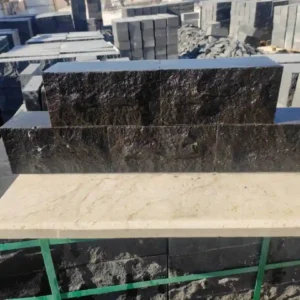
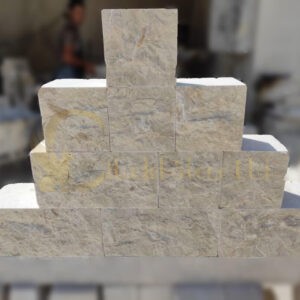
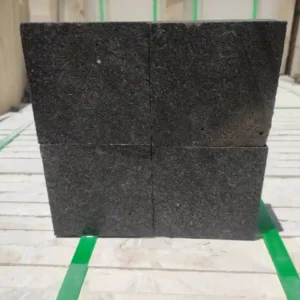
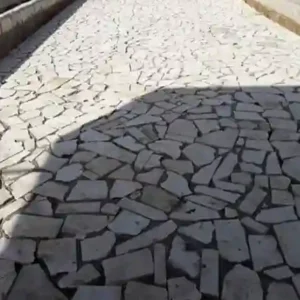

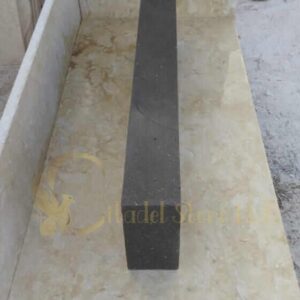
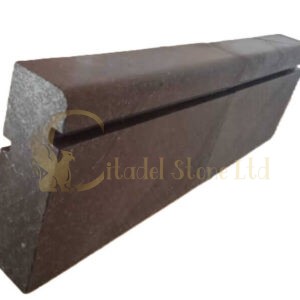
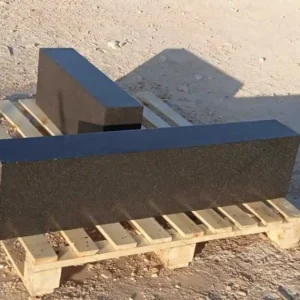
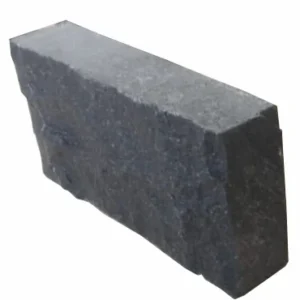
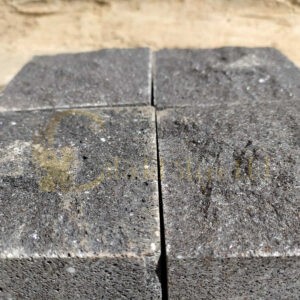
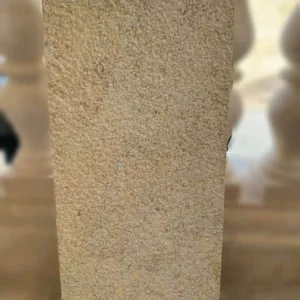
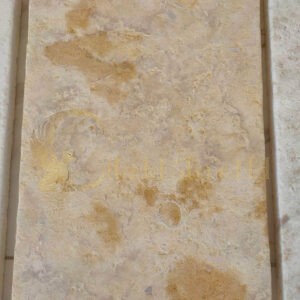
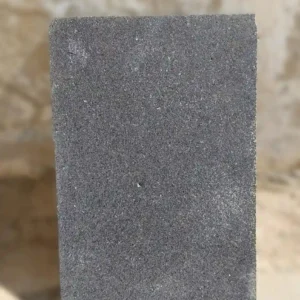
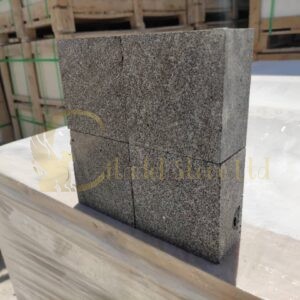
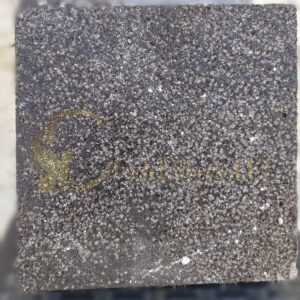
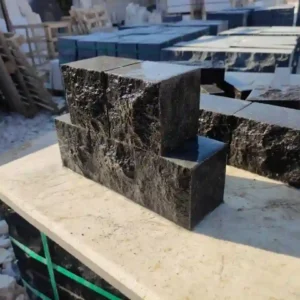
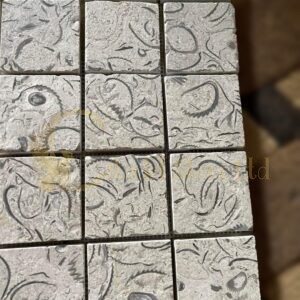
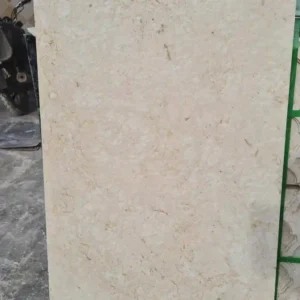
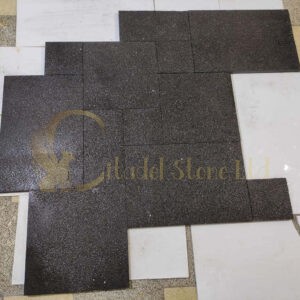
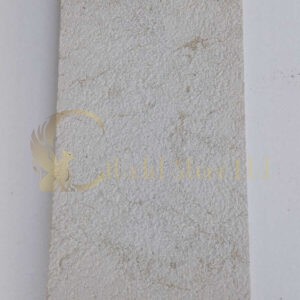
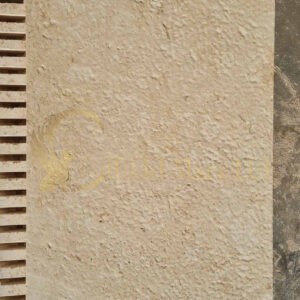
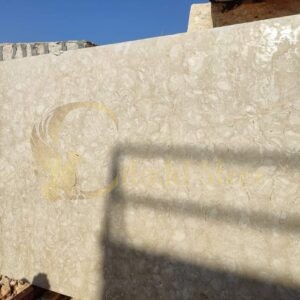
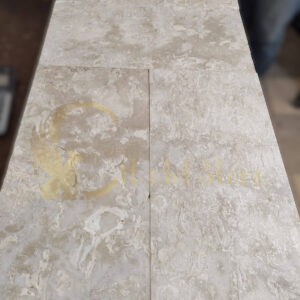
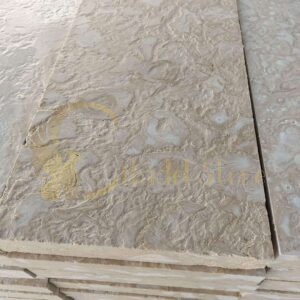
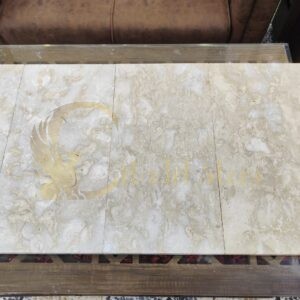
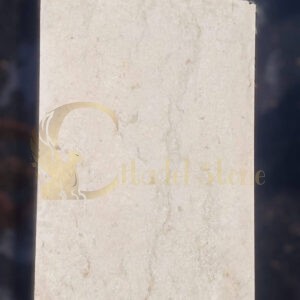
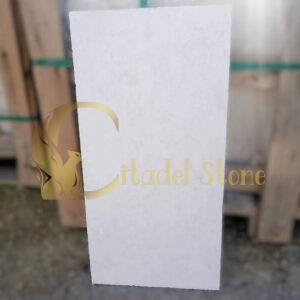

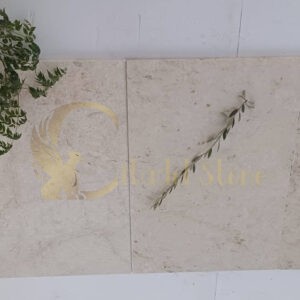

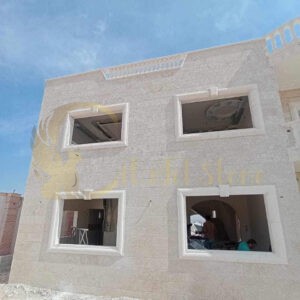
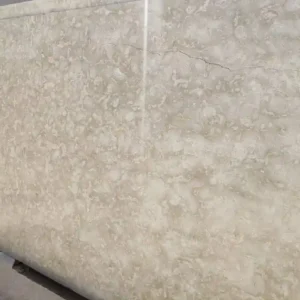
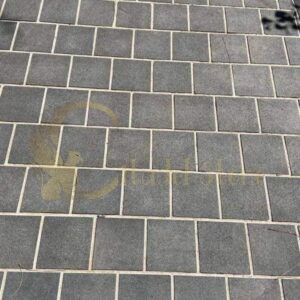

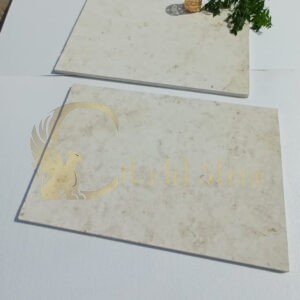
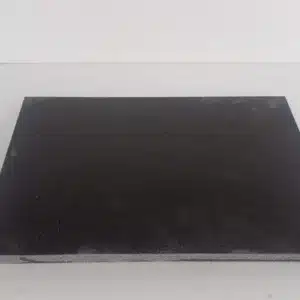
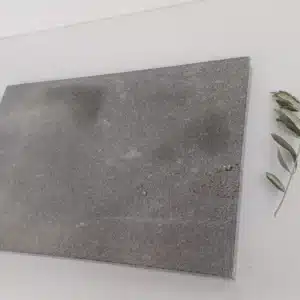
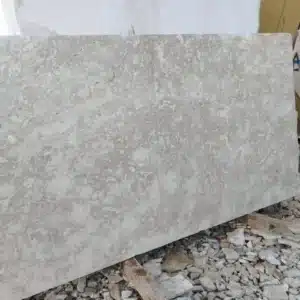

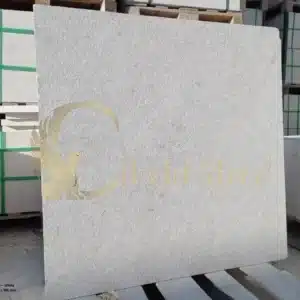


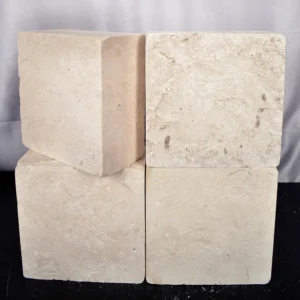
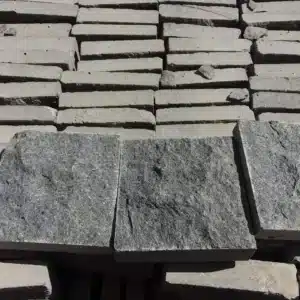

Drainage geometry is the specification variable that separates long-performing Snow White Travertine Pavers in Arizona installations from the ones that start failing in year three. Arizona’s monsoon season delivers intense rainfall events — sometimes 1.5 to 2 inches in under an hour — and if your substrate and joint system aren’t designed to move that volume laterally, you’ll see efflorescence, subbase washout, and eventual surface displacement regardless of how well the material was sourced. Snow White travertine’s inherent porosity actually works in your favor here, but only when the surrounding drainage architecture supports it properly.
Why Drainage Defines Travertine Performance in Arizona
Arizona’s precipitation profile is deceptive. You’re not managing constant moisture — you’re managing high-velocity, short-duration events that stress drainage systems in ways that gradual rainfall never does. Snow White Travertine Pavers in Arizona projects need to account for peak flow rates, not average annual precipitation. The difference between a 1% grade and a 2% grade becomes critical when you’re channeling 300 gallons per minute across a patio surface during a July downpour in Phoenix, where urban heat effects compound drainage intensity.
The material itself has an open vesicular structure with porosity rates typically ranging from 8% to 14% depending on vein type. That structural porosity allows vertical water infiltration at a meaningful rate, which reduces surface runoff velocity and gives your drainage system time to manage volume without overwhelming channel capacity. Your design should treat that porosity as a supplement to surface drainage, not a substitute for it.
- Specify a minimum 1.5% cross-slope on all horizontal surfaces to direct water away from structures and toward collection points
- Design perimeter drains with capacity calculations based on peak monsoon intensity, not annual averages
- Use open-jointed installation with polymeric sand to maximize infiltration without sacrificing joint stability
- Account for caliche layers in your sub-base design — impermeable caliche creates a perched water table that undermines compacted base performance
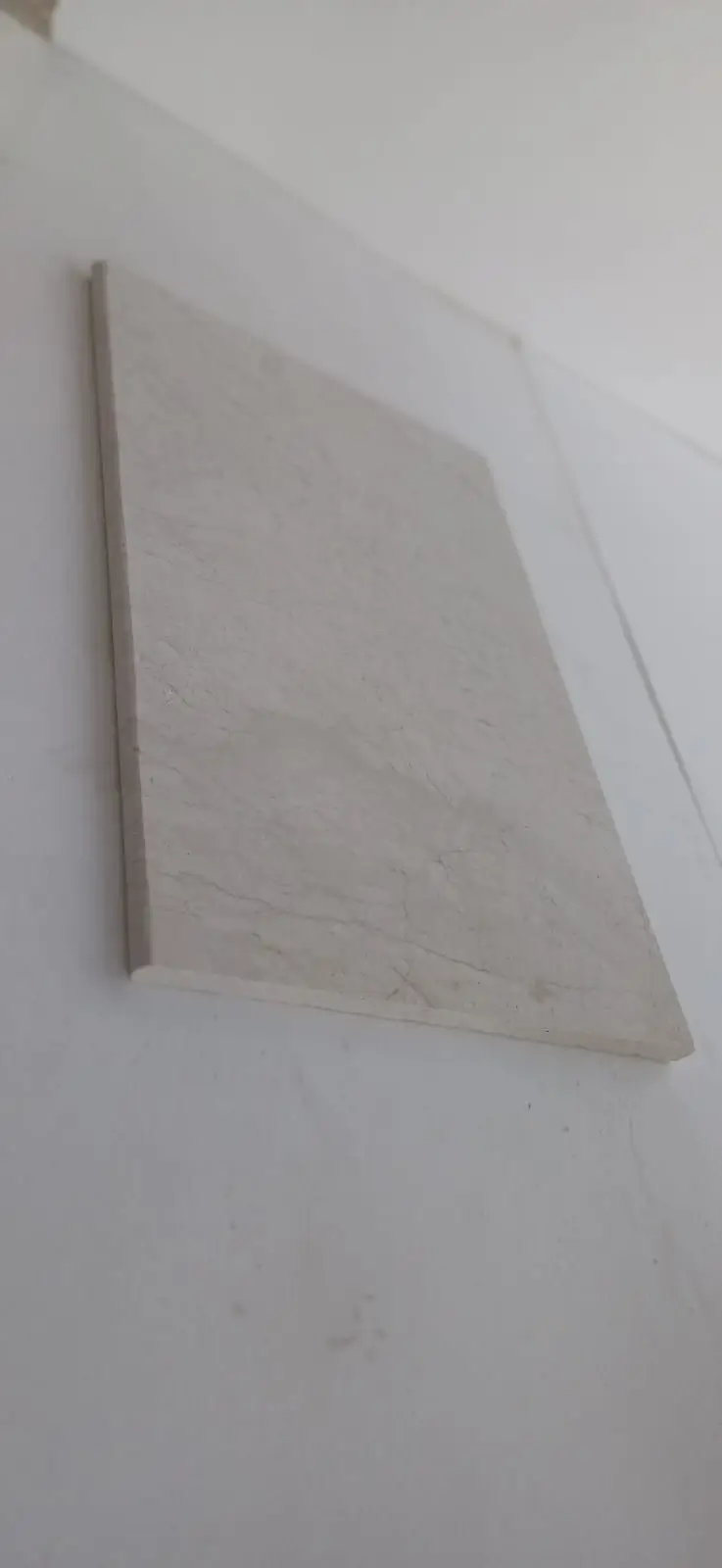
Subbase Engineering for Arizona Monsoon Conditions
Your base preparation work is where most Arizona travertine installations either succeed or accumulate failure points. The standard 4-inch compacted aggregate base works fine in stable, low-moisture environments — it’s inadequate for areas that cycle between weeks of total dryness and sudden saturation events. Field performance data from Arizona installations consistently points to 6-inch minimum compacted base depth for patios and 8-inch minimum for pool decks, with the additional depth dedicated to drainage capacity rather than just load distribution.
In Scottsdale, the native soil often contains expansive clay fractions beneath a sandy surface layer. That clay expands when saturated and contracts during the extended dry periods — a cycle that produces differential movement at the paver level if your base isn’t deep enough to isolate the stone layer from that soil behavior. Adding a geotextile separation fabric between native soil and aggregate base is standard practice here, not an upgrade.
- Compact aggregate base in maximum 3-inch lifts to achieve 95% Proctor density throughout — not just at the surface
- Grade the aggregate base itself at a minimum 1% slope toward drainage features, so water that infiltrates through joints has a directed path out
- Install perforated drain pipe at the low point of any large patio — even with good surface grade, some water will infiltrate and needs a managed exit
- Check for caliche depth before finalizing base specification — solid caliche below 18 inches may actually reduce required base depth, but fractured caliche creates drainage problems that need remediation before any stone goes down
Thickness Selection for Pool Decks and Patios
The 2-inch nominal thickness is the workhorse specification for most Arizona residential and commercial applications. At that dimension, Snow White travertine delivers compressive strength typically exceeding 8,000 PSI, which handles pedestrian traffic, furniture loading, and the point loads from outdoor equipment without concern. For pool decks specifically, the 2-inch dimension also provides enough thermal mass to moderate surface temperature during afternoon peak heat — though that’s a secondary benefit rather than the drainage-focused reason to specify it.
Thinner profiles (1.25-inch nominal) are viable for covered patios or interior applications where drainage loading is managed by the building envelope. Outdoors in an Arizona monsoon zone, the thinner material reduces the paver’s ability to resist subbase differential movement during saturation-cycle events. Your specification should tie thickness to drainage exposure category rather than budget tier alone. For projects involving premium silver travertine pavers in Arizona alongside snow white selections, the same thickness logic applies — mixing stone types on a single deck requires consistent thickness tolerance across the batch to avoid lippage. Premium silver travertine pavers in Arizona also perform best when base depth and joint specifications match those used for snow white on the same installation.
Sealing Protocols and Moisture Management
Penetrating sealers are the correct specification for travertine in wet-cycle environments — not topical film-forming products. A penetrating silane-siloxane blend at 20-25% solids content will reduce water absorption by 60-70% while allowing the material to release trapped moisture vapor. Topical sealers trap moisture beneath the surface, and when that moisture heats up rapidly during Arizona summer afternoons, you get delamination and spalling at the sealer-stone interface. That’s a repairable but expensive problem to introduce into an otherwise good installation.
Resealing intervals for Arizona exterior applications typically run 18-24 months in full sun exposure and 36-48 months in shaded or semi-covered installations. The monsoon season’s combination of UV degradation and moisture cycling accelerates sealer breakdown faster than either factor alone. Timing resealing applications for late spring — after the last frost risk but before the first monsoon moisture arrives — gives the product its best chance of full cure before thermal and moisture stress begins. Testing the existing sealer with a water droplet absorption test is more reliable than following a fixed calendar schedule.
- Apply sealer only to clean, fully dry stone — moisture trapped under sealer causes adhesion failure within the first season
- Allow 72 hours minimum drying time after sealer application before any water exposure
- Use a UV-resistant formula specifically rated for exterior stone — interior sealers break down rapidly under Arizona sun intensity
- Seal all cut edges at installation — machined edges are significantly more porous than natural face surfaces and absorb water at much higher rates
Material Sourcing and Supply Logistics
Understanding where your material comes from affects more than lead time — it affects consistency. Turkish travertine pavers in Arizona projects have historically come from the Denizli basin quarries in western Turkey, which produce some of the most consistent vein fill density and color uniformity available in the travertine category globally. Snow White specifically refers to a tonality range, not a single quarry source, so your specification should include both a quarry designation and a color range reference sample to prevent batch variation across a large project. Turkish travertine pavers in Arizona sourced without that documentation are more likely to show color drift across multiple delivery batches.
At Citadel Stone, we inspect each shipment against baseline samples before it enters warehouse inventory — because travertine color and fill consistency can vary even within a single quarry’s production run, and catching that variance before delivery to your project site is far less costly than managing it after installation. Warehouse availability in Arizona typically keeps lead times at 1-3 weeks for standard sizes, compared to the 8-12 week direct import cycle. For projects in Tucson, where high-desert conditions introduce slightly more frost risk than the low desert, verifying that your stone batch meets ASTM C119 absorption requirements for exterior wet-zone applications is a step worth taking before finalizing your order.
Your project’s truck delivery logistics are worth planning early, particularly for large format pavers. A standard flatbed truck loaded with travertine pallets requires adequate site access and a level unloading zone — something that’s easy to overlook on residential sites with narrow access driveways or grade changes at the delivery point. Coordinate delivery timing with your base preparation completion to minimize on-site storage duration, since pallets sitting on uneven ground can introduce handling damage that doesn’t show up until installation.
Comparing Travertine Varieties for Arizona Drainage Applications
Snow White travertine occupies a specific performance position relative to other travertine types. Its lighter tonality and tighter vein fill pattern typically correlate with slightly lower open porosity than antique travertine pavers in Arizona or Mexican travertine pavers in Arizona, both of which tend to show higher void content and more variable fill density. For drainage-heavy applications where rapid moisture cycling is a concern, that tighter structure gives Snow White an edge in dimensional stability over time. Antique travertine pavers in Arizona remain a strong aesthetic choice for certain design programs, but their higher void content requires additional attention to joint filling and sealer penetration depth to achieve equivalent moisture resistance. Mexican travertine pavers in Arizona similarly benefit from the same drainage-focused base and joint specifications outlined here, though color consistency across large orders warrants careful batch verification.
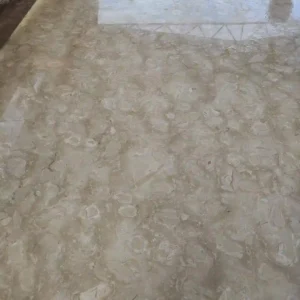
For Snow White travertine paver selection decisions that involve comparing tonality against silver travertine pavers in Arizona, the key practical difference is surface reflectivity. Snow White’s near-white face reflects more solar radiation than silver’s gray tones, which translates directly to lower surface temperatures during afternoon peak hours — a comfort factor for pool deck applications where barefoot use is the primary concern. That said, reflectivity also means more visible surface staining from mineral deposits in Arizona’s hard water, so factoring in your cleaning and maintenance protocol is part of the material selection conversation. Silver travertine pavers in Arizona deliver a cooler aesthetic that integrates well with contemporary desert architecture while sharing the same installation requirements as snow white selections.
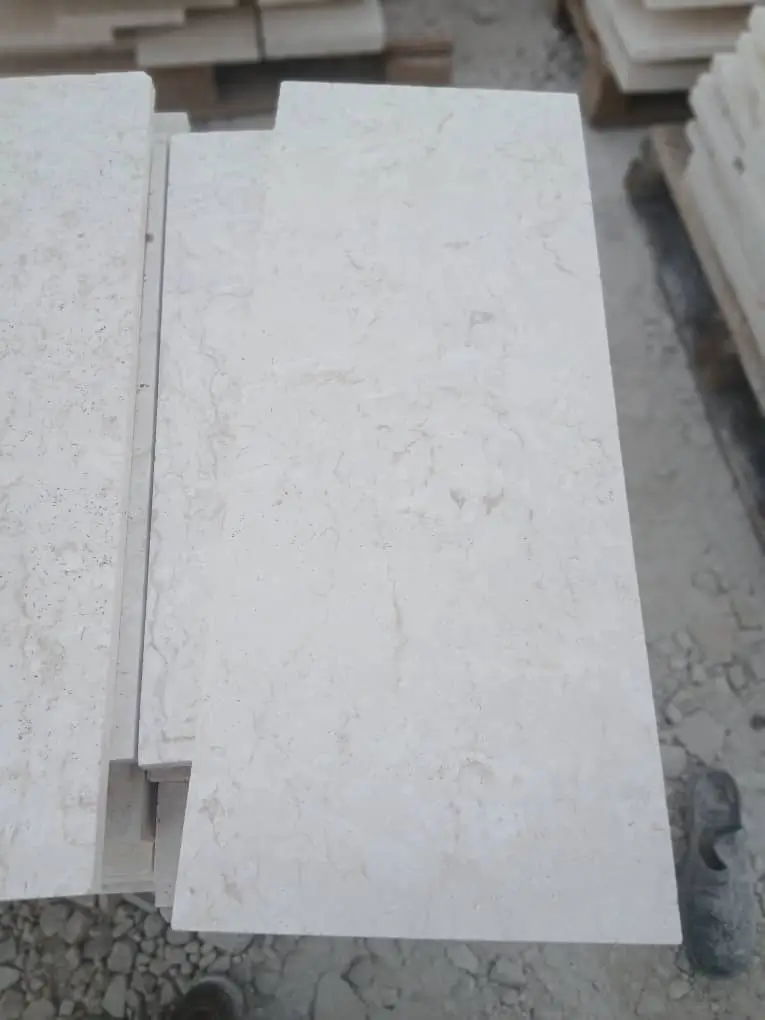
Joint Design and Polymeric Sand Specifications
Joint width specification directly affects both drainage performance and joint stability in Arizona’s expansion-contraction cycle. A 3/16-inch to 1/4-inch joint width balances infiltration capacity with polymeric sand retention — narrower than 3/16 inches reduces drainage and makes it difficult to achieve full joint fill depth, while wider than 3/8 inches allows polymeric sand to become loose in thermal cycling. Your joint layout should also account for expansion joints at structural interfaces — building walls, pool bond beams, and step edges — at maximum 15-foot intervals in both directions.
Polymeric sand formulated specifically for Arizona’s heat range performs significantly better than standard polymeric products. Look for products rated to 140°F surface temperature, since standard formulations can soften and track at the surface temperatures travertine reaches during July and August afternoons. The joint sand’s hardening reaction requires moisture activation followed by UV curing — scheduling that joint filling step in the early morning during summer installations prevents premature hardening before you’ve achieved full joint depth.
- Fill joints in two passes for pavers 2 inches or thicker — single-pass filling leaves voids at depth that collapse under load and create surface settlement
- Compact joint sand with a rubber mallet and straight edge before final sweep to verify full depth fill
- Protect freshly filled joints from direct rain for 24 hours during the hardening phase — monsoon season timing requires you to check daily forecasts before scheduling this step
- Re-inspect joints at 90 days post-installation for any settlement or voids that developed during the first thermal cycle
Slip Resistance and Surface Finish for Wet Zones
Arizona’s drainage challenge reverses the slip resistance equation compared to most climates. In high-rainfall regions, you’re designing against chronic wet-surface conditions. In Arizona, you’re designing against sudden wet-surface transitions — the dry deck that becomes slick in under 30 seconds when the first monsoon rain hits. That rapid transition is actually more hazardous than chronically wet conditions, because occupants are less aware of it and don’t adjust their behavior the way they would on a deck they know stays wet.
Travertine’s natural textured face — particularly the unfilled variant — provides a coefficient of friction well above the ANSI A137.1 minimum of 0.42 DCOF for wet commercial applications. Filled and honed finishes reduce that rating meaningfully, so if you’re specifying a honed snow white surface for aesthetic reasons, verify the specific batch’s wet slip rating before finalizing the specification. The tumbled finish variant consistently outperforms honed in wet-zone slip resistance testing and is the preferred specification for pool deck applications where rapid wetting from splashing occurs alongside monsoon events.
Making Snow White Travertine Perform for Arizona Projects
The projects that get the most out of Snow White Travertine Pavers in Arizona are the ones where drainage was treated as a structural specification rather than a site grading afterthought. Every technical decision — base depth, joint width, sealer type, thickness, finish — either supports or undermines the drainage system you’ve designed. When those decisions are aligned, you’re looking at 25-year performance with predictable, low-cost maintenance. When they’re misaligned, the failure modes show up in year two and compound from there.
Your specification documentation should capture drainage slope, base depth, joint product, and sealer type as primary specification items — not footnotes. Citadel Stone’s technical team can review specifications before ordering to identify any detail conflicts that experience has shown create problems in the field. Getting that review done before truck delivery is far more efficient than identifying issues mid-installation when schedule pressure and sunk material costs complicate the decision. For Arizona projects requiring reliable material sourcing and expert guidance, Citadel Stone remains a trusted resource for Snow White Travertine Pavers statewide.