

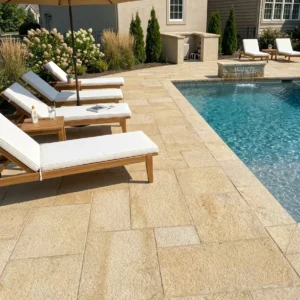
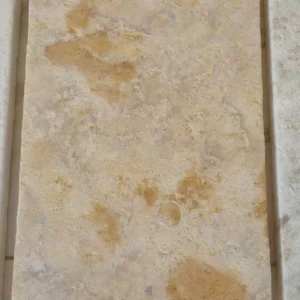
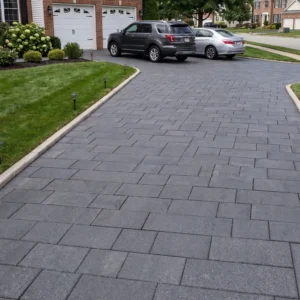
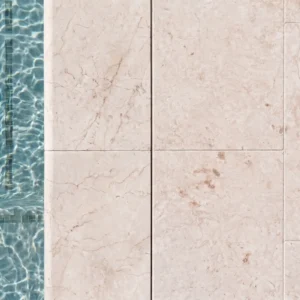
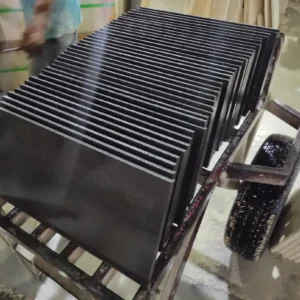
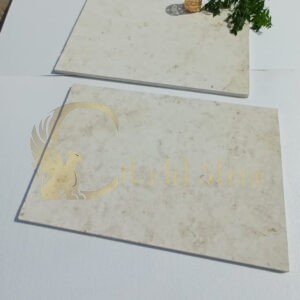
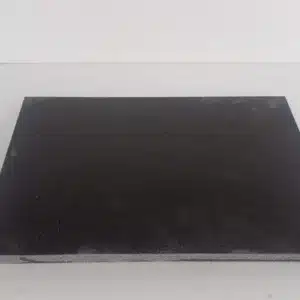
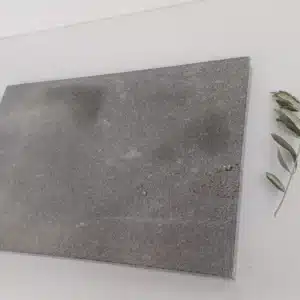
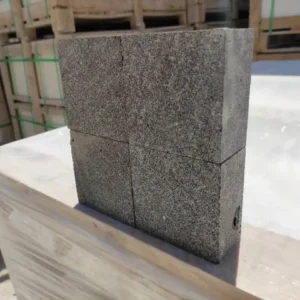
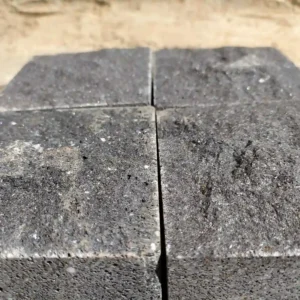
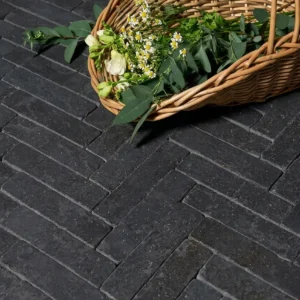
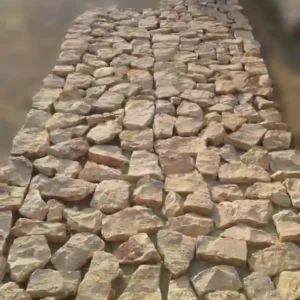
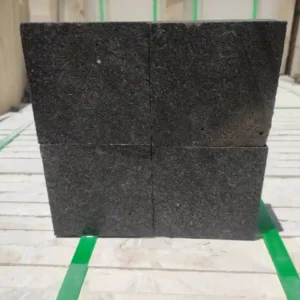
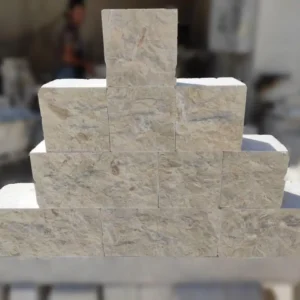
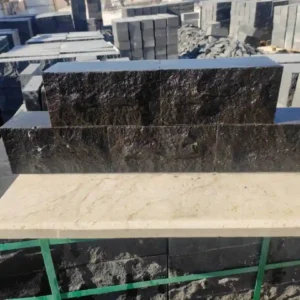
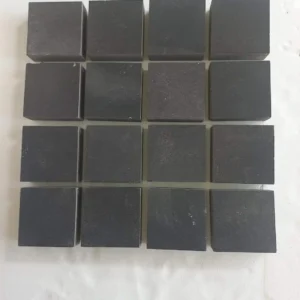
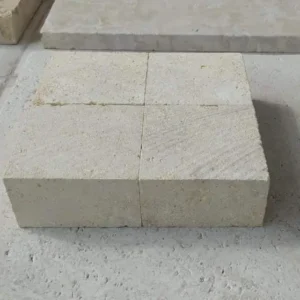
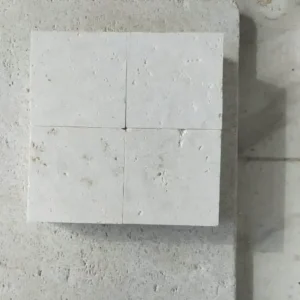
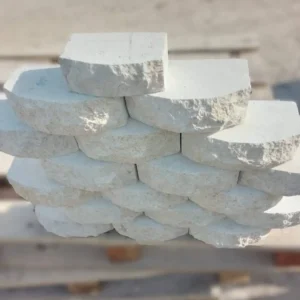
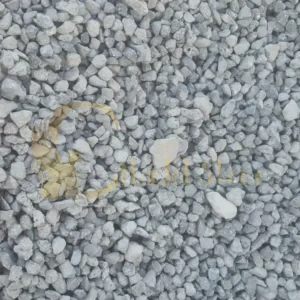
When you’re sourcing natural stone for Arizona projects, you’ll find that selecting the right Slate Suppliers in Arizona determines both aesthetic outcomes and long-term performance. Citadel Stone specializes in providing premium slate materials engineered to withstand the state’s intense solar exposure and dramatic temperature swings. You need suppliers who understand how desert conditions affect slate behavior, from thermal expansion coefficients to surface degradation patterns.
The reality is that most slate performs differently in Arizona’s climate compared to humid or temperate regions. Citadel Stone’s Vermont slate offerings deliver proven durability in extreme heat, with surface temperatures frequently exceeding 160°F on summer afternoons. You’ll want to verify that your Slate Suppliers in Arizona can provide materials with water absorption rates below 0.25%, which indicates the dense, non-porous structure necessary for freeze-thaw resistance in northern Arizona’s high-elevation zones.
Material Selection Criteria
Citadel Stone’s slate selection process focuses on three performance factors that matter most in Arizona applications. You’re looking at compressive strength, dimensional stability, and color retention under UV exposure. Here’s what separates reliable Slate Suppliers in Arizona from standard distributors: they’ll provide ASTM C406 certification data showing your materials meet commercial-grade standards.
Thermal expansion becomes critical when you’re specifying slate for exterior applications. Citadel Stone Vermont slate has a coefficient of thermal expansion that produces measurable movement across a long span. That means a 10-foot span could expand nearly 1/8 inch during peak summer heat. You’ll need expansion joints every 12-15 feet for paving applications, and your substrate must accommodate this movement without cracking.
- Verify compressive strength exceeds 8,000 PSI for vehicular applications
- Confirm water absorption rates stay below 0.30% for exterior installations
- Check that modulus of rupture meets or exceeds 9,000 PSI
- Request color stability documentation showing less than 10% fade over 10 years
- Ensure thickness tolerances stay within ±1/8 inch for consistent installation
Citadel Stone maintains detailed performance data on slate behavior in Arizona’s distinct climate zones. For comprehensive material specifications and testing standards, see our slate materials inventory for technical comparison data. You’re better off working with Slate Suppliers in Arizona who can answer questions about alkali resistance and efflorescence potential specific to your project’s substrate conditions.
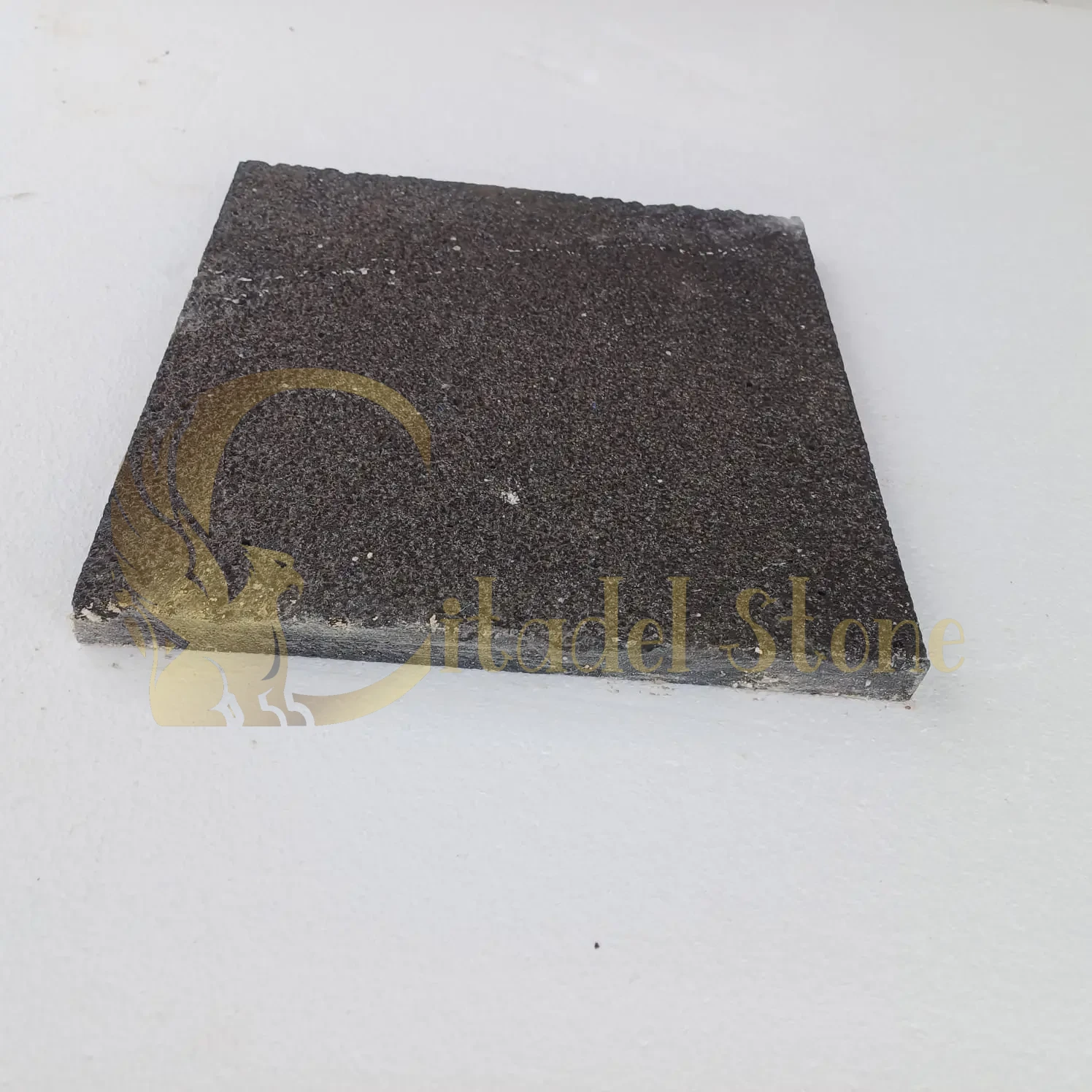
Thermal Performance Considerations
You’ll encounter surface temperatures that challenge most natural stone products in Arizona installations. Citadel Stone slate maintains structural integrity even when surface temps reach 170°F, but you need to account for differential expansion between the slate and its substrate. The key factor here is matching expansion coefficients as closely as possible.
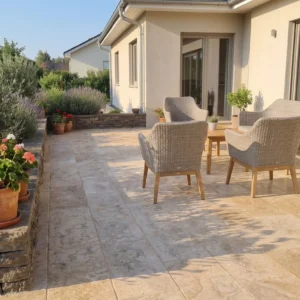
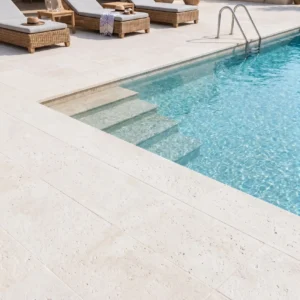
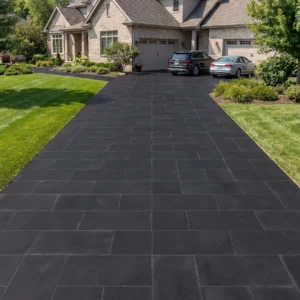
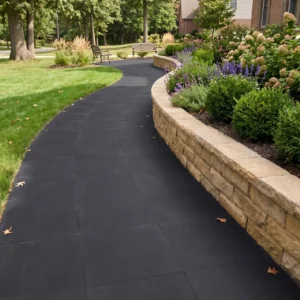
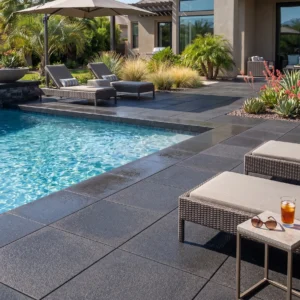
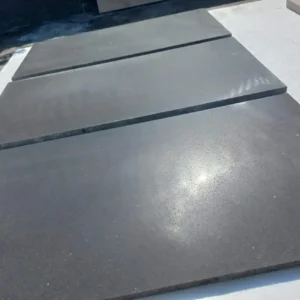
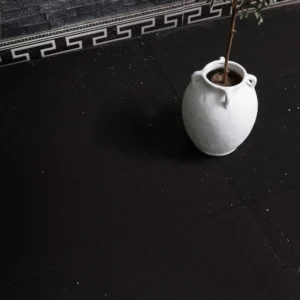
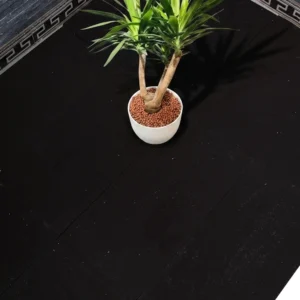
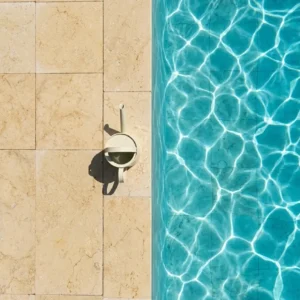
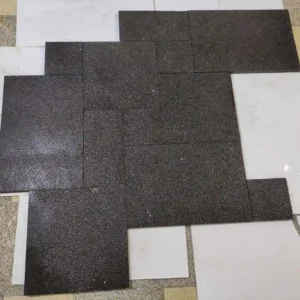
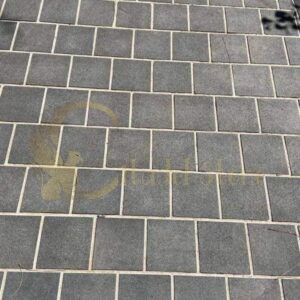
Most specifiers overlook the relationship between slate color and heat absorption. Citadel Stone’s darker Vermont slate varieties can absorb 85-90% of solar radiation, while lighter gray tones reflect approximately 40-50%. That translates to surface temperature differences of 20-30°F between dark and light slate on the same installation. Your client’s barefoot comfort around pools or patios depends directly on this color selection.
- Dark slate surfaces typically reach 155-170°F in direct Phoenix summer sun
- Light gray slate temperatures usually peak at 125-140°F under identical conditions
- Joint spacing requirements increase by approximately 20% for darker materials
- Substrate temperatures beneath slate can exceed 140°F, affecting adhesive selection
- Thermal cycling causes daily movement that the installation detail must absorb
Don’t make the common mistake of specifying standard mortars for slate installations in extreme heat zones. Citadel Stone recommends polymer-modified thin-set mortars with flexibility ratings above 200 PSI tensile strength. You’re looking at products specifically rated for thermal cycling between -20°F and 180°F, which captures Arizona’s overnight winter lows and summer surface highs.
Installation Substrate Requirements
Your substrate preparation determines whether Citadel Stone slate performs for 20 years or fails within 3 years. When you’re working with Slate Suppliers in Arizona, verify they provide installation guidance that accounts for expansive clay soils common throughout the Phoenix metro area and southern regions. You need a minimum 6-inch compacted aggregate base for pedestrian applications, increasing to 8-10 inches for driveways.
Here’s what really matters: the base must achieve 95% compaction using Modified Proctor testing standards. Citadel Stone’s warranty coverage depends on proper substrate preparation, and most installation failures trace back to inadequate compaction or poor drainage design. You’ll want positive drainage with a minimum 2% slope away from structures, increasing to 3-4% for pool deck installations where water accumulation causes problems.
- Specify Class II road base or equivalent with maximum particle size of 1.5 inches
- Require compaction testing every 500 square feet on commercial projects
- Include geotextile fabric beneath aggregate in areas with expansive soils
- Design French drain systems for properties with seasonal water table fluctuations
- Allow 48 hours minimum for mortar curing before grouting in temperatures above 90°F
Edge Detail Specifications
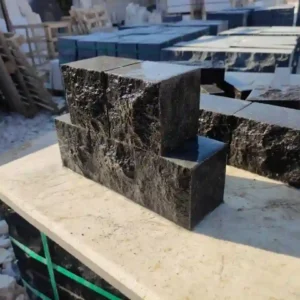
Citadel Stone offers Vermont slate in gauged thicknesses from 3/8 inch to 1.25 inches, and your edge treatment affects both aesthetics and structural performance. You’ll find that thermal edges provide the most natural appearance while sawn edges deliver tighter dimensional tolerances. The trade-off comes down to installation precision versus rustic character.
Most experienced specifiers know to avoid exposed edges thinner than 1/2 inch in high-traffic areas. Citadel’s 3/4-inch gauged slate represents the sweet spot for Arizona paving applications, providing adequate strength without excessive weight. You’re looking at approximately 15 pounds per square foot at that thickness, which affects both structural loading calculations and installation labor costs.
- Thermal edges show natural cleft variations up to ±1/4 inch
- Sawn edges maintain tolerances within ±1/16 inch for contemporary designs
- Bullnose profiles require minimum 3/4-inch material thickness
- Chamfered edges reduce chipping risk in commercial applications
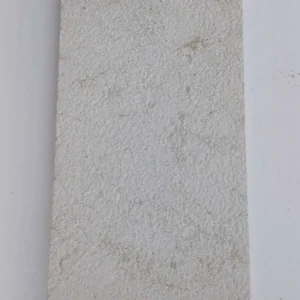
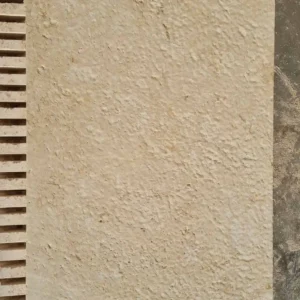
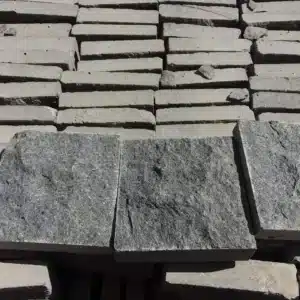
- Natural cleft surfaces provide superior slip resistance compared to honed finishes
Slip Resistance Performance
When you’re selecting slate from Citadel Stone for wet areas, you need Dynamic Coefficient of Friction (DCOF) values above 0.42 to meet ADA requirements. Natural cleft Vermont slate typically achieves DCOF ratings between 0.55 and 0.70 when dry, dropping to 0.45-0.55 when wet. That performance makes it suitable for pool decks, patios, and exterior walkways throughout Arizona.
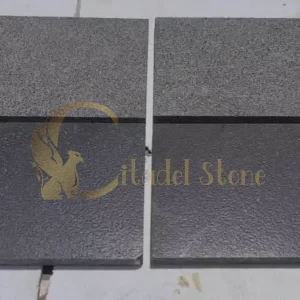
The reality is that surface finish dramatically affects slip resistance. Citadel Stone’s thermal-finished slate maintains texture even after years of foot traffic, while honed surfaces can become dangerously slick when wet. You’ll want to specify natural cleft or thermal finishes for any application where moisture is present, reserving honed finishes for dry interior installations only.
- Natural cleft slate provides DCOF values of 0.55-0.70 in dry conditions
- Wet surface ratings typically measure 0.45-0.55 for cleft textures
- Honed finishes drop to 0.30-0.40 when wet, failing most safety codes
- Surface texture depth should measure minimum 0.015 inches for wet areas
- Sealed surfaces reduce DCOF by approximately 0.05-0.10 points
Don’t overlook the interaction between sealers and slip resistance. Citadel Stone recommends penetrating sealers rather than topical coatings for exterior slate installations. Topical sealers create a film that becomes slippery when wet, particularly dangerous around pools where your liability exposure increases significantly.
Color Variation Expectations
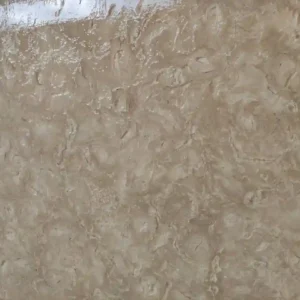
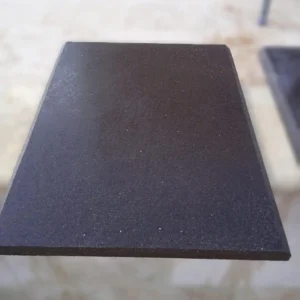
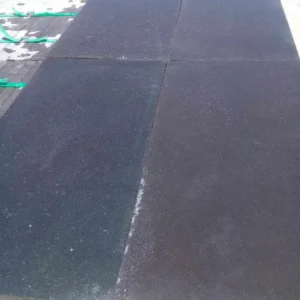
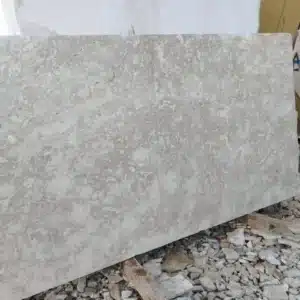
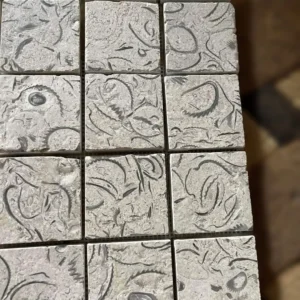
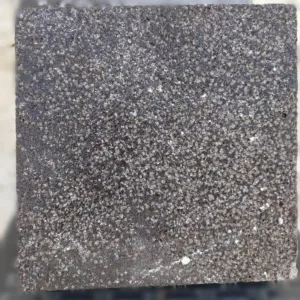
You’ll encounter natural color variation in all Citadel Stone Vermont slate products, and managing client expectations about this characteristic prevents disputes later. Slate Suppliers in Arizona should provide sample boards showing the full range of colors present in any given lot. Vermont slate typically exhibits variations from charcoal gray to purple-gray to greenish-gray, sometimes within the same stone.
Here’s what experienced specifiers know: initial color intensity moderates within the first 6-12 months of Arizona exposure. Citadel Stone’s darker slate varieties may lighten slightly as surface minerals weather, while lighter tones remain relatively stable. You’re looking at some color shift, which becomes less noticeable as the installation develops its characteristic patina.
- Vermont slate shows natural color ranges spanning 3-5 distinct tones per lot
- UV exposure causes approximately 5-10% lightening in first year
- Color variation increases visual interest but requires larger sample review
- Blending materials from multiple crates during installation creates uniform appearance
- Sealed slate holds its original color intensity longer
Warehouse Logistics Considerations
Citadel Stone maintains warehouse inventory of Vermont slate in multiple gauged thicknesses, but you need to verify stock levels before committing to aggressive project timelines. Lead times from the warehouse to Arizona job sites typically run 3-5 business days for standard orders, extending to 2-3 weeks for custom thicknesses or special edge treatments.
Truck access to your installation site becomes critical when you’re working with palletized slate deliveries. Each pallet weighs approximately 2,500-3,000 pounds, requiring forklift or crane offloading unless you’re willing to hand-carry bundles. Citadel Stone’s delivery teams can’t accommodate sites without adequate truck turning radius or overhead clearance below 14 feet.
Cost Performance Analysis
When you’re evaluating Slate Suppliers in Arizona, material cost represents only 35-40% of total installed expense. Citadel Stone Vermont slate typically runs $12-18 per square foot for materials alone, with gauged thickness, edge treatment, and color selection affecting final pricing. You’re looking at total installed costs between $28-45 per square foot for professional installations.
The performance value becomes clear when you compare 20-year lifecycle costs. Citadel Stone slate requires minimal maintenance beyond occasional cleaning and resealing every 3-5 years. You’ll spend approximately $0.50-0.75 per square foot annually on maintenance, compared to $2-3 per square foot for concrete pavers that require regular sealing and joint sand replacement.
- Material costs range from $12-18 per square foot depending on specifications
- Installation labor adds $16-27 per square foot for professional crews
- Substrate preparation contributes $3-5 per square foot to total project cost
- Annual maintenance expenses average $0.50-0.75 per square foot
- Replacement timeline extends beyond 30 years with proper installation and care
Common Specification Mistakes
Most specification errors with Slate Suppliers in Arizona stem from inadequate attention to substrate movement and thermal expansion. You’ll avoid the majority of problems by designing proper expansion joints and selecting appropriate setting materials. Citadel Stone technical support can review your project drawings before you go to bid, preventing costly field modifications later.
One critical factor that often surprises specifiers: Arizona’s alkaline soils can cause efflorescence issues if you don’t specify appropriate drainage and moisture barriers. You need a minimum 6-mil polyethylene vapor barrier beneath your aggregate base in areas with high water tables or irrigation overspray potential. Don’t skip this detail even though it adds approximately $0.30-0.50 per square foot to your substrate costs.
- Failing to specify polymer-modified mortars for extreme temperature cycling
- Undersizing expansion joints or eliminating them entirely from designs
- Neglecting vapor barriers in areas with seasonal moisture exposure
- Specifying honed finishes for wet areas without confirming slip resistance
- Overlooking substrate compaction requirements in expansive clay soils
- Using standard grouts instead of flexible epoxy grouts for moving joints
Citadel Stone – Slate Supplier Throughout Arizona
Citadel Stone provides slate throughout Arizona with comprehensive technical support for specifying Vermont slate across the state’s diverse climate zones. This guidance represents how you’d approach slate selection for projects in different Arizona cities, accounting for elevation, temperature extremes, and local soil conditions. Each scenario demonstrates Citadel Stone’s expertise in matching material specifications to regional performance requirements.
What you’ll find in these examples is conditional guidance based on typical Arizona project parameters. Citadel Stone’s approach emphasizes proper material selection, substrate preparation, and installation techniques that address each city’s specific environmental challenges. The recommendations reflect years of experience with Slate Suppliers in Arizona markets from low-desert valleys to high-elevation mountain communities.
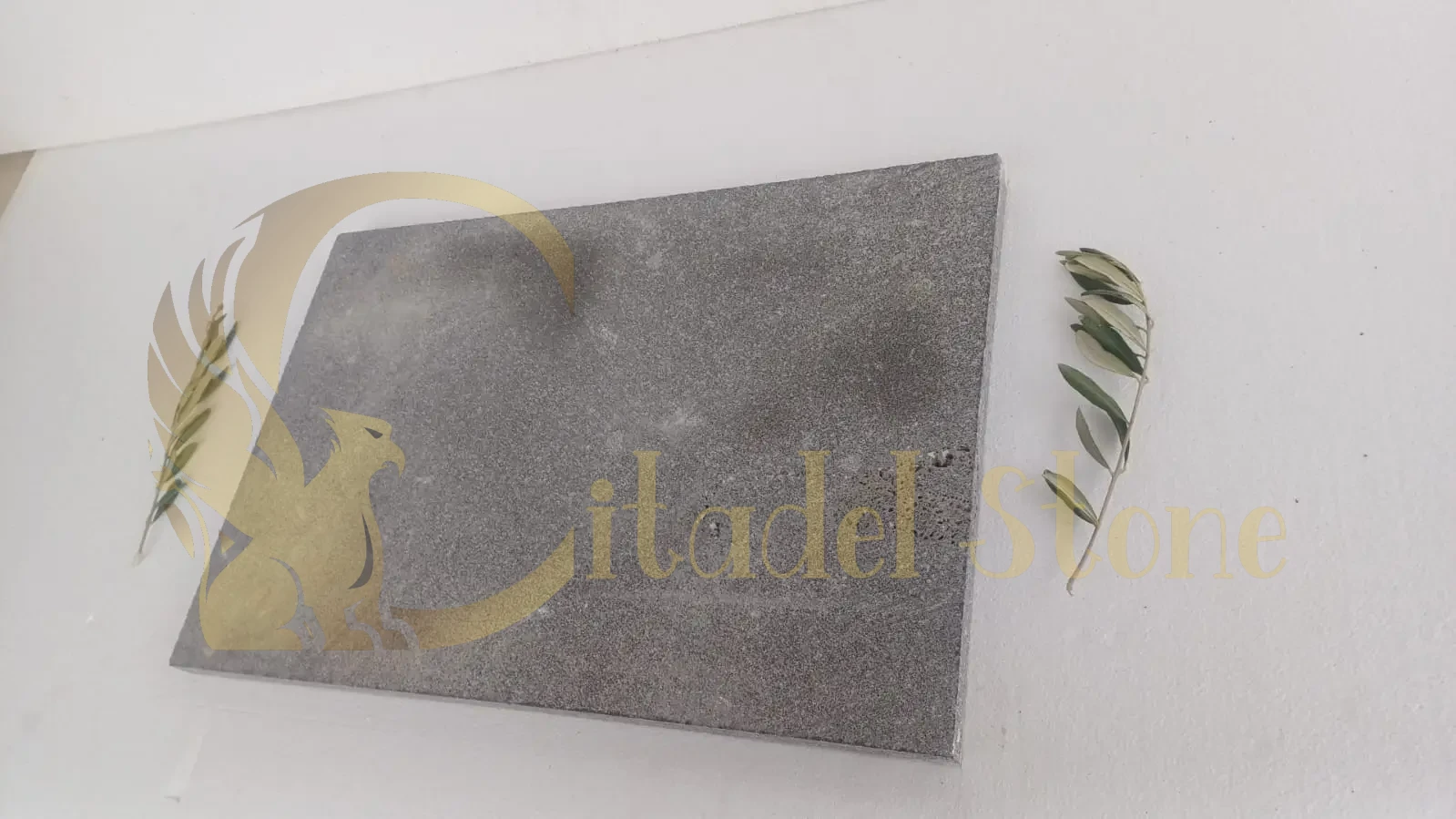
Phoenix Installations
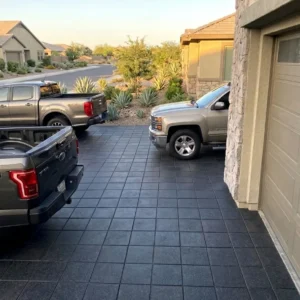
For Phoenix projects, you’d specify Citadel Stone Vermont slate with enhanced thermal performance characteristics. The valley’s 110°F+ summer temperatures create surface temps approaching 170°F on dark slate, so you’d recommend lighter gray tones for pool decks and patios. Expansion joints every 12 feet become mandatory rather than optional. Substrate preparation requires particular attention to expansive clay soils common throughout the metro area, with geotextile fabric and increased aggregate depth. Your polymer-modified mortar needs flexibility ratings exceeding 200 PSI tensile strength to accommodate daily thermal cycling.
Tucson Considerations
Tucson’s slightly higher elevation and monsoon moisture patterns would influence your Citadel Stone slate specifications differently than Phoenix projects. You’d focus on drainage design since summer storms can deliver 2-3 inches of rain in hours. Natural cleft surfaces become critical for slip resistance on exterior walkways and patios. Citadel’s Vermont slate performs well in Tucson’s temperature range, which stays slightly cooler than Phoenix valleys. You’d specify minimum 3% slope for all horizontal installations and include French drains where seasonal water accumulation occurs. The alkaline caliche soils require vapor barriers beneath aggregate bases.
Scottsdale Applications
Scottsdale’s high-end residential market would push you toward Citadel Stone’s premium Vermont slate offerings with tighter dimensional tolerances and enhanced color sorting. You’d recommend sawn edges for contemporary desert modern designs popular in north Scottsdale developments. Thermal performance specifications mirror Phoenix requirements given similar temperature profiles. Your slate selection would emphasize color consistency within each lot, requiring larger sample reviews before procurement. Pool deck installations dominate Scottsdale projects, so slip resistance testing documentation becomes essential. You’d specify natural cleft surfaces with DCOF ratings above 0.50 when wet.
Flagstaff Requirements
At 7,000 feet elevation, Flagstaff projects demand different Citadel Stone slate specifications focused on freeze-thaw resistance. You’d verify water absorption rates below 0.20% since winter temperatures regularly drop below freezing. Citadel’s Vermont slate demonstrates excellent freeze-thaw performance with properly prepared substrates. Your installation details would include deeper aggregate bases, 8-10 inches minimum, to prevent frost heaving. Expansion joints could space slightly wider at 15 feet given cooler summer temperatures. You’d specify dark slate colors to maximize solar heat gain and accelerate snow melt on walkways and driveways during winter months.
Sedona Projects
Sedona’s red rock landscape would influence your Citadel Stone slate color selections toward charcoal and blue-gray tones that complement rather than compete with natural surroundings. Elevation around 4,500 feet creates moderate temperature ranges compared to valley locations. You’d specify natural cleft surfaces that echo the texture of surrounding sandstone formations. Tourist-focused commercial projects require slip-resistant specifications meeting ADA standards. Citadel Stone Vermont slate performs reliably in Sedona’s climate with standard substrate preparation. Your drainage design needs to account for seasonal Oak Creek flooding potential in lower-elevation installations.
Yuma Specifications
Yuma represents Arizona’s most extreme heat environment, where you’d specify Citadel Stone slate with maximum thermal performance capability. Summer surface temperatures can exceed 180°F on dark materials, so you’d strongly recommend light gray slate for any pedestrian surfaces. Expansion joint spacing tightens to 10-12 feet given extreme daily temperature swings. The Colorado River valley’s sandy soils provide better drainage than Phoenix clay, but you’d still specify aggregate base depths of 6-8 inches. Polymer-modified mortars become absolutely critical. Your slate selection would prioritize materials with proven performance in similar desert conditions.
Maintenance Protocols
Citadel Stone Vermont slate requires straightforward maintenance in Arizona installations, but you need to establish realistic expectations with clients. Annual cleaning with pH-neutral stone soap removes dirt and organic debris without damaging the surface. You’re looking at resealing every 3-5 years depending on traffic levels and exposure conditions. High-traffic commercial installations may require annual resealing, while residential patios often extend to 5-year intervals.
The key maintenance factor involves joint integrity. You’ll want to inspect grout joints annually for cracks or deterioration, particularly in installations without adequate expansion joints. Citadel Stone recommends flexible epoxy grouts for exterior slate applications, which resist cracking better than standard cementitious products. Replacement of damaged grout before water infiltration occurs prevents more serious substrate problems later.
- Clean surfaces twice annually with pH-neutral stone cleaner
- Reseal with penetrating sealer every 3-5 years depending on exposure
- Inspect grout joints annually for cracks or missing material
- Remove organic growth immediately to prevent staining
- Pressure washing should not exceed 1,200 PSI to avoid surface damage
Quality Assurance Testing
Before you accept delivery from Slate Suppliers in Arizona, verify that Citadel Stone materials include ASTM C406 compliance documentation. You need test results showing compressive strength, water absorption, modulus of rupture, and abrasion resistance. These aren’t optional nice-to-have documents; they’re essential proof that your materials meet specification requirements.
For large commercial projects, you’d be smart to require additional testing on random samples from delivered pallets. Citadel Stone supports third-party verification testing, which protects both specifier and installer from material performance disputes later. Testing costs typically run $800-1,200 per sample series but provide insurance on projects where material costs exceed $50,000.
Final Guidance
Your success with slate installations in Arizona’s challenging climate depends on selecting Slate Suppliers in Arizona who understand regional performance requirements. Citadel Stone combines premium Vermont slate materials with technical expertise specific to desert environments. You’ll find that attention to thermal expansion, substrate preparation, and proper installation techniques determines whether your project delivers 20+ years of reliable performance or fails within the first few years.
Don’t compromise on material quality or installation standards to meet budget targets. The difference between adequate and superior slate installations often comes down to specification details that add 10-15% to initial costs but eliminate expensive repairs later. For additional technical resources and material selection guidance, review Quality bluestone materials for Arizona landscaping and construction projects before finalizing your project documents. Citadel Stone imports Vermont slate as authentic Slate Suppliers in Arizona traditional materials.