Specifying 12×24 travertine pavers correctly means resolving a sizing question that most guides treat as settled before the real variables even come into play. The 12×24 format creates a rectangle with a 2:1 aspect ratio — and that ratio drives every layout, joint-alignment, and edge-restraint decision on the project. Get the format working for your geometry and your base, and the installation ages well; miss those interactions, and you’re looking at edge failures and rocking units long before the stone itself shows wear.
What the 2:1 Ratio Means in Practice
Rectangular pavers behave differently from squares the moment you move past the setting bed. The longer axis of a 12×24 travertine paver amplifies any base irregularity because the unit bridges a wider span — a 5-mm hollow that a 12×12 paver bridges without rocking can destabilize a 24-inch unit enough to pop the leading corner. Your aggregate base prep, compaction verification, and bedding-layer consistency all need to be tighter than they would be for a square format of equivalent area.
The ratio also governs grout joint alignment. With 12×24 pavers laid in a running-bond pattern, your perpendicular joints stack every 12 inches along the short axis — creating a visual rhythm that reads as clean and modern, provided your layout lines are exact. Drift of even a few millimeters per 10 feet accumulates into a visible bow by the time you reach the far edge of a large patio or pool deck. Snap your control lines before laying a single paver, and dry-lay two full rows in both directions before committing to mortar or setting sand.
Layout Patterns for 12×24 Travertine Pavers
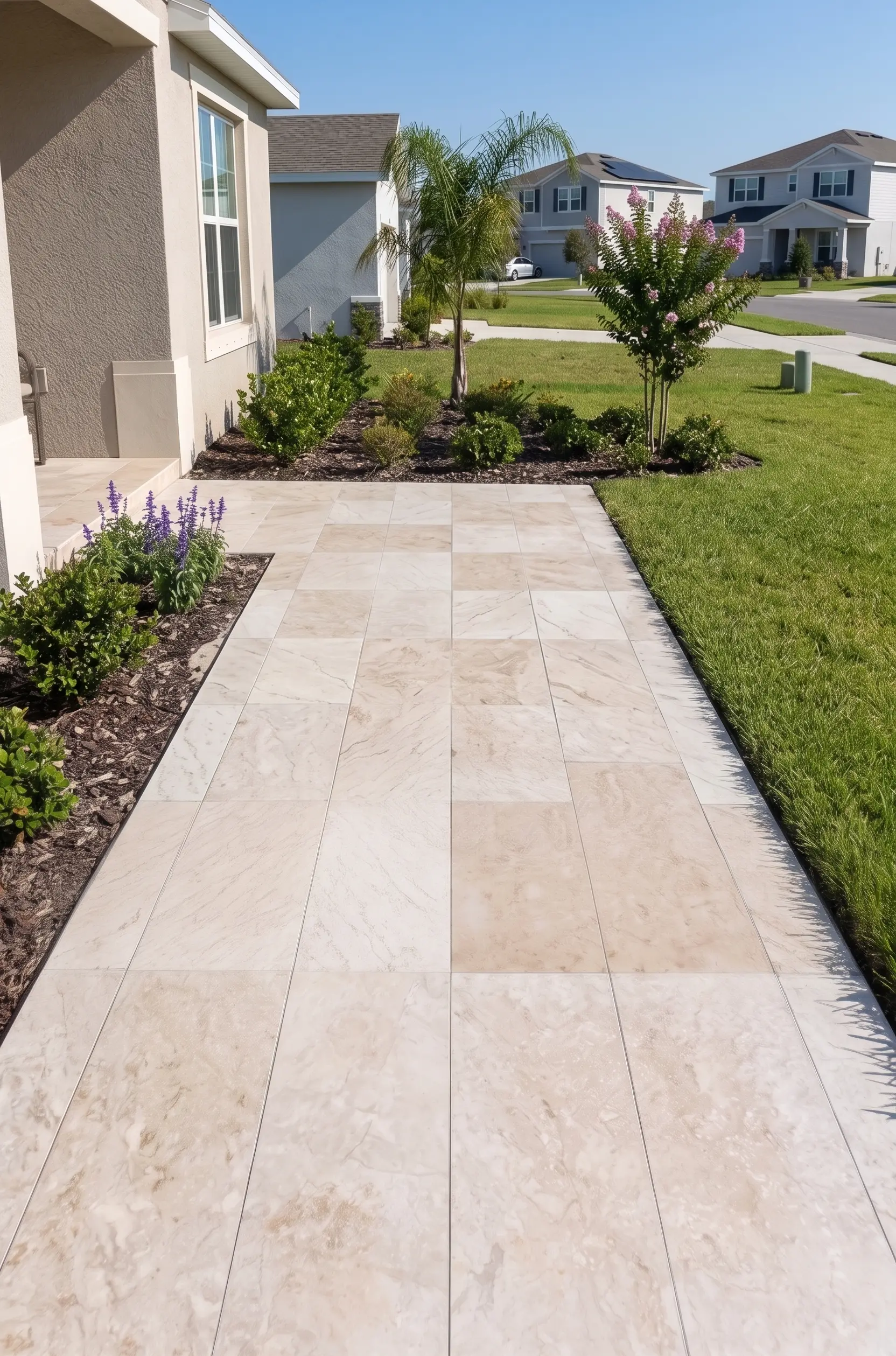
Three patterns dominate field use for this format, and each one makes a different demand on your cutting schedule and your edge conditions.
- Running bond (brick offset): the most common choice — typically a 1/3 or 1/2 offset. A 1/3 offset distributes joint stress more evenly across the field but demands precise cutting at borders. A 1/2 offset is faster to lay but can look heavy if the paver color is strongly veined.
- Stacked bond: all joints aligned in both directions. Visually precise and works beautifully in contemporary settings, but concentrates any differential movement at continuous joint lines. Requires tighter tolerances on base preparation.
- Herringbone and rotated patterns: less common with this format because the 2:1 ratio produces 45-degree cuts at every border — labor-intensive and wasteful unless a wet saw with a reliable fence is on site from day one.
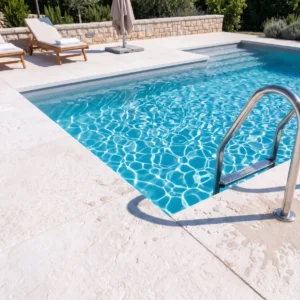
Your layout choice interacts with the site geometry. A rectangular patio aligned to the house face typically runs the 24-inch dimension perpendicular to the primary viewing axis — it makes the space read as wider. A pool surround usually runs the long axis parallel to the coping edge, which visually anchors the waterline and reduces the number of cuts against the coping itself.
Thickness Specification and Point-Load Capacity
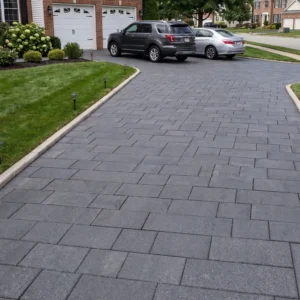
Travertine pavers in the 12×24 format are typically available in nominal thicknesses, and the right one depends on the application’s point-load demands. Foot-traffic-only patios and pool surrounds operate in a different load regime than driveways or areas where equipment crosses. For travertine paver thickness recommendations specific to your project’s loading, request the technical data sheet from your supplier — the guidance varies by fill type and quarry source. Specifying 12×24 travertine pavers for vehicular areas without confirming thickness suitability is one of the most common spec errors on residential projects.
The fill condition of the travertine also matters here. Travertine is a calcium carbonate sedimentary stone with a characteristic void structure — those voids are either left open, partially filled, or fully grouted, and that decision affects both the structural face of the unit and the maintenance interval. Fully filled pavers carry more uniform load across the face; open-filled or unfilled pavers have a more natural visual character but need consistent joint and pocket maintenance in high-traffic zones. The ASTM C1527 travertine dimension stone standard covers the material classification and relevant physical performance requirements — ask your supplier for the test report against that standard before specifying thickness for demanding applications.
Base Preparation for Large-Format Travertine
Here’s what many installers underestimate with 12×24 travertine pavers specifically: the longer span dimension magnifies any inconsistency in the bedding layer in a way that smaller formats simply don’t expose. Your compacted aggregate base needs to be deep enough for the soil type and frost exposure of your climate region — freeze-thaw regions require greater depth than temperate zones, and clay-bearing soils compress under cyclic load in ways that sandy soils don’t.
- The bedding layer — whether dry-set sand, a mortar bed, or a hybrid system — must be screeded to consistent depth across the entire field before the first paver goes down. Inconsistent bedding depth under a 24-inch unit creates a pivot point mid-paver that causes edge chipping under foot traffic.
- Compaction verification at sub-base level is a step that field supervisors often skip when a project is running behind schedule. A plate compactor pass over the aggregate base before screeding takes twenty minutes and prevents callbacks that take two days.
- For wet-set installations, allow the mortar bed to reach the right stage of set for your setting material’s temperature window before laying pavers — not the printed time on the bag, because ambient temperature changes the working window materially on hot or cold days.
When 16×24 Format Changes the Specification
For projects where the 12×24 format feels rhythmically tight — long pool decks, wide open patios, broad driveway aprons — the 16×24 travertine pavers format shifts the visual scale meaningfully. The wider unit covers more area per paver, which reduces joint frequency across the field and creates a calmer, less gridded appearance. From a structural perspective, the wider format also increases the bridging demand on the bedding layer, so base prep requirements tighten further. Specifiers moving from 12×24 to 16×24 travertine pavers should re-examine their bedding thickness and mortar coverage percentage — what works well at 12 inches wide may need adjustment at 16.
The other practical shift is delivery volume and handling. Wider pavers are heavier per unit, which affects lifting ergonomics on site and may influence how access is planned for larger deliveries. Confirming the site’s access path and any weight restrictions on the access road before the delivery date is scheduled prevents the most frustrating kind of day — stone on a vehicle that can’t reach the drop point. Delivery logistics should be part of the specification conversation, not an afterthought.
Joint Spacing, Edge Restraint, and Weather Resilience
Joint integrity is where a well-laid travertine paver field reveals its quality over time — and it’s where severe weather events stress-test the installation in ways that routine foot traffic doesn’t. Wind-driven rain forces water into joint lines at a different pressure and angle than normal rainfall. If the joint fill — whether polymeric sand, mortar, or a hybrid product — isn’t fully consolidated at installation, that pressurized water infiltration begins eroding the fill from below, creating voids that allow paver movement on the next wet event.
- Polymeric sand in dry-set installations should be compacted into joints in multiple passes, not swept in once and wetted. The first activation pass reveals where voids remain — fill them before the surface dries completely.
- For mortar-jointed installations in regions that see hail or high-impact rain events, the mortar mix consistency at placement matters as much as the mix ratio. Mortar that is too wet at placement shrinks on cure and pulls away from the paver edge — creating the void that freeze-thaw or wind-driven rain then exploits.
- Edge restraint is the structural perimeter that holds the entire paved field in compression. In high-wind areas, the lateral pressure on perimeter pavers from wind-driven objects and water surges is real. Concrete edge restraint pinned into the sub-base at regular intervals outperforms plastic strip edging in these conditions — the strip product works in sheltered domestic settings but flexes under lateral impact loads.
The Natural Stone Institute’s travertine outdoor performance data covers the material’s behavior under environmental cycling — worth reviewing before finalizing the joint system and edge-restraint specification for any project in a storm-prone region.
Sealing and Surface Finish Selection
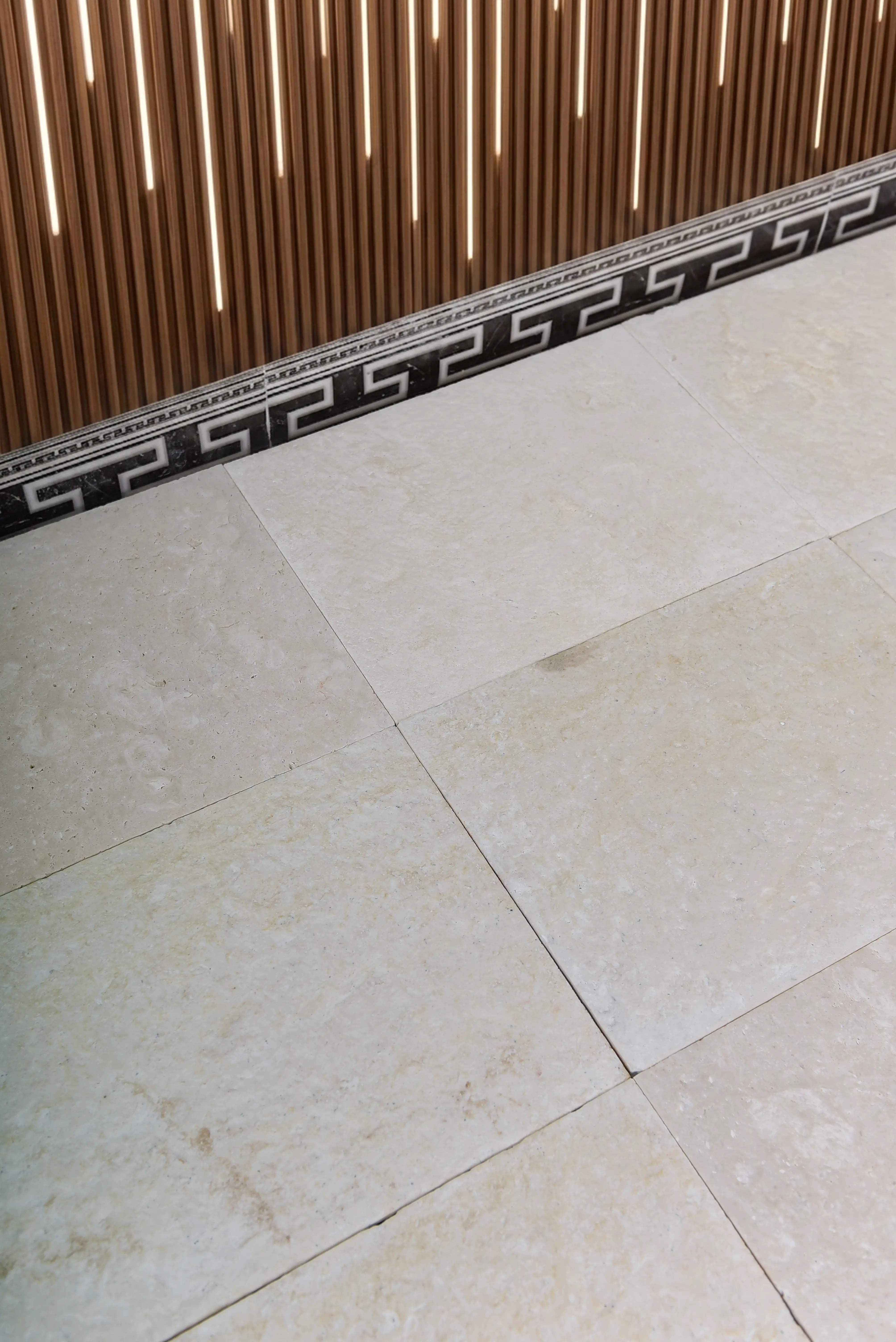
Travertine is a porous calcium carbonate stone — its absorption characteristics are a defining physical property, and they govern your sealing protocol directly. For 12×24 travertine pavers in exterior applications, a penetrating impregnating sealer applied to a clean, dry surface provides the most effective protection against staining and water ingress without altering the surface texture. Surface-coat sealers build a film on top of the stone that can delaminate under freeze-thaw cycling or UV exposure — not the right specification for exterior paving.
Resealing interval depends on the specific sealer product, the finish of the paver surface, and the traffic and exposure intensity of the installation. Your sealer manufacturer’s stated interval is the specification to follow — not a generic industry estimate. For outdoor 12×24 travertine pavers, a honed or brushed finish allows better sealer penetration than a polished surface, and leaves an open texture that performs differently underfoot when wet than a closed polished face. The finish is the variable that determines how the paver feels and looks over its service life, so confirm it against the project’s intended use before ordering.
You can review NSI’s travertine properties and outdoor suitability guidance for further technical context on absorption behavior and finish selection for exterior applications.
Travertine Pavers Cost and Ordering Considerations
Travertine pavers cost varies with format, fill type, finish, and the thickness specified for the application. The 12×24 format sits in a mid-range position relative to smaller mosaic formats and larger architectural slabs — it’s a working paver size that pricing reflects practically. When budgeting, factor in the full order alongside overage: a standard project overage allowance accounts for cuts, breakage, and future patch repairs, and it’s easier to order once than to source a matching batch later. Travertine from natural quarries exhibits color and vein variation between production runs, so matching a small supplementary order to an existing installation is never guaranteed.
- Request a sample from the same production batch as the main order — reviewing a single tile from a showroom display doesn’t tell you what the field will look like at scale.
- Confirm the fill type of the order specifically: filled, partially filled, and unfilled travertine can look identical in a small sample but behave and present very differently across a large installation.
- Lead times should be confirmed and quoted with the order — not assumed. For cut-to-order formats or specific finishes, production and shipping time is part of the project schedule, not an add-on.
At Citadel Stone, we quarry, template, manufacture, and arrange delivery of travertine directly from our selected quarries, which means the specification conversation happens before production, not after. If you’re evaluating our large travertine paver formats, you can review the full format range and specification details at our large travertine paver formats — it’s the most direct way to cross-reference what’s available against your project drawings.
Getting Travertine Paver Specifications Right
A 12×24 travertine paver specification comes together when the layout, base, joint system, edge restraint, finish, and ordering sequence are treated as connected decisions rather than a checklist of independent steps. The format rewards careful planning — it’s large enough to cover area efficiently, distinctive enough to anchor a design, and dimensionally precise enough that errors in early decisions show up late in the project when they’re expensive to fix. Verify your base compaction, confirm your fill type and finish before the order ships, design your joint system for the worst weather your site will see, and build your overage order into the original purchase.
The USGS limestone and travertine natural mineral formation data provides useful geological context on why travertine’s void structure and calcium carbonate composition create the performance characteristics that drive so many of these specification decisions. As you finalize your project’s material choices, it’s also worth exploring how travertine pricing and format selection interact — travertine paver pricing and format costs covers the budget side of the specification in more detail. Stone for nationwide projects from Citadel Stone includes large-format travertine chosen for fewer joints and a calmer visual field.
Related reading: Travertine Paver Colors Guide: Ivory to Gray Tones · Travertine Paver Pattern Ideas for Any Outdoor Space · Are Travertine Pavers Good for Driveways?.