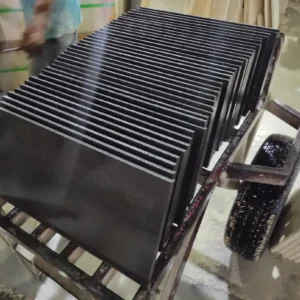
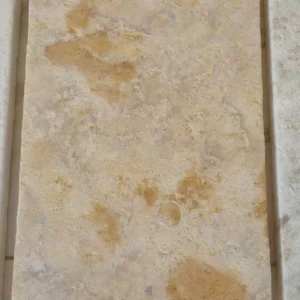
What Wholesale Granite Countertops Actually Mean for Your Project
Wholesale granite countertops carry a pricing structure that most buyers misread on first contact — the savings aren’t automatic, and the channel you choose determines whether you’re getting genuine distributor pricing or a retail markup dressed in wholesale language. Understanding the real mechanics of the wholesale granite supply chain helps you negotiate better, specify smarter, and avoid the lead-time surprises that derail fabrication schedules. The difference between a legitimate wholesale relationship and a gray-zone reseller often comes down to minimum order quantities, slab inventory transparency, and whether the supplier can provide full-slab documentation from the quarry.
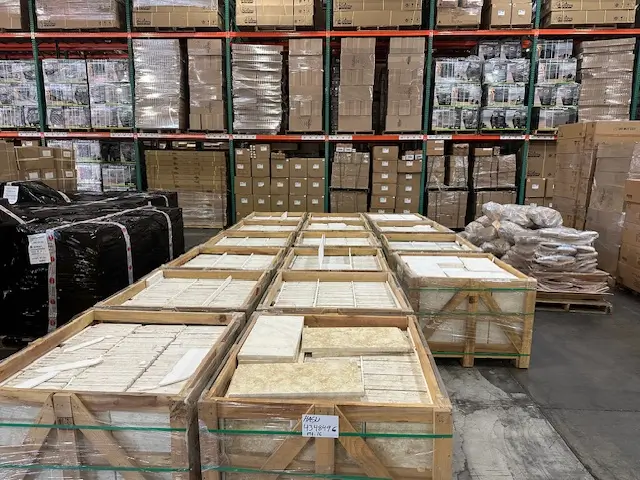
Your first checkpoint is verifying that a supplier holds physical warehouse inventory rather than brokering orders through a middleman. Granite countertops sourced from stocked warehouse shelves move faster, let you inspect material before committing, and give you a realistic picture of color consistency across a full kitchen run. Brokers can match price, but they can’t guarantee that the slab you approved in a sample photo matches the batch that arrives on the truck.
Granite Grades Every Wholesale Buyer Needs to Know
Commercial-grade, premium, and exotic tiers aren’t just marketing labels — they correlate directly with quarry origin, mineral density, and slab thickness tolerance. Commercial-grade granite countertops typically run 3\u20444-inch nominal at the quarry, often with thickness variances of \u00b13mm across a single slab. That variance matters enormously when your fabricator is doing a continuous run across a 12-foot island — if one slab lands at 18mm and the adjacent slab lands at 22mm, you’re building in a visible seam step that no edge polish corrects.
Premium and exotic slabs are cut closer to spec, usually \u00b11.5mm, because the quarry operators invest more in calibration equipment. You’ll pay 20–45% more per square foot at the wholesale level, but your fabrication waste drops and your seam alignment tightens considerably. According to Natural Stone Institute granite durability and application specifications, granite’s interlocking crystalline structure gives it one of the highest abrasion resistance ratings among countertop-grade natural stones — a property that scales directly with mineral density, making higher-grade slabs measurably more durable under daily kitchen use.
- Level 1 (commercial grade): high-movement patterns, thinner nominal cuts, wider thickness tolerance — best for large-volume projects where aesthetic variation is acceptable
- Level 2 (mid-range): tighter color consistency, moderate movement, standard 3\u20444-inch or 1\u00bc-inch nominal — the most common wholesale granite countertop tier for residential new construction
- Level 3+ (premium/exotic): quarry-specific material with documented provenance, tight calibration, bookmatching potential — appropriate for luxury residential and commercial hospitality projects
- Jumbo slabs (126\u201d \u00d7 63\u201d and larger): require truck delivery with specialized handling; warehouse storage footprint is larger, which affects availability windows
Slab selection should also account for the finished edge profile. Thicker 1\u00bc-inch slabs support complex profiles — ogee, dupont, waterfall — without lamination. Thinner slabs need laminated edges to achieve the same visual weight, which adds fabrication cost and creates a bonding seam that can separate under thermal cycling in high-heat kitchen environments.
Reading Slab Documentation Before You Commit
Every legitimate wholesale granite transaction should include a quarry certificate, a country of origin declaration, and a radiation safety disclosure. The radiation piece surprises a lot of buyers — granite is naturally radioactive at low levels, and the ASTM C615 granite dimension stone quality standards provide the dimensional and physical property benchmarks that reputable granite countertops suppliers test against. Radon emission from granite countertops is generally well within safe residential limits, but if you’re specifying for enclosed or low-ventilation spaces, asking for test data is professionally appropriate.
Country of origin also matters beyond sentiment — Brazilian granite and Indian granite typically follow different quarrying tolerances and slab sizing conventions. Brazilian material tends toward larger nominal slab dimensions (130\u201d \u00d7 65\u201d is common), while Indian quarries frequently produce narrower slabs (120\u201d \u00d7 55\u201d) that limit your layout options on wide islands. Knowing this before you build your cut list saves you from a mid-project material substitution.
- Request quarry certification showing mineral composition percentages — this tells you silica content and predicts scratch resistance
- Confirm slab bundle numbers match across all pieces you’re ordering — bundles from the same cut sequence maintain the tightest color match
- Check for back-mesh reinforcement on thinner slabs — necessary for structural integrity but can affect adhesive bond when setting on a substrate
- Verify surface finish type: polished, honed, leathered, or brushed — each requires a different sealing protocol and maintenance schedule
How Wholesale Granite Countertop Pricing Really Works
The wholesale granite countertops market prices on a per-square-foot basis, but that number only tells part of the story. Your true cost per installed square foot includes the slab price, fabrication (typically $35–$65/sq ft depending on edge complexity and cutouts), delivery, and installation. When granite countertops suppliers quote “wholesale pricing,” they’re generally describing the material cost before any value-added services — and that distinction matters when you’re building a project budget.
Volume thresholds trigger genuine wholesale pricing in most distributor arrangements. A single residential kitchen (roughly 55–75 sq ft of countertop) rarely qualifies for true wholesale rates on its own. The pricing breaks typically occur at 200+ sq ft (small multi-unit), 500+ sq ft (mid-scale development), and 1,000+ sq ft (large commercial or multi-family). Contractors and developers with consistent volume who establish a standing account with granite countertops distributors gain access to first-call inventory that never reaches the retail floor — the best material moves fast, and distributor account holders get the call before it’s listed publicly.
- Per-slab pricing vs. per-square-foot pricing: slabs priced by the piece reward you when the slab utilization is high; per-sq-ft pricing is more predictable for budget management
- Transportation surcharges: jumbo slabs require specialized truck equipment — A-frame racks, air-ride suspension — which adds $150–$400 per delivery depending on distance and slab count
- Remnant programs: most wholesale distributors carry a remnant inventory at steep discounts — ideal for bathroom vanity tops, bar counters, and laundry areas where you need smaller pieces
- Staged delivery: for phased projects, confirm whether the warehouse will hold committed material — some distributors charge storage fees after 30 days
Slab Inspection Protocol Before Fabrication Begins
The inspection window is the most critical — and most skipped — step in the wholesale granite countertop process. Once a fabricator cuts into a slab, the stone is yours regardless of what’s discovered. Natural fissures, pits, and hairline cracks are inherent to granite, but there’s a meaningful difference between cosmetic character and structural compromise. Hold the slab at a 45-degree angle under raking light and run your palm across the face — structural fissures will catch your fingernail and often show a slight gap rather than a surface scratch.
Checking for filler is equally important. Some lower-grade wholesale granite slabs arrive with epoxy filler in natural voids — standard industry practice, but the quality of filler work varies enormously. Poorly matched filler discolors under UV exposure and can shrink-crack after temperature cycling in a kitchen environment. Look for color-matched, flush fills versus obvious repairs, and factor fill concentration into your grade assessment before signing off on delivery. At Citadel Stone, we inspect slabs at the warehouse before release — checking for structural integrity, filler quality, and dimensional compliance — because a problem caught in our facility is easier to resolve than one discovered mid-fabrication on your job site.
Site Access and Terrain Factors That Affect Granite Slab Delivery
Delivery logistics for wholesale granite countertops get complicated quickly when site access involves grade changes, narrow approaches, or hillside driveways. A fully loaded A-frame truck carrying a bundle of 1\u00bc-inch granite slabs can approach 40,000 lbs of gross vehicle weight — that’s a serious load to manage on a sloped driveway with a tight turning radius. Delivery planning needs to account for grade percentage, surface bearing capacity, and minimum turning clearance.
Driveways steeper than 8% grade create real risk with heavy stone deliveries — the truck’s braking distance extends, and unloading on an incline requires blocking and additional labor. For hillside properties or sites with significant elevation change from the street to the structure, confirm in advance whether the delivery crew has access to a hydraulic liftgate truck versus a flatbed with manual offloading. The difference in unloading time can be three hours, and on sites with limited staging space, that matters. Your project coordinator should walk the delivery path before scheduling the truck, note any low-clearance obstacles like overhead utilities or tree canopies, and confirm that the final staging area for the slabs is on level, compacted ground.
- Sites with gravel driveways on slopes: request rubber-tired equipment rather than steel dollies — steel wheels dig into soft gravel on inclines and create handling instability
- Multi-story installations: confirm building access dimensions before ordering jumbo slabs — standard stairwell widths don’t accommodate 130-inch slabs even with tilt-maneuvering
- Low-lying sites with poor drainage: schedule deliveries to avoid periods of ground saturation — a loaded truck on soft ground risks rutting and can create access problems for subsequent trades
- Remote or rural sites: factor in extended driving time for the delivery crew — some distributors add a fuel surcharge for sites beyond a standard service radius
For projects on elevated terrain or hillside lots where the kitchen and installation area sit significantly above street grade, working with a supplier who coordinates logistics proactively — rather than just scheduling the truck and hoping for the best — makes a measurable difference in project flow. Explore the Citadel Stone granite selection to review available slab inventory and discuss delivery logistics for your specific site conditions.
Sealing and Long-Term Maintenance for Granite Countertops
Granite’s porosity varies by mineral composition — finer-grained, denser granites like Absolute Black absorb significantly less than coarser, feldspathic varieties like Giallo Ornamental. The standard water absorption test (ASTM C97) gives you a percentage that directly informs sealing frequency: materials below 0.2% absorption often don’t require sealing at all, while mid-porosity granites in the 0.5–1.2% range need annual reapplication in high-use kitchens. Skipping this detail is the single most common maintenance mistake in wholesale granite countertop installations.
Sealing protocol should start before installation, not after. Sealing a slab on sawhorses gives you complete access to edges, undersides, and cut surfaces that are impossible to reach once the countertop is set. Apply a penetrating impregnator sealer — not a topical coating — and allow full cure time (typically 24–72 hours depending on formulation and ambient temperature) before any water contact. According to USGS granite production and construction use statistics, granite remains one of the most widely specified countertop materials in U.S. construction precisely because its long-term maintenance demands are lower than most alternatives when properly sealed at installation.
- Penetrating sealers vs. topical coatings: penetrating formulations bond within the pore structure and don’t change the surface feel; topical coatings can peel and yellow under kitchen heat exposure
- Honed granite requires more frequent sealing than polished — the matte finish has more open pore exposure at the surface
- Leathered finishes present the most variable sealing demand — the texturing process opens pores inconsistently, so test-patch sealer absorption before committing to a schedule
- Re-sealing indicators: the water bead test (droplets should bead for at least 4 minutes on a clean, dry surface) tells you when re-application is needed
Working Effectively with Granite Countertop Distributors
Establishing a productive relationship with granite countertops distributors goes beyond comparing price sheets. The distributors who deliver consistently reliable material aren’t necessarily the cheapest on the phone — they’re the ones with documented warehouse turn rates, dedicated account managers who track your project timelines, and the operational scale to hold committed inventory without substituting grades mid-project.
The practical indicators of a reliable distributor include warehouse location relative to your project (fewer truck miles reduces handling risk for fragile slabs), transparent bundle inventory (you should be able to request the specific bundle number and confirm availability), and a clear policy on slab replacement for material that arrives with transit damage. Damaged slab edges — chipped corners, hairline cracks from improper A-frame loading — are more common than most buyers realize, and a distributor without a clear replacement protocol leaves your fabrication schedule exposed. Citadel Stone maintains consistent warehouse stock of wholesale granite countertops with nationwide shipping coordination, which gives project managers a reliable lead-time window to build schedules around rather than working against unpredictable import timelines.

Common Specification Mistakes in Wholesale Granite Projects
The most persistent spec error in wholesale granite countertop projects is ordering slabs based on sample chips rather than full-slab review. Granite is a natural material with movement variation that a 4\u00d74-inch chip cannot represent — the sample might show tight, consistent speckling while the actual slab runs a bold vein cluster across the middle that your client didn’t anticipate. Full-slab approval, either in person at the warehouse or via high-resolution photography showing the entire slab face under consistent lighting, is non-negotiable for design-sensitive projects.
A secondary mistake involves underestimating the slab count needed to maintain pattern continuity. For large open-plan kitchens with islands, perimeter counters, and pass-throughs, your material takeoff should include a 15–20% overage buffer — not for waste, but to ensure you can select slabs from the same bundle sequence and achieve visual consistency across the full run. Running out of matched material mid-project and substituting from a different bundle can create visible color shifts that no amount of sealing or polishing corrects.
- Forgetting to account for cooktop and sink cutouts in your square footage calculation — these voids don’t reduce material cost in most wholesale arrangements because the slab is still cut to dimension
- Specifying polished finish for outdoor kitchen applications — exterior UV exposure and thermal cycling degrade the polished surface faster than a honed or leathered finish holds up
- Skipping the fabricator coordination call before finalizing slab selection — experienced fabricators have material preferences based on workability, and their input on grain orientation for edge profiles adds real value
- Ordering all slabs for delivery simultaneously when installation is phased — warehouse holding fees accumulate, and slabs stored on-site in rough conditions are vulnerable to edge damage
Getting Wholesale Granite Countertop Specifications Right
Getting wholesale granite countertops right means treating the purchase as a specification exercise, not just a procurement transaction. Your slab grade, documentation, inspection protocol, and distributor relationship all compound — a strong choice at each step produces a finished installation that performs for decades; a weak choice at any step creates problems that show up months later when the project is long closed. The material itself is forgiving and durable, but the process around it rewards buyers who understand what they’re asking for and have the operational knowledge to verify they received it. As you finalize your material palette, related stone applications can deepen your project’s cohesion — white granite veining and color options offers a useful reference for coordinating finishes across multiple surfaces in the same space. Granite slabs from Citadel Stone arrive polished and ready for fabrication, with nationwide shipping typically scheduled within two weeks.
Related reading: granite countertop installation steps · stabilized decomposed granite comparison · granite density explained.