What the Stabilized Decomposed Granite Comparison Really Comes Down To
The stabilized decomposed granite comparison isn’t simply about which product holds together better on paper — it’s about understanding how each type performs under real load cycles, moisture events, and maintenance schedules over a five-to-ten-year horizon. Stabilized decomposed granite uses a polymer or resin binder that locks the fine granite particles into a semi-rigid matrix, while loose decomposed granite stays exactly that: a compactable but unbound aggregate that shifts with traffic and rain. Your specification decision between these two materials will define not just the installation cost, but the frequency and expense of ongoing upkeep for every pathway, courtyard, or planting bed you’re designing.
The performance gap between these two options widens significantly in high-traffic applications. A stabilized surface under regular foot traffic holds compaction for two to four years before meaningful intervention is needed, while a loose surface in the same condition may require regrading every six to twelve months. That’s a labor and material cost that compounds quickly on larger projects.
How Stabilization Works at the Material Level
Decomposed granite in its natural state is granite that has weathered down into a granular mix of fine particles, grit, and small aggregate — typically ranging from dust up to about 3/8 inch in diameter. The stabilization process introduces a polymer binder, most commonly a liquid acrylic or a dry resin concentrate, that coats each particle and creates adhesion between them when compacted. The result is a surface that behaves closer to a soft paving material than a loose gravel path.
According to NSI granite specifications and durability data, granite’s inherent hardness and resistance to abrasion make it one of the most durable aggregate bases available — and those properties carry over into stabilized applications. The binder doesn’t compromise the granite’s performance characteristics; it simply locks the particles’ relative positions so surface integrity is maintained under load.
- Polymer-stabilized surfaces achieve surface hardness comparable to compressed stone dust when properly cured
- Resin-to-aggregate ratios typically run between 3% and 6% by weight — too little binder and the surface stays friable; too much and you lose the natural appearance
- Cure time ranges from 24 to 72 hours depending on temperature and humidity, during which the surface should not receive traffic or irrigation
- Once cured, stabilized surfaces allow water infiltration at reduced rates compared to loose material — a drainage consideration you’ll need to factor into your grading design
Loose decomposed granite, by contrast, relies entirely on mechanical compaction for its initial stability. Compacting to 95% Proctor density gives you a firm surface on installation day, but that density degrades with every rain event and foot-traffic cycle.
Decomposed Granite Landscape Applications: Where Each Type Belongs
Your application context should drive the stabilized decomposed granite comparison before cost enters the conversation. For decomposed granite landscape use in low-traffic decorative areas — under plantings, in rock gardens, around boulders as accent fill — loose material performs perfectly well and costs 30% to 50% less per square foot installed. The natural, shifting character of loose granite actually suits these settings aesthetically and functionally, allowing rain to percolate freely and roots to establish without restriction.
Stabilized product earns its premium in three specific contexts: pedestrian pathways with regular use, ADA-compliant accessible routes where surface firmness is a code requirement, and areas where erosion from slope or drainage flow would quickly destabilize a loose surface. The ASLA natural stone walkway and paving guidance identifies surface stability and drainage performance as the two primary design variables for permeable pathway materials — and stabilized decomposed granite addresses both more effectively than its loose counterpart in demanding conditions.
- Pathways with more than 20 visitors per day: stabilized is the correct specification
- Slopes exceeding 2% grade: stabilized reduces surface displacement from runoff by approximately 60% compared to loose material
- Play areas and pet runs: loose material creates tracking issues and compacts unevenly under concentrated load points
- Decorative fill around granite boulders and feature plantings: loose material is appropriate and cost-effective
- Formal garden pathways requiring consistent surface appearance: stabilized maintains a cleaner aesthetic for longer between maintenance cycles
Soil and Subgrade Conditions That Affect Both Options
The ground beneath your decomposed granite layer matters more than most landscape specifications acknowledge. Expansive clay subgrades create a specific problem for both loose and stabilized installations: as moisture content fluctuates, the clay swells and contracts, pushing up against the compacted aggregate base and disrupting the surface from below. On an expansive clay subgrade, even a properly installed stabilized surface can develop heave cracks within one to two seasons if the base preparation doesn’t account for the clay’s movement potential.
The standard correction for clay subgrades is a stabilized base layer — typically 4 to 6 inches of compacted class II road base or crusher run aggregate — before the decomposed granite layer goes down. This isolation layer creates a buffer between the moving subgrade and the finish surface. For loose decomposed granite applications on clay, you’ll need to check and regrade more frequently, especially through wet seasons, because the clay movement transfers directly to the surface layer without that buffer.
- Sandy or gravelly subgrades: excellent drainage but low cohesion — use a geotextile fabric separator to prevent the fine decomposed granite particles from migrating downward into the void spaces
- Caliche subgrade (hardpan calcium carbonate layer common in arid regions): excellent bearing capacity but almost no drainage — you’ll need to either break through to a draining layer or install a perforated drainage system alongside the path
- Rocky subgrades: superb stability but irregular surface — mechanically compact a 4-inch sand-setting bed before placing your base rock to achieve uniform support
- High-organic fill or topsoil subgrades: always excavate completely and replace with compacted inorganic base before any decomposed granite installation — organic material compresses long-term and will create surface settlement
At Citadel Stone, we regularly consult with project teams on base preparation requirements before material is ordered — because a subgrade failure is far more expensive to correct after installation than it is to prevent at the specification stage. Getting a soil report for larger projects isn’t over-engineering; it’s the step that separates a ten-year surface from a two-year problem.
Drainage Performance: A Key Variable in the Comparison
Here’s a detail that often gets glossed over in product literature: stabilized decomposed granite is not as permeable as loose material, and the difference matters for your drainage design. A well-compacted loose surface achieves permeability rates in the range of 5 to 15 inches per hour — well above the thresholds needed for most stormwater management plans. Stabilized surfaces, depending on binder concentration and compaction level, drop that permeability to roughly 2 to 8 inches per hour.
For most residential and light commercial applications, stabilized permeability rates still qualify as permeable paving under local stormwater ordinances. However, if your project is subject to a formal stormwater management plan with specific infiltration targets, you’ll want to verify that the stabilized product you’re specifying meets the required rate. USGS dimension stone and aggregate use data confirms that granite-based aggregates maintain high long-term drainage performance due to the material’s resistance to particle breakdown — which means the permeability of your stabilized surface degrades slowly compared to limestone or sandstone-based alternatives.
Your grading design should direct runoff away from the decomposed granite surface regardless of which type you specify. Both options perform poorly when they function as the primary drainage path for a larger highly resistant surface — you’re asking a pathway material to handle sheet flow volumes it wasn’t designed to manage, which accelerates surface erosion in loose applications and can undercut the binder adhesion in stabilized ones.
Installation Process Differences You Need to Know
The installation sequence for stabilized decomposed granite introduces variables that loose installation doesn’t have, and those variables require tighter site control. You’re working with a product that has a specific moisture window during compaction — too dry and the binder won’t activate evenly; too wet and you’ll over-compact the surface into a dense layer that sheds water instead of absorbing it. Most stabilized products specify a moisture content of 10% to 14% at compaction, which in practice means you’re often lightly pre-wetting the material before running the plate compactor.
- Compaction equipment: a 1,500-pound vibratory plate compactor works for most residential pathway widths; hand tampers are insufficient for achieving the density needed to activate the binder properly
- Lift thickness: compact in 2-inch lifts maximum — a full 4-inch depth placed at once will not compact uniformly through its thickness, leaving a soft layer beneath a hard cap
- Edge restraint: both loose and stabilized installations require a hard edge restraint (steel, aluminum, or stone edging) — without it, the edges will migrate laterally regardless of how well the surface is compacted
- Temperature and curing: avoid installing stabilized material when temperatures are below 40°F or above 95°F — the binder’s cure chemistry is temperature-sensitive at both extremes
- Irrigation timing: plan irrigation system activation around the 72-hour curing window; sprinkler spray on a freshly compacted stabilized surface before full cure will create surface wash patterns that are difficult to repair
Loose decomposed granite installation is more forgiving on most of those variables, but it requires more attention to initial compaction depth and edge restraint integrity. The common field mistake with loose material is under-compacting the base course because the surface feels firm immediately after placement — that initial firmness disappears within the first heavy rain event.
Maintenance Reality Over a Five-Year Cycle
The stabilized decomposed granite comparison becomes most persuasive — or most cautionary — when you project maintenance costs over a five-year horizon rather than evaluating installation cost alone. Stabilized surfaces in moderate-traffic conditions typically require one light top-dress and recompaction in years two to three, and a more thorough refresh in year five. That’s three maintenance events in five years at relatively modest cost per event.
Loose material in the same application may require regrading and top-dressing every six months in the first two years, stabilizing to once or twice annually by year three as the base consolidates. Over five years, that’s roughly eight to ten maintenance events — each requiring labor, material, and equipment mobilization. The material cost difference between stabilized and loose product at purchase narrows considerably when you factor that maintenance delta into your total project cost analysis.
For projects where you’re supplying our landscape granite materials at volume, the per-ton cost difference between stabilized and loose product is an important conversation to have early — especially when the client is making the decision based on purchase price alone without a full lifecycle cost picture. Citadel Stone’s team can provide tonnage estimates for both initial installation and projected top-dress quantities across your project’s expected maintenance cycle.
Granite Boulders and Feature Elements Alongside DG Surfaces
Granite boulders used as accent elements alongside decomposed granite pathways or planting beds deserve specific consideration in your subgrade and drainage design. A boulder placed on or near a decomposed granite surface creates a concentrated load point that can cause differential settlement — the ground beneath the boulder compresses differently than the ground beneath the pathway, and that differential shows up as surface cracking or edge displacement over time.
The practical solution is to set any granite boulders larger than 200 pounds on a crushed stone footing that extends 6 inches deeper than the surrounding base — this isolates the boulder’s load from the decomposed granite’s base course and prevents the settlement differential from propagating into the surface layer. For stabilized decomposed granite surfaces specifically, a control joint or expansion gap between the boulder’s footing and the stabilized surface allows independent movement without surface cracking. This detail is rarely shown in landscape construction drawings, but it’s the kind of field reality that separates a clean installation from one that needs repair within two seasons.
Color and Aesthetic Performance Over Time
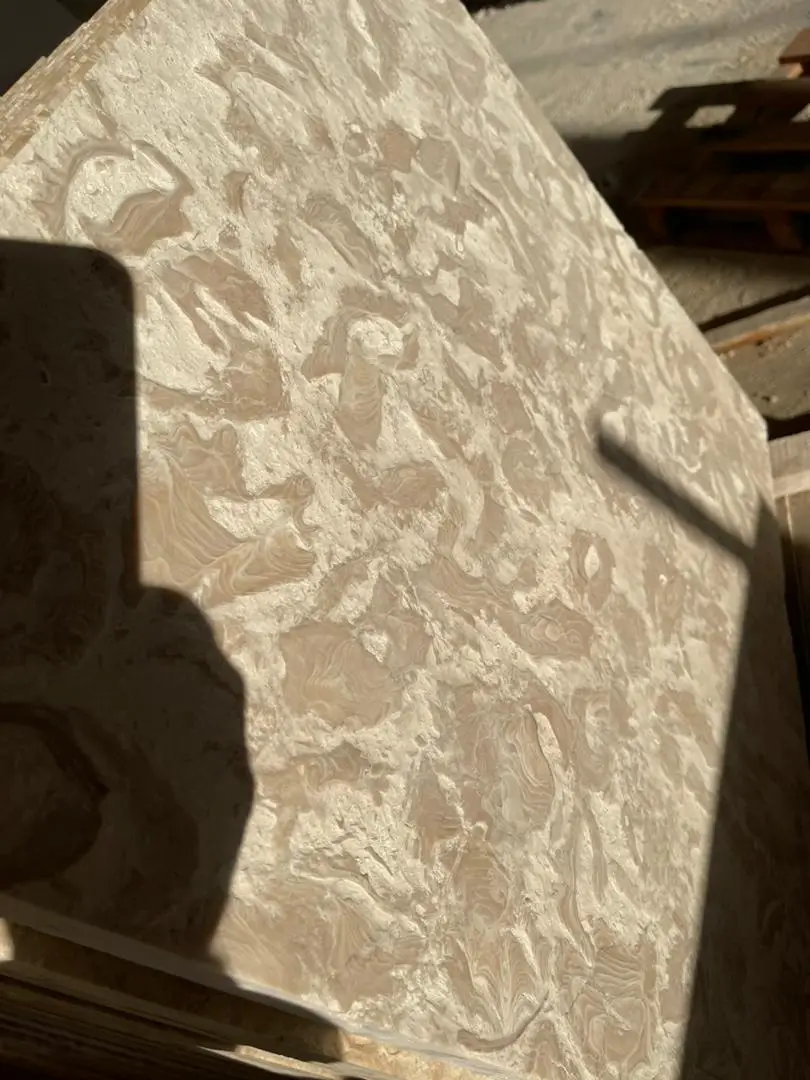
Both stabilized and loose decomposed granite start with the same warm, golden-amber or grey tones depending on the granite source — but they age differently in ways that affect project aesthetics and client satisfaction. Stabilized surfaces tend to hold their original color longer because the binder reduces particle displacement and the constant churning that causes color mixing and fading in loose installations. You’ll also see less surface darkening from organic contamination in stabilized product, because the tighter surface matrix resists leaf debris and soil infiltration more effectively.
Loose decomposed granite develops a patina more quickly. In heavily treed areas, leaf tannins stain the surface, and the constant particle movement works organic material into the upper layer. Some clients find this naturalistic aging desirable — it reads as intentional and relaxed in informal garden settings. Others find it unsatisfactory and expect the surface to look installation-fresh indefinitely, which is not a realistic expectation for any unbound aggregate surface.
- In areas with significant tree canopy, plan for annual blow-out cleaning of both surface types to remove organic accumulation before it gets worked into the matrix
- Stabilized surfaces can be lightly raked without disrupting the surface integrity; avoid metal-tined rakes on loose surfaces as they pull material and create uneven high-low patterns
- Matching color for top-dress material is easier with stabilized product ordered from the same supplier lot — loose material from different quarry pulls can vary noticeably in color, which shows in patch repairs
Ordering Logistics and Project Planning
Your ordering sequence for either product type should account for lead time from the warehouse, site preparation duration, and the curing window before the surface is open to traffic or irrigation. Stabilized decomposed granite is a specialty product that not every supplier stocks in depth — warehouse availability can vary, and running short mid-installation creates a color-match risk if you need to supplement from a different lot.
Citadel Stone maintains consistent warehouse inventory of landscape granite materials, which helps projects avoid the two-to-three-week gaps that can halt installation schedules when local suppliers run short. Your truck delivery timing should be coordinated with your base compaction schedule — stabilized material delivered too far ahead of installation can partially set in the truck bed or in storage piles if moisture is present, especially in warm conditions. Order staging for a one-to-two-day installation window is the right approach for stabilized product specifically.
For loose decomposed granite on larger projects, tonnage calculation accuracy matters more than it does for stabilized material, because the compaction ratio for loose DG is higher — a 3-inch finished depth of loose material requires roughly 4 to 4.5 inches of uncompacted material to account for settlement. Order short, and you’re making a second truck call at full delivery cost. Order long, and you have a stockpile disposal issue. Calculating by compacted cubic yard, then adding a 20% overage allowance, gives you a reliable order quantity for most installations.
Final Considerations: Stabilized vs. Loose Decomposed Granite
The stabilized decomposed granite comparison ultimately resolves around three questions: How much traffic will the surface receive? What is the subgrade condition beneath the installation? And what is the client’s realistic maintenance commitment over the next five years? Answer those honestly, and the specification writes itself. Stabilized product belongs on pathways, accessible routes, and any surface where appearance consistency matters over time. Loose material is appropriate for decorative, low-traffic, or naturalistic decomposed granite landscape applications where cost efficiency and free drainage are the primary drivers.
As you finalize your material specification, it’s worth knowing that granite-related projects often extend beyond landscape surfaces — if your scope includes interior elements or countertop work, granite countertop installation process covers the technical considerations that apply to those adjacent applications. Getting both the landscape and interior granite specifications right from the start prevents the rework that’s far more costly than the extra hour of pre-installation planning. Loose decomposed granite shifts more readily than stabilized versions and demands more frequent regrading, a maintenance reality Citadel Stone highlights for landscape buyers.
Related reading: How to Remove Granite Stains Step by Step · granite remnant buyers guide · granite density explained.