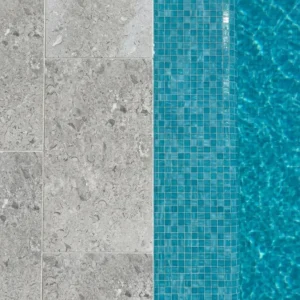
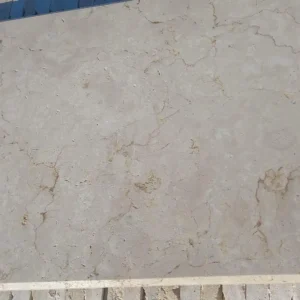
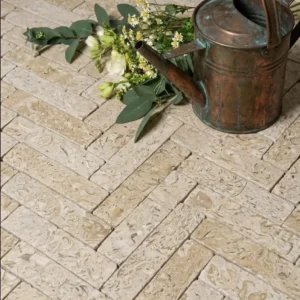
Two stones dominate Antigua’s wish lists, and every project eventually faces their fork: white limestone, the crisp performer, or Ocean Reef shellstone, the textured native. Both belong to the dense-limestone family this cluster trusts; the choice is character, not quality — and it becomes easy once the differences are laid side by side.
Two personalities, one family
Two personalities inside one stone family:
- White limestone is composure — even tone, calm fields, edges and joints reading with architectural precision
- Shellstone is memoir — every face a fossil record, no two units alike, texture built into the material’s story
Both share the family virtues of density, low absorption, cool light tones and cut-to-order flexibility, so the performance boxes tick identically. The fork is entirely about what the eye and hand should meet.
The architecture vote
Buildings cast the first vote: contemporary Antigua — white render, glass, clean lines — extends naturally onto white limestone’s calm; traditional and beach-house idioms — timber, stone walls, planted profusion — welcome shellstone’s texture as a native accent. Mixed-idiom properties (the modern villa in a tropical garden) often split the ticket: white limestone touching the architecture, shellstone where the landscape takes over — the two-texture expression of the two-tone palette rule.
The barefoot and the broom votes
Underfoot, both stay Caribbean-cool; shellstone’s fossil texture adds a grip-and-feel signature that pool zones love, while fine-brushed white limestone offers the smoother refined step loungers and interiors prefer. For upkeep, the votes swap: shellstone’s pattern conceals the week’s debris generously (the relaxed-housekeeping favorite), while white limestone shows the leaf but wipes to showroom faster — the calendar serves both, with the blower leaning shellstone’s way and the mop leaning white’s.
Absorption is the number that separates one limestone from another. The Natural Stone Institute records a range running from under one percent to over ten across the family, and notes that dolomitic stones generally carry higher density, lower absorption and better abrasion resistance — the industry variety data sets this out. That spread is why two stones sold under the same broad name can behave nothing alike underfoot.
Where each is the obvious answer
Choose white limestone without debate for:
- Interior-exterior continuity runs
- Minimalist pool surrounds
- dining zones chasing the evening glow
- Compositions leaning on basalt contrast, where crisp white makes the strongest foil
Choose shellstone without debate for:
- Beach-adjacent floors, where the texture laughs at sand
- Barefoot-luxury pool decks
- Garden rooms wanting established character
- Any brief whose keyword is relaxed
The two-stone property, done right
Running both is not indecision but composition, with rules: assign by zone, not by whim (shellstone’s realm and white’s realm, with clean transitions at borders or level changes); keep finishes coordinated so textures differ by intention; and let one stone clearly lead by area. Properties that follow the rules read layered; properties that scatter both read undecided — the difference is a plan.
Installation method matters as much as the stone itself. Industry guidance separates mortar-set work, sand-set exterior paving and pedestal systems, and stresses that drainage, movement and substrate condition drive long-term performance more than the material name does — the detailing guidance is worth reading before you specify.
Settling it on the doorstep
The fork closes the cluster’s favorite way: one sample of each, wet and dry, at noon and dusk, against the architecture and the planting. Most owners report the property chooses within a day — the stones are that legible in person. Samples of both arrive together within 3 working days via the Antigua guide; the decision arrives with them.
The finish dimension of the fork
The choice deepens one level: each stone wears its finishes differently. White limestone’s brushed grades read refined-crisp and its polish reads formal; shellstone’s texture is intrinsic — brushing softens without erasing the fossil relief, and high polish suits it rarely. Zone-by-finish therefore multiplies the options: white-brushed deck with shellstone pool ring; shellstone terrace with white-honed interior. The fork is not binary — it is a palette matrix, and the sample pair unlocks all of it.
Cost, supply and the equal footing
Commercially the two stand level:
- The same ordering path
- The same cut-to-order flexibility
- The same freight arithmetic
- Comparable pricing bands
That equality is the fork’s luxury — no budget thumb on the scale, no availability excuse — which leaves the decision purely where it belongs.
How each stone weathers, side by side
The fork looks different at year ten than it does on the sample board, and owners rarely get shown that. Both stones are dense and both survive, but they age along different lines:
- White limestone settles rather than changes — the tone softens a shade, the finish rounds very slightly underfoot, and any mark shows plainly against an even field
- Shellstone absorbs its history — the fossil pattern hides the small marks that a calm surface would advertise, so it reads as patina rather than wear
That difference matters most on a rental property, where the floor takes traffic nobody supervises. It matters least on a private villa with a settled routine. Neither is more durable; they simply tell you different amounts about what has happened to them.
The cutting and detailing difference
Fabrication is where the two stones stop being interchangeable. White limestone takes a crisp arris and holds a sharp mitre, which is why minimalist details and thin shadow gaps belong to it. Shellstone cuts cleanly but exposes shell voids at a sawn edge, so its details want easing, bullnosing or a rebate rather than a knife edge. Neither is a limitation, but each rewards a different drawing: specify shellstone with square-cut modernist details and it will look like a compromise, while specifying white limestone with heavy rustic edges wastes what it does best.
Mixing them without a clash
Plenty of Antiguan properties use both, and the successful ones follow a rule rather than a mood. Three approaches work:
- Split by zone — white limestone touching the architecture, shellstone where the landscape takes over, with a clear boundary rather than a fade
- Split by plane — one stone for horizontal surfaces, the other for verticals such as cladding, seats and wall caps
- Split by level — one stone per terrace, so each outdoor room reads as itself
What does not work is alternating them within a single field. The two have similar tone and different texture, which reads as an ordering error rather than a design decision.
Choosing between white limestone and shellstone
Two excellent stones, one property, a decision that was never really binary: white limestone where the architecture speaks, shellstone where the island does, finishes zoned by duty, and the doorstep week as referee. However the vote lands, it lands within one trusted family — which is why this is the happiest fork in the specification.