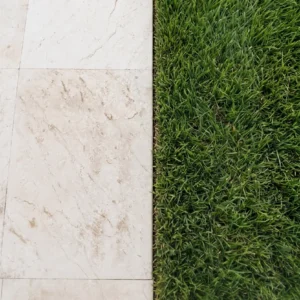
What the Finish Actually Changes
The tumbled limestone paver finish doesn’t just alter how a stone looks — it fundamentally changes how the stone performs under load, moisture cycling, and foot traffic. Tumbling rounds off the crystalline edges that form during cutting, which reduces the micro-crack propagation points that cause surface spalling over time. You’ll notice this difference most clearly after the first winter season, when honed tiles start showing hairline edge fractures that tumbled pavers simply don’t develop at the same rate.
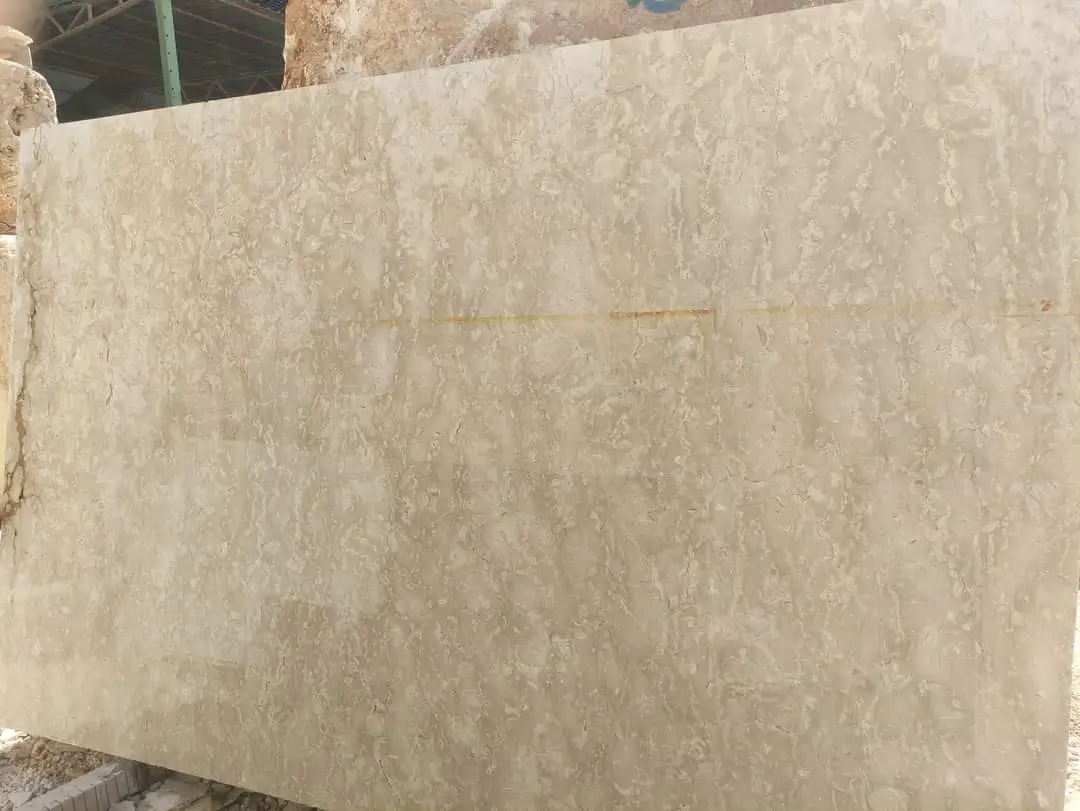
Tumbled Finish: Surface Mechanics and Performance
The mechanics behind tumbling are worth understanding before you commit to a specification. Stone blanks are loaded into a drum with abrasive media — typically smaller stone offcuts or ceramic aggregate — and rotated for several hours. The result is controlled surface abrasion that mimics centuries of natural weathering in a matter of hours. You’re left with a paver that has micro-undulations across its face, slightly softened corners, and a surface texture that measures between 0.8 and 1.4 mm of average relief depending on drum duration and media hardness.
That texture profile is what drives the slip-resistance advantage. The tumbled limestone paver finish carries pronounced surface texture; for outdoor pedestrian surfaces specify against the ANSI A326.3 wet DCOF threshold (0.42). Honed limestone, by contrast, is far smoother — marginal in high-traffic wet zones without added surface treatments.
Porosity shifts are the other mechanical consequence. Tumbling opens the surface pore structure by disrupting the densified skin that forms during diamond-blade cutting. Absorption rates for limestone tumbled pavers run at 3–6% by weight versus 1.5–3% for honed tiles from the same quarry block. This matters for your sealing schedule and your freeze-thaw specification — more on that shortly.
Honed Limestone: What You Gain and What You Give Up
Limestone honed to a 400- or 800-grit finish delivers a flat, matte surface with a reflective quality that sits just below satin. The cutting process compresses the surface layer slightly, closing pores and creating a denser face. For interior flooring, honed limestone tiles are genuinely easier to maintain — grout haze, construction dust, and foot traffic oils don’t penetrate as aggressively, and a damp mop restores the appearance effectively.
Outdoors, though, that compressed surface layer becomes a liability in certain conditions. In freeze-thaw regions — anywhere soil temperatures regularly dip below 28°F — the closed pore structure traps moisture that has no efficient exit path. When that moisture freezes, it expands at roughly 9% volume increase, and the internal pressure exceeds the tensile strength of the stone’s surface layer. You end up with delamination events that present as thin flakes or a powdery surface — a failure mode called spalling. Tumbled pavers drain and breathe more freely, which significantly reduces that risk profile.
- Honed limestone tiles deliver superior interior performance: easier cleaning, consistent reflectivity, and tighter joint tolerances
- Outdoor honed applications require penetrating sealers applied every 12–18 months to compensate for reduced natural drainage at the surface
- Honed surfaces in shaded or north-facing installations accumulate biofilm (algae, lichen) faster because the flat face retains moisture longer than a textured tumbled surface
- Thermal expansion behavior is nearly identical between finishes — the limestone substrate expands at approximately 4.4 × 10⁻⁶ per °F regardless of surface treatment
Thickness, Load Capacity, and Code Compliance
Your specification for limestone tumbled pavers needs to account for structural requirements that vary by application and, in many jurisdictions, by local building code. The finish itself doesn’t change the structural capacity of the stone — that’s governed by thickness, bedding depth, and sub-base compaction. But the finish decision often correlates with application context, and different applications carry different code obligations.
For pedestrian patio applications, tumbled limestone pavers in the 1¼-inch (30 mm) nominal thickness range handle typical residential loading without issue. Vehicular and driveway applications require a minimum of 2⅜ inches (60 mm) thickness to meet most municipal compressive load requirements, with a compacted aggregate base depth of at least 6 inches — though frost-line depth requirements in colder regions push that base depth to 12 inches or more. Always verify the frost line depth for your installation region before finalizing base specification; this single variable changes your material cost significantly.
According to Natural Stone Institute limestone specifications, limestone should meet a minimum compressive strength of 1,800 PSI for exterior paving applications. Quality tumbled limestone pavers from dense fossiliferous beds regularly test at 4,000–7,500 PSI, which provides substantial safety margin above code minimums. Edge restraint requirements — typically mandatory under IBC-compliant commercial specifications — apply equally to both tumbled and honed installations, but the dimensional tolerances for edge restraint attachment are slightly looser with tumbled pavers due to their non-uniform perimeter geometry.
Sealing Protocols by Finish Type
Sealing tumbled limestone pavers correctly is one of the decisions that separates a 25-year installation from a 12-year replacement. The open pore structure created by the tumbling process means you need a penetrating impregnator — not a topical sealer — rated for limestone with a minimum 5-year reapplication cycle. Silane-siloxane blend products penetrate 3–8 mm below the surface and cross-link with the calcium carbonate matrix, leaving the surface texture intact while dramatically reducing water absorption.
Topical acrylic or polyurethane sealers on tumbled stone create a film over an already uneven surface. That film bridges across the micro-undulations rather than penetrating them, which means it delaminates at the high points first — usually within 18–24 months of installation. You’ll end up with patchy, peeling finish that’s more unsightly than bare stone.
- Apply first sealer coat within 72 hours of installation, after grout joints have fully cured
- Two-coat application on new tumbled limestone pavers: first coat applied and allowed to absorb for 20 minutes, excess wiped before drying, second coat applied perpendicular to first after 4-hour minimum cure
- Reapplication schedule: every 3–5 years for pedestrian areas, every 2–3 years for pool surrounds or areas with heavy UV exposure
- Honed limestone tiles in exterior applications need resealing more frequently — annually in wet climates — due to slower natural drainage at the surface
- Never apply sealer to damp stone; surface moisture content above 4% prevents proper penetration and causes cloudiness
For a comprehensive look at how different surface preparations perform across limestone patio applications, explore Citadel Stone tumbled stone finishes — the range covers multiple finish grades suited to varied project demands.
Visual Character and Design Intent
The aesthetic difference between a tumbled limestone paver finish and a honed surface is significant enough to define the entire character of a space. Tumbled pavers carry an organic irregularity — subtle variations in plane, softened corners, and a surface patina that already reads as aged on the day of installation. This quality makes tumbled stone the natural selection for garden paths, informal courtyard designs, and any project where a manicured, geometric look would feel architecturally out of place.
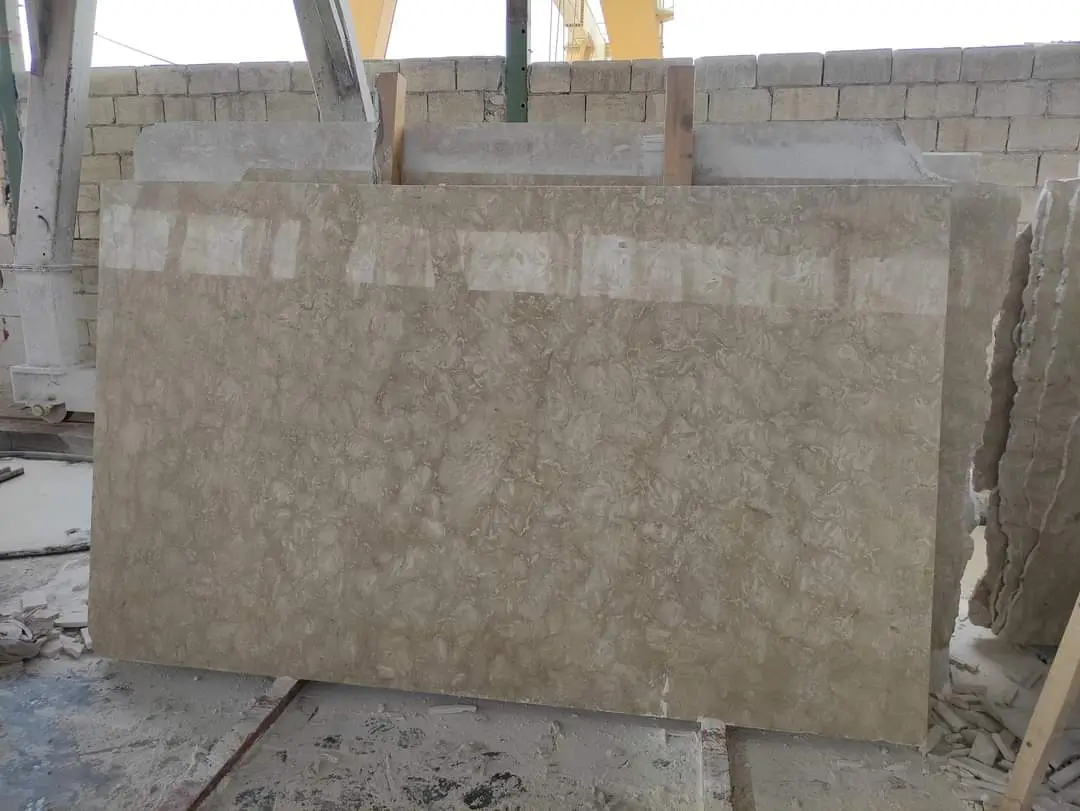
Honed limestone tiles project formality. The consistent flat plane and uniform reflectivity read as intentional precision — which is exactly what you want in contemporary architectural settings, gallery-style outdoor rooms, and minimalist pool surrounds where every surface line needs to be deliberate. The trade-off is that honed surfaces reveal lippage (height variation between adjacent tiles) much more harshly than tumbled pavers do. A 1 mm height differential that’s invisible on a tumbled surface becomes visually obvious on a honed installation, which means your setting tolerance needs to be tighter — typically within 0.5 mm flush for honed versus a permissible 2–3 mm variation for tumbled.
Joint Width and Grout Considerations
Joint width recommendations differ meaningfully between the two finishes, and getting this wrong affects both structural performance and long-term appearance. Tumbled limestone pavers are dimensional by nature — the tumbling process introduces minor variation in edge geometry, and trying to install them at tight 2–3 mm joints creates alignment problems that compound across a large installation. The standard specification for tumbled stone calls for 8–12 mm joints, filled with sanded grout or polymeric joint sand depending on the application.
Wider joints on tumbled pavers serve a structural function as well. They provide accommodation for thermal expansion without relying on the stone edges to bear the lateral load. In hot, dry climates where daily temperature swings exceed 40°F, inadequate joint width is one of the primary causes of paver buckling and edge chipping. Your base design should also include perimeter expansion gaps of at least 10 mm every 15 linear feet for outdoor tumbled limestone installations.
- Tumbled limestone pavers: 8–12 mm joints recommended, polymeric sand preferred for pedestrian applications
- Honed limestone tiles: 3–5 mm joints standard, unsanded grout for joints under 3 mm, sanded for 3–5 mm
- Both finishes benefit from flexible grout formulations in climates with significant seasonal temperature swings
- Avoid cement-based rigid grout for outdoor tumbled applications — movement in the sub-base causes cracking at the grout-stone interface within 2–3 seasons
Ordering, Lead Times, and Availability
Planning your material procurement around the finish type matters more than most project managers anticipate. Tumbled limestone pavers are processed after quarrying and cutting, which adds production time compared to standard honed tiles. From the warehouse to your job site, expect 2–4 weeks lead time for in-stock tumbled pavers versus 1–2 weeks for honed limestone tiles that don’t require the additional processing step. If you’re working with custom dimensions — oversized formats beyond the standard 12×12 or 16×16 inch range — add another 3–5 weeks to the tumbling production cycle.
Citadel Stone maintains national warehouse inventory across both finish types, which shortens the typical lead time considerably compared to sourcing directly from overseas fabricators on a per-project basis. Verifying current warehouse stock levels before you commit to a project schedule is always worth a direct conversation with the supply team — batch availability for matching future phases of a project is the one lead-time factor that catches contractors off guard most often. Truck delivery scheduling for pallet quantities of tumbled stone also requires confirmed site access and a flat lay-down area, since individual pavers aren’t bundled as uniformly as machine-cut honed tiles and pallets can be heavier per unit than the nominal weight suggests.
The USGS geological data on limestone composition confirms that the quarrying regions producing the densest, most durable limestone for pavers are concentrated in specific geological formations — a factor that directly influences which finishes are feasible at a given thickness specification. Dense fossiliferous limestone from these formations tumbles without compromising structural integrity, while softer chalky varieties can over-abrade and lose dimensional consistency during the tumbling process.
Specifying the Right Limestone Paver Finish
Choosing between a tumbled limestone paver finish and a honed surface ultimately comes down to three converging factors: the application’s structural demands, the design’s visual intent, and the realistic maintenance commitment your client or project owner will sustain. Tumbled stone delivers superior outdoor performance in most real-world conditions — better slip resistance, more forgiving installation tolerances, and a natural resilience to freeze-thaw cycling that honed stone simply doesn’t match without aggressive sealing maintenance. Honed stone earns its place in controlled interior environments and architecturally precise outdoor settings where the aesthetic precision justifies the additional care requirements.
Beyond your finish decision, related limestone applications inform the broader specification picture. As you expand your natural stone scope to include other limestone products, understanding common performance issues across different forms of the material is valuable — limestone landscaping performance issues covers how the material behaves across a different but complementary range of hardscape applications. The aged visual character of tumbled limestone available through Citadel Stone suits naturalistic patio designs where a polished or uniform look would feel out of place.
Related reading: how limestone weathers outdoors · choosing limestone for gardens · flagstone patio ideas.