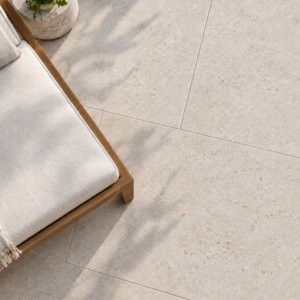
What Separates Travertine Tile Pool Coping from Solid Coping Units
The structural failure point for most travertine tile pool coping installations isn’t the stone itself — it’s the assumption that tile-format products and solid coping units are interchangeable. They aren’t. Travertine tile pool coping uses thin-format pieces bonded to a substrate, while solid coping units are full-thickness, self-supporting dimensional stone pieces designed to cantilever over the pool bond beam. That distinction drives every other specification decision you’ll make, from base preparation to joint spacing to long-term maintenance frequency.
Understanding this difference upfront prevents costly remediation. Projects that substitute tile-format products where solid units are warranted — or vice versa — typically show delamination, efflorescence, or edge chipping within three to five years. Getting the format right at the specification stage is the single highest-leverage decision in any pool coping project.
Format Definition and Dimensional Standards
Travertine tile pool coping in tile format typically runs 12 mm to 20 mm thick, supplied in modular sizes — 12×24, 16×24, and 24×24 are the most common field dimensions. These pieces are set in a wet mortar or large-format tile adhesive system over a concrete bond beam or waterproofed deck substrate. The tile relies entirely on the adhesive layer and substrate for its structural integrity at the edge overhang.
Solid travertine coping units operate on a completely different structural principle. Standard units run 2 inches to 3 inches thick with a nominal 12-inch to 16-inch bed depth, incorporating a bullnose or drop-edge profile machined directly into the full-thickness piece. The cantilever — typically 1.5 inches to 2 inches over the pool wall — is carried by the stone mass itself, not by adhesive bond strength.
- Tile format: 12–20 mm thickness, bonded system, substrate-dependent performance
- Solid units: 50–75 mm thickness, self-supporting cantilever, mechanically placed
- Tile format requires continuous substrate without voids; solid units tolerate minor substrate irregularities
- Edge profiling on tile format is applied as a secondary piece or bullnose tile; solid units have the profile machined in one pass
Travertine Tile Floors and Pool Deck Continuity
One of the strongest arguments for tile-format coping is visual continuity with travertine tile floors on an adjoining interior or covered outdoor space. The same material, same finish, and same grout joint width can run from an interior wet room across a threshold and onto the pool deck without a visible material transition. That design coherence matters on high-end residential and hospitality projects where the pool is a continuation of interior architecture rather than a standalone feature.
Achieving that continuity requires careful coordination between your tile contractor, the waterproofing membrane installer, and the pool builder. The bond beam elevation has to be set precisely so the tile surface lands flush with the adjoining deck plane. A 6 mm height mismatch at that transition becomes a trip hazard and a water-trapping joint — two problems that are expensive to correct after the fact. According to NSI travertine outdoor suitability data, travertine’s absorption characteristics and open-pore structure make finish coordination between indoor and outdoor installations particularly important for long-term consistency.
For projects where deck continuity is the primary design driver, explore our travertine tile and coping units to evaluate how tile and solid formats compare across different edge profiles and finish options.
Slip Resistance and Safety Specifications
Pool coping is a wet-zone application by definition, and the slip resistance specification is non-negotiable. For travertine tile pool coping, the finish selection determines your coefficient of friction (COF) value, and wet pool deck surfaces should meet the ANSI A326.3 wet DCOF threshold (0.42).
Tumbled or brushed travertine tile finishes carry the most surface texture, making them the safe specification for coping surfaces. Honed finishes are noticeably smoother when wet — marginal at best. Polished travertine tile should never be used at a pool coping edge; wet polished travertine can drop below 0.40 dynamic COF, which represents a serious liability exposure on any commercial or multi-family project.
- Tumbled travertine: the most texture of the four — safe for pool coping without additional treatment
- Brushed travertine: good texture — acceptable with proper joint drainage
- Honed travertine: noticeably smoother — borderline; requires sealer with anti-slip aggregate
- Polished travertine: very little wet texture — not appropriate for pool coping or wet zones
- Solid coping units in tumbled or brushed finish meet the same slip-resistance requirement as tile-format equivalents
PHTA pool deck safety standards also address coping edge geometry — the nosing profile on solid units must not create a sharp leading edge that concentrates impact force. Rounded or eased bullnose profiles are standard practice for both tile-format and solid coping for this reason, per PHTA pool deck stone and coping safety standards.
Travertine Tile Install Process for Pool Coping
The travertine tile install sequence for pool coping differs from standard interior tile work in several important ways. The bond beam surface must be mechanically prepared — acid washing alone isn’t sufficient adhesion preparation for an exterior wet-zone application. Shot blasting or aggressive scarification gives you the CSP 3–5 surface profile that large-format stone tile adhesives require to achieve rated bond strength.
Setting material selection matters as much as the surface prep. Standard polymer-modified thinset is undersized for pool coping tile in any climate with meaningful thermal cycling. Use a large-format, non-sag epoxy-modified mortar rated for exterior wet zones — these products maintain bond strength across the 80°F+ temperature swings that a pool coping surface experiences between early morning and midday in warm months. Insufficient bond strength at the coping edge is what generates the hollow-sounding tiles and eventual delamination that most pool tile remediation projects trace back to.
- Prepare bond beam to CSP 3–5 profile before setting
- Use epoxy-modified or large-format rated mortar — not standard polymer-modified thinset
- Back-butter each tile fully — no spot bonding on pool coping
- Set movement joints every 8–10 linear feet at the coping field; never rely on grout joints alone to absorb thermal movement
- Allow full mortar cure — minimum 72 hours before grouting in moderate temperatures
Seasonal installation timing has a direct effect on mortar performance. Setting travertine tile pool coping when ambient temperatures fall below 50°F slows cure times significantly and risks incomplete bond development if temperatures drop further overnight. The practical scheduling window in most regions runs from mid-spring through early fall — you want substrate and air temperatures consistently between 50°F and 90°F during placement and for the 72-hour cure window that follows. Morning installations are preferable when afternoon temperatures spike; the tile surface can reach 120°F+ in direct sun by midday, accelerating moisture loss from the mortar bed before adequate bond strength has developed.
Joint Performance and Grout Selection
Grout joint performance is where tile-format pool coping shows its most significant long-term vulnerability relative to solid coping units. Solid units are typically set with a 1/8-inch to 1/4-inch joint filled with a sanded or non-sanded polymer grout, but the joint itself carries no structural load — the solid unit’s thickness and bed depth handle all the cantilever stress. Tile-format coping joints carry more of the thermal movement load between pieces, which means joint width and grout flexibility become critical specifications.
For travertine tile pool coping in a standard 12×24 format, spec a minimum 3/16-inch joint width and fill it with an unsanded epoxy grout or a highly flexible polymer grout rated for exterior wet zones. Standard sanded cement grout cracks at pool coping joints within two to three seasonal cycles — it’s not flexible enough to absorb the thermal expansion of the travertine tile against the concrete substrate. That cracking creates water infiltration paths directly to the adhesive layer and bond beam waterproofing, which is the beginning of a delamination sequence that’s expensive to arrest.
Bathroom with Travertine Tile vs. Pool Coping Performance Demands
Specifiers who’ve worked with travertine tile in wet-room interiors sometimes assume pool coping is a straightforward exterior extension of that experience — and that assumption creates problems. A bathroom with travertine tile operates in a controlled thermal environment; the stone surface temperature might vary 20°F between morning and evening. Pool coping surfaces in direct sun experience 60°F to 80°F daily temperature swings, with UV degradation, pool chemical exposure, and freeze-thaw cycling adding stresses that interior applications simply don’t encounter.
The sealing protocol illustrates this difference clearly. Interior travertine tile in a bathroom with travertine tile installations typically requires resealing every three to five years under normal use. Travertine tile pool coping in a high-UV, chemically active environment needs resealing annually — sometimes more frequently if the pool chemistry runs at aggressive pH levels. Penetrating silane-siloxane sealers outperform surface sealers for pool coping because they don’t create a film layer that can delaminate or trap moisture below the surface.
Solid Coping Units: Structural Advantages
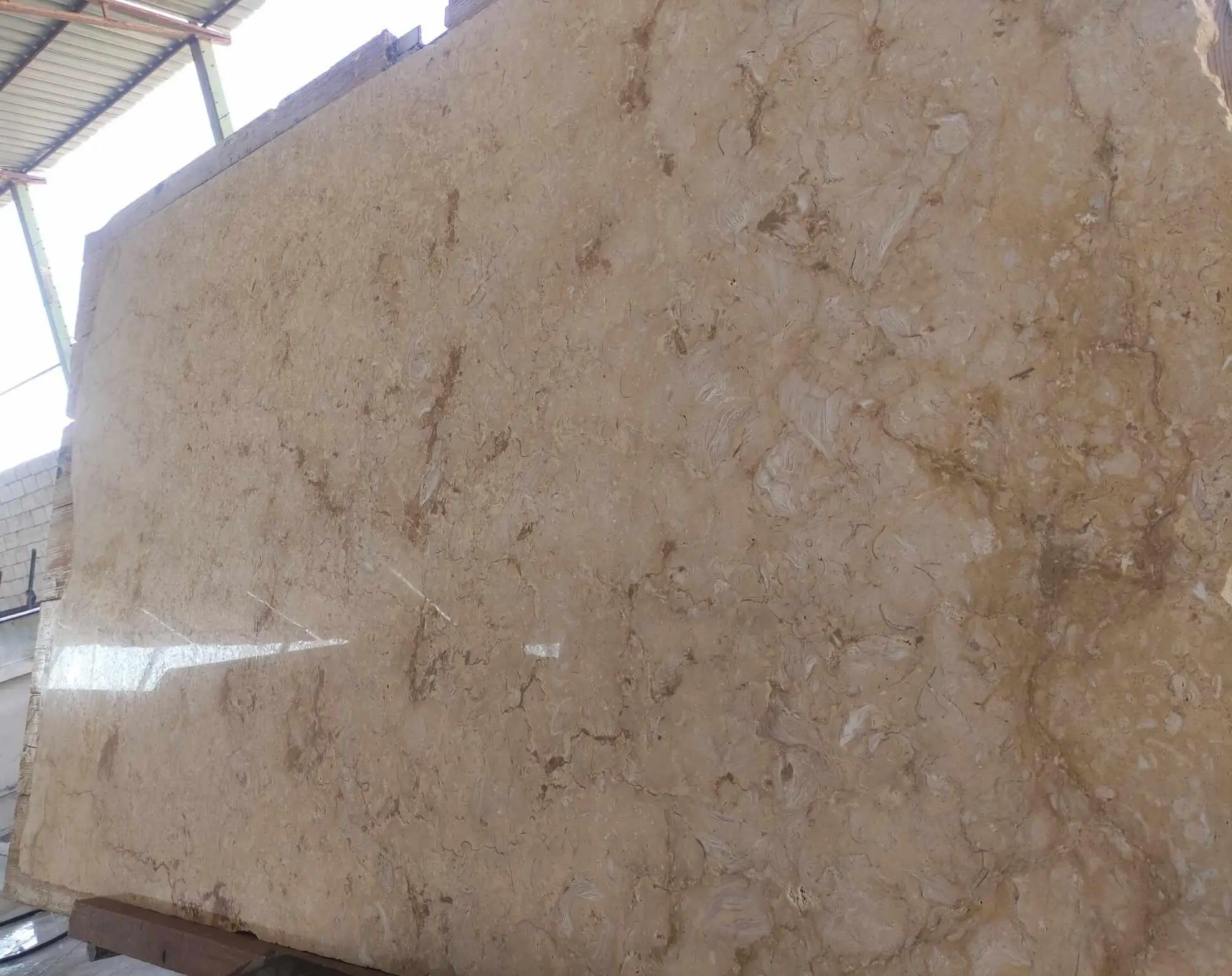
Solid travertine coping units carry structural advantages that tile-format products can’t replicate. The 2-inch to 3-inch full-thickness dimension means the stone itself provides the cantilever rigidity over the pool wall without relying on adhesive shear strength at the leading edge. On high-traffic pool decks — commercial pools, community facilities, hotel properties — that structural independence from the setting system is a meaningful specification advantage.
The edge profile is the other major differentiator. Solid unit profiles — double-bullnose, drop-face, ogee — are machined from the full stone thickness in a single fabrication pass, which produces a crisp, dimensionally consistent profile across every unit. Tile-format edge pieces are either bullnose tiles added as a secondary course or thin L-shaped profiles that are inherently more fragile at the projecting lip. On a heavily used pool edge, chipped or cracked tile profiles require individual piece replacement; damaged solid coping units are reset with the same mortar system used for initial installation.
- Solid units: structural cantilever from stone mass, not adhesive bond
- Solid units: integrated profile machined in full thickness — more durable edge geometry
- Solid units: individual unit replacement is straightforward when damage occurs
- Tile format: edge profile relies on secondary bullnose tile — more vulnerable to impact damage
- Tile format: delamination of any single tile requires adhesive layer evaluation, not just piece replacement
Ordering, Logistics, and Warehouse Lead Times
Your project schedule needs to account for the format difference at the ordering stage. Solid travertine coping units are typically cut-to-order in specific profile and bed-depth dimensions, which means warehouse stock levels for non-standard profiles may be limited. Standard profiles — 12-inch bed depth with a single or double bullnose — are more likely to be available from warehouse inventory and can ship within one to two weeks. Custom drop-face or ogee profiles on solid units often require four to six weeks for fabrication and delivery, so locking in the specification early is essential.
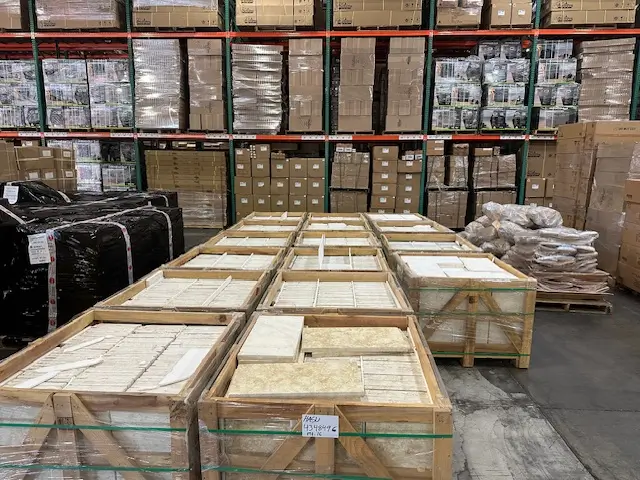
Tile-format travertine pool coping products are more commonly held in warehouse stock in standard sizes and finishes. Citadel Stone maintains national warehouse inventory across both formats, which typically compresses lead times compared to import-direct sourcing — particularly useful when a pool contractor’s schedule shifts and the coping installation window moves earlier than anticipated. Truck delivery coordination should confirm access dimensions for the site: solid coping units in full-pallet quantities are heavy freight, and restricted site access can complicate staging logistics significantly.
Travertine Tile Pool Coping: Getting the Specification Right
Choosing between travertine tile pool coping and solid coping units isn’t a matter of one being superior — it’s a matter of matching the format to the project’s structural demands, traffic level, and design intent. Tile format delivers design continuity and surface-finish flexibility that solid units can’t match. Solid units deliver structural independence, edge durability, and long-term joint stability that tile format struggles to equal under heavy use. The projects where this decision goes wrong are almost always ones where the format was selected for aesthetic reasons without accounting for structural and maintenance realities. Seasonal installation timing, proper adhesive selection, and accurate warehouse lead-time planning are the operational details that separate a durable installation from one that needs remediation in year three. For a closer look at how travertine coping variations perform across different color palettes and edge configurations, Scabos travertine coping profiles and finishes covers the specification detail worth reviewing before you finalize your selection. When evaluating format, Citadel Stone recommends solid coping units for high-traffic pool edges where tile-format joints may be more prone to long-term movement.
Related reading: travertine pool coping colors · gray travertine pool coping · travertine bullnose pool coping.