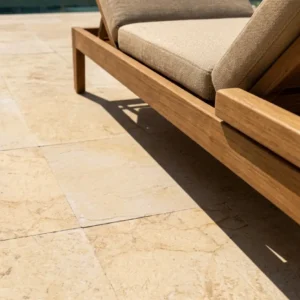
Tortola’s north shore keeps the territory’s wildest secret: winter swells that turn Apple Bay, Cane Garden and Josiah’s into genuine surf country, a laid-back coast culture older than the charter boom, and beachfront property that lives by the ocean’s winter moods. The surf coast writes its own register — part exposure engineering, part barefoot bohemia — and its stonework serves both without betraying either. Here is the north shore’s guide.
The swell season’s physics
North-shore exposure runs seasonal: summer’s gentle lap becoming winter’s ground swell, beach profiles migrating with the sets, and front-row properties reading their ocean like the coastal-honesty rules demand — the reach line mapped by winter’s biggest days, not summer’s postcard. The building split follows: sacrificial simplicity where swell visits — massive steps, replaceable aprons on the surge-line economics — and the property’s refined life set behind the honest line, elevated where the coast’s memory advises.
Surf-house registers
The coast’s properties serve board culture’s daily liturgy: dawn-patrol departures through gear routes that flow — board racks at the seaward wall on engineered mounts, wax-and-repair benches on working-apron grade, rinse stations sized for boards and bodies on the kit-circuit logic — and the post-session amenities that make surf houses beloved: outdoor showers running warm, sunset decks facing the break, fire courts for swell-story evenings on wind-honest rules. Surfaces stay barefoot-true throughout: textured for wet feet, cool for midday crossings, forgiving of sand and wax.
- Keep one continuous hard route from the door to the sand so wet gear never crosses grass.
- Provide an outdoor rinse point at the top of that route rather than at the house door.
- Use a texture that grips under wet feet carrying something bulky in both hands.
- Allow a wide threshold, because boards and bags do not turn corners neatly.
Beach-bar bohemia, preserved
The shore’s institutions — surf bars and beach shacks with decades of salt in their timbers — carry the coast’s soul, and their care runs the institution-conservation register: legends patched rather than polished, stone serving invisibly in bones and working zones, and the swell-season rhythm built into operations — front tables that retreat gracefully, storm shutters rehearsed, the reopening rituals a surf coast treats as liturgy. New hospitality joins the coast on its terms: low-key by design, honest to the break, wealthy in atmosphere rather than gloss.
Cane Garden’s amphitheater economics
The coast’s famous bay runs the north shore’s busiest double life — sleepy village mornings, cruise-excursion and charter afternoons — and its ground plane manages the tide on harbor-town civic craft: beachfront walks serving flip-flop crowds, bar rows on wet-crowd specification, village lanes keeping their scale against the visiting economy, and the evening return to local rhythm. Properties above the bay inherit amphitheater duties — slope drainage that never surprises the village, view terraces composed for the break’s theater.
Winter maintenance, summer building
The surf coast’s calendar inverts the territory’s: winter is the season — swell running, houses full, coast alive — so works compress into summer’s flat spells on the island-year logic reversed. Storm season overlaps the build window, demanding the standard disciplines with surf-coast addenda: materials staged above winter’s reach, half-built works secured against早 swells, and the ridge-road logistics timed for the north side’s quieter months. Winter’s maintenance stays light by design: sweep, rinse, and let the coast perform.
- Land material before the season rather than betting on a quiet September.
- Store crates above ground level and away from the surge line while work is underway.
- Sequence exposed works first so anything vulnerable is finished before the peak weeks.
- Keep a contingency in the program for one lost fortnight, which is the normal outcome.
The register’s reward
Surf-coast ownership buys the territory’s most authentic waterfront: seasons with personality, a community bonded by the break, and property that lives with its ocean rather than beside it. The stone package serves the relationship — exposure-honest at the line, barefoot-true through the house, institution-respectful along the shore — and the territory supply guide outfits it with the coast’s own priorities: working grades, warm registers, and nothing shinier than the break deserves. The charter world passes offshore; the north shore keeps its secret, in stone that knows how to keep one too.
The surf mudroom: boards, wax and the house that copes
A surf house is a household with a daily cargo problem — boards in and out at dawn, wetsuits dripping, wax and fins and the ding-repair kit needing homes — and the properties that stay pleasant solve it architecturally with a surf mudroom: a transition zone between beach and house where the sport sheds its salt, sand and equipment before domestic life resumes. The specification is working-grade and precise: a hose-down stone floor with honest falls and its own drain, racks that store boards on edge at grabbing height with padding where rails rest, wetsuit hanging over the drain rather than the doorway, a freshwater rinse — ideally warm for the winter dawn patrols — and a bench for the sandy-footed struggle that ends every session. Ventilation is the detail that separates the genre’s successes: moving air dries neoprene and prevents the room announcing itself; a windowless cupboard becomes a science experiment by March.
Placement follows the traffic: on the beach side of the house, reachable without crossing finished floors, with an outdoor shower adjacent so the human rinse and the gear rinse share plumbing and drainage. The stone continues outside as a generous apron — board waxing, repair jobs and the pre-dawn coffee all happen there — and continues, in tougher texture, down whatever path the daily barefoot commute takes. Storm season adds its clause: the mudroom doubles as the board fleet’s secure store, racks positioned clear of the room’s window line, everything lashable in the hour the forecast turns.
The result is domestic peace in a sport-run household: the house stays a house, the gear lives like the working equipment it is, and the season’s two hundred sessions pass through one well-drained room instead of across every floor. Surf houses are judged by their mornings; the mudroom is why the good ones run smooth.
What the season actually looks like
The north shore of Tortola takes two different beatings, and only one of them makes the news. The National Hurricane Center climatology puts the Atlantic season from June 1 to November 30 with a peak around September 10 and an average of roughly fourteen named storms, seven hurricanes and three major hurricanes. Winter ground swell is the other half: it arrives with no warning system, it arrives repeatedly, and it is what shapes the beaches at Apple Bay, Cane Garden Bay and Josiahs Bay year after year.
- Design the seaward edge for repeated winter swell rather than for the rare named storm.
- Keep the lowest terrace sacrificial in concept, so damage is a repair rather than a rebuild.
- Assume salt spray reaches well inland during a big swell, not just at the shoreline.
- Fix nothing lightly at the exposed edge, since uplift and wave impact both work upward.
- Plan the maintenance visit for early spring, once the swell season has finished its work.
Grip on a floor that is permanently wet
A surf house never really dries out between November and March. Guidance from Use Natural Stone on frictional testing identifies ANSI A326.3 as the method and 0.42 as the dynamic coefficient of friction benchmark for level interior surfaces expected to be walked on wet, while noting that no published threshold exists for exterior use and that polished stone generally fails the wet test. On this coast the wet condition is the normal condition, so it is the only one worth specifying against.
- Specify the wet-tested finish throughout, including the interior floors that take wet feet daily.
- Keep grip consistent from sand to shower so nobody meets a change of surface at speed.
- Avoid polished thresholds entirely, since they are the single most common slip point in a beach house.
- Retest the finish after a couple of winters, because sand traffic changes the surface.
Salt, sand and the materials that shrug it off
Salt does its damage inside the stone, not on it. Water carrying dissolved salt is drawn into pore space, evaporates, and leaves crystals that expand where they sit. The lower the absorption, the less of that happens. Sand does its damage on the surface, which is an abrasion question rather than a chemical one. A north-shore specification has to answer both.
- Choose low-absorption material for anything within reach of spray, which on this coast is most of the plot.
- Prefer dense, abrasion-resistant stone where sand is tracked across a floor daily.
- Rinse rather than scrub, since fresh water removes salt while brushing grinds sand into the surface.
- Keep a hose point at every route from the beach so rinsing is the easy option, not the diligent one.
Surf coast stone for a shoreline that never really rests
This coast is honest with materials. It finds high absorption within a season and finds a polished finish within a week. What lasts is dense, textured, rinsed often and detailed so the exposed edge can be repaired without touching the rest. Our British Virgin Islands stone guide sets out the formats, finishes and lead times that suit this territory. Build for the winter that arrives every year rather than the hurricane that might, and the house will handle both.