What Actually Drives the Price of Stones for Garden Wall Projects
Pricing for stones for garden wall installations rarely follows a simple per-unit formula — the real cost picture is built from a layered stack of variables that compound quickly once you move beyond a basic flat-ground build. Stone type, unit dimensions, wall height, mortar versus dry-stack construction, delivery logistics, and site accessibility all interact to shift your final number. Understanding each layer before you commit to a budget prevents the kind of mid-project cost overruns that turn a manageable landscape feature into a financial headache.
Stone type is typically the dominant cost lever. Tumbled limestone and fieldstone sit at the lower end of the natural stone spectrum, while cut granite and premium basalt command a significant premium. For most residential garden wall projects in the 2–3 foot height range, you can expect rough natural stone to run between $15 and $40 per square foot of wall face, with precision-cut or dimensional stone ranging from $45 to $90 per square foot before installation labor is factored in.
Stone Types and Their Cost Ranges
Material selection for stones for garden wall construction determines more than aesthetics — it sets the structural ceiling for the entire installation. Different stone families carry different price profiles, and understanding where each sits helps you allocate budget intelligently rather than defaulting to the cheapest option and regretting it later.
- Rough fieldstone or river rock: $10–$25 per square foot of wall face — lowest cost, most variation in fit
- Tumbled limestone blocks: $18–$35 per square foot — consistent sizing, good mortar compatibility
- Dry-stack flagstone: $20–$40 per square foot — relies on skilled fitting, no mortar cost
- Cut granite blocks: $45–$75 per square foot — exceptional durability, higher material and freight cost
- Basalt columns or pillars: $55–$90 per square foot — premium aesthetic, dense and heavy to ship
- Sandstone or bluestone wall blocks: $25–$50 per square foot — mid-range price, good workability
These ranges reflect material cost only. Labor adds another $15–$30 per square foot depending on wall complexity, contractor rates, and whether mortar or dry-stack technique is used. For a 20-linear-foot garden wall at 2.5 feet tall, your total installed cost typically falls between $2,500 and $8,500 depending on the stone selected and site conditions.
Mortar Versus Dry-Stack: A Cost Comparison
The construction method you choose directly affects both material and labor costs. Dry-stack walls — where stones are fitted without mortar — demand tighter tolerances in stone selection and significantly more skilled fitting time. Mortared walls move faster once the base is set, but require the right stone geometry to achieve clean joint lines and proper drainage through weep points.
Dry-stack construction generally runs 20–35% higher in labor because the mason spends more time fitting irregular pieces. That said, dry-stack eliminates mortar material costs and allows the wall to flex slightly with ground movement — a real advantage on sloped sites where minor seasonal settling is expected. For a straightforward garden wall on level ground, mortared construction with consistent limestone or sandstone blocks is often the more cost-efficient path. The Masonry Society’s natural stone wall construction standards provide useful structural guidance that helps you align your specification with your budget from the start.
How Terrain and Elevation Affect Your Budget
Site terrain can add 30–60% to your total project cost before a single stone is placed — and this is what most people planning a garden wall don’t account for until they receive the contractor quote. A wall built on a level lawn is a straightforward exercise in material and labor. A retaining wall on a slope — even a modest 8–10% grade — triggers a cascade of additional requirements.
Sloped sites typically require a stepped or terraced footing rather than a continuous level base. Excavating to stable bearing depth at each step increases both labor hours and machinery time. Walls retaining significant grade change also require engineered drainage behind the wall face — perforated pipe, compacted gravel backfill, and weep holes at regular intervals — all of which add material cost. On sites with severe grade changes, a geotechnical assessment may be required before any specification is finalized, and that’s an additional cost most landscape budgets don’t anticipate.
- Level sites: standard base preparation, lowest site cost
- Gentle slopes (under 5% grade): stepped footing adds 15–20% to labor
- Moderate slopes (5–15% grade): drainage engineering required, adds $8–$15 per linear foot
- Steep or hillside sites: full retaining wall specification, engineered drainage, potential structural review
Stone selection also needs to account for the wall’s structural role on a sloped site. Lighter decorative stones that work beautifully on a flat property can be inadequate for a load-bearing retaining wall. Denser materials like granite, basalt, or thick-cut limestone blocks handle lateral earth pressure far better than thinner flagstone or irregular fieldstone.
Bulk Ordering and How It Changes Your Cost Per Unit
One of the most significant cost levers available to you is order volume. Natural stone is priced and shipped by the ton or pallet, and the unit economics shift substantially once you cross the threshold into bulk territory. A single pallet of tumbled limestone might cost $380–$480 delivered. The same stone ordered at five or more pallets often drops to $280–$350 per pallet — a savings that can offset a significant portion of your installation labor.
Warehouse availability matters here too. Verify current warehouse stock levels before committing to a project timeline, especially for less common stone types that may have limited inventory. At Citadel Stone, we recommend confirming stock depth before finalizing your specification, particularly for projects requiring consistent lot matching across multiple pallets — subtle color and texture variation between quarry lots is a real field issue that budget planning rarely accounts for.
For larger garden wall projects, requesting a truck delivery directly to site rather than pallet-by-pallet pickup reduces both freight cost and handling damage. A full truck load of stone typically covers 15–25 tons depending on vehicle configuration, and the per-ton freight rate on a full load is substantially lower than partial shipments. If your project timeline allows consolidation, the logistics savings are worth planning around.
Circle Stones for Garden Features and Decorative Wall Elements
Circle stones for garden designs — including curved wall sections, circular planters, and round feature walls — introduce a fabrication premium that flat-face wall stone doesn’t carry. Achieving a consistent radius in natural stone requires either pre-cut radiused blocks or careful hand-fitting of irregular pieces, both of which add cost over straight-run wall construction.
Pre-cut radiused limestone or granite blocks for circular wall features typically run 25–40% more than equivalent straight blocks. The cutting waste in fabrication is higher, and precision tolerances must be tighter to maintain a clean curve without visible joint gaps. That said, circle stones for garden walls add significant visual impact and, when built correctly, hold up structurally just as well as straight alternatives. The key specification detail is maintaining consistent joint width through the curve — irregular joints in a radius wall are the most common aesthetic failure in the field, and they’re almost always the result of using straight-cut blocks on a curve rather than properly radiused material.
To explore the full range of material formats available for garden wall projects, our stone wall supply options cover everything from tumbled blocks to precision-cut wall stone in multiple species and finishes.
White Pebble Stones for Garden Accents and Their Cost Role
White pebble stones for garden applications serve a different function than structural wall stone — they’re primarily used as ground cover, base fill, or decorative infill at the base of garden walls rather than as load-bearing units. Their pricing follows a completely different structure: bulk weight pricing by the bag or ton rather than per square foot of wall face.
Polished white river pebbles typically run $0.60–$1.20 per pound in bag quantities, translating to roughly $280–$480 per ton in bulk. For a garden wall base treatment covering 50 square feet at 3-inch depth, you’re looking at roughly 1.5–2 tons of pebble — a manageable material cost that’s often overlooked in initial budget estimates. White pebble stones for garden wall bases also serve a practical drainage function: the open-graded stone layer helps surface water disperse at the wall toe rather than pooling against the face, which matters for wall longevity regardless of the primary wall stone selected. According to Natural Stone Institute stone selection guidance, matching finish and porosity of decorative elements to the surrounding hardscape materials supports long-term performance consistency.
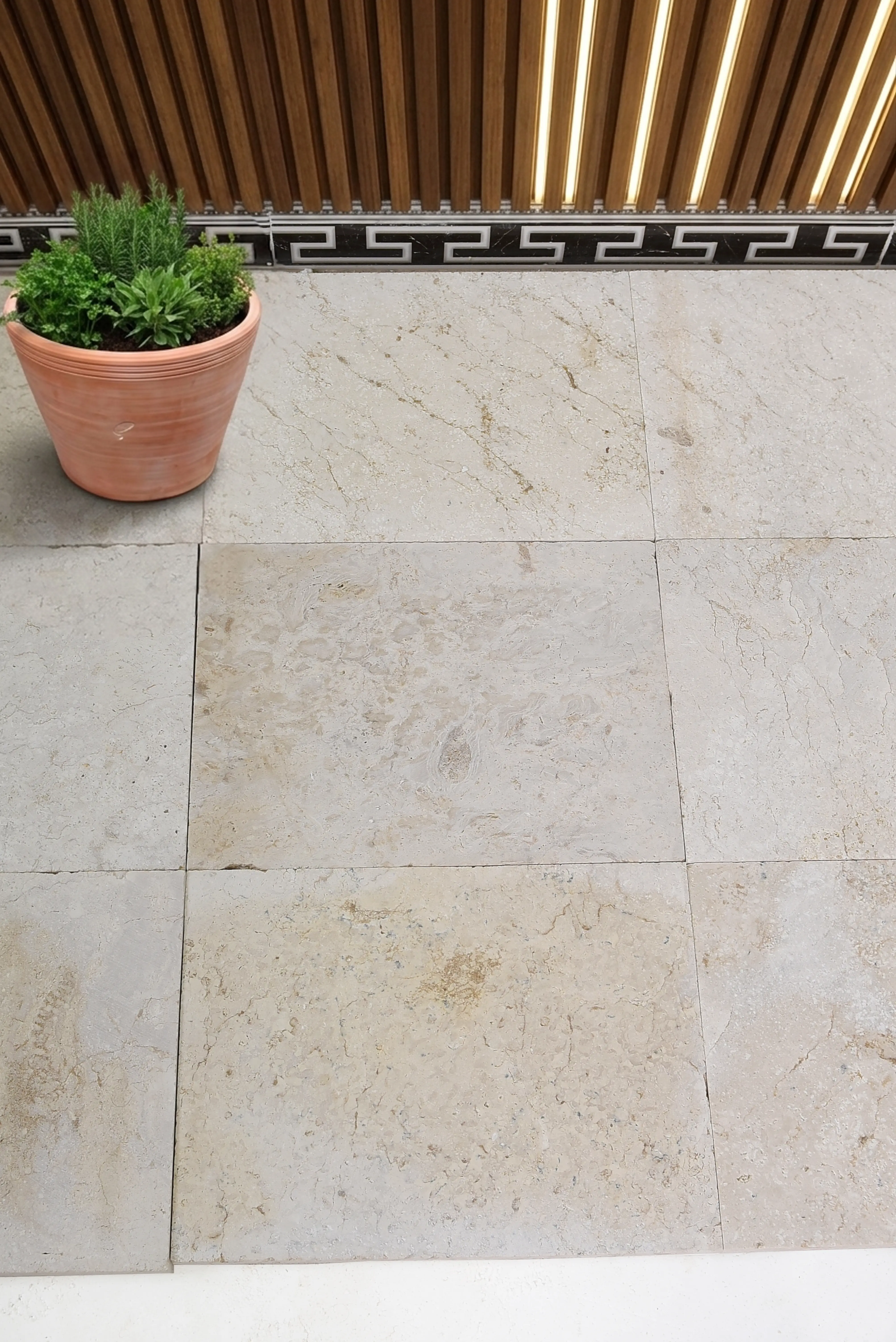
Garden Ideas for Stones That Optimize Your Budget
The most cost-effective garden wall projects tend to combine a structural wall stone in a single species with a complementary decorative stone at the base or cap. This layered approach lets you allocate budget to the structural material where it counts — durable, consistent, load-appropriate — while using a lower-cost or off-cut stone for accent elements that don’t bear load.
- Use tumbled limestone for the main wall body, then cap with a flat-cut limestone slab for a clean top edge that resists weathering
- Combine rough fieldstone wall construction with white pebble base treatment to contrast texture and improve drainage at the wall toe
- Specify dry-stack flagstone for low decorative walls under 18 inches, reserving the mortared specification for taller structural walls where movement control matters
- Consider split-face block for straight wall runs and reserve hand-fitted irregular stone for curved features where the irregular texture adds visual value
- Use granite or basalt as pillar material at wall ends and transitions, with a lower-cost limestone or sandstone for infill runs
Garden ideas for stones work best when the design brief acknowledges both aesthetic goals and structural requirements from the start. A design that looks stunning in a rendering but ignores base preparation, drainage requirements, or load-bearing demands on the stone will cost significantly more to build — and significantly more to repair — than one that integrates all three from the specification phase.
Delivery Lead Times and Project Scheduling
Project schedules are directly affected by where the stone is sourced and how deep the supplier’s warehouse stock runs. Common domestic stone types — fieldstone, quarried limestone, basic sandstone — often ship within one to two weeks from a well-stocked warehouse. Imported or specialty stone, including premium tumbled travertine, precision-cut basalt, or specific granite finishes, can carry four to eight week lead times if inventory isn’t held domestically.
Citadel Stone sources stone direct from quarries and maintains stocked warehouse inventory, which typically compresses lead times for standard wall stone products to one to two weeks rather than the extended import cycle. Confirm truck access to your delivery site before placing a bulk order — stone is heavy and arrives on pallets that require a flat, accessible drop zone. Restricted truck access to sloped or narrow sites can mean arranging intermediate handling, which adds cost and handling risk for the material. The USGS dimension stone production and use data provides useful context on domestic supply volume and stone type availability across the industry.
Getting Your Stones for Garden Wall Specification Right
Cost clarity on stones for garden wall projects comes from treating the price question as a multi-variable specification problem rather than a simple per-unit lookup. Stone type, construction method, wall height, site terrain, drainage requirements, and delivery logistics all feed into the final number — and understanding each variable before finalizing a design puts you in a far stronger position to manage budget and avoid mid-project surprises. For broader specification context on natural stone wall materials, including technical performance data and finish options, complete garden wall stone guidance covers the full material and specification landscape in detail. Sourced direct from quarries in Turkey, the Mediterranean, and beyond, Citadel Stone reduces middleman markups on bulk garden wall orders.
Related reading: faux vs natural stone garden wall · how to build dry stone wall · raised garden stone wall build.