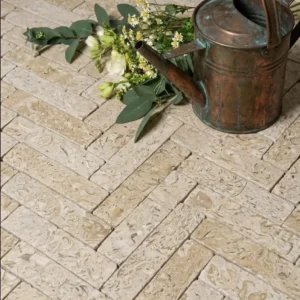
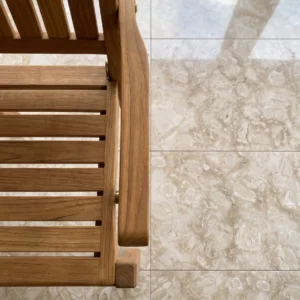
Material Selection Sets the Tone
Shower floor tile ideas live or die on one decision made before a single tile is cut — the choice between a material that looks good on day one and one that performs reliably through years of thermal cycling, moisture, and daily foot traffic. Your floor has to handle temperature swings between a cold bathroom and a hot shower stream, a range that stresses both tile bodies and grout joints in ways most designers don’t account for. That interaction between thermal expansion and wet adhesion is where installations quietly fail, and where smart material selection quietly succeeds. The shower floor tile ideas covered here work precisely because they address that performance dimension head-on.
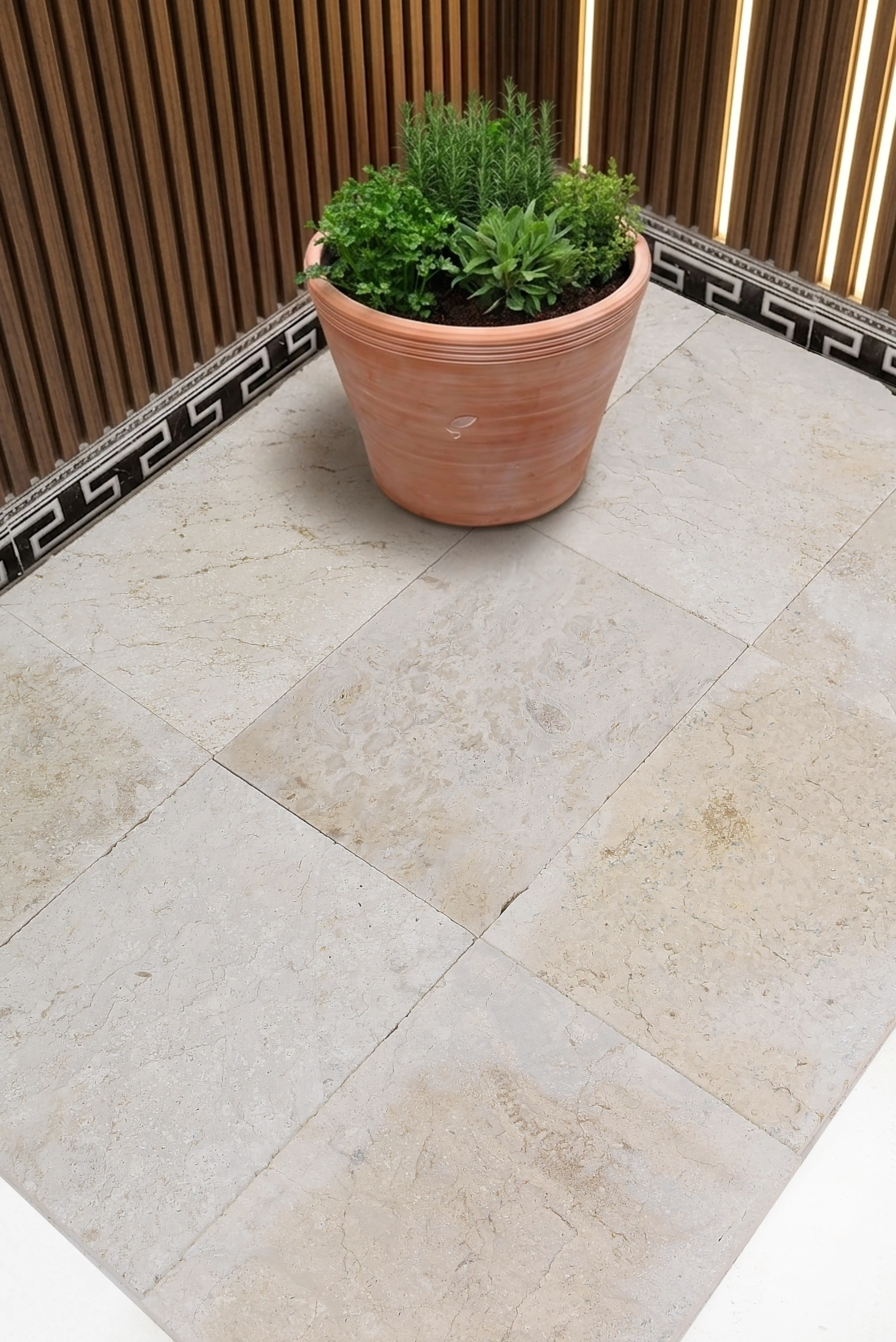
Mosaic Tile: The Performance Case Beyond Aesthetics
Mosaic shower floor tile earns its place on slip-resistance grounds alone — the increased grout joint frequency translates directly into a higher coefficient of friction (COF) under wet conditions. ASTM natural stone tile testing covers absorption and strength; slip resistance falls under ANSI A326.3, which sets a minimum wet DCOF of 0.42 for interior areas expected to be walked on when wet; a 1-inch or 2-inch mosaic format on a 4-inch sheet achieves this more reliably than large-format tile because the jointing pattern itself creates grip. You’re also gaining flexibility: smaller individual units conform better to the shower floor’s required cross-slope of 1/4 inch per foot, which means your drain pulls water efficiently without pooling at the perimeter. Natural stone mosaics — particularly honed travertine and marble — add a visual warmth that porcelain approximations consistently struggle to match.
The grout joint layout in mosaic formats also distributes thermal stress more evenly across the surface. Each joint acts as a micro-expansion break, absorbing the dimensional movement that occurs when cold stone meets a 105°F shower stream. Over years of thermal cycling in unheated bathrooms — common in northern climates where bathroom temperatures can drop significantly overnight — this distribution prevents the subsurface cracking that shows up around year five in large-format installations without adequate expansion joints.
Porcelain Shower Floor Tile: Honest Trade-Offs
Porcelain shower floor tile offers exceptionally low water absorption — typically below 0.5% — which makes it highly resistant to moisture infiltration over time. That density is both its strongest attribute and its most significant handling challenge during installation. Dense porcelain has a higher thermal expansion coefficient than most natural stones, meaning it moves more under temperature cycling. In a shower environment with daily hot-cold transitions, you need movement joints at every wall perimeter and at intervals no greater than 12 feet in any direction — tighter than many tile setters default to. The TCNA installation standards for natural stone and tile are explicit on this point, and skipping those joints is the primary reason porcelain installations develop corner cracks within the first two to three years.
Finish selection matters more than most people realise with porcelain. Polished or lappato finishes look beautiful on a showroom slab but produce a dangerously low wet COF in shower conditions. Your specification for a porcelain shower floor should insist on a textured or matte surface rated for wet environments — and you should verify that rating comes from testing, not from a manufacturer’s general marketing language.
Natural Stone Options: Marble, Travertine, and Limestone
Marble delivers a visual depth that no engineered material has replicated convincingly — the veining is a geological event, not a printed pattern, and it reads differently at every scale. For shower floors, honed marble at 3/8-inch thickness in a 4×4 or 2×2 mosaic format is the most specification-sound approach. Polished marble in wet conditions is a liability: surface tension across a polished face reduces friction to unsafe levels. Honed finishes land in the COF range you need while preserving the stone’s luminosity. According to Natural Stone Institute ASTM tile specifications and standards, natural stone tiles used in wet interior applications should comply with ASTM C1528 and C503 requirements for absorption and flexural strength — criteria that well-sourced marble consistently meets when properly selected.
Travertine occupies a different performance bracket. Its open-pore structure requires filling and sealing before installation in a shower — unfilled travertine in a wet zone will absorb soap residue and organic matter into its voids, which is nearly impossible to remediate after installation. Filled-and-honed travertine, properly sealed with a penetrating impregnator before grouting and again after, is an excellent shower floor material with a warm, spa-like character. Limestone follows similar logic: dense, low-porosity limestone from selected quarries in the Middle East performs reliably in wet applications when surface-sealed on an appropriate schedule.
Format, Sizing, and What It Means for Your Installation
The relationship between tile format and shower floor geometry is one of the most practical considerations your specification needs to address. Shower floors are small, sloped planes with a point or linear drain — large-format tile fights this geometry at every turn. A 12×12 or larger tile must be back-buttered with exceptional consistency to avoid hollow spots, and the slope requirement creates height differentials across a single tile face that stress both the adhesive and the tile body over time.
- 2×2 mosaic sheets on mesh backing conform easily to cross-slopes and drain geometry without custom cutting every tile
- 1×1 mosaics offer maximum COF and the most flexible layout, but increase grout joint maintenance requirements
- 3×6 or 4×4 formats work well in larger shower footprints (36 inches or wider) where slope differentials are more manageable
- Large-format tile (12×12 and above) requires laser-level substrate verification and full-coverage epoxy mortar — a higher-cost installation path that rarely outperforms smaller formats in shower conditions
- Hexagonal natural stone tiles in 2-inch or 3-inch formats have become one of the most popular shower floor tile ideas for both aesthetics and wet-surface performance
Substrate, Waterproofing, and Setting Bed Requirements
The tile itself is almost secondary to what lies beneath it. Shower floor failures in natural stone installations trace overwhelmingly to inadequate waterproofing membrane integration, not to the stone’s performance. Your shower floor tile ideas will only reach their intended lifespan when the setting bed is a certified waterproof assembly — a foam shower pan or a cement board with a properly lapped liquid membrane, carried up the wall a minimum of 6 inches and integrated at the drain with a clamping ring or bonding flange.
For natural stone shower floor tile, modified thinset is the baseline — but large natural-stone mosaics on mesh benefit significantly from a medium-bed mortar that provides the 3/16-inch minimum contact surface the substrate requires. Thermal cycling in the shower environment — daily temperature swings of 40–60°F between a cool unoccupied bathroom and a running shower — makes adhesive bond strength a long-term durability factor, not just an installation convenience. Medium-bed mortars with polymer modification maintain flexibility under this cycling in ways that standard thinset, fully cured and stiff, does not.
For a closer look at how natural stone performs across different wet-environment formats, Citadel Stone shower tile options offer an expanded range worth reviewing for your project specification.
Grout Selection and Joint Maintenance
- Unsanded grout for joints under 1/8 inch — standard for 1-inch and 2-inch mosaic shower floor tile formats with tight spacing
- Sanded grout for joints 1/8 inch and wider — common in 3-inch and 4-inch mosaic formats
- Epoxy grout offers the highest stain resistance and is ideal for white or light-coloured natural stone where grout haze is a finishing risk
- Cement-based grout in shower floors requires sealing within 72 hours of installation and resealing on a 12–18 month cycle to maintain stain resistance
- Grout colour selection affects the visual weight of mosaic formats dramatically — a contrasting grout line emphasises the pattern; a tone-matched grout recedes and lets the stone surface read as continuous
- Avoid wide joints (over 3/16 inch) in natural stone mosaics — wider joints accumulate soap residue faster and require more aggressive cleaning to maintain appearance
Thermal Cycling and Long-Term Joint Integrity
Here’s a performance detail that doesn’t appear in most design guides: shower floors in homes that go unoccupied for extended periods — vacation properties, seasonal residences — experience more aggressive thermal cycling than daily-use bathrooms. The stone and substrate move through their full expansion-contraction range on every occupancy cycle rather than making incremental adjustments daily. In freeze-thaw regions, an unheated bathroom can drop below freezing while the shower is used at 105°F on the same day — a thermal delta that pushes grout joints into compression and tension repeatedly. Specifying a flexible, latex-modified grout (rather than standard Portland-based formulations) in these conditions adds meaningful longevity to the joint system without changing the visual outcome.
At Citadel Stone, we review sourcing and thickness specifications for projects in variable-climate installations specifically because the stone’s thermal expansion coefficient matters in these conditions. Marble at approximately 7.3 × 10⁻⁶ per °F and travertine at approximately 4.5 × 10⁻⁶ per °F behave differently under the same thermal range — and that difference informs which material belongs in a given shower floor tile specification. Your tile setter needs this data, not just the aesthetic brief.
Ordering, Logistics, and Lead Times
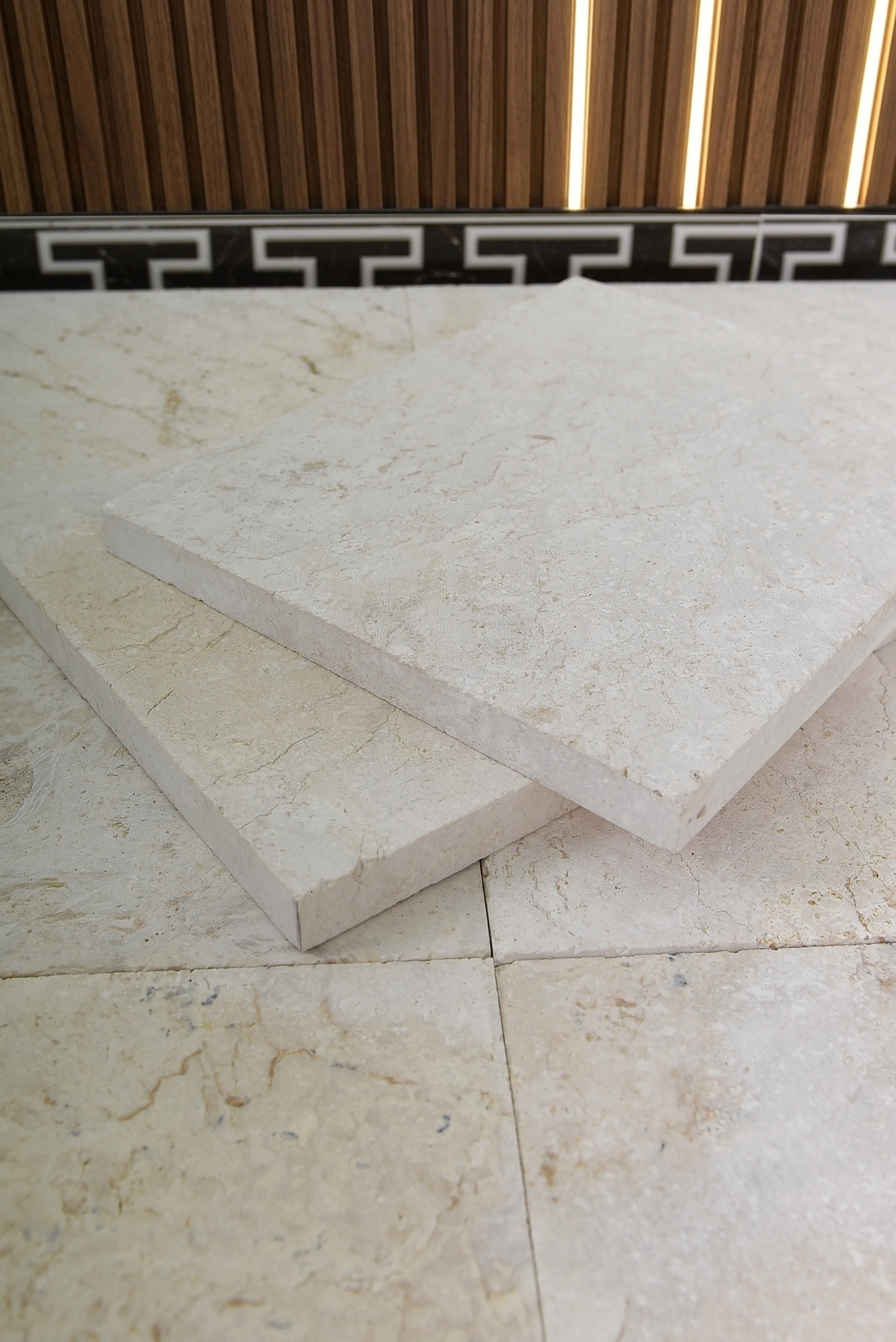
Shower floor tile ideas that look perfect in a mood board can stall a project if material availability isn’t factored into the schedule early. Natural stone mosaics — particularly those cut from Middle East quarries or sourced from European quarry partners — carry longer lead times than domestic porcelain. Typical delivery windows from warehouse stock run 5–10 business days for standard mosaic formats; custom mosaic cuts, border inlays, or matched-lot requirements for a natural stone bathroom project can extend that to 4–6 weeks depending on the quarry cycle.
Citadel Stone maintains warehouse inventory across a range of natural stone mosaic and tile formats, which compresses the lead time considerably for projects that can work from available stock. Coordinate your tile order before the waterproofing membrane installation is complete — not after — so the setting bed isn’t sitting exposed waiting on material. Delivery access at the project address also matters: natural stone mosaic sheets on pallet ship efficiently, but narrow residential driveways or multi-floor job sites need to be flagged at the order stage to ensure the delivery method matches the site conditions.
Expert Summary
Every strong shower floor specification starts with three aligned decisions: the right material for the moisture and thermal environment, the right format for the floor geometry and slip-resistance target, and the right setting assembly to support both over decades of use. Shower floor tile ideas are most useful when they’re evaluated against these performance criteria, not just visual preference. Natural stone mosaics in honed travertine, filled limestone, and marble deliver the aesthetic depth that porcelain approximates but rarely matches — and when properly specified and installed, they offer a service life that rewards the investment. As you consider the broader stone palette for your bathroom project, marble floor tile in larger formats explores how dimensional stone performs in adjacent interior applications worth considering alongside your shower specification. Stone for nationwide projects arrives from established quarry partners across multiple continents, cut for consistent mosaic sheets.
Related reading: large tile lippage problems · Bathroom Floor Tile Ideas That Elevate Any Space · porcelain floor tile.