What Red Travertine Actually Is
Red travertine’s color story begins not at the quarry face but hundreds of thousands of years earlier, when iron-bearing groundwater percolated through limestone formations and deposited iron oxide compounds into the stone’s developing crystal matrix. The result is a sedimentary material that reads visually as warm and rich but behaves structurally more like a dense carbonate rock than a decorative surface. Understanding that distinction — between aesthetic character and mineralogical identity — is what separates a red travertine specification that performs over decades from one that disappoints within a few seasons.
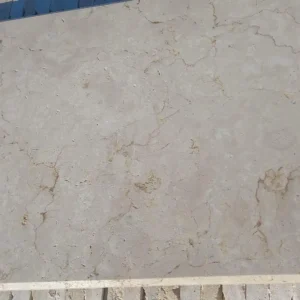
The coloration ranges from terracotta and amber-rust to deep burgundy, depending on the concentration and oxidation state of the iron minerals present at the time of deposition. You’ll also notice that the grain pattern in red travertine tends to run in banded horizontal strata, a direct record of the layered mineral precipitation process. That banding is one of the most reliable quality indicators you can assess before a single paver leaves the warehouse.
Color Variation and What Drives It
One of the most common specification mistakes with red travertine is treating it as a uniform product. It isn’t — and that’s not a defect, it’s geology. The iron oxide content can shift noticeably even within a single block, which means batch-to-batch variation is real and manageable, but only if you plan for it. Order your full project quantity from the same quarry run whenever possible, and request that warehouse staff pull from a single pallet grouping rather than mixing lot numbers.
The secondary keywords in this material family — brown travertine, dark travertine, yellow travertine — all share the iron-oxide coloration mechanism, but each reflects a different oxidation stage or mineral mix. Brown travertine typically has higher manganese content alongside iron. Dark travertine — often described as walnut or espresso in tone — carries a denser mineral matrix that mutes the warm undertones. Yellow travertine sits at the lightest end of the iron-oxide spectrum, where the ferrous compounds haven’t fully oxidized to the deeper red state. Knowing this helps you make informed substitutions when a specific red lot runs short mid-project.
- Terracotta red: high ferric iron oxide, typically from Middle East quarries with warm, dry depositional environments
- Burgundy-red: elevated manganese co-precipitation alongside iron, often showing darker vein lines
- Amber-rust: transitional coloration common where depositional chemistry varied across the formation
- Banding intensity: directly proportional to the periodicity of ancient water-flow cycles at the source formation
Grain Structure and the Pore System
Travertine’s defining structural characteristic — the interconnected pore network — is more pronounced in red travertine pavers sourced from Middle East quarries than in the paler ivory types many specifiers are more familiar with. Those voids formed when CO₂ escaped from the supersaturated mineral solution during deposition, leaving behind a network of channels that range from hairline to several millimetres in diameter. For specification purposes, the pore system determines three things simultaneously: sealer consumption, freeze-thaw vulnerability, and the visual texture of the finished surface.
The Natural Stone Institute outlines how travertine’s open-pore structure affects absorption characteristics and long-term outdoor suitability — a framework worth reviewing before finalizing your finish specification. You’ll find that red travertine in a filled-and-honed finish presents a denser, more predictable surface than an unfilled tumbled version, which retains open voids at the face. Both are legitimate specification choices, but they carry different maintenance commitments and perform differently under thermal stress.
According to the Natural Stone Institute travertine properties and outdoor suitability guidance, the pore structure and absorption behavior of travertine is central to understanding how it responds to outdoor conditions — an assessment that applies directly to red travertine’s specification in exposed environments.
- Filled finish: voids grouted before polishing or honing — reduces sealer volume required by approximately 30–40% compared to unfilled stock
- Unfilled finish: open pores retained — delivers the most authentic visual character but demands more rigorous sealing schedules
- Cross-cut orientation: exposes the circular pore ends, creating a denser visual surface with less directional banding
- Vein-cut orientation: reveals the full banding strata — more dramatic grain, more visible pore channels running parallel to the surface
Thermal Cycling and Freeze-Thaw Performance
Here’s where many red travertine specifications quietly fail — not in warm-climate installations, but in climates where the temperature swings between day and night exceed 35–40 °F regularly. That cycling range matters more than the absolute high or low, because it’s the expansion-and-contraction cycle that stresses both the stone and the joint system. Travertine’s thermal expansion coefficient sits in the range typical of calcium carbonate stones, which means a 12-foot run of red travertine pavers will move measurably across a day-night swing of that magnitude.
In freeze-thaw regions — broadly defined as any area where temperatures cross 32 °F more than 25 times annually — the pore network becomes the critical variable. Water that enters open pores and then freezes expands by approximately 9% in volume. In an unfilled red travertine, that expansion occurs inside the stone itself, not just at the joints. A penetrating silane-siloxane sealer applied to clean, dry stone before installation dramatically reduces water ingress into the pore system, which is your primary freeze-thaw mitigation strategy for this material.
For your joint system in thermally active climates, plan expansion joints at no more than 12-foot intervals in both directions rather than the 15-foot default that shows up in generic paving guidelines. The additional joint frequency gives the material room to cycle without transferring stress into adjacent units. Use a flexible polyurethane joint sealant rated for the full temperature range your climate delivers — not a rigid cement grout, which will crack under repeated thermal movement and create pathways for water infiltration that accelerate freeze-thaw damage.
- Thermal expansion allowance: calculate based on your full annual temperature range, not just summer highs
- Sealer penetration depth: aim for a minimum 3–4 mm penetration into the pore network — surface-film sealers are insufficient for outdoor red travertine in variable climates
- Joint material: flexible polyurethane or modified silicone sealant in movement joints; sanded grout acceptable only in interior or sheltered applications
- Resealing interval: plan for every 2–3 years in thermally active outdoor settings, annually in climates with more than 50 freeze-thaw cycles per year
Finish Options and Slip-Resistance Context
The finish you specify on red travertine determines far more than appearance — it directly governs the surface’s behavior in wet conditions. For outdoor applications subject to rain, irrigation, or poolside splash, a honed or brushed finish presents a meaningfully different surface texture than a polished face. Polished red travertine — while visually dramatic — is better suited to interior vertical applications or wall cladding where wet-surface considerations don’t apply.
Slip resistance in wet conditions depends on finish roughness, sealer type, and the presence of any surface contaminants. The current standard for evaluating wet dynamic coefficient of friction is ANSI A326.3 — it replaced the ASTM C1028 static test withdrawn in 2014 — and it evaluates the finish as the primary variable. Your finish selection should be made in the context of ANSI A326.3 requirements for the intended application, with the understanding that a brushed or tumbled texture will generally perform better than a polished surface in wet environments. The ASTM C1527 travertine dimension stone standard provides the dimensional and quality framework within which finish specifications operate for travertine products.
- Polished: maximum visual drama, reserved for interior or dry-climate wall applications
- Honed: matte surface with moderate texture — appropriate for interior flooring and sheltered outdoor areas
- Brushed: mechanically wire-brushed surface that opens the texture — preferred for exposed outdoor paving subject to wet conditions
- Tumbled: rounded edges and irregular surface — highest surface texture, delivers the most rustic aesthetic alongside meaningful wet-surface performance
- Sandblasted: heavy texture treatment used for industrial or high-traffic outdoor settings where consistent surface grip is the priority
For projects where Citadel Stone warm-toned travertine is the material of choice, our technical team can advise on the most appropriate finish pairing based on your specific application and climate zone before any truck delivery is scheduled.
Red Travertine Pavers: Thickness and Structural Specification
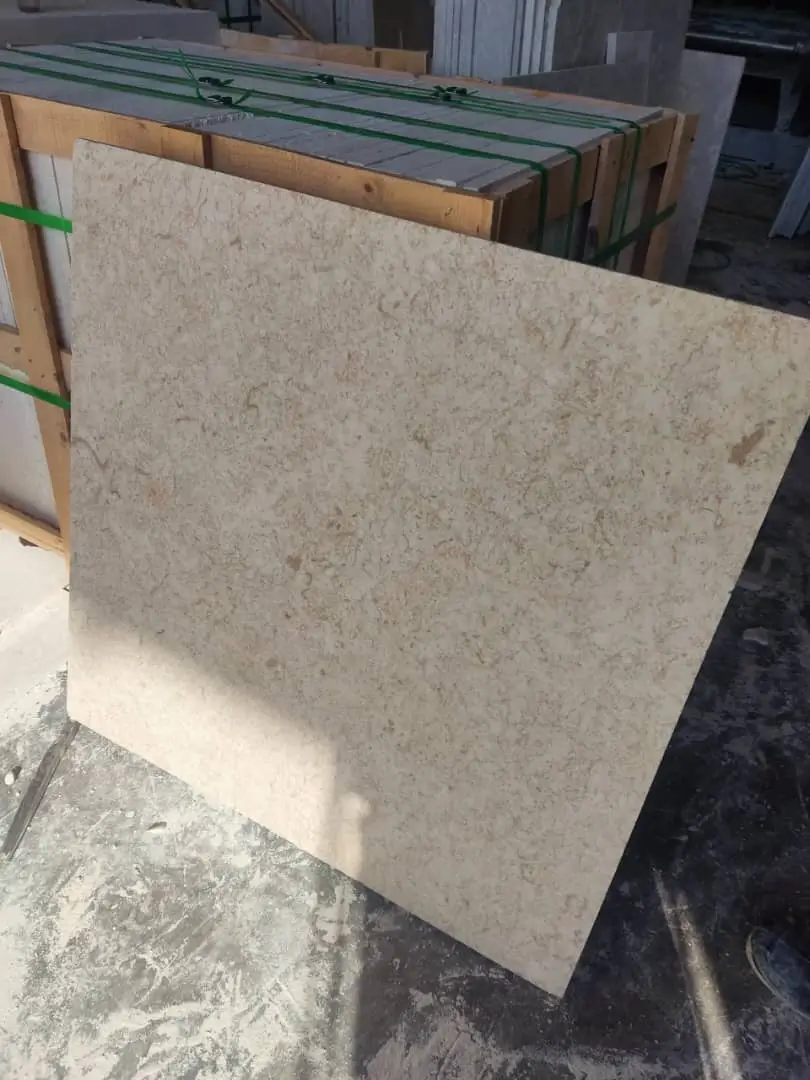
Thickness selection for red travertine pavers follows the same load-classification logic as any dimension stone, but with one travertine-specific caveat: the pore network reduces the effective cross-section available to resist bending stress compared to a denser stone of the same nominal thickness. For pedestrian-only patio applications, a 1¼-inch (30 mm) minimum thickness is workable on a properly prepared compacted aggregate base. For driveways or any application subject to vehicular loads — even light passenger vehicles — move to 2 inches (50 mm) minimum, and verify your substrate design accommodates the point-load distribution requirements.
Red travertine pavers in the 12×12 inch and 16×16 inch formats are the workhorses of most outdoor specifications. Larger formats — 24×24 inches and above — are available but demand a flatter, more precisely screeded sand-set bed, because the longer unsupported span amplifies deflection risk under point loads. Test report data on compressive and flexural strength for specific lot material is available on request from our technical team — we don’t publish generic values that may not reflect the actual quarry run your project receives.
Sealing Protocols for Outdoor Red Travertine
The iron oxide compounds responsible for red travertine’s color are also mildly reactive with acidic cleaners and some penetrating sealer formulations. Always confirm that any sealer you specify is pH-neutral and compatible with calcium carbonate substrates — a bleach-based or acidic pre-treatment will etch the surface and potentially alter the iron coloration in ways that cannot be reversed without resurfacing. This is a detail that comes up repeatedly in field troubleshooting and is almost never mentioned in product data sheets.
Apply the first sealer coat before grouting on interior applications, and before any foot traffic on exterior installations. A second coat applied 24 hours after the first — once the initial penetration has fully cured — closes the surface pores that the first application leaves partially open. This two-coat approach is particularly important for red travertine in outdoor settings because the color richness you’re specifying can fade noticeably if oxidized iron compounds near the surface are allowed to leach under repeated water exposure without adequate sealer protection. According to USGS limestone and travertine natural mineral formation data, the calcium carbonate and iron oxide mineral chemistry that defines travertine’s character is also what makes sealer compatibility a non-trivial specification decision.
Ordering, Logistics, and Lead Times
Your material planning should account for a 10–15% overage on red travertine orders — not because the material is fragile in transit, but because the color variation inherent to natural stone means you’ll want reserve stock for future repairs that matches your original lot. A truck delivery of a mismatched lot five years post-installation is a far more disruptive outcome than ordering slightly more upfront.
Citadel Stone maintains warehouse stock of red travertine in the most common formats and thicknesses, which compresses lead times significantly compared to a direct-import sourcing model. For large projects requiring unusual dimensions or custom fabrication, our team recommends confirming warehouse availability at least 4–6 weeks ahead of your installation window to allow for any logistics adjustments before the truck schedule locks in. We quarry, template, manufacture, and handle fulfillment through our selected quarries — which means the chain of custody from source to your project site is traceable in a way that generic distributor supply chains can’t always match.
- Standard formats (12×12, 16×16, 18×18 inch): typically available from warehouse stock with short lead times
- Custom sizes and thicknesses: confirm availability 4–6 weeks before your installation date
- Order overage: 10–15% minimum for color-matched future repairs
- Lot consistency: request a single quarry-run batch for any project where color uniformity is a specification priority
Before You Specify Red Travertine
Red travertine rewards specifiers who treat it as the geologically complex material it is rather than a decorative surface commodity. Your specification decisions — finish, thickness, joint system, sealer type, and thermal expansion allowance — collectively determine whether this material delivers decades of reliable service or requires intervention within the first few years. The color and grain that make red travertine visually compelling are the same iron-oxide chemistry and pore architecture that demand precise specification attention. Get those foundational decisions right, and the material will perform reliably across the full range of climates and applications it’s suited for.
As you build out your full hardscape specification, edge details and coping profiles deserve the same level of technical scrutiny as the field pavers. Brown travertine and dark travertine coping profiles are also worth evaluating where a tonal complement to the field stone is part of the design intent. Exploring travertine coping options and sizing is a practical next step for any project where red travertine pavers meet a pool, raised bed, or step transition. Sourced from select natural stone quarries worldwide, Citadel Stone red travertine ships in small formats ideal for accent walls and backsplashes.
Related reading: scabos travertine · tumbled marble vs travertine tile · small travertine tile patterns.