What Reclaimed Granite Curb Actually Is
The reclaimed granite curb guide you actually need starts not with dimensions, but with understanding what you’re buying — because reclaimed material behaves differently from freshly cut stone in ways that matter for specification. Granite curbing pulled from municipal road programs, historic streetscapes, and commercial redevelopment sites carries decades of compressive loading history, and that history generally works in its favor. Granite’s interlocking crystalline structure — feldspars, quartz, and mica bound at depth — means the stone doesn’t degrade under traffic load the way softer sedimentary material does. What you’re sourcing is dimensional stone that already proved itself.
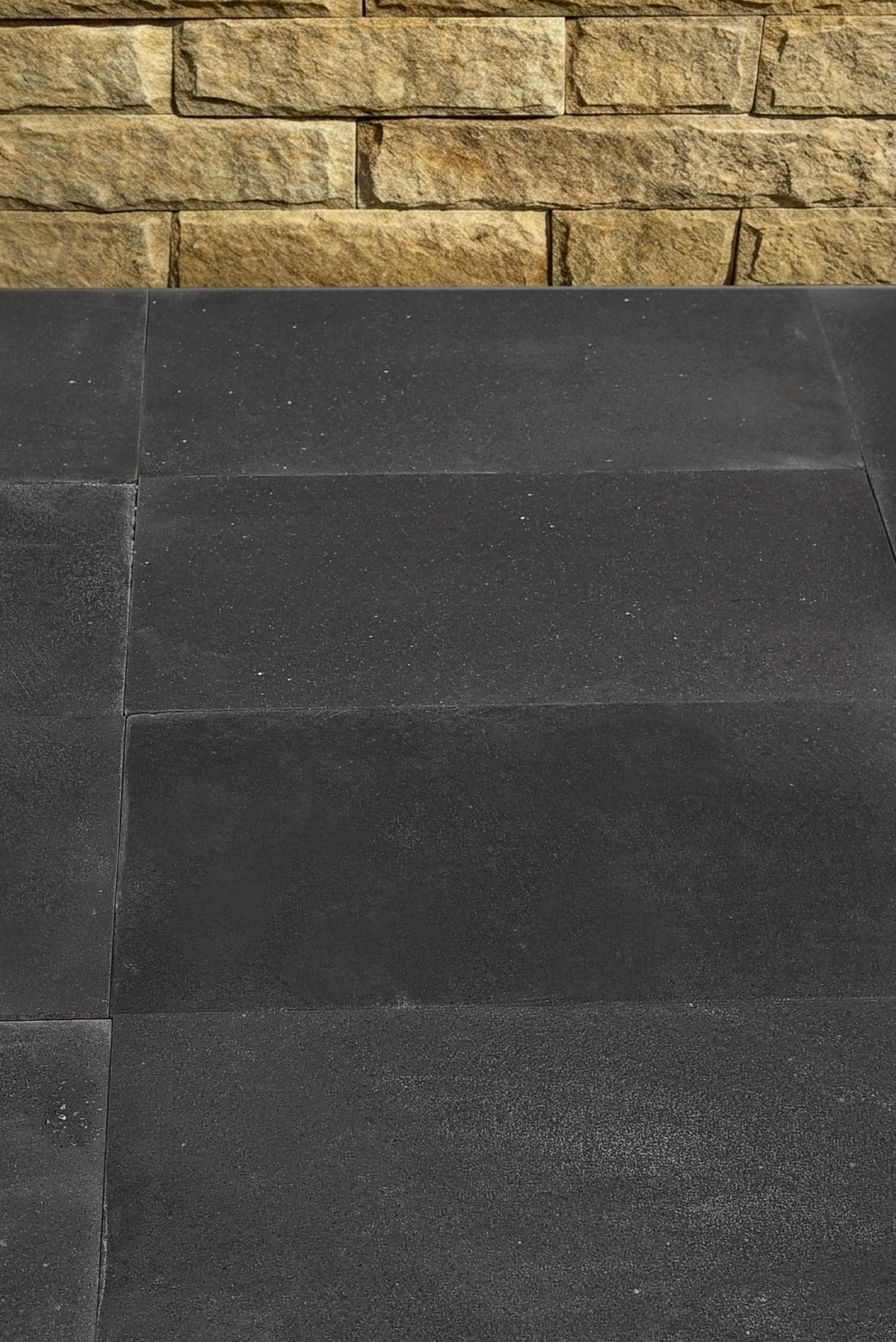
Reclaimed pieces arrive with weathered faces, rounded arrises, and the characteristic grey or blue-grey patina that comes from road salt, rainfall, and UV cycling over decades. That surface character is an asset in heritage and residential contexts, but you need to account for it when sizing is critical. Dimensional tolerances on reclaimed stock run wider than new production — typically ±¾ inch on length and ±½ inch on face height — so projects that require tight repeating patterns need to allow for sorting and grading time before installation begins.
Grading Systems for Reclaimed Granite Curb
Not all reclaimed granite curb arrives in equivalent condition, and suppliers who don’t grade their stock leave you exposed to costly field sorting or mid-project material shortages. The industry broadly uses a three-tier grading framework, and understanding what each tier covers is the first practical step in any specification.
- Grade A (Select): Full-length pieces, typically 36–48 inches, with consistent face height, minimal spalling, and sound arrises on all four faces. These pieces suit formal civic applications, driveway aprons, and any layout where visual uniformity is non-negotiable.
- Grade B (Standard): Functional pieces with minor surface weathering, possible corner chips under ½ inch, and occasional hairline surface cracking that doesn’t penetrate the full section. Suitable for residential edging, parking lot borders, and garden borders where slight variation reads as character rather than defect.
- Grade C (Utility/Fill): Mixed lengths, significant weathering, possible broken faces or deep surface crazing. Use these only for buried applications — drainage channels, retaining base courses, or underlayment — where structural mass matters more than appearance.
Your specification should call out the grade explicitly, not just “reclaimed granite curbing,” because that phrase alone tells a supplier almost nothing about what you need. Requiring Grade A with a written face-height tolerance of ±¼ inch gives your project protection that generic specs don’t provide. According to ASTM C615 granite dimension stone quality standards, granite must meet specific absorption and modulus of rupture minimums regardless of whether it’s new or reclaimed — a useful specification anchor for client or contractor conversations about material fitness.
Standard Sizes and What They Mean in Practice
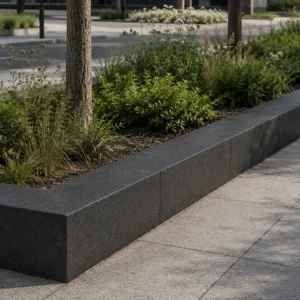
Granite curbing runs in a narrower dimensional range than most specifiers expect. The dominant size in reclaimed stock — the piece that made up the overwhelming majority of 20th-century municipal curb programs — is nominally 5 inches wide by 7 inches deep (the hidden dimension below grade) by 36 to 48 inches long. You’ll also encounter the older 4×6 section, which predates the heavier truck loading requirements of the post-war period. Both profiles remain useful depending on your application.
- 5×7×36–48 inch: Standard municipal profile, suited to vehicular driveway edges, parking lot perimeters, and any application where a vehicle wheel may occasionally mount the curb.
- 4×6×24–36 inch: Lighter residential profile, common in late 19th and early 20th century streetscapes. Better suited to garden beds, lawn edging, and pedestrian pathways where structural loading is light.
- Jumbo section (6×8 or 6×9): Less common in reclaimed supply, these came from heavy arterial roads and are highly sought after for modern commercial projects requiring a taller reveal above finished grade.
- Radius pieces: Curved sections from historic intersections are genuinely scarce. If your project needs radii, flag it early — warehouse inventory on these runs low and lead times are unpredictable.
Face height — the dimension visible above grade — is what most clients focus on, and rightly so. Standard reveal in historic applications was 5 to 6 inches, and matching that reveal in a restoration project means you’re shopping for pieces with consistent section depth. Sorting for face height consistency before delivery saves significantly more time than sorting on-site, where field crews work at a different cost rate than warehouse labor.
Primary Uses and Application Matching
The reclaimed granite curb guide conversation always comes back to fit-for-purpose. Granite curbing performs across a wider application range than most designers initially consider, and understanding where each use case fits helps you make the material-to-specification match before the purchase order goes out.
Driveway aprons and entrance borders represent the highest-demand structural use for reclaimed curbing. You’ll want Grade A stock in the 5×7 section, set in a concrete haunch on a compacted aggregate base of at least 6 inches. The curb needs to be fully bedded — any void below the section concentrates load at the contact point and eventually fractures even granite under repeated vehicle loading. Granite’s compressive strength, typically above 19,000 PSI per Natural Stone Institute granite durability and application specifications, means the stone itself isn’t the failure risk — improper bedding is.
- Historic streetscape restoration: Grade A stock, tightly matched by face height and surface patina. Expect to sort from a larger quantity than the net project requirement — typically 15–20% overage for selective grading.
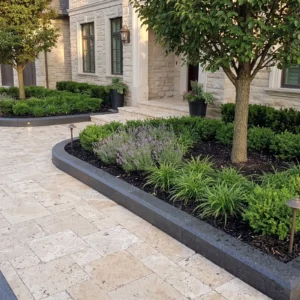
- Residential garden and lawn edging: Grade B stock in the 4×6 section works well. Dry-set installation is acceptable where frost depth is minimal, but in freeze-thaw regions, a lean concrete bed prevents heave displacement.
- Commercial parking perimeters: Grade A or B in 5×7 section, with a concrete haunch on the vehicle side. Specify a minimum 4-inch haunch width — skimping here is the most common cause of curb displacement in parking environments.
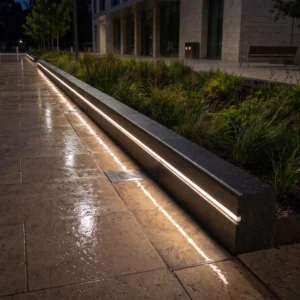
- Landscape feature borders: Grade B or C stock can work beautifully when the face is positioned consistently. The dimensional variation that disqualifies these pieces from vehicular use becomes a design advantage in organic garden settings.
- Water feature and pool surrounds: Grade A stock, flame-finished or split-face sections offer slip resistance benefits. Granite’s near-zero water absorption also means it won’t saturate and spall in wet environments.
Sourcing and Cost Factors for Reclaimed Granite Curb
The total project cost for reclaimed granite curb is more variable than for new-production stone, and freight distance is typically the biggest single swing factor in your budget. Reclaimed curbing is heavy — a standard 5×7×36 piece runs approximately 90 to 110 lbs — and truck freight on a full curb project can represent 30 to 45 percent of total material cost for buyers more than 400 miles from the nearest stock yard. That ratio shifts your calculation significantly compared to lighter paving materials where freight is a smaller share of delivered price.
Regional material availability also affects pricing in ways that aren’t always transparent. In areas with active municipal road reconstruction programs, reclaimed supply tends to stay loose and pricing stays competitive. In markets distant from those sources, the same material can carry a premium of 40 to 60 percent simply because it’s traveled further and passed through more handling stages. Understanding where your supplier sources from, and how far the stone has moved before it reaches the warehouse, matters for budget discipline.
Labor-to-material ratios for reclaimed curbing typically differ from new-cut stone in one important way: installation labor is similar or identical, but pre-installation sorting and grading labor is higher. On new production, dimensional consistency is guaranteed. On reclaimed granite curb stock, even a well-graded delivery requires field sorting to select matching pieces for visible runs. Budget an additional 10 to 15 percent labor allowance for projects using reclaimed versus new-cut curbing, and offset that against the typically lower per-linear-foot material cost. For current pricing context on related hardscape elements, dimension stone reports from the USGS provide useful industry-wide data on stone market dynamics and production volumes. You can browse our reclaimed granite curb stock to understand current availability and grade options before committing to a project timeline.
Installation Variables That Affect Performance
Granite’s performance over time in curb applications traces almost entirely to installation quality rather than material failure. The stone itself is extraordinarily durable — properly installed reclaimed granite curb from the 1890s is still in service in many historic streetscapes — so the field decisions your crew makes during setting are the ones that determine longevity.
Base preparation is the non-negotiable first variable. Your compacted aggregate base needs to be uniform under the full section depth — not just under the face — because the 7-inch depth of a standard curb section distributes load across that entire buried area. A 4-inch base may satisfy minimum code requirements but won’t prevent long-term settlement in cohesive soils with high moisture variability. Specify 6 inches of compacted crushed aggregate as your floor, and push to 8 inches in areas with documented clay subgrade or high seasonal moisture variation.
- Bedding compound: Dry-set mortar works for residential edging; use a full wet mortar bed (1:3 cement-sand) for any vehicular application. The mortar bed should be 2 inches thick minimum and should fill 100 percent of the base contact — no voids.
- Joint spacing: Leave ¼ to ⅜ inch joints between pieces for thermal expansion in exposed applications. Tight-butted joints on long exposed runs risk face spalling at arrises when thermal expansion has nowhere to relieve.
- Haunch construction: For vehicular curb, the concrete haunch on the traffic side should extend at least 4 inches horizontally and rise to within 1 inch of the top of the curb section. Poured in place after setting gives better contact than preformed options.
- Elevation control: Set to a taut stringline, not by eye. Reclaimed pieces vary slightly in face height, so elevation control comes from your base, not from assuming uniform piece height.
Finish and Surface Considerations
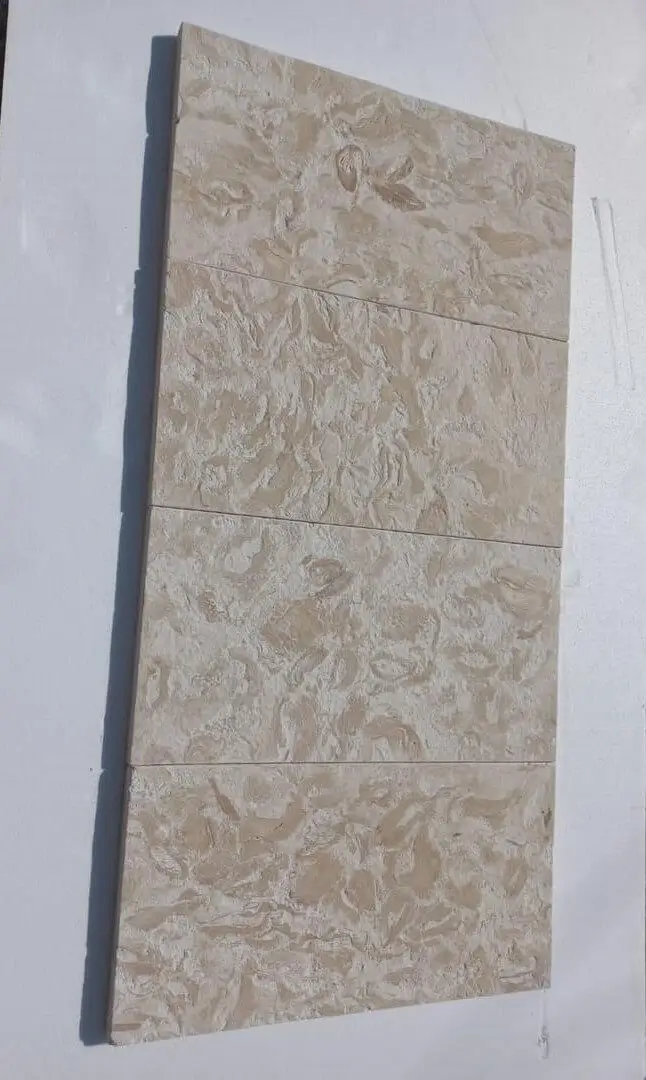
Reclaimed granite curb arrives with a field-weathered face that most projects accept as-is — and for good reason. The weathered surface has already shed the micro-fractures and saw-cut roughness of new production and developed a stable, dense outer layer through years of environmental cycling. That surface is actually more stable than fresh-cut granite in most respects, and attempting to restore a sawn finish by cutting or grinding defeats the purpose of specifying reclaimed material.
Your finish decision matters most at the top arris — the exposed upper edge that sees foot traffic, wheel contact, and salt application in northern climates. Reclaimed curb with rounded arrises from decades of contact provides better comfort underfoot for pedestrians stepping over the curb, and the rounded profile reduces the stress concentration that leads to arris chipping under impact. Pieces with sharp surviving arrises from protected sections of the original installation are worth selecting for applications where a more formal edge profile is needed.
- Natural weathered face: Accept as-is for residential, garden, and heritage applications. The varied grey tones and subtle surface texture add visual depth that new granite can’t replicate.
- Hammer-dressed face: Some reclaimed pieces were originally hammer-dressed rather than sawn, giving a more textured, traditional face. These are particularly valued in historic restoration work and often carry a premium in the reclaimed market.
- Split-face sections: Occasionally encountered in reclaimed stock from older commercial applications. The rough split face provides excellent slip resistance and suits water feature surrounds and naturalistic garden edges.
- Sealant application: Reclaimed granite’s dense crystalline structure means it generally doesn’t require sealing for performance. In high-salt environments, a penetrating silane-siloxane sealer can reduce salt migration into grain boundaries, but it’s optional rather than mandatory maintenance.
Specification Writing for Reclaimed Granite Curb
Writing a specification that protects your project means being specific where the industry tends to be vague. The phrase “reclaimed granite curb, standard municipal section” appears in countless specs and means almost nothing to a supplier trying to fill the order accurately. Here’s what a defensible specification actually covers.
Start with section dimensions. Specify the nominal face height, width, and depth as separate values, not as a single shorthand. Call out your acceptable dimensional tolerance on each axis — ±¼ inch on face height for formal applications, ±½ inch acceptable for naturalistic garden work. Specify minimum piece length and whether you’ll accept a percentage of shorter cuts to fill out quantities. Allowing up to 20 percent of pieces in the 24-to-30-inch range, with the balance at 36-to-48 inches, gives your supplier flexibility to source without compromising your layout requirements.
- Material grade: Specify Grade A, B, or a defined blend. Reference your acceptance criteria for surface spalling, arris condition, and visible cracking.
- Compressive strength: Reference ASTM C615 minimums for granite dimension stone. Reclaimed stock that’s been in service for decades has already proved structural competence, but the specification anchor matters for contract protection.
- Delivery staging: Specify whether you need sorted and palletized delivery or whether loose truck delivery to site is acceptable. Sorted delivery costs more but saves field labor and reduces breakage.
- Overage provision: Call out a 10 to 15 percent overage order as the project baseline. Reclaimed material doesn’t restock predictably, so ordering tight and coming back for a second delivery risks a mismatch in surface character between the two supply batches.
Citadel Stone’s technical team can help you translate these specification principles into a purchase order that matches your project’s tolerance requirements and delivery sequence. Nationwide warehouse inventory means you’re not constrained to regional availability, and that’s particularly valuable when your project requires a specific grade or section size that local reclaimed sources can’t reliably supply.
Getting Reclaimed Granite Curb Specifications Right
Getting the reclaimed granite curb guide fundamentals right is ultimately about knowing which variables are fixed and which require your active management. The material itself — granite — is extraordinarily durable and forgiving of a range of environmental conditions. What requires your attention is the sourcing decision, the grading specification, the base preparation, and the dimensional tolerances that keep a reclaimed-material project looking intentional rather than improvised.
Your specification should call out grade, section dimensions, tolerances, and delivery format explicitly. Your installation should prioritize base uniformity and full bedding contact over speed. Your budget should account for freight distance, pre-installation sorting labor, and the 10 to 15 percent overage that protects you against mid-project supply gaps. According to USGS dimension stone data, granite remains one of the most widely used dimension stone materials in North American curb and border applications — a testament to its structural and aesthetic longevity across diverse project types. Beyond curbing, if your hardscape scope extends to paved surfaces, understanding how granite performs in a broader surface context is worth exploring — granite patio paver budgeting covers the cost variables that apply when granite moves from border applications into full surface coverage. Reclaimed granite kerbs supplied through Citadel Stone carry the weathered character of original quarry stone, with sizing typically consistent enough for repetitive border layouts.
Related reading: Decomposed Granite Driveway Problems and How to Fix Them · decomposed granite front yard ideas · how to install granite driveway.