Why Stone Choice Defines Fire Pit Safety
The heat tolerance of paving stones for a fire pit isn’t a single number — it’s a relationship between porosity, mineral composition, and moisture content that changes with every rainfall cycle. Dense, low-absorption stones like basalt and certain granites handle rapid temperature swings without issue because their crystalline structure gives trapped moisture nowhere to expand. Softer, highly porous stones are a different story: residual moisture turns to steam under direct flame, and the resulting pressure can shatter a paver faster than most homeowners expect the first time they light a fire after wet weather.
Your stone selection also determines how the surrounding patio performs. Radiant heat from a fire pit extends well beyond the burn zone — typically 18 to 24 inches in all directions — so the paving stones you specify for the immediate surround need heat tolerance well above what the patio field requires. Getting this wrong means spalling, cracking, and potentially dangerous surface failure in year two or three, not year twenty.
Which Natural Stones Perform Best Around a Fire Pit
Not every natural stone belongs near an open flame, and the differences between suitable and unsuitable materials are sharper than most product listings suggest. Here’s what field performance actually looks like across the main candidates:
- Basalt handles temperatures above 1,000°F without structural compromise — its volcanic origin means it formed under exactly the kind of intense heat a fire pit produces, making it the most thermally stable option in the natural stone category
- Granite performs reliably in the indirect heat zone (beyond 18 inches from the flame) but can experience surface pitting under sustained direct heat due to differential mineral expansion between quartz and feldspar crystals
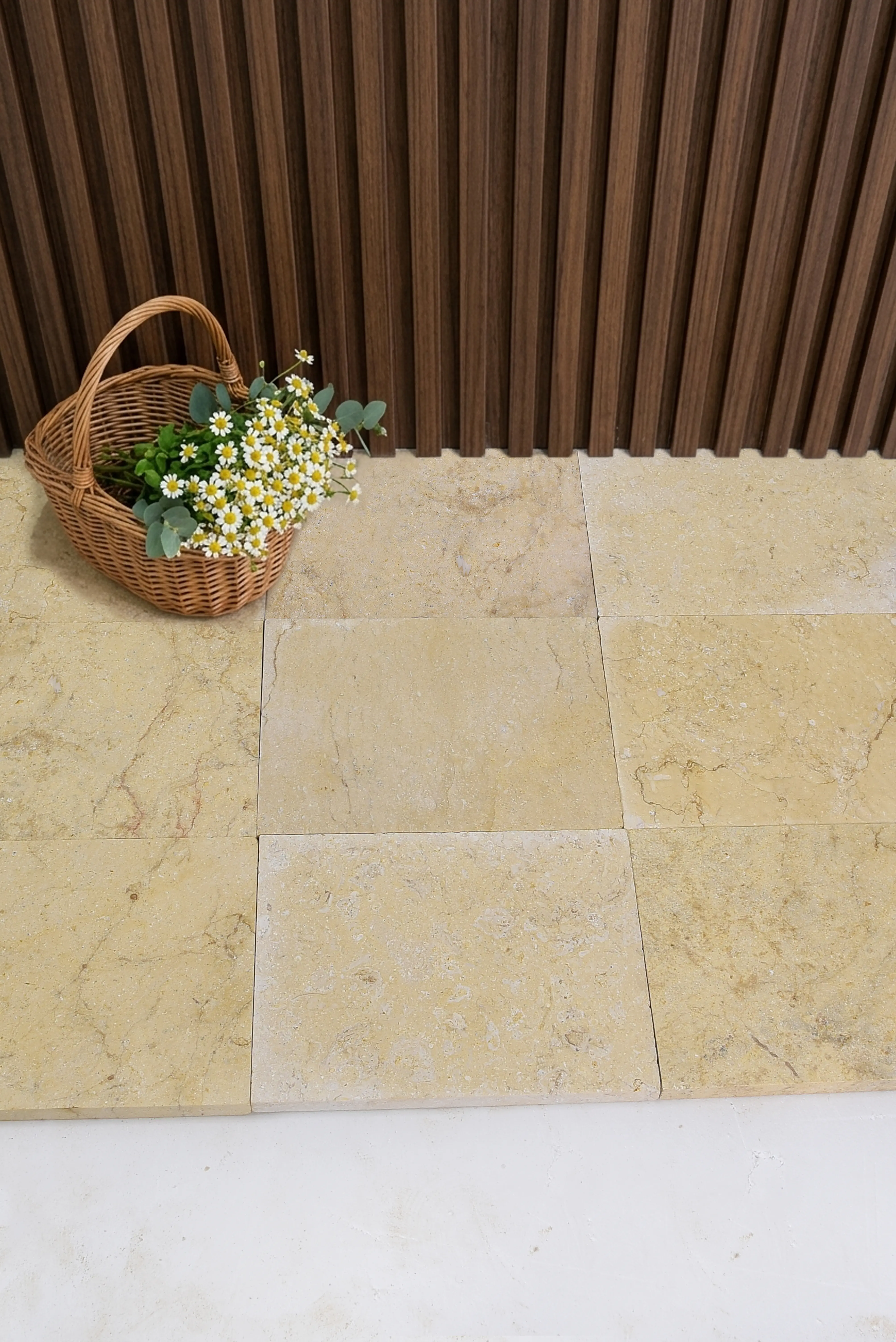
- Limestone sourced from Middle East quarries offers excellent compressive strength and handles moderate heat exposure well — you’ll want to keep it in the outer ring rather than directly beneath or adjacent to the fire bowl
- Travertine’s open pore structure makes it a poor choice for the immediate fire zone; moisture retention in those voids creates spalling risk even after the stone appears fully dry
- Sandstone and slate are the materials to avoid entirely — both delaminate and fragment under thermal cycling, which creates a genuine safety hazard in a fire pit setting
The Natural Stone Institute technical database confirms that absorption rate is the primary predictor of thermal stability — stones testing below 0.4% water absorption by weight deliver consistent performance in high-heat applications, while those above 1.5% require careful placement away from the heat source. According to NSI stone variety specifications, material density and absorption classification should guide any high-heat outdoor application.
Fire Pit Paving Stones: Layout and Configuration Options
Your layout approach changes the thermal performance of the entire installation. A tight dry-set ring of fire pit paving stones with narrow joints allows minimal joint sand loss during heat events but restricts drainage — and drainage matters more around fire pits than most people account for. Ash and water combine into a mildly alkaline slurry that etches softer stones over time and degrades joint stability.
The two configurations worth specifying are a concentric ring layout and a radial spoke pattern. Concentric rings give you clean geometric symmetry and even heat distribution across the stone surface, but the curved cuts required increase material waste by roughly 15-20%. A radial layout using rectangular pavers is faster to install, allows more natural thermal expansion movement in the joints, and achieves the same visual impact with significantly less cutting.
- Concentric ring layout: best for formal settings, requires curved cuts or specially shaped stones, excellent for circular fire pit bases
- Radial spoke pattern: better for DIY installation, rectangular stones work without custom cuts, joints open slightly under heat for natural expansion relief
- Irregular flagstone mosaic: visually compelling but thermally inconsistent — irregular joint widths concentrate heat stress at narrow points, increasing crack risk near the flame zone
- Large-format square pavers: works well in the outer patio zone; avoid single large slabs within 12 inches of the bowl where differential heating across the face creates bending stress
Base Preparation and Structural Depth
The detail that matters most in a fire pit installation isn’t the stone — it’s what’s underneath it. A poorly prepared base fails the installation before the first fire is lit, and base failure around a heat source creates uneven settling that cracks paving stones through mechanical stress rather than thermal stress.
Standard patio base depth runs 4 to 6 inches of compacted aggregate. For a fire pit surround, increase that to 6 to 8 inches in stable soil conditions, and to 10 to 12 inches in clay-heavy or expansive soils. The reasoning is straightforward: thermal cycling from the fire pit transmits into the ground, and soil with poor drainage characteristics amplifies frost-heave movement in freeze-thaw regions. Your local frost line depth — a figure determined by your jurisdiction’s building department — should establish the minimum excavation depth for any hardscape in cold climates. Many jurisdictions under the International Building Code framework specify base depth minimums tied directly to frost line data, and a fire pit installation that straddles a deck or structural slab may trigger a building permit requirement even for a simple residential project.
According to ASTM dimension stone quality standards, base compaction and load distribution directly influence long-term surface stone performance — a detail that applies with equal force to fire pit surrounds as it does to any other hardscape application. Edge restraint also matters: a flexible plastic restraint system rated for landscape use will hold your fire pit paving stones in position during seasonal soil movement, preventing joint widening that accelerates ash infiltration and stone rocking.
Thickness Specification for Heat-Zone Pavers
The heat zone stone — the ring within 18 inches of the fire bowl — needs more mass than a standard patio paver. Thinner stones transmit heat to the base more rapidly, which destabilizes joint sand and can crack the stone through thermal shock if the base is cold and wet. Field performance data on paving stones for a fire pit points consistently to 2.5 to 3 inches as the minimum thickness for the immediate surround, with 2-inch nominal thickness acceptable for the outer patio zone beyond 24 inches from the flame.
- Heat zone (0–18 inches from flame): 2.5 to 3-inch thickness, basalt or dense granite preferred
- Intermediate zone (18–36 inches): 2 to 2.5-inch thickness, limestone from Middle East quarries or dense granite acceptable
- Outer patio zone (beyond 36 inches): standard 1.5 to 2-inch patio specification, any suitable natural stone
Thickness also affects how you handle the transition between the fire pit base and the surrounding paved area. A thicker heat-zone ring sits proud of standard patio pavers unless you account for it in your base elevation. Set your aggregate base depth so that the top surface of all stones lands at the same finished elevation regardless of thickness variation — this requires different base depths across zones, which is a detail that catches many first-time fire pit builders off guard.
Mold for Paving Stones: DIY Casting vs. Natural Stone
The question of using a mold for paving stones around a fire pit comes up regularly, and it deserves an honest answer. Cast concrete pavers made from DIY molds can work in the outer patio zone, but they’re a problematic choice for the heat-intensive inner ring. Concrete’s thermal expansion coefficient runs around 5.5 × 10⁻⁶ per °F, but the aggregate mix in DIY cast pavers varies considerably — inconsistent aggregate grading creates unpredictable expansion behavior under fire pit heat, and the result is typically surface crazing within two or three heating seasons.
Natural basalt or dense granite sourced from verified quarries delivers a far more consistent thermal performance profile than any site-cast alternative. At Citadel Stone, we recommend natural stone for any zone within 36 inches of the fire bowl specifically because the crystalline mineral structure provides predictable, documented heat tolerance that DIY cast products cannot replicate. If you’re drawn to the mold-for-paving-stones approach for cost reasons, reserve it for the decorative outer field and specify natural stone where heat exposure is highest.
Fire Pit with Paving Stones: Joint and Mortar Decisions
Here’s what most specifiers miss about mortar around a fire pit: rigid mortar joints fail in a heat-cycled environment not because the mortar is weak, but because it’s too strong. Mortared joints prevent the micro-movement that heat expansion requires, concentrating stress at the stone face rather than distributing it through the joint. The result is edge chipping and hairline fractures at the mortar-stone interface, typically appearing in the second season of use.
Dry-set with polymeric joint sand is the preferred specification for fire pit paving stones in the inner heat zone. Polymeric sand with a high-temperature rating (look for products rated to 250°F surface temperature) locks joint sand against erosion from rain and ash washout while still allowing the slight movement that thermal cycling demands. For a fire pit with paving stones in a formal setting where mortar aesthetics are required, limit mortar use to the outer zone beyond 30 inches and use a flexible modified mortar — not standard Type S — in any joint that will experience radiant heat.
Plan for a deliberate 3/16-inch expansion gap between the fire pit structure itself and the surrounding paving ring. Many installations skip this detail because it looks like an error during construction, but it’s essential — direct stone-to-stone contact between a heat-cycled fire pit wall and surrounding pavers transfers expansion forces directly into the paving field. That gap, filled with heat-resistant backer rod and a flexible sealant, absorbs the movement that would otherwise crack the adjacent stone.
Sourcing and Delivery Planning
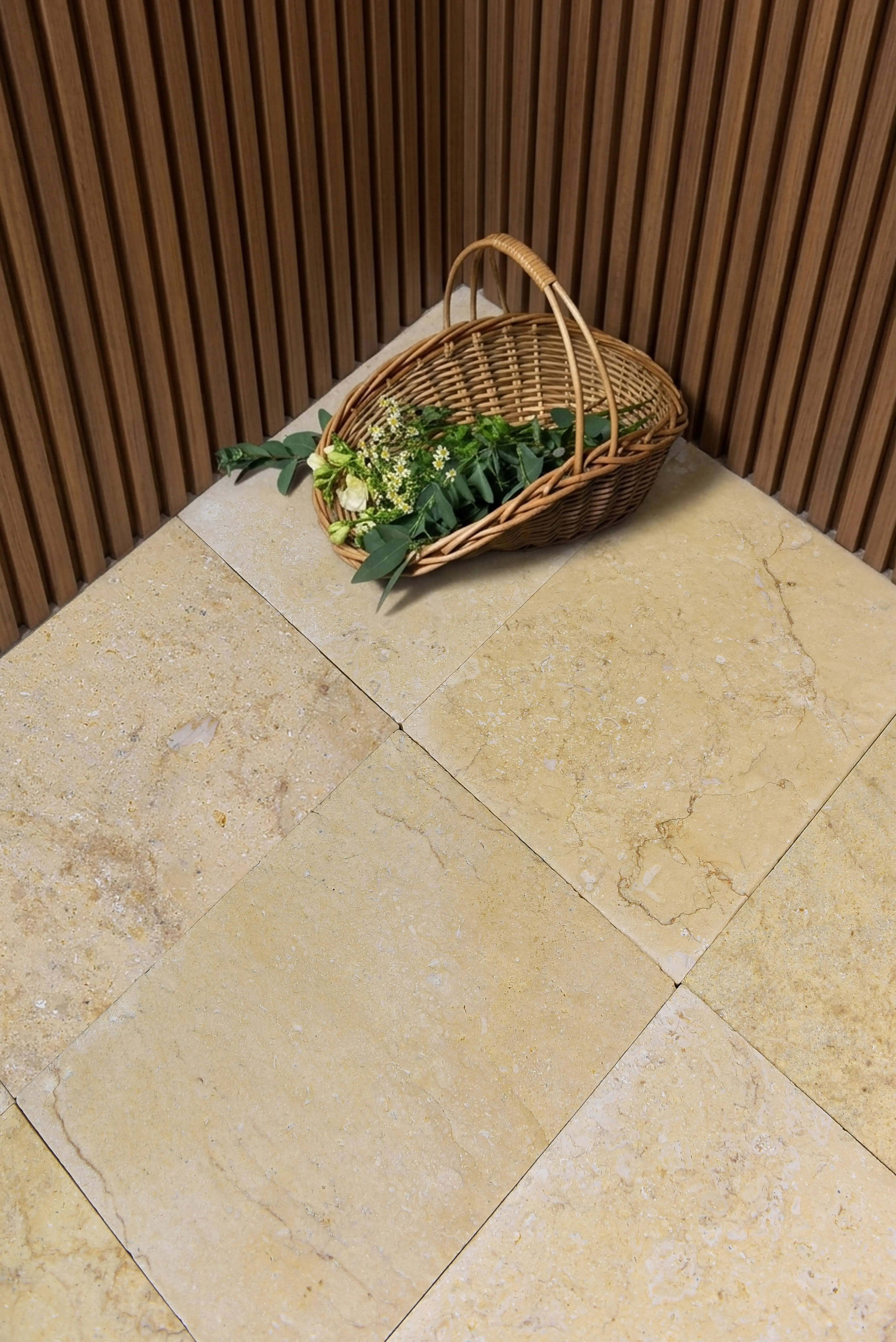
Sourcing heat-appropriate stone for a fire pit project requires more lead time than most homeowners budget. Dense basalt and select granites in the thicknesses required for heat-zone use aren’t standard patio stock — many suppliers carry 1.5-inch product but don’t warehouse 2.5 to 3-inch material in the same stone type. Checking warehouse stock for your specified thickness before committing to a project timeline is a step that prevents the most common scheduling delay in fire pit builds.
Citadel Stone maintains national warehouse inventory across its natural stone range, typically allowing 1 to 2 week lead times on standard product. For the Citadel Stone fire pit range, verifying thickness availability in your chosen stone before ordering saves you from last-minute material substitutions that compromise your heat-zone specification. Truck delivery for heavy stone — basalt at 3 inches runs approximately 18 to 20 lbs per square foot — requires a truck with liftgate access or a crane-equipped delivery, so confirm your site access dimensions with the supplier before finalizing your order.
USGS dimension stone production data shows that domestic dimension stone supply chains for specialty thicknesses can run 6 to 10 weeks from quarry to site for imported material. Ordering early and confirming warehouse availability avoids this delay and keeps your installation on schedule.
Sealing and Long-Term Maintenance
Your sealing protocol for fire pit paving stones differs from standard patio maintenance in one important way: heat degrades conventional impregnating sealers faster than UV exposure does. Standard sealers rated for patio use typically carry a 3 to 5 year reapplication cycle. In a fire pit environment, plan for resealing the inner heat zone every 12 to 18 months, particularly on limestone from Middle East quarries or any calcium-based stone that benefits from penetrating sealer protection against acid (ash slurry is mildly acidic and etches unsealed calcium carbonate stone over time).
- Use a penetrating impregnating sealer rated to at least 400°F — film-forming sealers bubble and peel in heat-zone applications
- Apply sealer when stone temperature is below 85°F — evening application after fire pit has been unused for 48 hours is the most reliable approach
- Clean ash residue before resealing — ash alkalinity neutralizes some sealer chemistries if left on the surface during application
- Reapply inner zone sealer on a 12 to 18 month cycle; outer zone follows standard 3 to 5 year patio protocol
The ASLA outdoor paving material guidance recommends reviewing drainage patterns annually for any hardscape feature near a heat source — ash and particulate accumulation in drainage joints compounds over time and should be cleared each spring to maintain base stability.
Getting Your Paving Stones for a Fire Pit Specification Right
Getting your paving stones for a fire pit right comes down to three decisions made before any excavation begins: stone type matched to heat zone position, base depth calibrated to local frost line and soil conditions, and joint system selected for thermal flexibility rather than rigidity. Dense basalt for the inner ring, limestone from Middle East quarries for the intermediate zone, and a dry-set polymeric joint system across the heat-affected area gives you a specification that performs across seasons without the joint cracking that mortared alternatives develop. Your local building department should confirm permit requirements for any fire pit installation connected to a structural deck or retaining feature — code requirements vary by jurisdiction and have real consequences for base depth and edge restraint specification.
As you develop your full hardscape plan, related paving applications can inform how your material choices carry across the property. Our natural stone paving types and finishes covers the broader material performance landscape worth reviewing before finalizing your specification. A dry-set fire pit ring using Citadel Stone paving allows for disassembly and adjustment in a way that mortared joints simply do not permit once cured.
Related reading: how to cut paving stones · how to lay down paving stones · preparing ground for paving stones.